
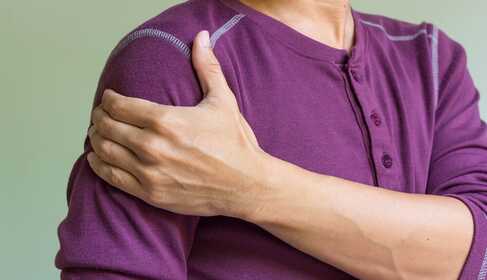
Causes of Muscle Pain
You've almost certainly experienced tight or aching muscles. Muscle pain may affect a small muscle (for example the sternocleidomastoid in a stiff neck) but it can also involve the whole body. Its intensity ranges from mild to excruciating. A large portion of muscle pain resolves on its own within a short time, but sometimes you may feel it for months. “There can be a thousand causes,” one might say. Here I list the most common ones (presented in alphabetical order).

You've almost certainly experienced tight or aching muscles. Muscle pain may affect a small muscle (for example the sternocleidomastoid in a stiff neck) but it can also involve the whole body. Its intensity ranges from mild to excruciating. A large portion of muscle pain resolves on its own within a short time, but sometimes you may feel it for months. “There can be a thousand causes,” one might say. Here I list the most common ones (presented in alphabetical order).
Causes of muscle pain
Claudication (vascular pain)
Pain most commonly develops in the calf muscles during walking. Depending on the severity of the condition, it begins after walking a certain distance and can become so intense that it forces the person to stop. It eases after a short rest and then reappears after walking the same distance again. How far you can walk depends on the degree of the vascular disease. In the most severe cases, pain may occur even at rest.
Doctors refer to this vascular pain as claudication. It is a symptom of peripheral arterial disease (commonly called arterial narrowing). The arteries that supply blood to the limbs narrow, usually due to atherosclerosis. The vessel diameter decreases and their walls stiffen because of deposits (plaques) on the arteries. Even at rest, the muscle does not receive enough blood and oxygen. With walking, the muscle's oxygen demand increases but poor circulation prevents adequate delivery. This is why pain develops.
Treatments focus on reducing the risk of vascular disease, decreasing pain, improving mobility, and preventing tissue damage.
Covid-19 (coronavirus infection)
Coronaviruses cause illnesses such as the common cold, severe acute respiratory syndrome (SARS) and Middle East respiratory syndrome (MERS). The new coronavirus identified in 2019 is now known as severe acute respiratory syndrome coronavirus 2 (SARS-CoV-2). The disease it causes is called coronavirus disease 2019 (COVID-19). The World Health Organization (WHO) declared the COVID-19 outbreak a pandemic in March 2020.
Muscle pain can be one of the symptoms of COVID-19 infection (as with many other viral infections).
Dermatomyositis
A rare inflammatory disease characterized by muscle weakness and a distinctive skin rash. It can affect both adults and children. In adults it typically appears in the late 40s to early 60s. In children it most commonly occurs between ages 5 and 15. It affects more women than men.
There is no cure for dermatomyositis, but symptoms can fluctuate. They sometimes worsen and then improve. Treatment can help clear the skin rash and restore muscle strength and function.
Dystonia
A movement disorder in which muscles contract involuntarily, causing repetitive or twisting movements. It can affect one part of the body (focal dystonia), two or more adjacent parts (segmental dystonia), or the whole body (generalized dystonia). Muscle spasms range from mild to severe — they can be painful and interfere with daily tasks.
It is not curable, but medications can improve symptoms. In severe dystonia, surgery is sometimes used to deactivate or regulate nerves or certain brain regions.
Fibromyalgia
Characterized by musculoskeletal pain accompanied by fatigue, sleep, memory and mood problems. Researchers believe fibromyalgia amplifies pain sensations by affecting how the brain and spinal cord process pain and non-pain signals.
Symptoms often begin after an event such as physical trauma, surgery, infection or significant psychological stress. Sometimes symptoms gradually develop without a single triggering event.
Women are more likely to develop fibromyalgia than men. Many people with fibromyalgia also have tension-type headaches, temporomandibular joint (TMJ) disorders, irritable bowel syndrome, anxiety and depression.
Although there is no cure, various medications can help manage symptoms. Exercise, relaxation and stress-reduction techniques are also very helpful.
Medications
Muscle pain can be an unwanted side effect of certain medications, particularly cholesterol-lowering drugs known as statins.
Hypothyroidism
The thyroid gland does not produce enough of certain vital hormones. Early-stage hypothyroidism may not cause noticeable symptoms. Without treatment, over time it can cause many health problems such as weight gain, joint pain, infertility and heart disease.
Diagnosis is made with thyroid function tests. Treatment with synthetic thyroid hormone is usually simple, safe and effective. The required dose is individual and it may take time to find the appropriate dose with your doctor.
Influenza and other viral illnesses
Upper respiratory viral infections attack the respiratory system — the nose, throat and lungs. They are commonly referred to as the common cold or the flu, though they are not the same as the stomach “flu” that causes vomiting and diarrhea. Viral infections resolve on their own in most people, but sometimes complications can be fatal.
Viral infection may pose a higher risk to certain groups:
- Young children under 5 years, especially those younger than 6 months.
- Adults aged 65 and older.
- Residents of nursing homes and other long-term care facilities.
- Pregnant women and women within 2 weeks postpartum.
- People with weakened immune systems.
- Isolated communities (e.g., jungle or previously uncontacted groups).
- People with chronic illnesses such as asthma, heart disease, kidney disease, liver disease and diabetes.
- Severely obese people with a body mass index (BMI) of 40 or higher.
Because there is no cure for many viruses, vaccination (prevention) may be the best defense — although the annual flu vaccine is not 100% effective.
Muscle cramp
A sudden, involuntary contraction of one or more muscles. If you've ever been woken by one in the middle of the night, you know it can cause severe pain. Although usually harmless, a muscle cramp can temporarily make it impossible to use the affected muscle.
Prolonged exercise or physical labor, especially in hot weather, can lead to muscle cramps. Some medications and certain diseases can also cause them. They generally do not require treatment.
Chronic fatigue syndrome (CFS)
A complex condition characterized by extreme fatigue lasting at least six months that cannot be fully explained by any underlying disease. Fatigue worsens with physical or mental activity and does not improve with rest.
Other characteristic symptoms include:
- Unrefreshing sleep.
- Memory, perception and concentration difficulties.
- Dizziness that worsens when standing up from lying or sitting.
This condition is also known as myalgic encephalomyelitis (ME). The most recently recommended term is systemic exertion intolerance disease (SEID).
The cause is unknown, although many theories attempt to explain it, ranging from viral infection to psychological stress. Some experts believe chronic fatigue syndrome may be triggered by a combination of factors.
There is currently no diagnostic test that confirms it. Various medical investigations may be needed to exclude other health problems with similar symptoms. Treatment focuses on improving symptoms.
A newer treatment option is tVNS (vagus nerve stimulation) which may offer new possibilities. Click here for the Nurosym tVNS device.
Lupus
An autoimmune disease that occurs when the immune system attacks its own tissues and organs. The resulting inflammation can affect the joints, skin, kidneys, blood cells, brain, heart and lungs.
It is difficult to diagnose because its signs and symptoms often mimic those of other diseases. The most characteristic sign — a butterfly-shaped rash across both cheeks — occurs in many but not all cases.
Some people are born with a predisposition and factors such as infections, certain medications or even sunlight can trigger the disease. Although not curable, treatments can help control the symptoms.
Lyme disease
Lyme disease is the most common tick-borne illness and is transmitted by the bite of a tick infected with certain bacteria. You are more likely to contract it if you live or spend time in grassy and heavily wooded areas where ticks that carry Lyme disease thrive.
When you are in tick-infested areas, be cautious. Take necessary precautions such as using insect repellent and wearing closed clothing.
Myofascial pain syndrome
A chronic pain disorder in which pressure on sensitive points in the muscles (trigger points) causes pain in the muscle and sometimes in seemingly unrelated parts of the body.
Symptoms typically arise after repetitive contractions of a muscle. For example, repetitive motions at work or during a hobby, or muscle tension caused by stress.
Although almost everyone has experienced temporary pain from muscle tension, in myofascial pain syndrome the discomfort persists or worsens.
Polymyalgia rheumatica
An inflammatory disease that causes muscle pain and stiffness, especially in the shoulders and hips. Signs and symptoms usually appear rapidly and are worst in the morning.
It most commonly occurs in people over age 65. It rarely affects those under 50.
It often occurs together with another inflammatory disease called giant cell arteritis, which can cause headache, visual problems, jaw pain and scalp tenderness.
Polymyositis
An uncommon inflammatory disease that causes muscle weakness affecting both sides of the body. It can make any movement difficult, such as walking, climbing stairs, rising from a seated position or lifting objects.
It most often affects adults in their 30s, 40s or 50s. Women are more often affected than men. Symptoms usually develop gradually over weeks or months.
There is no cure for polymyositis, but treatments — from medications to physiotherapy — can improve muscle strength and function.
Rheumatoid arthritis
A chronic inflammatory disease that can affect not only the joints but many different systems of the body, including the skin, eyes, lungs, heart and blood vessels.
It is an autoimmune disease in which the immune system mistakenly attacks the body's own tissues.
Unlike the wear-and-tear damage of osteoarthritis, rheumatoid arthritis affects the lining of the joints, causing painful swelling that can eventually lead to bone erosion and joint deformity. As the synovial membrane that lines the joints becomes inflamed and thickened, fluid accumulates and the joints erode and deteriorate.
The inflammation associated with the condition can damage other parts of the body. Although newer medications have dramatically improved treatment options, advanced stages can still cause physical disability.
Injuries (sprain, strain, dislocation)
Muscles can be injured in several ways during movement, leading to pain.
Sprain refers to stretching or tearing of the ligaments that hold a joint together, usually caused by a sudden awkward movement. Ligaments are strong bands of fibrous tissue that support joints and help prevent excessive movement.
The most common site of ligament injuries is the ankle, especially the three ligaments on the outer side of the ankle. This occurs when your ankle "rolls" or twists.
With a sprain, the injured area should be rested immediately: rest, ice, compression (bandaging) and elevation (keep the ankle higher than the hip). Milder sprains can often be treated successfully at home; treatments such as softlaser or microcurrent therapy can aid the regenerative process. Surgery may be required in severe cases to repair torn ligaments.
Strain involves stretching or tearing of muscle fibers within a muscle bundle due to overexertion. Muscle strains are usually less severe than sprains, with milder pain and swelling.
Treatment is similar: rest, ice and elevation of the affected limb are important during the first 2–3 days. Regenerative processes can be supported by softlaser or microcurrent therapy.
Dislocation occurs when the ligaments are stretched so much that the bones comprising the joint are forced out of their normal position. The joint's shape changes and movement is greatly limited. Severe pain and swelling occur.
Stress
Chronic stress and constant tension can lead to muscle stiffness, primarily affecting the neck, shoulders and upper back. The muscle becomes hard, palpable as a tight band, and tense. The pain is a pressing type and may not be purely local — it can even cause tension headaches.
Excellent ways to relieve stress-related muscle pain include relaxing massage, muscle stimulation for tension relief, meditation and relaxation. It is important to eliminate the factors causing stress, because prolonged stress is a breeding ground for disease. Read my article on chronic stress and its relationship to disease.
Overuse
One of the most common causes of muscle pain is overuse, i.e., strenuous muscle work. Typical examples are gardening in spring or autumn or after moving house, when otherwise healthy muscles are subjected to unusual movements. In such cases many metabolites, including lactic acid, build up and cause pain — commonly known as delayed onset muscle soreness (DOMS).
You can avoid this by avoiding sudden heavy loads, i.e., by "dosing" the work. With gradual training muscles adapt to the load and their metabolism improves, so trained muscles no longer produce painful amounts of metabolites.
Muscle soreness responds very well to massage or post-exercise electrostimulation treatments.
The diseases listed above often accompany muscle pain. Avoid self-diagnosis! If you have muscle pain, see a doctor so the cause can be investigated and appropriate treatment applied.
When to see a doctor?
Muscle pain from minor injuries, stress or exercise usually does not require medical treatment and can be eased with simple home remedies. Muscle pain due to injuries or systemic (organ-system) disease may be more serious and therefore requires medical attention.
Seek immediate medical attention if muscle pain is accompanied by any of the following:
- Difficulty breathing or dizziness;
- Extreme muscle weakness;
- High fever and a stiff neck.
Make an appointment if:
- You had a tick bite or suspect you may have been bitten by a tick;
- You have a rash, especially the bull's-eye rash of Lyme disease;
- You have muscle pain, especially in the calf, that occurs during exercise and disappears with rest;
- There are signs of infection, such as redness and swelling around the sore muscle;
- Muscle pain develops after you started taking or increased the dose of a medication (particularly statins — drugs used to control cholesterol);
- The muscle pain is severe enough that self-care no longer improves it.
Self-care
Muscle pain that occurs during some kind of work or exercise usually means a "strain." This type of injury generally responds well to R.I.C.E. therapy:
- Rest: rest, do not load the painful area.
- Ice: apply ice several times a day for 20 minutes (use ice cubes, an ice pack or frozen peas on the sore area).
- Compression: use an elastic bandage (compression bandage) to reduce swelling.
- Elevation: support the injured part with pillows so it is above the level of the heart (e.g., when lying down keep your leg higher than your chest).

