
Facial neuralgia, i.e., trigeminal neuralgia
Facial neuralgia, medically called trigeminal neuralgia or facial nerve tic, is one of the most painful neurological conditions and can significantly affect your daily life. This chronic pain syndrome occurs in the area of the 5th cranial nerve, the trigeminal nerve. This nerve is responsible for sensory innervation of most of your face and for controlling the muscles used for chewing.
Anatomy of facial neuralgia
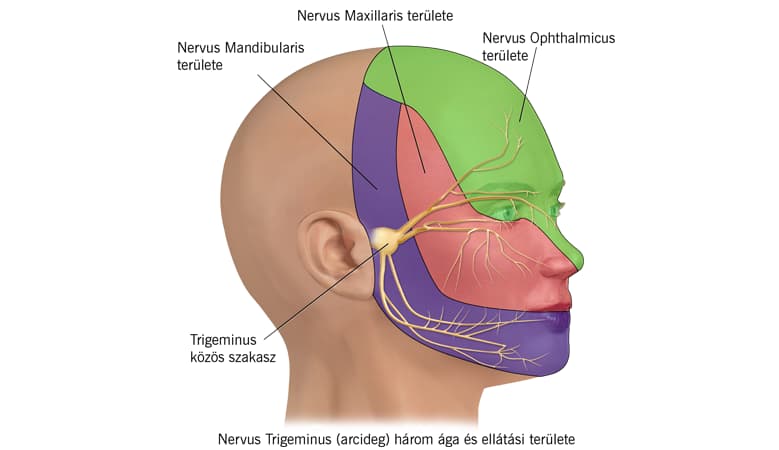
The trigeminal nerve has three main branches that network across your entire face. The upper branch supplies your forehead and the area around your eye, the middle branch serves the midface and cheek, while the lower branch is responsible for the jaw area and your tongue.
Pain can appear in any of these regions, but most commonly it affects the middle and lower branches.
Occurrence of facial neuralgia – Who is most at risk?
Trigeminal neuralgia is relatively rare, affecting only about one or two people in every ten thousand. It is more common after the age of fifty, and women are slightly more at risk.
If you have multiple sclerosis, unfortunately you have a higher chance of developing this condition.
Causes of facial neuralgia – What might be behind it?
There are many possible causes of trigeminal neuralgia.
In most cases no clear trigger is found – this is called the primary or idiopathic form. Often a blood vessel compresses the nerve at its entry to the brainstem, or the protective sheath of the nerve may be damaged.
The secondary form can be due to multiple sclerosis, brain tumor, stroke, facial injury or trauma. It can also develop as a complication of dental or ear surgery, or be triggered by various infections such as the shingles virus.
Symptoms of facial neuralgia – How to recognize it?
The symptoms of trigeminal neuralgia are very characteristic.
The pain is lightning-like, shockingly intense, often resembling an electric shock. It can also be burning or stabbing in nature and may last from seconds to minutes.
It is important to know that it usually appears on one side of the face and rarely affects both sides.
Triggers of the pain – What to watch for in everyday life?
Many everyday moments can trigger the pain.
Simple touch or stroking of the face, washing, or drying the face can all be triggers. Shaving, toothbrushing, talking, chewing or swallowing can also provoke attacks.
Even common things like a gust of wind, consuming a cold or hot drink, or applying makeup can cause pain.
Diagnosing trigeminal neuralgia – What to expect at the doctor?
To make a diagnosis your doctor will ask detailed questions about the onset of symptoms, the nature of the pain and triggering factors.
During the physical exam they will check the sensitivity of your face and look for trigger points.
In most cases imaging studies are also needed, such as an MRI, which can reveal possible nerve compression or other organic causes.
Treatment options for facial neuralgia – What can the doctor do?
Treatment is personalized and often combines several approaches.
Medication is usually the first step, using antiepileptic drugs, pain relievers and muscle relaxants.
If medication does not provide adequate relief, various surgical options may be considered, such as microvascular decompression or gamma knife treatment.
Home treatment options – What can you do yourself?
Various physiotherapy devices can be very helpful for home treatment.
A TENS device stimulates nerves with mild electrical impulses, thereby reducing pain.
Softlaser treatment can assist nerve regeneration and relieve pain.
Microcurrent devices may be effective in restoring cell membranes and reducing inflammation.
Purchasing and using home treatment devices
Among TENS devices, the Dolito TENS, Genesy 300 Pro or Premium 400 models are recommended.
Among softlaser devices, the Personal Laser L400 and Energy Laser L500 Pro models may be the most effective.
Detailed descriptions of the devices are available by clicking the links.
Applying home treatments
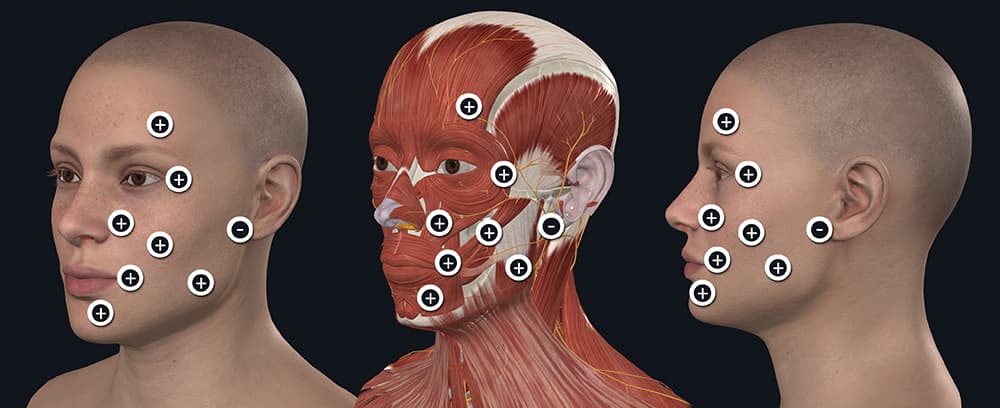
You can use TENS and microcurrent treatments three to four times a day, with each session lasting twenty to thirty minutes.
In the illustration I show some possible treatment points. Always place the negative pole by the area in front of the ear. The positive pole should be positioned according to the spread of pain shown in the diagram. Treat only one, or at most two points at a time, because microcurrent devices are currently at most 2 channels.
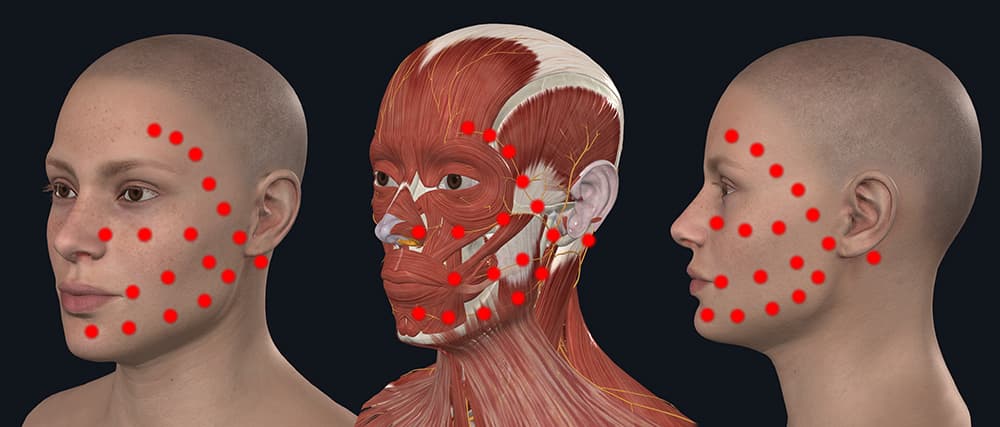
Softlaser treatment can be applied once or twice a day. You should treat along the course of the nerve, moving the probe point by point. Each point requires 4–8 Joules of energy. With the Personal Laser 400 device this corresponds to 10–20 seconds per point.
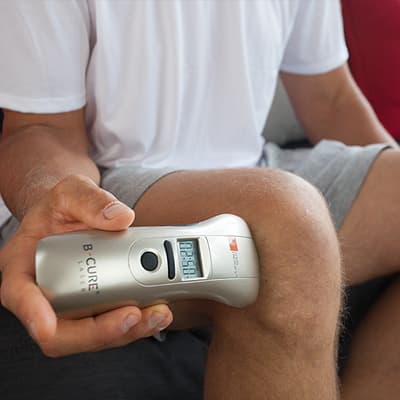
Product recommendation: our softlaser devices
The primary effect of a softlaser device is to support cell regeneration processes and thereby speed up healing, and by stimulating endorphin production it also provides pain relief.
In the illustration I show some possible treatment points. These are example treatment points. You do not need to treat every point, only those along the branches where the pain spreads. The shape of the points may vary depending on your device type.
Lifestyle advice for managing facial neuralgia
There are many changes you can make in your daily life that may help relieve symptoms.
Protect your face from strong wind and cold, use a soft toothbrush and be gentle when cleansing your face.
Favor foods rich in B vitamins and magnesium in your diet, and include omega-3 fatty acids.
Managing stress is also crucial – learn relaxation techniques and ensure you get enough sleep.
When to see a doctor immediately?
If the pain appears suddenly for the first time, or if your usual medications no longer work, be sure to consult your doctor.
Immediate medical evaluation is also necessary if new symptoms appear, if the pain affects both sides of your face, or if visual disturbances or other neurological signs accompany it.
Long-term outlook for facial neuralgia
Trigeminal neuralgia is generally a treatable condition, but finding the right approach requires patience. Medication is effective for most patients, and symptoms may ease over time. Longer symptom-free periods can occur, and with appropriate treatment your quality of life can improve significantly.
Recommendation
Although trigeminal neuralgia can be extremely debilitating, there are many treatment options available. The key is patience and seeking proper professional care.
Home treatment devices can be useful as adjunctive therapy, but always under specialist supervision.
Avoiding trigger factors and implementing lifestyle changes can greatly improve your quality of life. Remember that every patient is unique, so your treatment plan should always be individualized. If you have any questions or your symptoms worsen, consult your treating physician with confidence.

