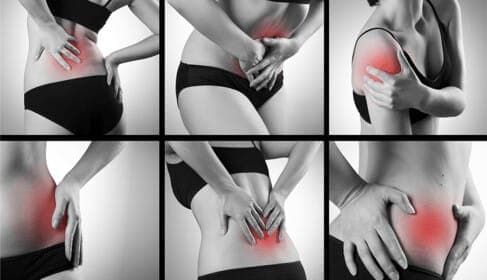

 What is fibromyalgia?
So I’ll start with the most important sentence: fibromyalgia is a real, well-described condition – not an imaginary illness and not a sign of weakness. The problem is not in the muscles, but in pain processing: the nervous system’s “volume control” is set to a higher level, so stimuli that a healthy nervous system would not even register arrive as pain. That does not make the pain any less real – it simply means that its cause and treatment must be sought elsewhere.
 Key point
Fibromyalgia is a disorder of pain perception: the nervous system transmits signals with the volume turned up. There is no single miracle medicine – according to international recommendations, treatment is based on understanding the condition and gradually building up regular exercise, supplemented as needed by psychological support, medication and home pain-relief methods such as TENS. Small steps over the long term – but symptoms can be improved meaningfully.
 Symptoms of fibromyalgia
| Symptom | How does it present? |
|---|---|
| Widespread, chronic pain | Burning, stabbing or dull pain in several parts of the body at the same time, for at least three months; typically fluctuating and worsened by weather, stress and exertion |
| Profound fatigue | Not “sleepiness”: exhaustion that does not go away with rest and is already present in the morning, on waking |
| Sleep disturbance | Light, unrefreshing sleep and frequent waking – lack of sleep further worsens the pain the next day, closing the vicious circle |
| “Fibro fog” | Problems with concentration and memory, slowed thinking and difficulty finding words |
| Morning stiffness | It takes longer in the morning to get the joints and muscles moving |
| Associated complaints | Irritable bowel-type digestive symptoms, tension headaches, increased sensitivity to stimuli such as light, sound and smells, anxiety and low mood |
 What happens in the body?
The phenomenon is called central sensitisation: the pain-processing network in the spinal cord and brain becomes oversensitive. The same stimulus – a touch or ordinary muscle activity – travels through the system in amplified form, while the pain-relieving “braking system” works less effectively. This is why something that should not hurt can hurt, and why pain can spread throughout the body without actual muscle damage.
Because the problem is not where routine tests look for it. Blood counts, inflammatory markers, X-rays and ultrasound show whether the muscles and joints are intact – and in fibromyalgia, they really are. The problem lies in how pain signals are processed, which these tests cannot see. A “negative result” therefore does not mean that nothing is wrong with you – it means that the problem lies elsewhere. The doctor makes the diagnosis based on the symptom pattern and by ruling out other conditions.
The exact cause is unknown; research suggests a combination of inherited susceptibility and triggering factors. Symptoms often begin after physical or emotional trauma – an accident, surgery, infection, bereavement or prolonged high stress. Persistent stress and poor sleep are not causes, but they can worsen the process: both further sensitise the pain system, so treating them is part of fibromyalgia therapy.
 How can it be treated? The steps recommended internationally
European rheumatology recommendations advise a gradual approach – and it is important to know that the only treatment supported by strong evidence is not a medicine, but exercise.1
Step 1: understand your condition. Treatment begins with learning about the condition – exactly what you are doing now. When you understand that your pain comes from an “amplified” nervous system rather than tissue damage, you are more willing to move, feel less anxious and make better decisions.
Step 2: exercise – the backbone of treatment. Research shows that regular, gradually increased physical activity improves quality of life, reduces pain and supports everyday functioning.1,2 The key is dosage: start low – even with 10 minutes of walking or water exercise a day – and increase it only a little each week. Going too fast can trigger a flare-up, which is the reason for most failures; being too cautious and avoiding activity, however, causes further weakening. Slowly, but consistently.
Step 3: psychological support – if needed. If anxiety, low mood or unhelpful coping patterns make the situation harder, psychological therapy, particularly cognitive behavioural therapy, can help and has supporting evidence. This does not mean that you are “mentally ill” – it means that the pain system and the stress system are connected, and it is worth working on both.
Step 4: medication – selectively and under medical supervision. For severe pain or serious sleep disturbance, a doctor may prescribe medication temporarily. Traditional anti-inflammatory medicines usually help little – because there is nothing for them to reduce: inflammation is not part of the condition. Medication may help with symptoms, but step 2 remains the backbone of treatment.
 Home pain relief – what can TENS and microcurrent do?
For daily relief of fibromyalgia pain, drug-free electrotherapy methods are often the most suitable options. The strongest evidence is available for TENS treatment: in a large, carefully designed study, TENS used daily during movement noticeably reduced movement-evoked pain and fatigue – and a trial treatment lasting just the first half hour already showed well who was likely to benefit in the longer term.3 On very sensitive days, microcurrent (MENS) treatment may be an alternative: a gentle current below the sensory threshold. As an addition, soft laser and therapeutic ultrasound may help treat a specific painful area.
When choosing a device, the order matters – you do not need to start with the most advanced one:
Globus Elite 150
An entry-level device with TENS programmes: if you are trying electrotherapy for the first time, this carries the least risk. The lesson from the half-hour “test treatment” applies here too: if the first sessions bring noticeable relief, you are likely to benefit from it over the longer term as well.
Genesy 300 Pro
TENS and microcurrent in one device: TENS for “normal” days and gentle MENS for days with heightened sensitivity. For fibromyalgia, this combination is the most practical starting point if you are considering both methods from the outset.
Premium 400
The device with the widest range of programmes, including TENS, MENS and muscle stimulation – worth considering if, alongside pain relief, you would also like to gently exercise weakened muscles as part of your long-term plan. One of the three devices is enough – your needs should decide, so do not buy all three at once.
You can find the complete range of devices selected for fibromyalgia on the Fibromyalgia category page. And the usual honest qualification applies here too: the device itself does not solve anything – daily, regular use together with a gradually developed exercise programme does; the device helps you get through more painful days so that you do not drop out of your exercise routine.
 My advice
Learn energy management, or pacing: fibromyalgia days have an “energy envelope”, and the most common mistake is trying to catch up on everything on a better day – then paying the price for three days afterwards. Spread the load: shorter periods, with rests in between, and moderation even on good days. Keep a symptom diary covering pain, sleep, activity, weather and stress – after a few weeks you will see your own patterns and what really helps.
 Before starting home electrotherapy
- Cardiac pacemaker, implanted defibrillator or another electronic implant – TENS and microcurrent must not be used
- Pregnancy – electrotherapy only after medical consultation
- Cancer in the area to be treated – local treatment is prohibited
- Epilepsy – only with the approval of the treating doctor
- Skin injury or inflammation at the electrode site – allow the skin to heal before treatment
 When should you see a doctor?
Diagnosing fibromyalgia and ruling out conditions that cause similar symptoms are medical tasks – the route leads to a rheumatologist. Do not “self-diagnose” without an examination: if you notice swollen, warm joints, persistent fever, unintentional weight loss, muscle weakness or newly developing numbness, these are NOT symptoms of fibromyalgia – they may indicate another condition requiring targeted treatment. And if your low mood deepens or you have thoughts of self-harm, call the free 116-123 mental health helpline.
Frequently asked questions
No. It is an internationally recognised condition included in the WHO classification of diseases, with a well-described neurological mechanism. The fact that routine test results are normal is a consequence of the nature of the condition – the problem is in pain processing, which these tests do not detect.
There is no single laboratory test for it. The doctor, usually a rheumatologist, decides based on the symptom pattern: widespread pain for at least three months together with associated symptoms such as fatigue, sleep disturbance and fibro fog, after ruling out conditions that cause similar complaints, including thyroid disorders, inflammatory joint diseases and vitamin D deficiency.
Properly dosed exercise does not merely avoid harm: it is the only treatment supported by strong scientific evidence. The secret is dosage – start low, increase slowly and include rest days. Mild pain during movement is not a sign of damage; a flare-up lasting several days, however, indicates that you increased the load too quickly.
Research suggests that TENS used regularly during movement may noticeably reduce movement-evoked pain and fatigue – and your response to the first half-hour treatment provides a good indication of whether you are likely to benefit over the longer term. It does not treat the condition itself, but can make your days easier – helping you stay in your exercise programme.
Not always. International recommendations begin with non-drug treatment and suggest medication selectively for severe pain or serious sleep disturbance, under medical supervision. Do not expect much from traditional anti-inflammatory medicines: fibromyalgia does not involve inflammation that they could reduce.
Fibromyalgia is a chronic condition with a fluctuating course – but it is not progressive: it does not damage the joints and does not shorten life. With a well-structured approach involving exercise, improving sleep, managing stress, and therapy and pain relief as needed, symptoms can be reduced meaningfully, and many people achieve long, good periods. The aim is to keep the condition under control, and that is a realistic goal.
 What does the research say?
“What has actually been shown to help?”
The European professional rheumatology organisation developed its recommendations based on more than one hundred scientific reviews – and only one treatment received a “strongly recommended” rating: physical exercise. Everything else – medicines, psychotherapy and other methods – is included as an adjunct with weaker evidence, adapted to the individual situation.1 This ranking is your treatment roadmap.
“What can I expect from regular exercise?”
According to the combined results of studies, regular endurance-type exercise – walking, cycling and water exercise – improves quality of life and everyday functioning, and reduces pain. The effect is modest but real, and longer follow-up suggests that improvements in pain and function may last. Participants tolerated the exercise well – gradual progression was the key.2
“How do I know whether TENS would work for me?”
A large study provided a practical answer to exactly this question: in women living with fibromyalgia, TENS used daily during activity reduced movement-evoked pain and fatigue over one month – and those who experienced noticeable relief during the first 30-minute treatment were more likely to be among the longer-term responders. Side effects were rare and mild.3 In other words, it is worth trying and deciding based on your own response.
 Summary – Quick overview
Read more
Scientific sources
- Macfarlane GJ, Kronisch C, Dean LE, et al. (2017). EULAR revised recommendations for the management of fibromyalgia. Annals of the Rheumatic Diseases, 76(2), 318–328. DOI: 10.1136/annrheumdis-2016-209724
- Bidonde J, Busch AJ, Schachter CL, et al. (2017). Aerobic exercise training for adults with fibromyalgia. Cochrane Database of Systematic Reviews, 6(6), CD012700. DOI: 10.1002/14651858.CD012700
- Vance CGT, Zimmerman MB, Dailey DL, et al. (2021). Reduction in movement-evoked pain and fatigue during initial 30-minute transcutaneous electrical nerve stimulation treatment predicts transcutaneous electrical nerve stimulation responders in women with fibromyalgia. Pain, 162(5), 1545–1555. DOI: 10.1097/j.pain.0000000000002144