
Information about the Holter ECG examination
Diagnosing certain heart conditions can be challenging. This is especially true for those that occur only occasionally, at unpredictable times, come on suddenly and last for a short time. Examples include some arrhythmias or transient reductions in myocardial blood supply. Often, by the time you see a doctor and an ECG is taken, the heart may have returned to normal and no abnormality is visible. If such episodes recur, a Holter ECG test can help "catch" and identify the problem.

A Holter monitor is a small device that can record the heart's electrical activity continuously for 24 up to 72 hours or even longer.
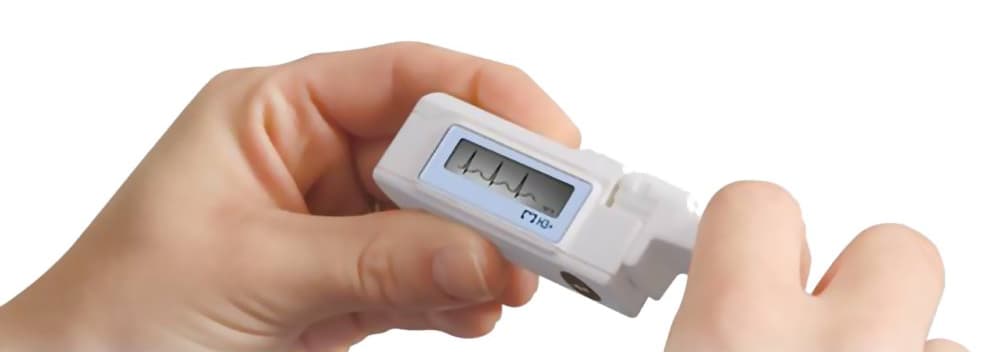
By analyzing the recorded tracing, a clear picture of your heart's activity can be obtained, and if your symptoms are caused by an arrhythmia, it can be identified on the continuously recorded trace.
The device is essentially a miniature ECG recorder that fits in your pocket. After placement, the device must be worn continuously for at least 24 hours. In some cases your doctor may request a 72-hour or even longer recording.
What is the Holter ECG test for?
A Holter monitor test is usually performed when a standard electrocardiogram (ECG) does not provide enough information about the heart, particularly if the irregular heartbeat occurs only rarely.
If you have symptoms suggesting a heart rhythm disturbance, the doctor will perform an ECG (electrocardiogram) (ECG – what you need to know about the electrocardiography examination).
If your arrhythmias are rare and brief, they may have stopped by the time you reach the clinic and a 10‑second ECG might not detect them.
The Holter monitor records the heart's electrical signals continuously, so it may detect irregular heart rhythms that a standard ECG did not catch.
There are consumer devices, such as smartwatches, that can record an ECG at home. These devices DO NOT replace a Holter test.
When is Holter monitoring performed?
- a periodic or persistent sensation of "irregular" heart activity
- episodes of rapid and/or irregular heartbeat
- skipped heartbeats
- rhythmic or irregular "strong heartbeats"
- an unexplained fainting episode
- symptoms that occur at certain times of day or with specific activities
Risks
There are no risks associated with the Holter ECG test. The device only observes and records; it does not emit any current or radiation into your body. It has no side effects.
Wearing the device continuously for several days may cause some minor discomfort or disturb your sleep.
The Holter device's operation is generally not affected by other electrical devices. Since accurate results are important for you, avoid electrical equipment that could interfere with the recording. During the test do not use:
- an electric blanket
- an electric razor or electric toothbrush
- place magnets near the device or the electrodes
- use a metal detector
- if you use a microwave oven, stay 1–2 meters away from it while it is operating
- keep your mobile phone away from the device
How to prepare
The Holter monitor is applied at a scheduled appointment in the clinic.
Because the Holter monitor must be worn continuously and without interruption for at least 24 hours, be prepared for that. Attend the appointment after bathing and personal hygiene!
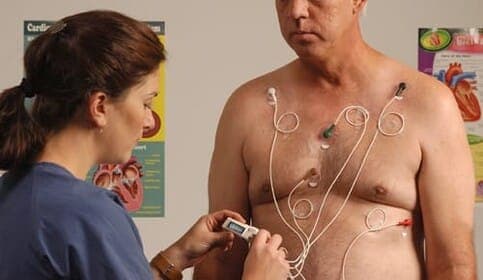
The Holter assistant will apply self-adhesive electrodes to several points on your chest. The electrodes are connected to the device by thin cables. In this way they "collect" your heart's electrical information.
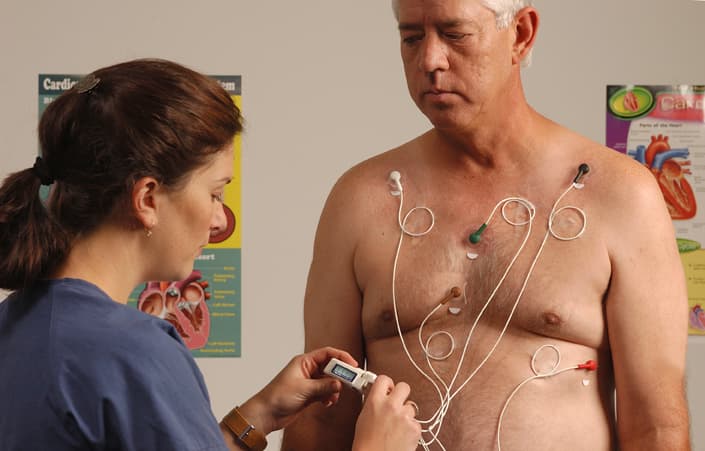
If you have heavy chest hair, the areas under the electrodes (about the size of a postage stamp) must be shaved. Without shaving the electrodes will not adhere and the test cannot be performed.
After the Holter monitor is attached you will receive instructions on how to wear it. Then you may go home and return to your normal daily activities. You can work, move around, etc., with the device on.
You should remain active so that your symptoms are "provoked." If you sit motionless while wearing the device during the recording, your symptoms may not occur (or may not occur reliably).
What happens during the test?
The Holter monitor is usually worn for 24 hours. Longer recordings are less common (but sometimes necessary).
The device records all your heartbeats, including normal and abnormal ones: skipped beats, strong beats, those associated with palpitations, etc.
Monitoring is completely painless. The electrodes and leads can be hidden under clothing. You can clip the device to your belt or use a small carrying bag that helps you carry it unobtrusively.
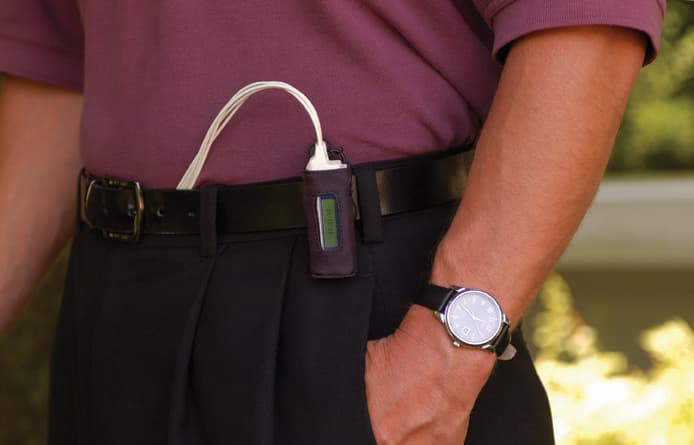
The device must not be removed — it should be worn for the entire recording period, even while sleeping.
Water can damage the device, so do not swim, shower, or bathe while wearing it. For multi-day recordings you will be shown how to temporarily suspend the test (disconnect the electrodes and the monitor and then reconnect). This may be necessary to clean yourself. Try to keep the interruption as short as possible! Remember: the test is for your benefit. If the monitor is not on you when an arrhythmia occurs, the recording is useless.
While wearing the Holter monitor you may perform most normal daily activities unless your doctor tells you otherwise. Meanwhile, keep a diary of what you do.
For example: if you walk up 10 flights of stairs, note when you started and when you finished, because physical exertion can speed up your pulse! If you do not inform the doctor that you climbed many flights, he or she may draw incorrect conclusions from the ECG tracing.
So this is also for your benefit!
Also record any symptoms you notice. It is especially important to note and record the time if you experience any of the following:
- throbbing, rapid or skipped heartbeats
- shortness of breath
- chest pain
- dizziness
Be sure to write down exactly when and what activities you were doing when you experienced these symptoms, if you notice any at all.
When the recording period ends...
When the recording period is over you must return the device to the clinic. A computer analysis program will "read" the recorded data from the device.
To give you an idea of how much data must be processed: if you are moderately physically active, your heart beats about 80 times a minute — roughly 4,800 per hour and about 110,000 in a day!
The computer analyzes each heartbeat individually. It groups normal and abnormal waveforms and summarizes the data.
Then an ECG expert reviews, checks and re-evaluates the computer-prepared data. Such a thorough review — if there are significant abnormalities — can take 30–40 minutes.
Information from the activity diary you kept during the test is important. During analysis the Holter data will be compared with your notes. This helps establish an accurate diagnosis.
Result (report)
In many cases the Holter monitor recording can clearly reveal certain types of heart disease. In other cases additional tests may be needed.
In many instances the Holter ECG provides enough information to start treatment.
Follow-up test
Another important indication for Holter testing is to check the effect of heart medications.
A follow-up (control) test is usually performed a few weeks after starting medication. It is done a bit later because the medications need some time to take effect.

