
 What is a leg ulcer?
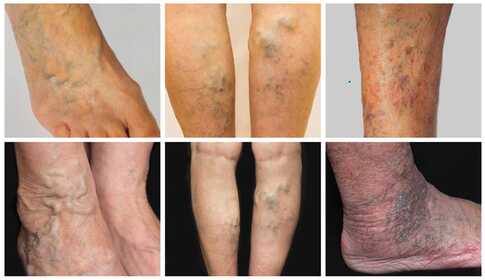
An ulcer is the death of the skin and the tissues beneath it, creating an open wound. A leg ulcer typically develops in the area between the ankle and the knee and is notoriously difficult to heal. While a normal cut closes within a few weeks, an ulcer may remain open for months or even years.
The cause is an underlying circulatory disorder: the tissues do not receive enough oxygen and nutrients, and waste products are not removed properly. The wound therefore becomes “stuck” in a persistent, non-healing state.
 Key point
The key to healing a venous leg ulcer (CEAP C6) is supporting venous return. Regular activation of the calf muscle pump – through active movement OR with a muscle stimulator, alongside compression therapy – may have a beneficial effect on wound healing. EMS is particularly valuable when the patient is physically limited in movement. Another home modality is soft laser therapy – the two can be combined.
Types of leg ulcer
Based on their origin, ulcers are divided into three main types:
| Type | Proportion | Underlying cause | Location |
|---|---|---|---|
| Venous | 70–80% | Varicose vein disease, venous valve insufficiency | Inner ankle, shallow, irregular edges |
| Arterial | ~15% | Arterial narrowing, peripheral arterial disease | Toes, heel, front of the lower leg, deep, sharply defined edges |
| Diabetic | ~10% | Diabetes (neuropathy + microangiopathy) | Sole, toes |
This article focuses primarily on home support with a muscle stimulator for the most common type, the venous leg ulcer. In diabetic and arterial ulcers, treatment of the underlying disease takes priority – seek medical guidance.
 How does wound healing happen?
When you accidentally cut your finger, the wound closes within 2–3 days, and barely a week later there is hardly any trace of it. The body has a remarkable “self-healing” ability. The injury sends a signal to the defence system: first, the mechanism responsible for blood clotting becomes active and seals the small severed blood vessels. The bleeding stops.
Blood flow then increases in the injured area. It brings a large number of white blood cells, which destroy pathogens and foreign materials that have entered the wound. Fresh blood contains plenty of oxygen and nutrients – these are needed to produce the substances that close the wound. Healthy blood circulation is essential for wound closure.
 An analogy
Imagine it like a storm knocking down an old tree in your garden. Normally, you cut up the branches and trunk, carry them into a pile, then wheelbarrow soil into the hollow left behind, level it, and sow grass. Within just a few days, there is no sign of the hole caused by the fallen tree. But if you have no tools to cut it up, no strength to carry it away, nothing to fill the hole with, and no grass seed, the tree and the hollow will spoil the appearance of your garden for a long time. If a friend brings over their tools and helps you, order is restored.
A leg ulcer is similar: when venous or arterial circulation is impaired, poor circulation makes the wound difficult to heal. This is why you need to “call for help” to support your circulation.
Do you know what keeps your blood circulating?
You can read about every medicine, dressing and operation on many medical websites – but the most basic information is rarely discussed, or its importance is not explained.
Your blood circulates continuously throughout your body for your entire life. Your heart pumps it into the arteries, which carry it to every cell in your body. Your veins and lymphatic vessels collect it, while the pumping action of your muscles drives it back towards your heart.
Some of your muscle fibres (10–15%) are constantly contracted. Although you do not feel it, this muscle tone pumps your blood even while you sleep.
When you get up and start doing things, this is no longer enough. More blood enters your limbs, and in an upright position it is harder to return it to your heart. This is why you need movement.
As you go about your activities, your muscles contract and squeeze blood out of the veins – just as you squeeze toothpaste out of a tube. When the muscle relaxes, the veins fill again. The valves in the veins and lymphatic vessels allow blood to move only backwards, towards the heart.
Little exercise = poor blood circulation
You can now understand this: if you do not move your muscles thoroughly and regularly, you create the conditions for poor blood circulation – and therefore for ulcer formation.
By sitting at your desk or in an armchair in front of the TV all day, you are “choosing” to weaken your circulation.
The most effective way to prevent ulcers (and many other diseases) is regular physical activity. You do not need to be an athlete! Walk around your neighbourhood for 30–40 minutes each evening. Go hiking, try Nordic walking, jog, cycle, swim, do yoga, exercise or dance. It does not matter which. The important thing is to work your muscles thoroughly every day.
This “gets your circulation moving”. You may prevent ulcers, symptoms caused by arterial narrowing and many other problems.
What can you do to support healing of a leg ulcer?
If you were unable to prevent the ulcer and it has developed, you have a more difficult task. Move as much as you can without pain.
If you can no longer move, use a modern medical device: replace muscle movement with a muscle stimulator (EMS). This type of treatment makes your muscles contract rhythmically; its effect is similar to walking. It supports venous blood circulation and may therefore have a favourable effect on the chances of healing a leg ulcer.
 Important warning
If you have a pacemaker or an implanted defibrillator, DO NOT use electrical treatment. It is also contraindicated if active thrombosis is suspected – see the detailed list of contraindications in section 9.
Treating a leg ulcer with electrotherapy – protocol
The treatment is very simple to perform. Attach the muscle stimulator electrodes to the calf muscles, select the treatment programme, then set the current intensity so that you feel firm but not painful contractions in your muscles.
Basic treatment parameters
- Time: 20–30 minutes daily, repeated up to twice a day.
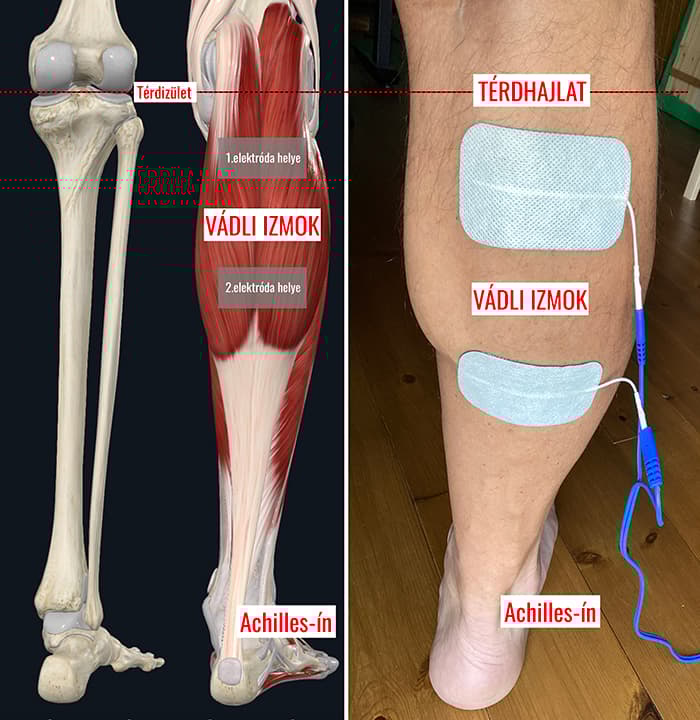
- Electrode placement: along the midline of the calf muscles (the requirements are described in the device instructions). Do not place the electrodes directly on the wound.
- Current intensity: a clearly noticeable, rhythmic contraction that is firm but not painful.
- Duration: continue until the wound has healed completely (often 2–4 months, or longer in more severe cases).
Electrode placement
I have prepared an illustration showing where to attach the electrodes. Place them on the calf muscles – not directly on the ulcer. Typically, two electrodes are placed on the upper part of the calf and two on the lower third, along the midline.
What should you expect?
The more severe the condition, the more often you need to exercise the muscles thoroughly. You can also treat a large ulcer – the important thing is not to place the electrodes directly in the wound.
During the first treatments, your pain may temporarily increase. This is because the faster circulation flushes accumulated toxins out of the ulcer (breakdown products formed by cell death), which causes pain. After a few days, the pain subsides – this is a sign that the healing process has begun.
Healing takes time – it does not happen within minutes, or even within a few days. But if you support your circulation, it will repay your patience.
 Home devices – muscle stimulators
Elite SII TENS/EMS device
A multifunctional 2-channel device with 100 programmes, including EMS and the pain-relieving TENS function. It is a suitable choice for supporting leg-ulcer treatment because it can also be used to relieve pain around the wound.
Rehalito EMS muscle stimulator
A simple, affordable 2-channel device. It was specifically designed for rehabilitation and circulation support.
Myolito TENS/EMS/FES device
A multifunctional electrotherapy device with TENS, EMS and FES programmes – functional electrical stimulation for targeted support of the calf muscle pump.
 Before starting treatment – contraindications
For safe use, you need to know the contraindications.
When should you NOT use a muscle stimulator?
- An implanted pacemaker or defibrillator
- Suspected acute thrombosis or recently diagnosed DVT
- An active, purulent skin infection in the treatment area
- A malignant tumour in the treatment area
- Pregnancy (around the abdomen and lower back)
- Severe arterial insufficiency (critical limb ischaemia) – medical consultation is required
Important information
If you have a leg ulcer, always consult your treating doctor before starting treatment: active thrombosis and possible arterial ischaemia must be ruled out. Read the device instructions.
Other home modalities alongside ulcer treatment
A muscle stimulator is not the only solution – successful leg-ulcer treatment is a team effort and combines several modalities:
- Medical supervision – diagnosis and treatment of the underlying disease.
- Compression therapy – the most important foundation for a venous ulcer (compression stocking or bandage, adjusted by a professional).
- Appropriate wound dressing – providing a moist wound-healing environment.
- Movement – operating the muscle pump supports venous return.
- Muscle stimulator (EMS/FES) – the main topic of this article.
- Soft laser therapy (photobiomodulation) – a parallel home modality that can be combined with EMS.
- Lymphatic massage device (pneumatic compression) – to support venous return in more severe venous circulation disorders.
- 3 tips for a daily leg-ulcer protocol – a practical daily routine combining soft laser, an ergometer and an elastic band.
 My advice – how should you combine them?
Compression stockings and regular daily movement (or a muscle stimulator if you cannot move) are the foundation. With your treating doctor’s approval, you can add soft laser therapy and pneumatic compression. The modalities do not exclude one another; they support one another.
When should you NOT expect a miracle?
Start with realistic expectations. A muscle stimulator will not heal an ulcer if:
- You do not treat the underlying disease – wearing compression stockings is essential in venous insufficiency, while blood-glucose control is indispensable in diabetes.
- Severe arterial insufficiency is present – if the blood supply is critically low, this must be addressed first, possibly with vascular surgery.
- The wound is infected – an active, pus-producing infection first requires antibiotic treatment.
- You do not follow hygiene rules – without regular dressing changes and wound cleaning, a stimulator cannot help either.
EMS is a valuable adjunctive device – but it does not replace medical care or treatment of the underlying disease.
 Scientific background
Recent systematic review: electrical stimulation in venous leg-ulcer healing (2023)
A 2023 VLU-specific systematic review (Borges et al.) found that electrical wound stimulation may accelerate the healing rate of venous leg ulcers – particularly in patients for whom surgical treatment is not an option.1
Classic VLU RCT: high-voltage pulsed current (HVPC)
In a classic RCT (2003), Houghton and colleagues showed that applying high-voltage pulsed current (HVPC) meaningfully improved the size and appearance of chronic leg ulcers alongside conventional wound care.2
Physical modalities head-to-head: HVS vs UH vs soft laser
In their RCT of 110 people in Poland, Taradaj and colleagues found that high-voltage electrical stimulation plus drug therapy after venous leg-ulcer surgery produced more favourable wound healing than drug therapy alone, ultrasound or soft laser used alone.3
Compression therapy – the Cochrane standard
The Cochrane review by O'Meara considers compression therapy the foundation of venous leg-ulcer treatment – without compression, wound-healing speed decreases significantly and recurrence rates increase.4
Calf muscle pump and venous return
A randomised clinical trial by Padberg and colleagues demonstrated that structured exercise significantly improves calf muscle pump function over 6 months in chronic venous insufficiency – this provides the theoretical basis for replacing this function with a muscle stimulator.5
ESVS 2022 European clinical practice guidelines
De Maeseneer and colleagues edited the European Society for Vascular Surgery 2022 clinical practice guidelines on the management of chronic venous insufficiency, which also include treatment algorithms for CEAP C5–C6 (venous ulcer) stages.6
Frequently asked questions
Healing a venous leg ulcer is always a lengthy process: in optimal cases it takes 8–16 weeks, while more severe cases may take several months. EMS is an adjunct to conventional treatment (compression, wound dressing and treatment of the underlying disease), and may have a favourable effect on the healing process. Continue the treatment until the wound has closed completely.
Yes. The two modalities work through different mechanisms: EMS supports venous return by activating the muscle pump, while soft laser supports regeneration at cellular level. They can be combined after consulting your treating doctor – a detailed soft-laser protocol is available in the related article.
Along the midline of the calf muscles, avoiding the ulcer. DO NOT place the electrodes directly in the open wound or around it. The device instructions give precise placement guidance, and your treating doctor can also help.
During the first days or weeks, pain in the ulcer area may temporarily increase as faster circulation flushes out accumulated toxins. This subsides after a few days and is a sign that the healing process has begun. If the pain is severe or persistent, stop the treatment and consult your doctor.
In the case of an active purulent infection (erysipelas, cellulitis), stop EMS treatment and contact a doctor without delay: antibiotic therapy is required. Details about infectious complications: erysipelas – a bacterial skin infection.
 Summary – quick overview
Sources
- Borges D, Pires R, Ferreira J, Dias-Neto M. (2023). The effect of wound electrical stimulation in venous leg ulcer healing – a systematic review. Journal of Vascular Surgery: Venous and Lymphatic Disorders, 11(5), 1066-1073. PubMed: 37196922
- Houghton PE, Kincaid CB, Lovell M, Campbell KE, Keast DH, Woodbury MG, Harris KA. (2003). Effect of electrical stimulation on chronic leg ulcer size and appearance. Physical Therapy, 83(1), 17-28. PubMed: 12495409
- Taradaj J, Franek A, Cierpka L, Brzezinska-Wcislo L, Blaszczak E, Polak A, Chmielewska D, Krol P, Dolibog P, Kucio C. (2011). Early and long-term results of physical methods in the treatment of venous leg ulcers: randomized controlled trial. Phlebology, 26(6), 237-245. PubMed: 21478141
- O'Meara S, Cullum N, Nelson EA, Dumville JC. (2012). Compression for venous leg ulcers. Cochrane Database of Systematic Reviews, 2012(11), CD000265. PubMed: 23152202
- Padberg FT Jr, Johnston MV, Sisto SA. (2004). Structured exercise improves calf muscle pump function in chronic venous insufficiency: a randomized trial. Journal of Vascular Surgery, 39(1), 79-87. PubMed: 14718821
- De Maeseneer MG, Kakkos SK, Aherne T, Baekgaard N, Black S, Blomgren L, Giannoukas A, Gohel M, et al. (2022). Editor's Choice – European Society for Vascular Surgery (ESVS) 2022 Clinical Practice Guidelines on the Management of Chronic Venous Disease of the Lower Limbs. European Journal of Vascular and Endovascular Surgery, 63(2), 184-267. PubMed: 35027279