
 If you have joint pain, what can you expect from microcurrent?
Microcurrent therapy is a gentle electrical treatment that is barely perceptible. You can use it comfortably at home, even while watching television. You can find the basis and general operation of the method in my article on microcurrent and its effects. The practical steps are described in microcurrent treatment in practice. This article specifically answers which joint problems may be suitable for microcurrent, and when another solution is preferable.
 Key point
Microcurrent is an adjunctive home treatment. It does not replace medical diagnosis, medicines or physiotherapy. According to recent research, it is most useful in two situations: acute knee pain [1] and rehabilitation after shoulder surgery [2]. It may also be considered as an adjunct for chronic back pain or persistent joint inflammation [3][6]. In every case, one thing is important: you need a medical diagnosis first, and it is worth fitting the treatment into the physiotherapist’s or treating doctor’s therapy plan.
 Why might microcurrent ease your joint pain?
According to studies [3][5], microcurrent may help ease symptoms in three different ways. None of these is an instant miracle cure. The treatment produces its effect when used regularly for weeks, and it remains an adjunct to other treatments in every case.
According to studies [3][5], microcurrent may moderate inflammatory processes associated with pain around the joint. This effect may explain why your knee pain [1] or post-operative shoulder pain [2] may feel less severe after several weeks of regular treatment. However, it is important to note that the reduction in inflammation is not immediate and does not replace painkillers or anti-inflammatory medicines. If your joint is hot, red or swollen, or this is accompanied by fever or chills, do not treat it at home. Contact a doctor immediately.
Recent research [5] suggests that microcurrent may support the regeneration of injured joint and connective tissues (cartilage, ligaments, tendons and scar tissue). This means that if a ligament injury, ligament strain, chronic scar stiffness or post-operative scar tissue is slowing your recovery, microcurrent may help as an adjunct. One clinical study [7] found that hand function improved meaningfully after a short course of microcurrent in people with chronic connective tissue disease. This is encouraging, but it does not replace medicines prescribed by a rheumatologist or regular physiotherapy.
Microcurrent gently influences the nerve signal carrying pain. It does not switch it off like a painkiller, but “turns down” the signal before it reaches the brain. In a recent clinical study [6], people with chronic muscle and back pain reported noticeably less pain after a course of microcurrent. However, it is important to note that the placebo group also felt better in the study. This means that part of the effect may come from the feeling that you are treating yourself and actively dealing with your symptoms. This is not a problem. It is one reason why it is worth combining home microcurrent with regular physiotherapy.
 Which specific problems may microcurrent be recommended for?
Find your symptoms in the list below. Each section explains what you may expect from microcurrent treatment, what course is needed and what not to expect from it.
If you have acute knee pain – for example because of an injury, sports-related strain or osteoarthritis – recent research [1][3] suggests that microcurrent treatment may provide meaningful help as an adjunct. One clinical study [1] found that knee pain may ease noticeably by week 3 and knee function may improve when the device is used for several hours a day. A professional review [3] also highlights this area as having a strong level of evidence. What you need to know: Always have knee pain assessed by a doctor. Osteoarthritis, cartilage damage, disc injury and inflammatory rheumatic disease require different treatments. Microcurrent can be added to an exercise programme, weight loss and prescribed medicines.
If you have had rotator cuff surgery and are preparing for home rehabilitation, microcurrent treatment may complement physiotherapy. One clinical study [2] found that, when used three times a week for four weeks, it may provide greater pain relief, improve your arm’s range of movement and restore grip strength. However, another, larger study [4] found that in similar cases a muscle-activating NMES programme may be more effective than microcurrent alone. What to do: Ask your treating doctor when you may start treatment at home and which electrode placement is safe around the surgical wound. If your device provides both microcurrent and NMES, you may combine the two methods.
If back or muscle pain has persisted for months or years and painkillers only work partly, microcurrent treatment may offer drug-free support at home. A recent clinical study [6] found that people whose main problem was back pain reported noticeably less pain during the course. What you need to know: Chronic back pain can have many different causes, including disc problems, muscle spasm, vertebral degeneration and nerve-related symptoms. Therefore, you need a medical diagnosis first. Microcurrent is an adjunct to physiotherapy, physical activity and your treating doctor’s therapy plan.
If your finger joints are stiff, turn white in the cold and make everyday movements such as fastening buttons, opening a jar or typing difficult, the cause may be a chronic connective tissue disease, such as scleroderma or an autoimmune condition. An emerging pilot study [7] suggests that microcurrent treatment may meaningfully improve hand function and reduce symptoms caused by cold fingers. What you need to know: These problems require treatment by a rheumatologist. Microcurrent may be a supplementary home treatment. Ask your rheumatologist whether you may start it in your particular case.
 What should you NOT expect from microcurrent?
To avoid disappointment, it is important to have realistic expectations. Microcurrent does NOT reliably produce results in the following situations:
- Treating rheumatoid arthritis (RA) on its own – this is a complex autoimmune inflammatory disease that can only be managed by a rheumatologist using specific medicines (DMARDs and biological agents). Microcurrent may be an adjunct only and never replaces the primary treatment.
- Faster healing of a bone fracture – no home microcurrent course has demonstrated convincing results for this. Bone treatment is a specialist surgical and physiotherapy matter.
- Cartilage regeneration – if you have osteoarthritis, regrowing the cartilage surface with microcurrent is unfortunately not a realistic expectation. Pain and function may improve, but the condition of the cartilage does not reverse.
- Replacing painkillers completely – microcurrent complements drug therapy, but does not replace it. Only your treating doctor can decide whether medicines should be reduced.
- Diabetes, high blood pressure and systemic diseases – these require medical treatment and cannot be influenced with local microcurrent.
- Specific percentage effects (for example, “60% more ATP”) – you may read such precise claims in advertising, but they have not been measured in humans. Treat them as marketing copy and do not plan your treatment around them.
What does a home microcurrent course for a joint problem look like?
If you have decided to try it, a typical home course looks like this:
| Parameter | Typical value | What does it mean for you? |
|---|---|---|
| What you will feel | typically nothing | Microcurrent is so gentle that you do not feel it – this is normal and does not indicate a fault |
| Length of one treatment | 30–60 minutes | You can use it while watching television, reading or working |
| How many times a day | 1–3 sessions | Morning, afternoon or evening – whenever it fits your day |
| How long | 4–8 weeks | You need patience – the effect appears after 2–4 weeks |
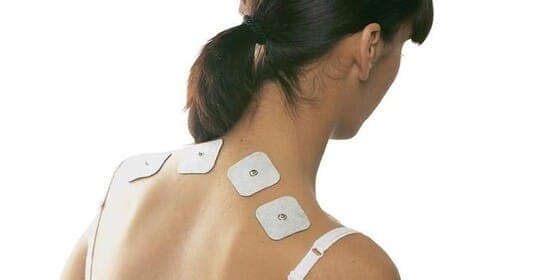
| Where to place the electrodes | on both sides of the painful joint | Above and below the painful point – see the practical article for detailed instructions |
You can read about precise electrode placement, programme selection and common beginner mistakes in my article on microcurrent treatment in practice.
Which home device should you start with?
The following devices in the MediMarket portfolio include factory MENS programmes for joint problems:
- Premium 400 – a 4-channel device specifically tuned for microcurrent programmes for joints and wound healing.
- Globus Genesy 1500 – a basic 2-channel device with microcurrent, TENS and EMS programmes, if you want a multifunctional device.
- Globus Genesy 3000 – a 4-channel device with expanded programmes for sports and rehabilitation use.
- TensCare UniPro – a compact, two-channel device with a simple interface, if simplicity is important.
 When should you NOT start home microcurrent treatment?
Because microcurrent has a low intensity, it is favourable from a safety perspective, but it is not free from side effects. The general contraindications for electrotherapy also apply here. For details, see the articles on contraindications to electrical treatment and electrical treatment and implants.
- You have a pacemaker, ICD or implanted nerve stimulator – you may use it only with the permission of a cardiologist or electrophysiologist.
- There is a tumour in the area to be treated – do not treat it with microcurrent.
- You are pregnant – avoid it as a safety precaution.
- Your joint is hot, red or swollen, possibly with fever – acute infectious inflammation may be present; urgent medical assessment is needed.
- You have a blood clot in the treatment area – treatment is prohibited because of the risk of embolisation.
- There is a fresh wound, eczema or skin infection where the electrode will be placed – wait until it has healed.
- You have an unexplained or worsening joint problem – see a doctor first.
- You cannot feel heat or cold in the affected skin – safe treatment is difficult.
With a new, severe, worsening or unusual symptom, always see a doctor first, and only then consider microcurrent.
Frequently asked questions about using microcurrent for joint problems
You need patience. According to studies [1][2], noticeable improvement usually begins after 2–4 weeks of regular treatment – by week 3 for acute knee pain and by the end of week 4 in shoulder rehabilitation. Microcurrent is not an immediate treatment like a painkiller tablet.
No. Microcurrent is an adjunct to painkillers and anti-inflammatory medicines. Do not replace them on your own. Always discuss any change in the amount of medicine with your treating doctor.
Yes, it may be used as a home adjunct. A clinical study [1] also included people with osteoarthritic knee pain, and the results were encouraging. But it is important to remember: the main pillars of osteoarthritis treatment are weight loss, exercise, physiotherapy and prescribed medicines. In more severe cases, joint replacement surgery may be needed. Microcurrent may reduce pain, but it does not regrow cartilage.
According to recent studies [2], it may be started in the early post-operative period, with the surgeon’s permission. Always consult your treating doctor. They will tell you when and where to place the electrodes so that treatment is safe around sutures and any screws or plates.
It is not recommended as a stand-alone treatment. RA is a complex autoimmune disease that must be managed by a rheumatologist using appropriate medicines. If you would like to use it for pain as an adjunctive home treatment, ask your rheumatologist for advice beforehand.
Only with the permission of a cardiologist or electrophysiologist. Although microcurrent is very gentle, any electrical treatment near an active implant (pacemaker, ICD or nerve stimulator) may cause interference. For details, see the article on electrical treatment and implants.
 Summary – microcurrent and joint problems in brief
What do you need to know as a patient?
- Microcurrent is an at-home treatment that is barely perceptible. It is an adjunct, not primary care.
- It may help most with knee pain [1] and rehabilitation after shoulder surgery [2].
- It may also help with chronic back pain and persistent muscle pain [6] as an adjunct to physiotherapy.
- In post-operative shoulder rehabilitation, newer data [4] suggest that a muscle-activating NMES programme may be more effective. This is also worth considering.
- There are emerging results for chronic connective tissue problems, such as stiff fingers and fingers that turn white in the cold [7]. Use it only after discussing it with a rheumatologist.
- The effect appears after 2–4 weeks and it should be used as a course (1–3 treatments daily for 4–8 weeks).
- Rheumatoid arthritis, bone fractures, cartilage regeneration, diabetes and high blood pressure are NOT stand-alone indications for microcurrent.
- Contraindications, including pacemakers, tumours, pregnancy, acute fever and blood clots, must be followed strictly.
Scientific sources (2020+)
-
Lawson D, Lee KH, Kang HB, Yang N, Llewellyn T, Takamatsu S.
Efficacy of microcurrent therapy for treatment of acute knee pain: A randomized double-blinded controlled clinical trial.
Clinical Rehabilitation.
2021;35(3):390-398.
PMID: 33095658.
Brief summary: A double-blind RCT involving 52 people – microcurrent treatment for 3 hours a day over 4 weeks; statistically significant pain reduction on the NPRS compared with placebo by week 3 (p < 0,01). -
Yi D, Lim H, Yim J.
Effect of Microcurrent Stimulation on Pain, Shoulder Function, and Grip Strength in Early Post-Operative Phase after Rotator Cuff Repair.
Medicina (Kaunas).
2021;57(5):491.
PMID: 34067980.
Brief summary: A randomised study involving 28 people after rotator cuff reconstruction – four weeks of microcurrent treatment three times a week produced significantly greater improvement in pain, shoulder function and grip strength compared with sham control (p < 0,05). -
Iijima H, Takahashi M.
Microcurrent Therapy as a Therapeutic Modality for Musculoskeletal Pain: A Systematic Review Accelerating the Translation From Clinical Trials to Patient Care.
Archives of Rehabilitation Research and Clinical Translation.
2021;3(3):100145.
PMID: 34589695.
Brief summary: A systematic review of the role of microcurrent therapy in musculoskeletal pain. According to GRADE, it found a high level of evidence for treating acute knee pain and a moderate level for shoulder pain. -
Wang RS, Sun JN, Zheng QY, Chen L, Chen P.
Therapeutic efficacy of home-based neuromuscular electrical stimulation on early postoperative functional recovery following arthroscopic rotator cuff repair: a double-blind randomized controlled trial.
BMC Musculoskeletal Disorders.
2025;26(1):805.
PMID: 40830452.
Brief summary: A double-blind RCT involving 63 people after arthroscopic rotator cuff reconstruction – home NMES produced meaningfully better functional recovery than sham microcurrent. -
Jonik S, Rothka AJ, Cherin N.
Investigating the therapeutic efficacy of microcurrent therapy: a narrative review.
Therapeutic Advances in Chronic Disease.
2025;16:20406223251361677.
PMID: 40821620.
Brief summary: A narrative review of the proposed mechanisms of microcurrent therapy, including cell membrane stabilisation, calcium regulation, collagen regeneration and inflammation modulation. -
Martuliak I, Chvála Ľ, Ferenčík M, Fabián V, Slovák M.
Efficacy of Rebox Electrotherapy in Pain Management: A Randomized Double-Blind Sham-Controlled Crossover Trial.
Pain and Therapy.
2025;14(5):1597-1610.
PMID: 40900299.
Brief summary: A randomised, double-blind, sham-controlled crossover study involving 71 people with musculoskeletal pain, mostly back pain. The average reduction on the NRS was 2.2 points greater than sham (p = 0,002). -
Gregory WM, Bagley K, Eng S, McMakin C, Del Galdo F.
Frequency-specific microcurrent improves hand function and Raynaud's symptoms in scleroderma: results of two pilot studies.
Rheumatology (Oxford).
2025;64(10):5504-5508.
PMID: 40465410.
Brief summary: Two pilot studies (n=17) in people with systemic sclerosis using frequency-specific microcurrent – an average 40% improvement in hand function (Cochin score, p < 0,001) and an 18-point improvement on the Raynaud VAS (p = 0,016).

This article is for general information and does not replace a personal medical consultation. The diagnosis behind joint pain and inflammation must always be clarified by medical examination. Microcurrent therapy is an adjunctive home treatment. It does not replace medicines, physiotherapy or surgery. Follow the contraindications, including pacemakers, tumours, pregnancy, acute fever and blood clots, strictly. The devices presented are medical devices with CE certification. Results may vary from person to person.