
What is home medical technology used for?
Perhaps the greatest change in healthcare over the past decades was not the appearance of a new drug or a surgical technique. The paradigm shift is much deeper: medical science has recognized that in the treatment of chronic diseases the patient must be an active participant in the healing process, not a passive sufferer. This insight gave rise to the concept of home medical technology — a therapeutic modality that fundamentally changes the doctor–patient relationship and the options for treating chronic conditions.
But what exactly do we mean by home medical technology? Why has this field become so significant in the first quarter of the 21st century? And most importantly: how can it help you or your loved ones in everyday life?
Limitations of traditional therapeutic thinking
Think about how traditional healthcare works. If something hurts, you go to the doctor. The doctor examines you, makes a diagnosis, and then recommends treatment — whether medication, an injection, or physiotherapy. Most treatments are given in institutional settings: in a hospital, clinic, or rehabilitation center. Then you go home and wait for the next appointment.
This model can work well for acute conditions. If you break your arm, need surgery, or have an acute infection, hospital care is indispensable. Medicine has achieved huge successes in this area — saving lives that a few decades ago would have been lost.
However, the health challenges of modern societies have changed fundamentally. Today the biggest burden is not epidemics and acute illnesses, but chronic conditions. Low back pain, joint degeneration, complications of diabetes, circulatory disorders, incontinence, chronic pain — these are problems people struggle with for years or decades.
And here the traditional model runs into a wall. What can it offer a patient with chronic low back pain? Five to ten physiotherapy sessions a year — if there is capacity at all? Pain relief medications that treat only the symptoms but not the cause? Surgery, which is often risky and may not guarantee a lasting solution?
By their nature, chronic diseases require continuous attention and regular treatment. Interventions are needed not once or twice a week, but daily. And the institutional healthcare system simply cannot provide this — it lacks both capacity and resources.
Home medical technology: a new way and opportunity for treatment
Home medical technology does not replace the doctor and does not eliminate the need for hospital care.
It offers something quite different: it extends medical care into the patient’s home. It makes it possible for treatments planned by the professional to take place not in the clinic but where the patient spends most of their time — in their own environment.
This represents a fundamental change in approach. The doctor no longer only prescribes medication or gives a referral, but recommends a complete therapeutic device for the patient. The doctor teaches how to use it, designs the treatment protocol, and from then on the patient carries out the therapy themselves — regularly, even daily, according to the doctor’s instructions.
Thus the patient is not a passive sufferer of their illness, helplessly waiting until the next medical appointment, but an active participant in their own recovery. This involvement brings not only practical advantages but also huge psychological significance. The sense of control and the ability to influence your own fate have been shown to improve recovery chances and quality of life.
Why now?
The question is legitimate: if this is such a logical solution, why didn’t it spread decades ago? The answer is simple: the technology wasn’t ready.
Medical devices used to be large, complex, expensive, and required specialized staff. An electrotherapy device twenty years ago could be as big as a small cabinet, needed skilled personnel to operate, and cost far more than the average household could afford. Laser devices, ultrasound therapy units or pulsed magnetotherapy equipment — their availability was limited even in hospitals.
However, in the past ten to fifteen years dramatic changes have occurred. Advances in microelectronics, improvements in battery technology, and reductions in manufacturing costs have made it possible for devices once intended only for institutional use to have home versions. These are not simply downsized “light” models — today’s devices can deliver the same therapeutic parameters as their larger counterparts.
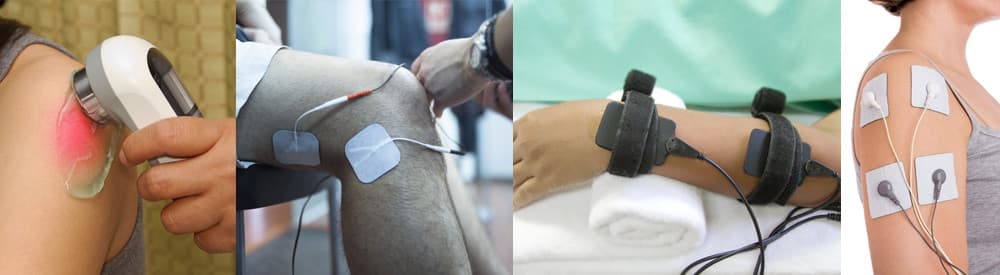
A modern home electrotherapy device can provide TENS, interferential, muscle stimulation, or microcurrent therapy just like hospital equipment. The only difference is that it fits in your palm, runs on a battery, and its price is within reach of an average family.
More than symptomatic treatment
Here we arrive at perhaps the most important point. Most home medical technology devices do not simply treat symptoms; they intervene at the level of the cause. And that is a decisive difference.
Take a simple example: chronic low back pain. Traditional approaches give pain relief — this reduces pain, but does nothing for the cause. The pain returns when the medication wears off, and in the long run the body may even become resistant.
By contrast, electrotherapy or softlaser treatment approaches the problem differently. TENS (transcutaneous electrical nerve stimulation) not only blocks pain-conducting nerve pathways but also induces endorphin release and improves local circulation. Muscle stimulation (EMS) programs release muscle spasms and re-strengthen weakened muscles that are often the real causes of pain. Softlaser activates the cells’ energy-producing systems, accelerating regeneration. Microcurrent therapy supports the tissue’s own bioelectrical processes.
The same is true for joint problems. Osteoarthritis used to be considered untreatable for decades — only symptoms could be eased until eventually surgery was performed. Today we know that cartilage tissue, although slow, can regenerate if given the right stimuli. Pulsed magnetotherapy, softlaser treatment, and certain electrotherapy procedures can promote this regeneration. They do not perform miracles — but with daily use over months they can achieve real, measurable improvement.
The power of regularity
There is a basic biological rule that traditional care systems rarely take into account: adaptation and regeneration of tissues require time and repeated application.
Therapy applied once a week — no matter how effective — simply cannot produce lasting change. Think of muscle building. If someone goes to the gym once a week, they will not build significant muscle mass over years. Muscle develops from regular loading, and the stimulus must be repeated with appropriate frequency for regeneration. The same applies to other tissues — cartilage, ligaments, nerves, vessels.
Home medical technology enables this sustained application. If the doctor says a painful joint should be treated twice daily for twenty minutes each time — that is impossible to achieve in the clinic, but perfectly feasible at home. And it is this daily, regular treatment that brings real breakthroughs.
I know patients who attended physiotherapy for years (twice a year, five sessions each time) without meaningful results, and then after buying a home device and using it daily they experienced dramatic improvement within a few months.
Not because the home device is “better” than the hospital one — but because the frequency of application was appropriate.
Where can it be used?
The applications of home medical technology are extremely wide. Without claiming completeness, some important areas:
In the treatment of musculoskeletal complaints, electrotherapy and magnetotherapy devices play a leading role. Low back pain, neck pain, joint problems, tendinitis, tennis elbow, rehabilitation after ankle injuries — all are areas where daily use of home devices can yield visible results. Importantly, this therapy does not have the side effects of medications and can be used safely long term.
In the treatment of circulatory disorders, pneumatic compression therapy units and electrotherapy that activates the muscle pump are helpful. Leg swelling, venous insufficiency, and lymphatic stasis all require daily treatment — and home devices can provide this.
Incontinence, whether stress incontinence or urge incontinence, can now be effectively treated with home pelvic floor trainers and electrotherapy devices. This is an area where patients often do not seek help out of shame — yet solutions exist and are accessible.
Post-stroke rehabilitation, treatment of muscle weakness, and athlete recovery are all areas where home electrotherapy and stimulation devices can provide great assistance.
Pain management is perhaps the broadest application. Chronic pain — whether neuropathic, rheumatic, or post-operative — can be effectively treated with various electrotherapy modalities.
The doctor's role does not diminish — it transforms
It is important to emphasize: home medical technology is not a tool for self-treatment without guidance. The existence and availability of devices do not mean the patient is left alone. On the contrary: the doctor’s role changes and transforms.
Good practice dictates that the use of a home device should always be preceded by medical consultation. The specialist establishes the diagnosis, determines the appropriate therapeutic device and treatment protocol. They teach the patient how to use the device, explain the course of treatment, the expected effects, and warning signs. Thereafter they monitor the therapy’s effectiveness at regular follow-ups and adjust the treatment plan if necessary.
Thus the doctor does not merely recommend a device as they might a medication, but accompanies the therapeutic process. The patient is not a passive executor but a partner — someone who understands what they are doing and why, and who monitors the body’s reactions and feedback.
This cooperation — the doctor’s expertise combined with the patient’s commitment — produces results that the traditional treatment model cannot achieve.
The economic reality
We must not ignore economic aspects either. Healthcare systems worldwide are overloaded and chronically underfunded. Waiting lists are long and capacities tight. In this situation home medical technology is not only therapeutically sensible but also economically reasonable.
A patient who can manage their chronic pain at home does not occupy physiotherapy clinic capacity. They don’t have to travel, take time off work, or burden the healthcare system. And equally important: it spares their personal budget, because although a device requires an initial investment, over the long term it is far less costly than repeated institutional treatments.
Quality home medical devices are now affordable for the average family. These are not luxury items but investments that serve a family’s health for years.
The future is already here
When we talk about home medical technology, we are not talking about a distant future vision. This future is already here, today, in our daily lives. In Western Europe, the United States, and developed countries in Asia, the use of home therapeutic devices is already accepted and widespread.
The Hungarian healthcare culture is only beginning to recognize these possibilities. Doctors are increasingly open to this approach. Patients are becoming more informed and demanding. Technology is becoming more effective and accessible. Everything is in place for home medical technology to become a defining element in the treatment of chronic diseases.
A new therapeutic option
Home medical technology is therefore not a fad, not a trend, nor the “poor relative” of institutional care. It is a completely new therapeutic modality that fills the gap the traditional system cannot: daily, regular, causal treatment of chronic conditions.
It changes the doctor–patient relationship, making the patient an active participant in their own healing process. It allows the professional’s knowledge and modern technology to jointly serve health in the intimate environment of the home.
If you suffer from chronic complaints — whether pain, reduced mobility, circulatory problems, or any other long-lasting condition — it is worth learning about these options.
Talk to your doctor, get informed, and discover how home medical technology can help you regain control over your health.
Because healing does not only happen in the hospital. Healing happens where you live and take action.
Watch the film I made on the topic on my YouTube channel!

