
Mitochondrial health — what is it?
Chronic inflammation is closely linked to nutrition, metabolism and the processes of energy production. If you understand why mitochondrial health is so important, then by paying attention to the composition of your food and the timing of your meals, you can prevent a large portion of chronic diseases and counter excess weight without extreme effort or self-denial.
Where does energy “come from”?
Your body needs energy. Without it, tissues gradually stop functioning and you can become life‑threateningly ill within just a few days.
You mostly don’t get energy “ready‑made.” Your body produces it by breaking down foods and "burning" the end products (glucose or fatty acids).
With a normal, mixed diet, your metabolism produces what is needed. In fact… it also stores and creates reserves — like grandma putting jam in a jar — so it can be used in times of shortage.
Foods contain three main macronutrients: fats, carbohydrates and proteins. Of course, different foods have different amounts and ratios. Cereals, for example, contain a lot of carbohydrates and less fat and protein. Meats are mainly protein and fat, with minimal carbohydrates.
Proteins
Proteins break down into amino acids during digestion. These are important building blocks for healing processes and tissue repair. They only become an energy source in cases of extreme starvation.
Proteins come in two main types: plant and animal. Animal proteins are found in meats (pork, beef, poultry, fish, etc.), as well as dairy products and eggs. Although many still doubt it, it is proven that protein needs can be met solely from plant proteins. Chickpeas, beans, lentils, peas, spinach, mushrooms, edamame (young soybeans), tofu and seitan are just a few examples of plant protein sources.
Carbohydrates
You hear most about these on weight‑loss forums. Carbohydrates are not only important in everyday eating but are also an absolutely necessary component of a sustainable weight‑loss program. Carbohydrates provide the body with the most readily available energy and play an important role in healthy brain function.
Complex carbohydrates are "better" for health than simple ones.
Simple carbohydrates are consumed with grain‑based foods (breads, pastries, cakes, snacks, etc.), potatoes and rice. In our country, most people get at least 60% of their daily calories from these sources.
Their carbohydrate is starch, which the amylase enzyme in your saliva starts breaking down into glucose already in your mouth. As a result, a significant portion is absorbed through the oral mucosa. Once in the blood, it raises blood sugar and triggers insulin release. Insulin's job is to "push" sugar into cells and convert excess into fat.
Complex carbohydrates consist of longer, more complex sugar molecules and therefore break down more slowly. They raise blood sugar less and keep you feeling full longer. Vegetables, peas, beans and whole grains are rich in complex carbohydrates.
Carbohydrates that enter the bloodstream are stored by the liver and your skeletal muscles in the form of glycogen (liver 90–100 g, skeletal muscles 2–400 g). If the stores become full, the excess glucose is converted into fat.
Fats
Fats play a role in vitamin storage and are involved in building hormones such as cholesterol, testosterone and estrogen.
If you consume good quality fats — like those found in nuts, avocados, olives and fish — your body can better store the nutrients from the other macros.
Like carbohydrates, fats come in different types: saturated fat, trans fat, monounsaturated fat and polyunsaturated fat.
The healthiest fats are monounsaturated (e.g., in avocados) and polyunsaturated (e.g., in fish).
Saturated fats are found in animal meats and processed meat products; excessive intake may be unhealthy for the heart.
Trans fats are the worst form of fats. They sometimes appear in animal products, but the unhealthiest are hydrogenated oils. These are vegetable oils chemically altered to remain more solid at room temperature. Vegetable margarines, snacks and frozen ready meals are high in trans fats.
Mitochondrial health
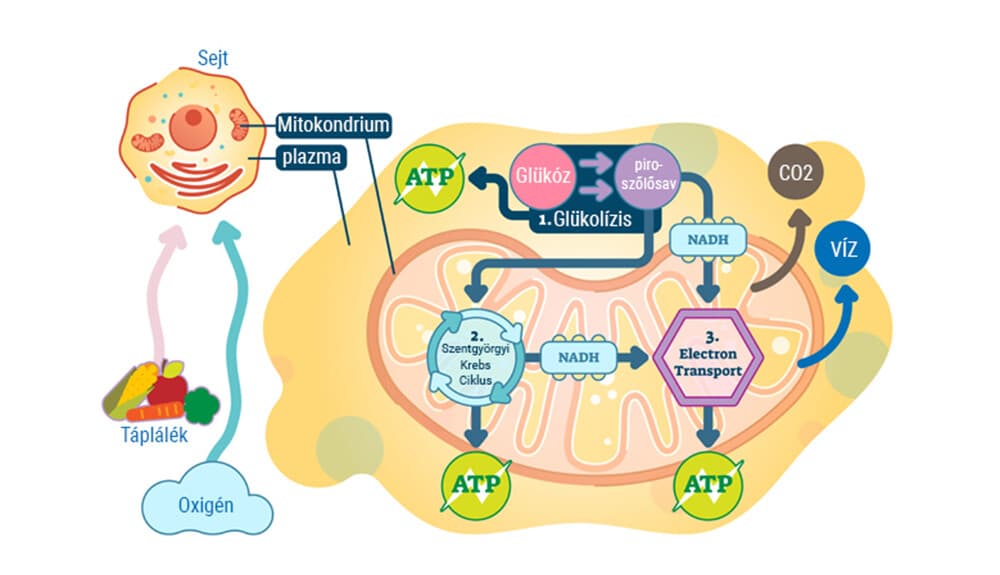
As I mentioned, carbohydrates are broken down into glucose, which your body stores as glycogen or fat. As long as your glycogen stores are not empty, your body uses them because they are the easiest source for producing energy.
When glycogen "runs out," the switch to the other fuel — fat — begins. Fat provides energy more slowly but for a longer time.
Mitochondria, which produce energy, "prefer" fat over glucose. From a fat molecule they can generate about twice as much energy as from a glucose molecule. Burning glucose produces more free radicals as a by‑product than burning fat.
A healthy mitochondrion can neutralize some free radicals. However, glucose breakdown produces so many free radicals that mitochondrial function deteriorates, leading to inflammation of the cell containing the mitochondria and even to cell death.
This cellular inflammation underlies most chronic diseases.
In cases of chronic inflammation or autoimmune disease, this should always be considered a fundamental cause. You must examine nutrition and, within that, carbohydrate consumption habits. Establishing a healthy diet should be a central element of treatment.
Metabolic flexibility — the key to health
Metabolic flexibility is your body's ability to quickly switch between burning carbohydrates and burning fat.
The healthier your mitochondria and the more of them you have, the faster your energy production can switch from sugar to fat.
Mitochondrial health, and even increasing mitochondrial number, depends on how you eat. If every meal contains simple carbohydrates (bread, pasta, potatoes, rice, sweeteners, sugary drinks, sugar), you force your mitochondria to constantly burn glucose. Due to free radical production, mitochondria are destroyed and their numbers decrease. In cells where mitochondrial number and health decline, inflammation develops and energy production falls.
Timing matters
Macronutrients — carbohydrates, proteins and fats — should be consumed in the right balance and timing throughout the day. Timing carbohydrate intake alone gives a huge boost to initiating weight loss and optimizing body weight!
Everyone needs a different amount of carbohydrates and each person's metabolism switches to fat burning at different speeds!
With poor mitochondrial health (consuming carbohydrates at every meal), it may take 3–4 days to start fat burning!
It may happen that you're dieting but still consume some carbohydrates with every meal. In that case you’re torturing yourself, you feel hungry, but you don’t lose weight because your body never manages to switch to fat burning!
To burn fat, you need a "carbohydrate fast," meaning your carbohydrate stores must be depleted so your body switches to burning fat.
16/8 fasting
Intermittent or time‑restricted fasting is not complicated. Simply consume carbohydrate‑containing food and drink only during an 8‑hour window each day, and then avoid all sugar for 16 hours. Ideally the other macronutrients would also be consumed only within that window.
Admit it, this isn’t too complicated. You get up, have breakfast at 7–8 am and finish with a late dinner around 4–5 pm.
After that, do not consume carbohydrates! If you can’t resist, you can eat salad, avocado, eggs, fish, or lean meat — but zero side dishes, zero bread, zero snacks, no soft drinks! Of course water and sugar‑free tea are fine.
The longer the fasting period (i.e. the closer to 16 hours), the more certain and faster the result will be.
The first days require self‑discipline because you’re used to constant sugar and you feel hungry. If you stick with it, the feeling of hunger will soon decrease and disappear! What’s more, you’ll feel more energetic! Your physical performance will improve too!
Lumen.me – a “support” for fasting
The hardest part of any diet is believing it will work. The sign of weight loss is the scale going down, so have a scale to check progress.
But what if the needle doesn’t move? You have no idea why the diet plan isn’t working. That’s because the composition and timing aren’t right for you. You are making yourself suffer, but you have no clue what it triggers in your body — whether the necessary fasting actually occurs.
I suggest you get a Lumen.me device to measure your metabolism directly! The morning measurement shows whether your body switched to fat burning overnight (values 1 and 2 indicate this) or is still burning carbohydrates. A value of 3, 4 or 5 means your diet still contains too much sugar or your meal timing is off! I wrote about the device in this article.
If your value is high, make sure your last carbohydrate intake is as early as possible, preferably around 3–4 pm. That gives your body enough time to switch to fat burning… if you do it correctly, the kilos will gradually and without starvation (!) melt away.
Summary
To simplify: if you eat foods that promote mitochondrial growth and health, your energy levels will be good. Poor, unhealthy nutrition first makes you tired, then sick.
The good news is that you can control and influence the number and health of mitochondria in your cells. It’s up to you what you eat and how you time it.
By planning your nutrition you can decide the health of your mitochondria and your body. The Lumen.me device is an excellent help for this.

