
Pneumonia – what can you do to speed up recovery?
Pneumonia (medically referred to as pneumonia) is an inflammation that develops in the airways and/or lung tissues. Inflammatory mucus accumulates in the airways and the pulmonary alveoli. Breathing becomes difficult and general weakness and malaise appear.
Pneumonia affects 450 million people worldwide each year. That is about seven percent of the Earth's population. It is responsible for millions of deaths. It can affect virtually any age group, from infants to the elderly.
Symptoms of pneumonia
Chest pain, fever, difficulty breathing, shortness of breath, fatigue, listlessness and coughing. It may be accompanied by headache and muscle pain.
To establish the diagnosis, a chest X-ray is usually sufficient (the inflamed area becomes visible), and there are audible signs detectable with a stethoscope.
Vaccines are available for some types of pneumonia.
In prevention, quitting smoking can play a role, since smoking weakens the lungs' resistance to infections. A healthy, active lifestyle and observing hygiene rules also reduce the risk of infection.
Types of pneumonia
Depending on its extent and causative agents, several types can develop. It can be lobar or focal, caused by viruses or bacteria, and there are also atypical forms that do not fit into the previously known categories. A large proportion of pneumonias are of viral or bacterial origin, and they are often caused by a combination of different pathogens.
Another classification distinguishes acute, subacute and chronic pneumonias.
- Acute pneumonia begins suddenly and is accompanied by very severe symptoms: chest pain, high fever, forceful coughing. Acute pneumonias resolve within 3–4 weeks.
- Subacute pneumonia symptoms are generally minor: cough, side pains, upper respiratory symptoms. It takes 6–10 weeks for the pneumonic infiltration to clear.
- Chronic pneumonia develops when a small inflamed area remains after an acute or subacute inflammation. The inflammatory secretions chronically obstruct the smaller airways, the alveoli stick together and no longer participate in gas exchange.
Treatment of pneumonia
Treatment depends on which form it is and what general symptoms are present.
In many cases the course is mild enough to be managed at home, although treatment and rest are still necessary. In such cases broad-spectrum antibiotics are usually used.
In severe cases, the bacterium is cultured from the sputum and tested for which agent is most effective; that specific drug is then given. Pneumonia that causes a severe general condition should be treated in a hospital setting with strict bed rest. This should be especially considered in elderly or generally weakened patients.
Complementary treatment at home
If you do not need to be hospitalized, use salt therapy at home strictly alongside — and not instead of — medical treatment!
Salt therapy alone is not sufficient for pneumonia. Use it to help and strengthen the effect of medical treatment, antibiotics and expectorants.
In pneumonia, a large amount of secretions is produced due to the infection. This blocks the smaller airways, causing a constant urge to cough and ongoing inflammation.
Salt therapy helps dissolve and remove the secretions by liquefying the mucus. This clears the airways, reduces coughing and eases shortness of breath — allowing the pneumonia to heal.
Thus, salt therapy contributes to symptom relief, speeds up recovery and means you will need fewer medications. All in all, beneficial effects.
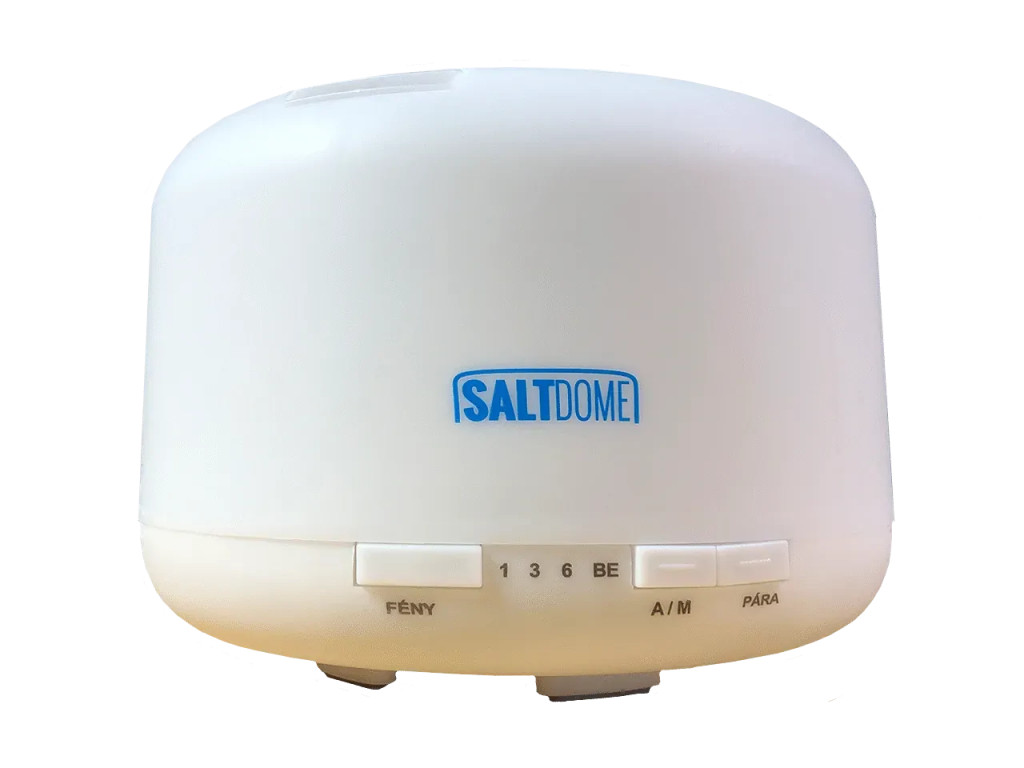
Product recommendation: SaltDome salt therapy device
If you want to produce beneficial salty air in the comfort of your home, choose the SaltDome ultrasonic salt therapy device. Read customer reviews to learn about users' experiences!

