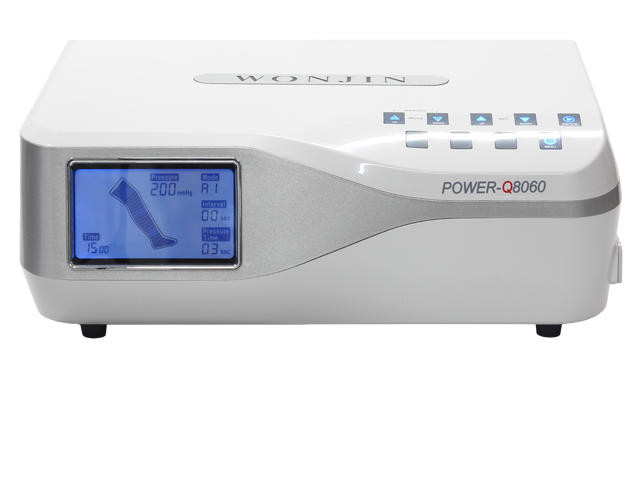
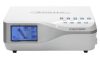



Who is the Power Q-8060 recommended for?
More chambers allow more precise, finer treatment — this difference really matters when visible improvements are expected within a few days. At home, consistency is the decisive factor: daily use of a 4-chamber device can also deliver results. In the sections below I outline who benefits from the 6-chamber professional model and who will be fine with a simpler unit.
In a clinic patients come one after another and visible results are often expected within a short multi-day course. Here the number of chambers and the precision it brings make a real difference: the 6 chambers produce a noticeably finer pattern than classic 4-chamber machines.
Another decisive factor is load capacity. Professional-line devices are built for continuous operation — not just 2–3 hours per day like many home units. That implies a more robust construction; conversely the device is less portable than a home model and it's worth allocating a fixed place for it.
Full programmability allows tailoring treatments to each patient's individual needs, and the capacity for up to three separate cuffs supports treating multiple limbs of a patient simultaneously.
In upper range stage 2 and in stage 3, the 6-chamber inflation pattern enables finer fluid mobilization than 4-chamber home devices. It can serve as the home device for the intensive and maintenance phases of complex decongestive therapy (CDT). Details in the Lymphedema – forms and causes guide.
Let's be realistic! Within the professional line this is the model that can reasonably be considered for home use — at a significantly lower price than the Q-8120. However, regular daily treatment with a 4-chamber device also produces results. If you can afford it, a device with more chambers gives finer and noticeably more effective treatment and may pay off in the long run.
Stage-3 lipedema involves significant tissue mass and skin irregularities. The 6-chamber sequential pattern produces clinically better outcomes than a 4-chamber device. Limitations for fat-edema users: the Q-8060 has no pants-type cuff and the leg cuff range lacks size options. Detailed clinical background in the Lipedema (fat edema) symptoms and treatment guide.
For more severe BCRL forms or long-term maintenance therapy, a 6-chamber IPC can deliver sustained advantages over entry-level 4-chamber devices. Detailed BCRL clinical background in the Radiation therapy and lymphedema article.
For triathletes, long-distance runners, cyclists and serious amateurs who benefit from the finer sequential patterns in recovery. On competition days and after training, shorter sessions at higher pressures (60–100 mmHg) may help relieve DOMS. For clubs and sports medicine practices continuous-operation construction is an advantage — as an individual athlete, consider whether a portable device might serve you better. Details in the Compression therapy for athletes guide.
For premium salons where lymphatic massage is recommended after lipolysis treatments. The 6-chamber finer pattern and program saving give a professional appearance in the cosmetic market. For serving multiple clients daily the continuous-operation design is a key advantage.
I don't want to give the impression that only 6- or 12-chamber devices are good. For regular home treatments, 4-chamber devices also deliver results — they are designed for daily use totaling a few hours and reliably fulfill that role.
Advantages of a 4-chamber device:
- much lower price — 6/8/12-chamber machines cost significantly more and are unaffordable for many,
- light and portable — you can take it on trips so treatment is not interrupted,
- designed for a daily home routine.
The most important thing is that treatment actually happens: anything is better than no treatment. If you can afford it, choose a device with more chambers. If you're still deciding, the Lymphatic massage device – purpose and how to choose? guide can help.
What does the 6-chamber Power Q-8060 IPC affect?
The 6-chamber technology sits between the classic 4-chamber pattern and the 12-chamber high-end category. Chambers inflate and deflate in finer wave-like sequences closer to the manual lymphatic drainage (MLD) hand technique. In clinical practice, this finer pattern may contribute to:
- mobilizing protein-rich interstitial fluid in complex anatomical cases,
- supporting venous return in more severe complaints,
- improving fluid distribution in the more fibrotic tissue environment of stage-3 lipedema and lymphoedema,
- enhancing endothelial function and capillary perfusion,
- stabilizing maintenance therapy long-term with highly customizable protocols.
Read more about differences between chamber configurations (4, 6, 12) in the Lymphatic massage device – purpose and how to choose? guide, and compare manual and mechanical lymphatic drainage in the Lymphatic drainage – manual vs. machine guide.
Frequently asked questions
Both devices are programmable but represent different technologies. The Q-1000 Premium is a 4-chamber top-of-the-line home model. The Q-8060 is a 6-chamber professional-level device with finer sequential patterns and higher channel count. If 4-chamber treatment no longer provides sufficient effect (stage-3 lipedema, complex lymphoedema), consider upgrading to the Q-8060.
Both are professional sequential IPC devices. The 8060 handles 6-chamber cuffs, while the 8120 handles 12-chamber cuffs. The 8060 effectively manages most stage-3 cases; choose the 8120 high-end model if you treat particularly complex stage-4 lipedema or lipo-lymphoedema cases in clinical practice.
Yes, the Power Q-8060 can be used at home if your physician or lymphatic therapist recommends this device level. The interface is intuitive and core functions resemble simpler home devices. The 6-chamber sequential pattern gives a gentler effect — particularly beneficial in stage-3 lipedema or complex lymphoedema.
It depends on the indication. For lymphoedema typically 30–50 mmHg, for lipedema 30–60 mmHg, for sports recovery 60–100 mmHg. Always agree exact settings with your treating physician or lymphatic therapist. Start first sessions at lower pressure.
Only one patient at a time. For hygiene reasons cuffs must be disinfected and dried after each treatment.
NO. In cases of acute skin infection (erysipelas, cellulitis) or suspicion of deep vein thrombosis, treatment must be suspended and you should seek immediate medical attention. Use may be resumed only after antibiotic therapy completion or thrombosis exclusion and with treating physician approval.
General knowledge about lymphatic massage devices
In the video I demonstrate how a lymphatic massage device works, why the correct pressure range and chamber count matter, and how to choose between different models of the Power Q series.
- Significance of chamber number (4, 6, 12)
- When a 6-chamber finer pattern is required
- The value of program saving for multiple patient profiles
- Boundary between professional and advanced home use
How to use the Power Q-8060?
1
Applying the cuff
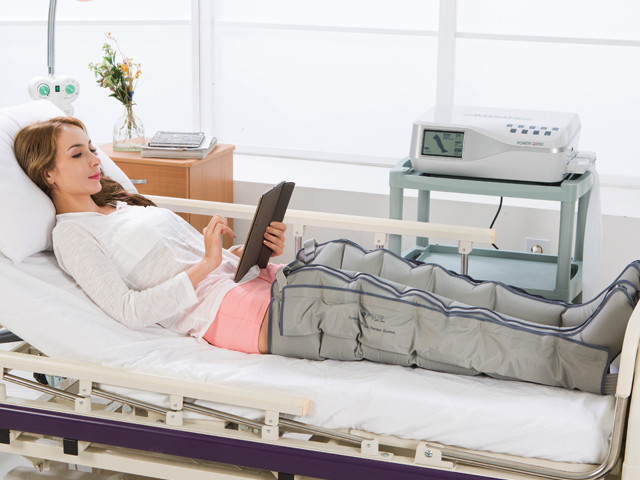
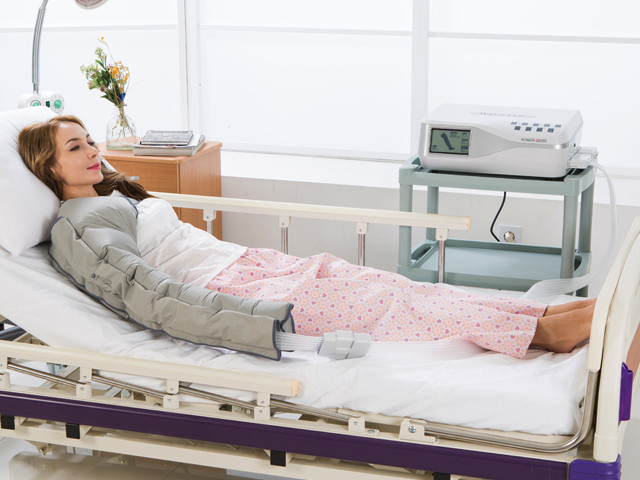
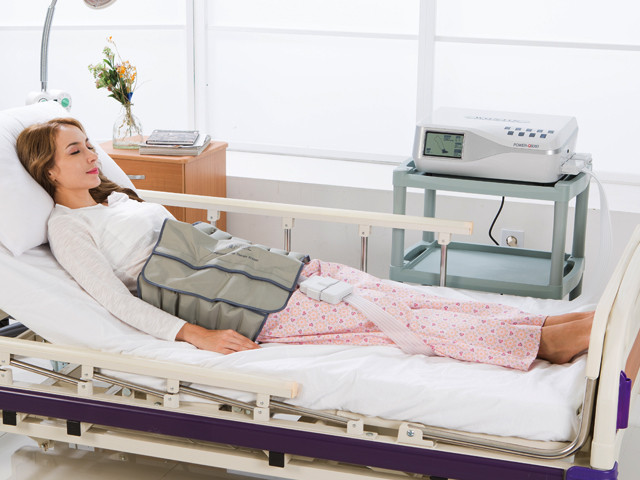
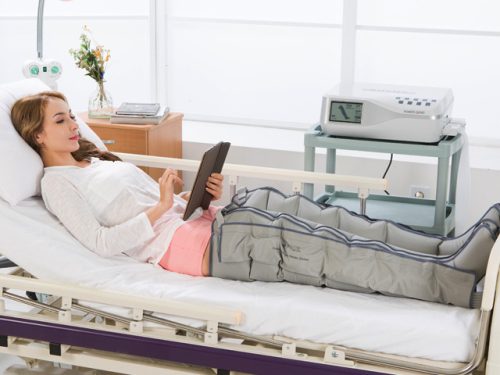
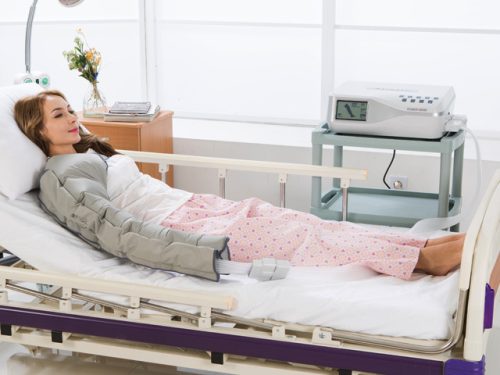
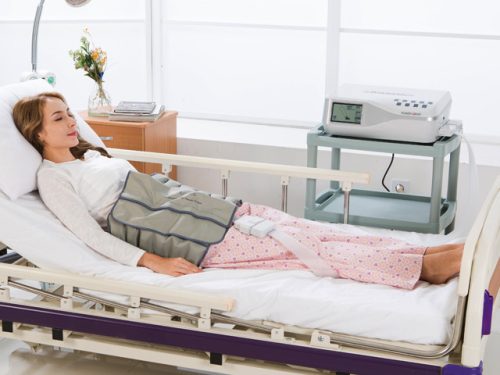
Place the 6-chamber leg, arm, or trunk cuff over the treatment area. The cuff should fit snugly but not tightly.
2
Select a program or load a saved protocol
Recall a custom protocol set by your physician or lymphatic therapist, or choose a factory preset matched to your condition.
3
Set pressure and treatment time
Typically 30–60 mmHg for lymphoedema, 30–60 minutes. For sports recovery, higher pressure (60–100 mmHg) and shorter duration (15–30 minutes). Start initial sessions at lower pressure.
4
Start the treatment
The 6 chambers sequentially inflate with rising pressure to "smooth" fluid along the limb toward patent lymphatic pathways. Perform comfortably seated or lying down with the limb slightly elevated.
5
Wear compression garments after treatment
To stabilize volume, put on compression stockings/gloves immediately after treatment. This ensures the durability of the IPC results.
What is included in the package?
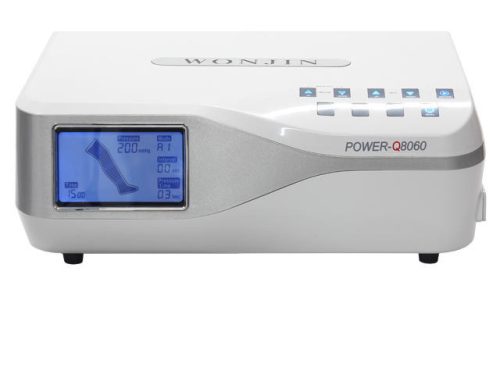
The Power Q-8060 base package contains the following:
- 1 pc Power Q-8060 control unit
- 2 pcs 2x6-port air tubing
- 1 pc 6-port air tubing
- 1 pc blind plug
- 1 pc stop button
Attention! Treatment cuffs are sold separately and are not included in the base price.
The inner surfaces of cuffs can be wiped with a damp cloth regularly, and disinfected weekly. The control unit should be wiped only with a dry cloth. Keep air tubing untwisted and avoid sharp folding when storing.
Several 6-chamber cuff types are available for the Q-8060: arm cuff, trunk cuff, leg cuff, protective stocking covers and spare air tubings. The full list is in the Lymphatic massage accessories category.
Technical specifications
| Model | Power Q-8060 |
| Number of chambers | 6 |
| Number of channels (max.) | 18 |
| Pressure range | 20–250 mmHg |
| Programs | Full programmability and program saving |
| Treatment time | 5–60 minutes, adjustable |
| Compatible cuffs | 6-chamber leg, arm, trunk cuffs |
| Power supply | 220V/50Hz |
| CE / MDR compliance | CE medical device, registered under MDR |
 When NOT to use the device?
- Acute deep vein thrombosis or suspected DVT – treatment only with medical approval
- Severe heart failure – increased venous return may cause decompensation
- Active skin infection (erysipelas, cellulitis) in the treatment area
- Severe peripheral arterial disease – individual assessment and low pressure required
- Untreated high blood pressure – after stabilization and on physician recommendation
- Active malignant tumor in the treated region – only with oncologist approval
- Immediate postoperative period – not recommended until wound healing
- First trimester of pregnancy and complicated pregnancies – only after obstetric consultation
Unsure? Consult your treating physician before use!
 Important information
The Power Q-8060 lymphatic massage device is CE-certified as a medical device under the European MDR (Medical Device Regulation). Its use is intended as an adjunct to medical and physiotherapeutic treatment and does not replace them. For new symptoms, increasing swelling, pain or skin changes, consult your treating physician.
The information provided here is for guidance only. Defining the exact treatment protocol is the responsibility of your treating physician or lymphatic therapist.
Scientific sources
The clinical effectiveness of pneumatic compression is supported by the following randomized studies:
- Atan T, Bahar-Özdemir Y (2021). The Effects of Complete Decongestive Therapy or Intermittent Pneumatic Compression Therapy or Exercise Only in the Treatment of Severe Lipedema. Lymphatic Research and Biology. PubMed
- Herbst KL, Zelaya C, Sommerville M, és munkatársaik (2025). An Advanced Pneumatic Compression Therapy System Improves Leg Volume and Fluid, Adipose Tissue Thickness, Symptoms, and Quality of Life and Reduces Risk of Lymphedema in Women with Lipedema. Life (Basel). PubMed
- Kulchitskaya DB, Fesyun AD, Konchugova TV, Apkhanova TV (2024). Influence of intermittent pneumatic compression on microvasculature condition in lymphedema. Voprosy Kurortologii, Fizioterapii, i Lechebnoi Fizicheskoi Kultury. PubMed
- Su L, Huang H, Tong Y, és munkatársaik (2025). Intermittent pneumatic compression devices for the prevention and treatment of breast cancer-related lymphedema – a systematic review and meta-analysis. Supportive Care in Cancer. PubMed
 Lymphatic massage device – multi-indication hub and product overview →
 Lymphatic massage device – purpose and how to choose? →
 Lipedema (fat edema) symptoms and treatment →
 Lymphatic drainage – manual and machine differences →
 Compression therapy for athletes