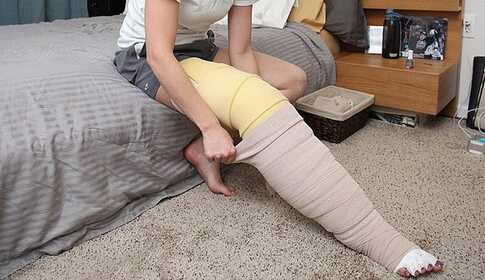

What is lymphedema (lymphoedema)?
Lymphedema affects about 250 million people worldwide. In Hungary there are tens of thousands of affected individuals who often wait years for the correct diagnosis. The condition does not resolve on its own — however, early recognition, appropriate home treatment and multimodal therapy can markedly improve quality of life and slow progression in the long term.
Key point
Lymphedema is currently a chronic disease: it cannot be completely cured, but it can be well controlled. The core of treatment is complex decongestive therapy (CDT): compression garment + lymphatic drainage (manual or mechanical) + skin care + exercise, all under professional supervision. Pneumatic compression as a home device is one of the most effective options for maintenance therapy.
How does lymphedema develop? The role of the lymphatic system
In the human body the lymphatic system is the second main “drainage system” alongside the venous circulation. The protein-rich fluid that leaks from the bloodstream through the capillaries is collected by lymphatic capillaries and returned to the venous circulation via a network of lymphatic vessels and filtered through lymph nodes. Muscle contractions and the intrinsic rhythmic contractions of lymphatic vessels ensure onward flow. In a healthy adult 2–4 liters of lymphatic fluid return via this route each day.
If lymphatic capacity falls — due to congenital developmental disorder, surgical intervention, radiotherapy, infection or severe injury — interstitial fluid becomes trapped. The retained protein-rich fluid increases local inflammation, triggers connective tissue proliferation, and leads to permanent histological changes (fibrosis, adipose tissue accumulation). This process explains why affected areas become firmer over time, tire more easily, and are more prone to infections (recurrent erysipelas).
Pneumatic compression aims to mechanically move this trapped fluid: with segmental, ascending pressure it “smooths” the fluid along the limb toward patent lymphatic pathways. You can read more in the Lymphatic drainage – manual and mechanical lymphatic massage guide.
Primary (congenital) lymphedema — when the problem is present from birth
Primary lymphedema is caused by developmental abnormalities of the lymphatic system: fewer lymphatic vessels, defective or absent valves, or reduced lymph node function. It represents a hereditary predisposition and often produces symptoms in childhood or young adulthood.
Three classic presentations:
- Congenital (Milroy disease): symptoms appear in the neonatal or infant period. A rare, autosomal dominant form.
- Early (lymphedema praecox, Meige disease): symptoms start around puberty or in early adulthood. The most common primary form, predominantly affecting women.
- Late (lymphedema tarda): begins after age 35, often with a gradual, barely noticeable leg swelling.
Diagnosis of primary lymphedema is based on the clinical picture, family history and complementary tests (lymphoscintigraphy, MR-lymphangiography). Treatment principles are the same as for secondary forms: compression garment + manual or mechanical lymphatic drainage + lifestyle measures + surgical intervention when indicated.
Secondary lymphedema — when an external cause is responsible
The secondary form is the most common: the lymphatic system developed normally but was damaged by an external event. The lymphatic pathway is interrupted or obstructed and fluid cannot pass onward.
Most frequent triggers:
- Oncological surgery: lymph node removal (lymphadenectomy) during treatment of breast cancer, cervical cancer, prostate cancer, melanoma or head and neck cancers. Post-breast-cancer arm swelling (BCRL) is a distinct clinical entity (see below).
- Radiation therapy: radiation-induced fibrosis can damage lymphatic vessels years after treatment. See the Radiation therapy (radiotherapy) guide for details.
- Severe injury or surgery: post-thrombotic state, amputation, extensive burns, chronic wounds can cause local lymphedema.
- Infection: recurrent erysipelas or filariasis — the latter affects tens of millions in tropical regions (Africa, Southeast Asia).
- Chronic venous insufficiency: long-standing severe venous stasis can progressively overwhelm the lymphatic system and present as phlebolymphedema.
Breast cancer-related lymphedema (BCRL)
Twenty to thirty percent of women treated for breast cancer will develop lymphedema of the operated-side arm or upper torso during their lifetime. This clinical phenomenon is known in English as breast cancer-related lymphedema (BCRL) and in Hungarian is often called “karduzzanat” or postoperative arm edema. BCRL is a long-term factor reducing quality of life and can appear years after surgery.
The good news: a large part of the risk is preventable. Early detection and prophylactic pneumatic compression significantly reduce the incidence of BCRL.
Su et al. (2025) — BCRL meta-analysis, 1,397 patients
Pooling 14 randomized clinical trials, intermittent pneumatic compression significantly reduced the development of breast cancer-related lymphedema (RR=0.36; 95% CI 0.22–0.58). The optimal protocol: ≤40 mmHg pressure, >2 weeks treatment duration, preferably started within 24 months after surgery. The meta-analysis also showed improvement in upper limb function.1
Donahue et al. (2023) — BCRL review
The modern approach to BCRL prevention and treatment is multimodal: sentinel lymph node removal as standard, early detection (tape measure, bioimpedance), complex decongestive therapy (CDT), pneumatic compression, low-level laser therapy and modern microsurgical techniques (LVA, VLNT). Patient education and long-term follow-up are as important as physical treatment.2
A detailed clinical treatment guideline for BCRL will be presented in a separate forthcoming article. Guidance on choosing a home pneumatic compression device can be found in the /nyirokmasszazs-gep#nyirokodema section and in the Lymphatic massage device category.
Stages of lymphedema — the ISL classification
The International Society of Lymphology (ISL) divides lymphedema into four stages. This staging forms the basis for clinical management and determination of compression parameters.
| Stage | Clinical picture | Treatment direction |
|---|---|---|
| 0 (latent) | Lymphatic pathway is damaged but visible swelling is absent. Bioimpedance or sensory symptoms (heavy-leg sensation) may indicate it. | Prophylactic compression, patient education, early detection. |
| 1 (reversible) | Soft, pitting swelling. It subsides with elevation, decreases overnight and reappears by evening. | Compression garment + daily pneumatic compression + lifestyle measures. |
| 2 (irreversible) | Persistent swelling with partial fibrotic tissue. Does not resolve with elevation. Stemmer sign may be positive. | Complex decongestive therapy (CDT) with intensive and maintenance phases, compression + manual/mechanical lymphatic drainage. |
| 3 (lymphostatic elephantiasis) | Severe, deforming swelling, thick, nodular, hyperkeratotic skin. Recurrent infections. | Intensive CDT under specialist supervision + sometimes surgical interventions (LVA, VLNT, debulking). |
Transition between stages is not inevitable — well-controlled stage 1 lymphedema can remain stable for years or decades. Early recognition and consistent home treatment are decisive for progression. A stage-specific treatment protocol will be described in a separate article.
How to recognize it? Symptoms and the Stemmer sign
The onset of lymphedema is often subtle and easily overlooked. For early recognition watch for these signs:
- Unilateral, gradually developing swelling of the arm or leg. After oncological surgery it usually occurs on the operated side.
- Heavy leg or arm sensation, especially at the end of the day.
- Tightness of rings, watch or shoes on the affected side.
- Skin changes: the skin becomes firmer and harder to lift into a fold.
- Pitting swelling: a finger press leaves a visible indentation that returns within minutes. This is typical of stage 1.
In clinical diagnosis the Stemmer sign is a key orientation point: try to pinch and lift a skin fold at the base of the second toe. If the skin cannot be lifted (positive Stemmer sign), lymphedema is likely. A negative Stemmer sign suggests other causes (venous, cardiac or renal edema) should be considered.
Definitive diagnosis is the responsibility of a specialist (lymphologist, vascular surgeon, oncology follow-up clinician). In straightforward cases the clinical picture is sufficient; in more complex situations lymphoscintigraphy, MR-lymphangiography or bioimpedance measurement complement the diagnostics.
Lipedema or lymphedema? How do they differ?
Lymphedema is most often confused with lipedema because both cause swelling. However, the two conditions arise from different mechanisms and their treatment protocols differ — correct differentiation is the first step to effective therapy.
Lipedema is an abnormal, symmetrical accumulation of subcutaneous fat that typically spares the foot and the back of the hand (the “cuff sign”). Lymphedema, in contrast, is a disease of the lymphatic system and usually affects the entire length of the limb including the foot and dorsum of the hand, often in a unilateral distribution.
A detailed differential diagnosis table, visual markers and clinical signs are available in the Lipedema (fat edema) symptoms and treatment guide. In advanced cases the two conditions may overlap (lipo-lymphoedema), requiring elements of both treatment approaches.
Is lymphedema curable?
According to current medical knowledge lymphedema is a chronic, lifelong condition: there is no single drug or procedure that fully restores the lymphatic system. This does not mean it cannot be well controlled or that symptoms cannot be substantially reduced.
Multimodal treatment (compression garment + lymphatic drainage + pneumatic compression + skin care + exercise + lifestyle) can in the long term:
- reduce and stabilize limb volume,
- relieve heavy-leg sensation and pain,
- reduce the risk of infectious complications (erysipelas),
- slow or halt disease progression,
- significantly improve quality of life.
Modern microsurgical techniques (lymphovenous anastomosis, vascularized lymph node transfer) show promising results even in stage 2 patients and in some cases can stabilize the disease for years. Conservative treatment, however, remains the foundation for durable results even after surgery. Read more about surgical options in the Lymphatic reconstruction surgery article.
What should you do to improve? — Action list for affected people
Managing lymphedema is not a single step but a continuous daily routine. The following six points summarize the clinically proven effective elements:
- Seek specialist consultation. A lymphologist, vascular surgeon, or oncology follow-up clinician. Without diagnosis and a treatment plan self-treatment may be misguided.
- Wear compression garments daily. Individually fitted compression stockings/sleeves of class II or III, from waking to bedtime. This is the treatment cornerstone; other methods complement its effectiveness.
- Incorporate pneumatic compression. A home lymphatic massage device with daily 30–60 minute sessions at 30–50 mmHg. This is one of the most effective home maintenance tools.
- Exercise. Swimming, walking, cycling — always while wearing compression. The muscle pump function fundamentally supports fluid flow.
- Care for your skin. Apply moisturizer daily, avoid injuries, and treat insect bites promptly. Intact skin is the main barrier against erysipelas.
- Monitor the limb. Measure the same point once a week (e.g. 10 cm above the knee). A rising trend warrants specialist consultation.
A detailed home treatment guide — with rules for wearing compression garments, steps for self-manual drainage and specific device protocols — is available in the Managing lymphedema at home article.
Evidence for pneumatic compression in lymphedema treatment
Intermittent pneumatic compression (IPC) is one of the most well-researched tools for lymphedema treatment. The following clinical trials measured volume reduction, microcirculation and changes in patient-reported symptoms.
Pajero Otero et al. (2022) — CPT+IPC vs Kinesio tape, 43 women
In BCRL treatment, complex physical therapy + IPC produced a significantly greater volume reduction (-2.2%) than Kinesio taping (-0.9%, p=0.002). The CPT+IPC combination also showed superior improvement in shoulder range of motion.3
Kulchitskaya et al. (2024) — IPC microcirculation RCT, 60 patients
In patients with lower-limb lymphedema (stages I–III) IPC + standard therapy significantly improved endothelial function, reduced arteriolar spasm and increased capillary perfusion compared with the control group. The results explain why patients often feel relief even after the first sessions.4
Ridner et al. (2020) — APCD head and neck cancer, 49 patients
In head and neck cancer patients the use of an advanced pneumatic compression device (APCD) proved to be a safe and feasible home treatment. It improved visible edema and patients’ perceived sense of control. It can be an alternative to CDT where a manual therapist is not available.5
The consistent message from clinical evidence: pneumatic compression is a valuable component of complex decongestive therapy (CDT). It does not replace compression garments or manual drainage on its own, but as a daily home adjunct it significantly increases the effectiveness of the treatment protocol.
How to choose a lymphatic massage device?
Power Q lymphatic massage devices suitable for home lymphedema treatment are available in five models — each optimized for a different user profile:
- Power Q-2200 – entry-level home basic system – simple treatment, 4 air chambers, ideal for stage 1 maintenance.
- Power Q-1000 Plus – 4-chamber home device – good value, for daily treatment in stages 1–2.
- Power Q-1000 Premium – advanced home device – program memory and fine pressure control for long-term daily use.
- Power Q-8060 – 6-chamber professional system – more precise sequential massage, for demanding home users and lymphatic therapist clinics.
- Power Q-8120 – 12-chamber top-tier device – most detailed sequence control, for intensive protocols and clinical use.
Technical considerations for choice (number of chambers, cuff size, pressure, programmability) are discussed in detail in the What is a lymphatic massage device and how to choose? blog post. Compatible cuffs and accessories are available in the Lymphatic massage accessories category.
Deeper guides to lymphedema management
Individual topics of lymphedema are covered in separate articles so each subject gets the necessary depth. Usable guides so far:
- Managing lymphedema at home — detailed daily routine
- Lymphatic drainage — manual and mechanical lymphatic massage — the differences between the two methods
- Lymphatic reconstruction surgery — overview of surgical options
- Radiation therapy (radiotherapy) and lymphedema — BCRL context
- Lymphatic massage device — multi-indication hub — pneumatic compression for all indications
Guides coming soon:
- Breast cancer-related lymphedema (BCRL) — detailed clinical treatment (in preparation)
- Lymphedema stages (ISL 0–3) — stage-specific guidance (in preparation)
Before you start home compression therapy
Pneumatic compression is a safe procedure, but there are some conditions when you should definitely consult a physician before use.
When be cautious?
- Acute deep vein thrombosis or suspicion of it — treatment only with medical approval and monitoring.
- Severe heart failure — increased venous return may cause decompensation.
- Active skin infection (erysipelas, cellulitis) — not recommended until the infection has healed; may be restarted after antibiotic therapy is completed.
- Severe peripheral arterial disease — individual assessment and low pressure are indicated.
- Untreated high blood pressure — stabilize first and use on medical advice.
- Active malignant tumor in the treated region — only with oncologist approval.
- Recent postoperative period — not recommended until wound healing is sufficient; surgeon’s permission required.
Important note
Pneumatic compression is one component of complex lymphedema care and does not replace medical or physiotherapeutic treatment. Always discuss new treatments with your treating physician, and start initial sessions at low pressure and short duration.
Frequently asked questions
None — the two names denote the same condition. “Lymphoedema” is the Greek-derived, internationally used form; “lymphedema” is the English term commonly used. In medical practice they are used interchangeably and patients search for both terms online.
According to current knowledge lymphedema is a chronic condition that cannot be completely cured but can be well controlled. Multimodal treatment (compression garment, lymphatic drainage, pneumatic compression, skin care, exercise) reduces swelling, pain and complication risk in the long term. Modern microsurgical procedures (LVA, VLNT) show promising results, but conservative treatment remains essential after surgery.
Clinical evidence suggests a recommended range of 30–50 mmHg, and it is advisable to start at lower pressures. Su’s 2025 meta-analysis for BCRL prevention recommends ≤40 mmHg with >2 weeks duration. Always confirm exact settings with your treating physician or lymphatic therapist.
Early signs: the operated-side arm feels heavier, rings or a watch feel tighter, persistent pressure sensation or mild swelling appears on the upper arm. If you notice this, measure arm circumference at the same points (usually 10–15 cm above and below the elbow crease) weekly and compare with the other side. A difference >2 cm or an increasing trend merits specialist consultation.
No. Pneumatic compression is one element of complex decongestive therapy (CDT) — it complements but does not replace compression garments and manual lymphatic drainage. The most effective approach: daily compression garment + several hours per week of pneumatic therapy + periodic specialist-led intensive CDT phases. Read about the differences between manual and mechanical drainage in the Lymphatic drainage guide.
Yes, but with precautions. Cabin pressure changes can worsen swelling. Recommended measures: wear compression garments for the entire flight, stay hydrated, perform leg/arm movements hourly, and limit salt intake before travel. For long flights some high-risk patients may be advised by their physician to use prophylactic pneumatic compression before and during travel.
Summary — Lymphedema in brief
Sources
- Su L, Huang H, Tong Y, and colleagues (2025). Intermittent pneumatic compression devices for the prevention and treatment of breast cancer-related lymphedema – a systematic review and meta-analysis. Supportive Care in Cancer. DOI: 10.1007/s00520-025-10159-8
- Donahue PMC, MacKenzie A, Filipovic A, Koelmeyer L (2023). Advances in the prevention and treatment of breast cancer-related lymphedema. Breast Cancer Research and Treatment. DOI: 10.1007/s10549-023-06947-7
- Pajero Otero V, García Delgado E, Martín Cortijo C, and colleagues (2022). Intensive complex physical therapy combined with intermittent pneumatic compression versus Kinesio taping for treating breast cancer-related lymphedema of the upper limb: A randomised cross-over clinical trial. European Journal of Cancer Care. DOI: 10.1111/ecc.13625
- Kulchitskaya DB, Fesyun AD, Konchugova TV, Apkhanova TV (2024). Influence of intermittent pneumatic compression on microvasculature condition in lymphedema – Prospective randomized clinical trial. Voprosy Kurortologii, Fizioterapii, i Lechebnoi Fizicheskoi Kultury. DOI: 10.17116/kurort202410106148
- Ridner SH, Dietrich MS, Deng J, Ettema SL, Murphy B (2020). Advanced pneumatic compression for treatment of lymphedema of the head and neck: a randomized wait-list controlled trial. Supportive Care in Cancer. DOI: 10.1007/s00520-020-05540-8