Who is the PressCare G250 for?
Running, cycling, triathlon, gym training and team sports: after heavy exertion, the legs feel tight, while delayed-onset muscle soreness typically peaks 24–48 hours later. Pressotherapy is useful during this window. The G250’s two modes are designed for this situation: Mode A is for gentle recovery immediately after training, while Mode B is for the following days when muscle soreness is present.
One important detail is often overlooked: the effect does not come from a single treatment. In a study examining plyometric exercise, the greatest difference appeared 48–72 hours after training when treatment was continued on the following days. After a hard workout, it is therefore worth having three or four treatments rather than just one.
Two-a-day training, multi-day competitions and successive heats – in these situations, the question is not how tired you are, but how ready you will be the next day. A 10–30-minute treatment can fit between two loads, alongside cooling down and stretching. Research shows the most consistent effect in reduced subjective fatigue and tightness – exactly what matters before the next start during a series of competitions.
I write in detail about the relationship between compression and muscle recovery in a separate article, and about use in athletes here.
Office work, a shift behind a counter, teaching or hairdressing: these situations all have one thing in common. The leg muscles pump very little, and fluid collects downwards. This is the most common everyday cause behind feelings of heaviness, tight ankles and swollen legs in the evening. The G250 targets this mechanical stagnation: the air chambers move from the bottom upwards and direct fluid towards the torso.
A hot summer day, a long flight or extensive driving can leave the ankle and foot feeling full. If the problem keeps returning or affects only one side, always arrange an examination first, because persistent leg swelling may have a venous, cardiac, renal or thyroid-related cause. Once the cause has been investigated, pressotherapy can be a pleasant evening routine for swelling related to exertion.
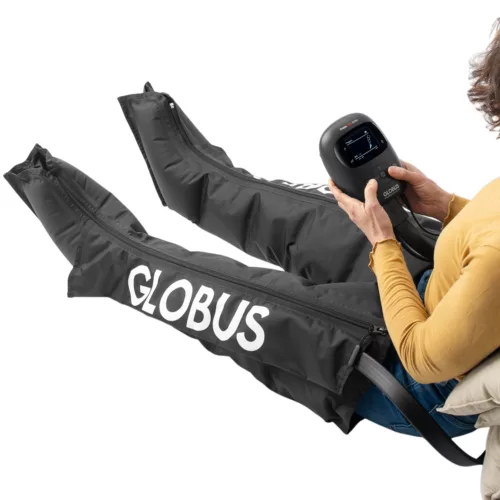
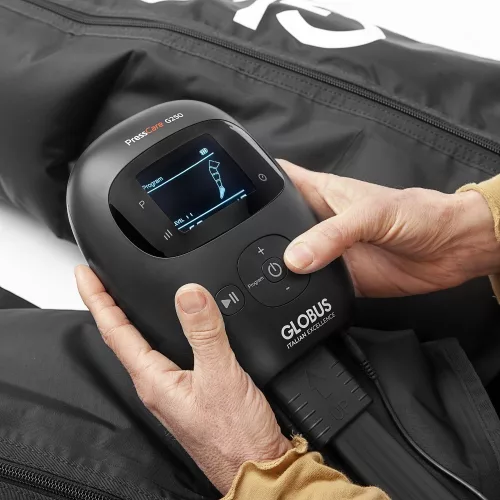
When walking is limited, the muscle pump also works less. The G250’s simple controls – two modes, one pressure control and one timer – are easy for older users to understand, and treatment can be carried out while sitting in an armchair. If you have a chronic illness or take regular medication, it is worth consulting your doctor before starting use.
The G250 can also be used for home treatment of lymphoedema. The sequential, bottom-to-top compression uses the same principle as lymphatic drainage devices, and the lower settings of 40–60 mmHg are within the range described as effective for lymphatic drainage.
Do not choose this device for arm lymphoedema, because a arm cuff is not currently available for the PressCare product family.
If you are specifically looking for a lymphoedema device, the Power Q-1000 Premium may be the more advanced choice: it has a 5–60-minute timer, leg, arm, torso and trousers cuffs, individual chamber adjustment and protocol memory. You can find all options among the lymphatic drainage devices.
How does intermittent pneumatic compression work?
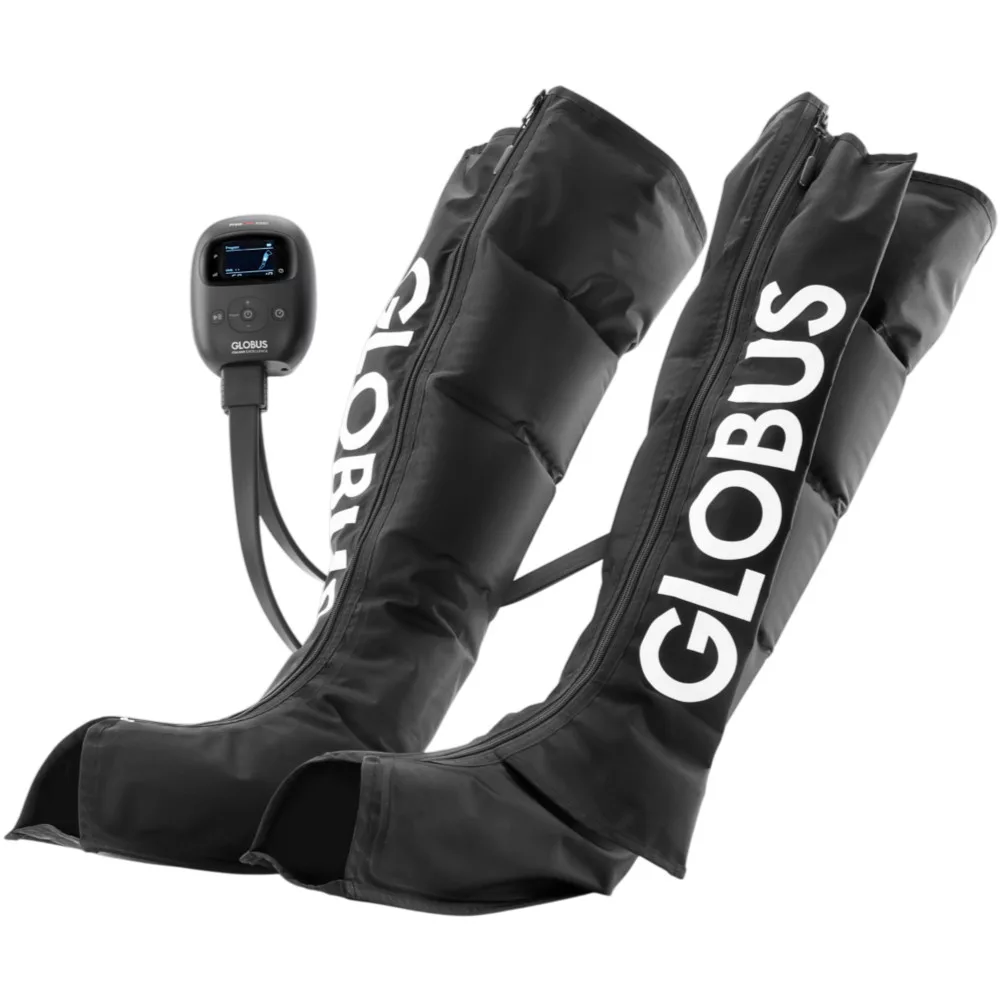
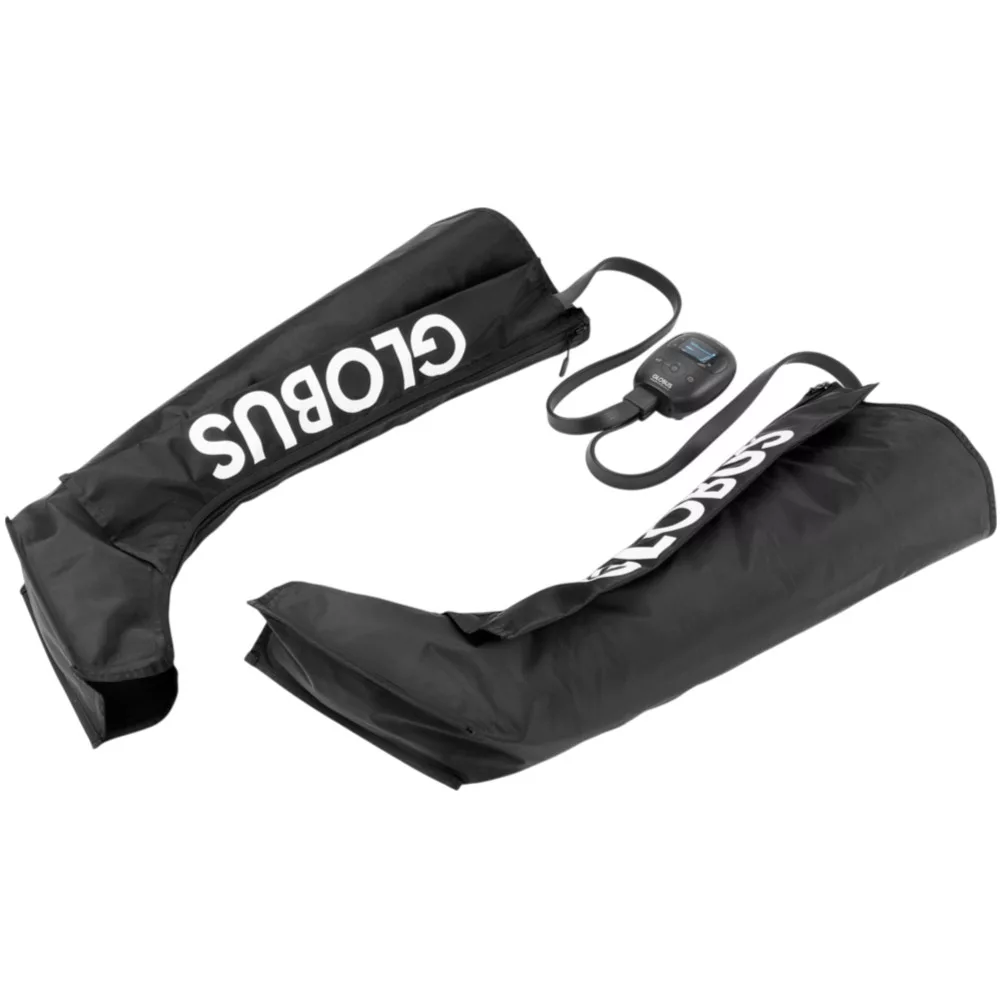
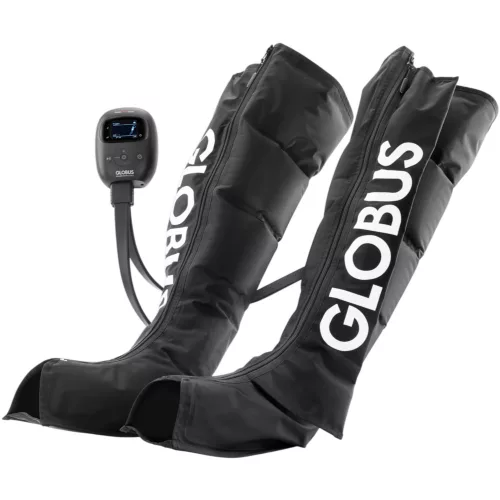
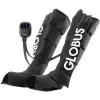
Pressotherapy is based on simple mechanics. The leg cuff contains five air chambers positioned one above the other. The device does not inflate them at the same time. It inflates them in sequence, from the bottom upwards: first around the foot and ankle, then the lower leg and finally the thigh. This upward-moving wave directs venous blood and excess fluid between the tissues towards the torso. When the chambers deflate, the area fills again.
In everyday life, this work is done by the leg muscle pump: with every step, the calf contraction pushes blood upwards. After training, while you are resting, and during all-day sitting or standing, this pump hardly works – hence the feeling of heavy legs. The device replaces this missing movement mechanically, in a few tens of minutes.
This is not merely a theoretical effect. In a measurement-based study, measurably more blood flowed through the calf during sequential compression, and the proportion of oxygenated blood was also higher than without treatment. Increased local circulation is the physical basis for recovery applications.
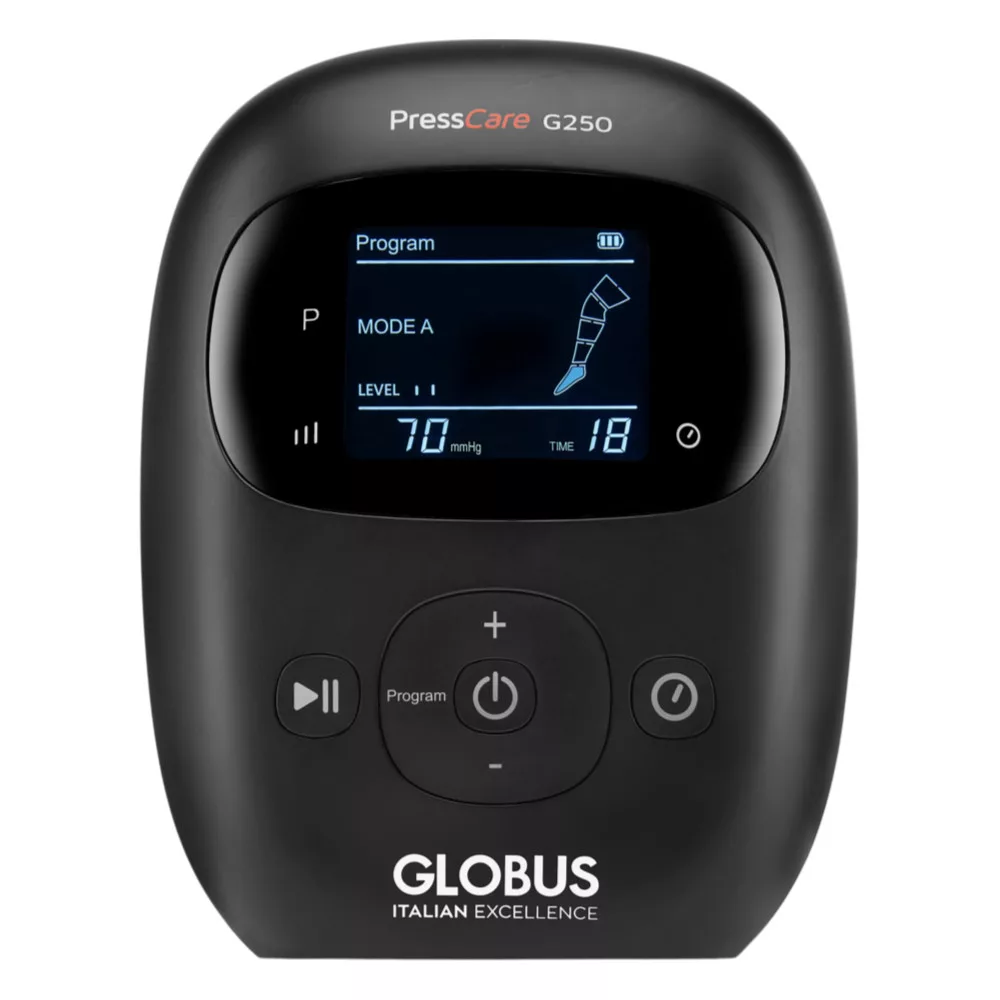
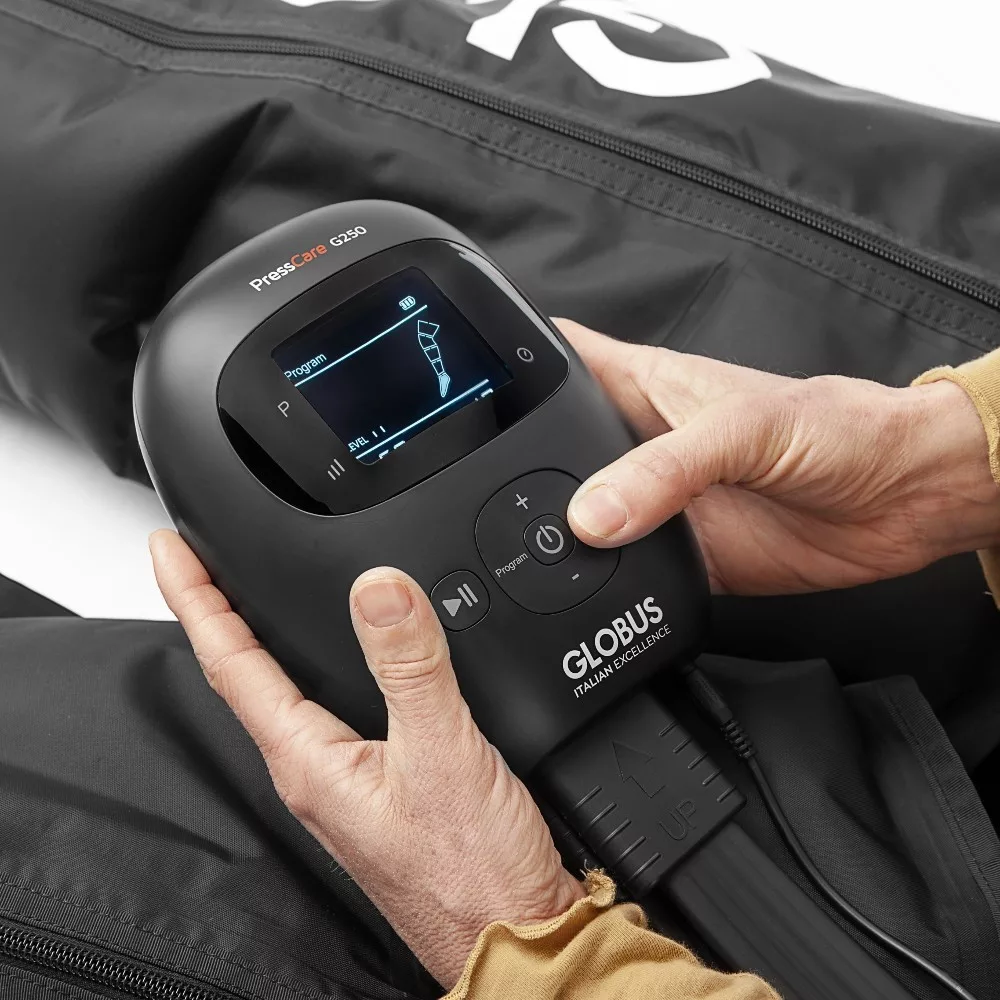
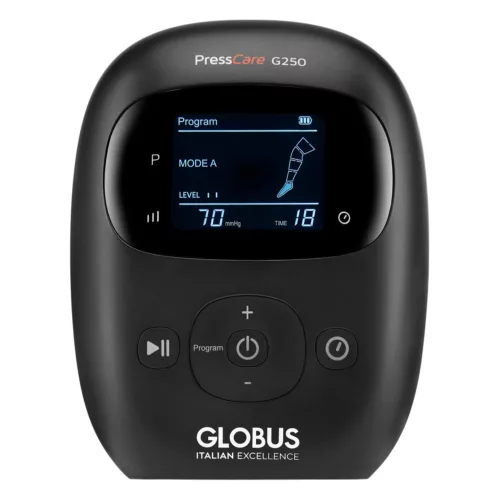
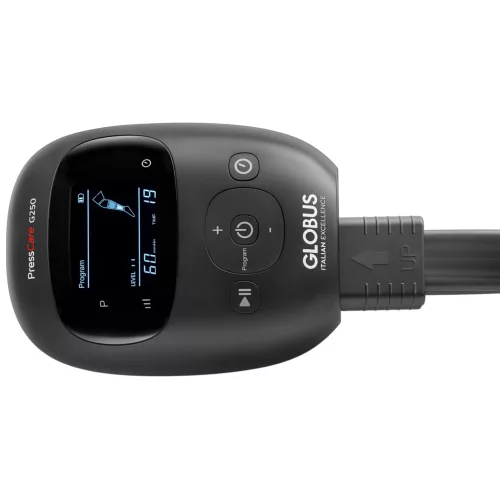
You can work with two built-in modes. Mode A (gentle activation) is gentler, with longer pauses. It is a good starting point and is intended for cooling down immediately after training. Mode B (deep massage) is stronger, for days with muscle soreness or for pressures that you already tolerate well. Pressure can be adjusted between 40 and 160 mmHg in 10 mmHg steps, with 13 settings in total.
One important misunderstanding is worth clearing up: higher pressure does not mean better treatment. In sports-recovery studies, the most commonly used setting is around 80 mmHg, while for lymphatic drainage research describes the lower range of around 30–60 mmHg as effective. The right setting is comfortable, not painful, and remains so until the end of treatment.
What does pressotherapy do after training – and what does it not do?
Recovery boots have moved from elite sport into recreational sport over recent years. It is worth being clear about what research shows, because this helps you set realistic expectations – and choose the device settings accordingly.
1
The most consistent finding: less muscle soreness and tightness
According to the latest analysis of 17 studies, intermittent pneumatic compression applied to the legs produced the clearest measurable effect in reducing the feeling of pain and muscle soreness. This is why athletes return to it: movement feels easier the next day, and climbing stairs is less painful.
2
A smaller but measurable effect on muscle function
The same review found a small but measurable advantage for treated groups in the return of muscle performance. It is not a dramatic difference. However, when there is little time between two training sessions or races, even a small difference matters.
3
The established protocol is 20–30 minutes at around 80 mmHg
The recovery-optimised setting most often used in studies is approximately 20–30 minutes of treatment at around 80 mmHg. The G250 timer runs for up to 30 minutes and pressure can be set up to 160 mmHg, so this range is comfortably within the device’s capabilities, not at its limit.
4
The peak effect does not occur on the day of training
In a study examining jumping exercise, the greatest difference between treated and untreated groups appeared 48 to 72 hours after training when treatment continued on the following days. In practice, this means that after hard training or a competition, you should use the device not just once but also on the next two or three days.
5
What it does not do: it does not speed up actual muscle repair
This is where honesty matters. Studies have produced mixed results for blood markers of muscle damage, and several studies found no difference. So pressotherapy may help you feel better and become ready for activity sooner, but it does not speed up the actual repair of muscle fibres. This does not make it worthless. It simply puts it in context: it is an adjunctive tool, not magic.
6
And what nothing can replace
The three pillars of recovery are sleep, nutrition and fluid replacement, and carefully planned training load. Pressotherapy comes fourth, and adds most when the other three are also in order. No device can make up for the difference in an athlete who sleeps poorly or is undernourished.
How to use it – in 6 steps
1
Choose the size
The G250 is available with three leg cuff sizes (S, M and L), and you order the package with your chosen size. The choice depends on your thigh and ankle circumference and leg length. You will find the exact values in the Configurator section. If your thigh is close to the upper limit, request an extension: the S/M/L extender adds 7 cm at the ankle and 9 cm at the thigh.
2
Put on the leg cuff
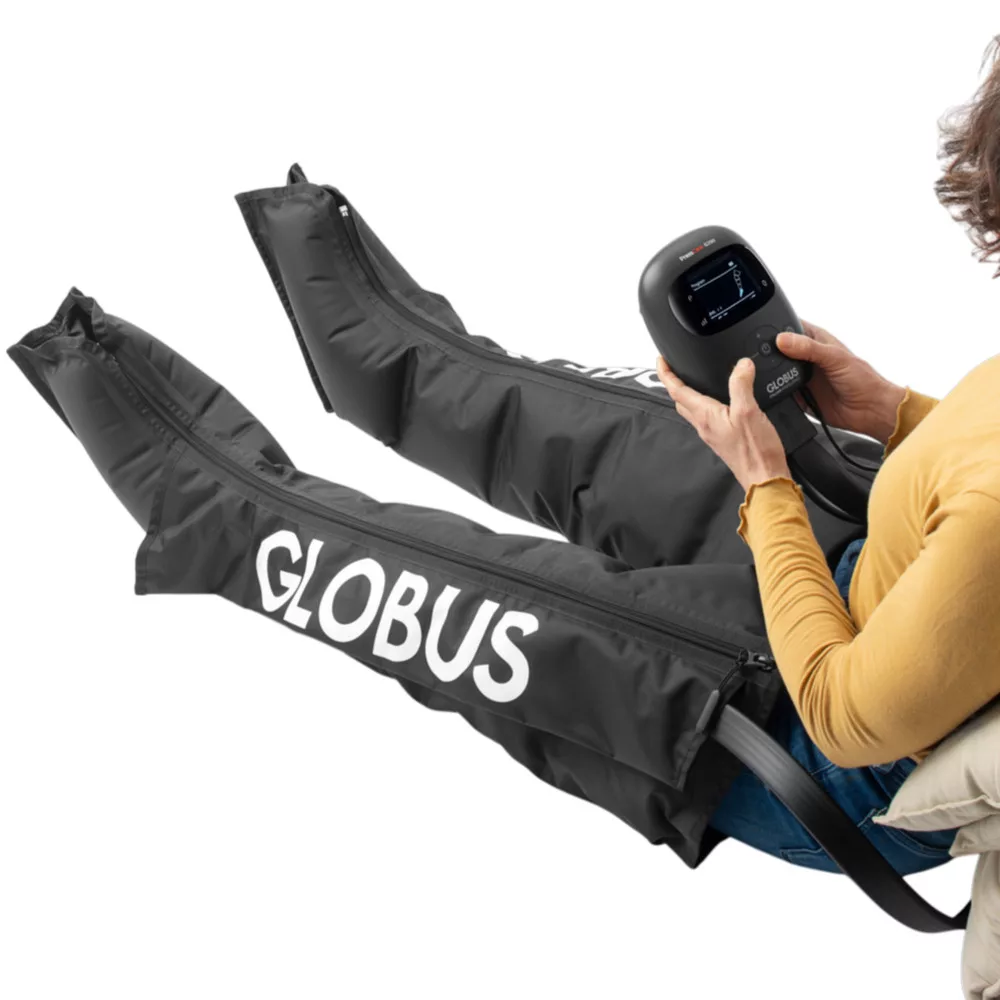
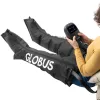
It is easiest to do this while sitting or semi-reclining: open the zip, step inside, pull it up to the top of the thigh and close it again. Thin cotton trousers or long socks underneath make treatment more comfortable and protect the cuff. The cuff should lie smoothly against the leg and must not crease.
3
Connect and switch on
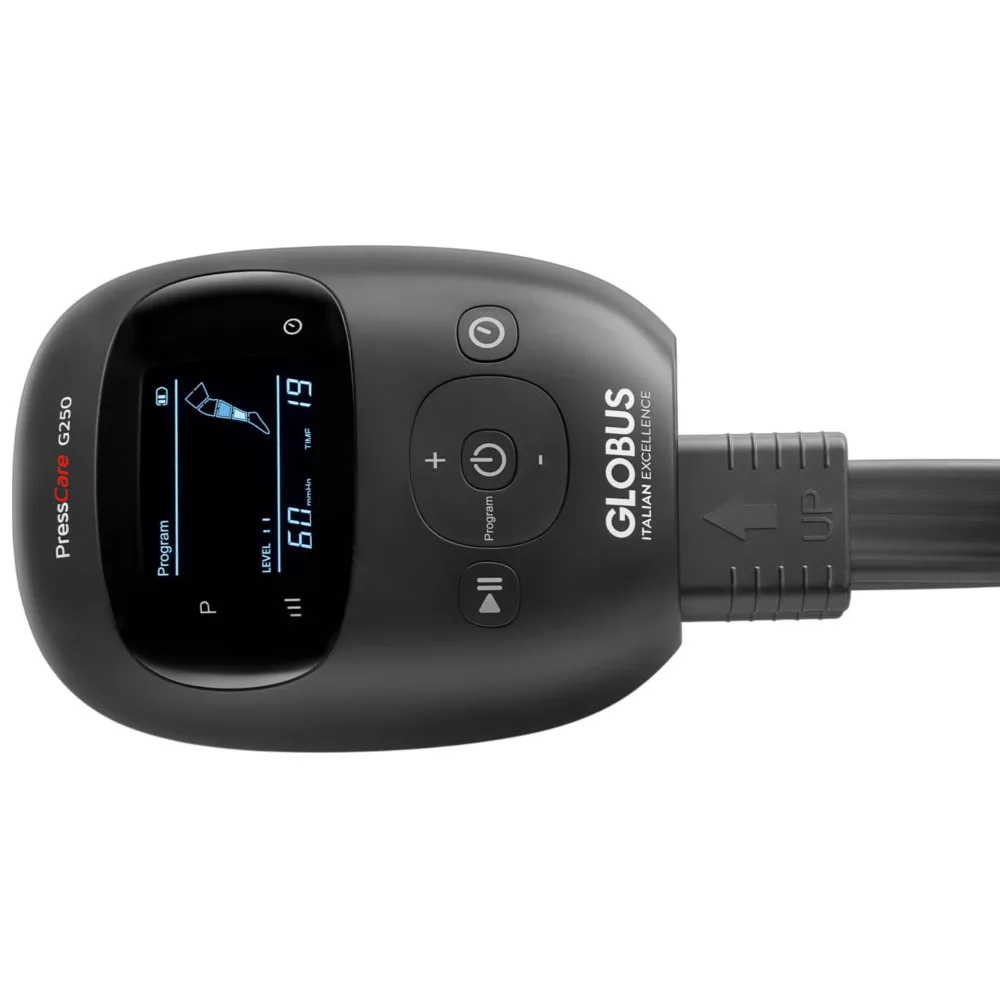
Insert the air hoses into the device connectors, then plug the power supply into the mains. The G250 runs from the mains and does not contain a battery, so position yourself where a socket is within reach.
4
Set the mode and pressure
Start with Mode A and the lowest setting of 40 mmHg. If this feels comfortable, increase it step by step. For recovery, the established setting is around 80 mmHg. Fine-tune upwards or downwards from there. If you feel numbness, stabbing or pain, always reduce the pressure. Use Mode B only when you already tolerate Mode A without problems.
5
Set the timer and raise your legs
The timer can be set between 10 and 30 minutes in 5-minute steps. For recovery, the established range is 20–30 minutes; 15 minutes is enough for evening relaxation. Keep your legs slightly raised during treatment. A pillow under the calves already makes a difference. The device switches off automatically when the time has elapsed.
6
Use it regularly
A single treatment feels pleasant, but regular use makes the difference. For athletes: after hard training or a competition, use it on the following two or three days as well, because the peak effect occurs around 48–72 hours. For heavy legs: after using it daily or every other day, assess the effect after a few weeks. After treatment, put on compression stockings if you wear them, and take a short walk.
Frequently asked questions about the PressCare G250
The device must not be used in acute deep vein thrombosis or if it is suspected, because compression may be dangerous in this situation. After a completed and treated thrombosis, use may begin after approximately 3 months, with the approval of your doctor. There is no single answer for varicose veins either: it depends on the stage and complications, so a vascular surgeon’s or GP’s opinion is needed beforehand. I write more about the background of varicose veins here.
In a complicated pregnancy, such as pregnancy-related varicose veins, only with your doctor’s approval. In severe heart failure, this device and two cuffs must not be used simultaneously because the returned fluid volume places extra strain on the circulation. If you have untreated high blood pressure, the first step is to bring your blood pressure under control before use.
Both have a place. The gentler treatment immediately after training (Mode A) forms part of cooling down and feels good for warm muscles. Research shows, however, that the greatest difference occurs in the 48–72-hour window. Treatment on the following and third day is therefore at least as important as treatment on the day of training. After a heavy load, you gain the most by spending 20–30 minutes on it for three or four consecutive days.
No, and it is not intended to. Pressotherapy targets circulation and fluid return, stretching targets range of movement, a light jog targets metabolism, and massage acts locally on soft tissues. These approaches complement one another. A practical order that works well is: cool down → shower → pressotherapy → relaxed stretching.
Definitely not instead of warming up. Warming up prepares the nervous system and muscles, and passive treatment cannot replace it. During the hours before a competition, however, many people use it while sitting and waiting to make their legs feel lighter, typically with a shorter treatment at lower pressure. Do not try something new for the first time on competition day. Fine-tune the settings on training days.
Do not use it during the acute phase of a recent muscle injury, strain, sprain or blow. Swelling is part of the healing process at this stage, and compression may worsen the situation, especially if bleeding is also present. Your doctor or physiotherapist should determine how and when to resume use after an injury. Muscle soreness is not an injury. It is a normal response to exertion and the device may be used for it.
Yes, it can be used for this purpose. Sequential, bottom-to-top compression uses the same principle as lymphatic drainage devices, and the lower settings fall within the range described for lymphatic drainage. However, this device was not optimised specifically for it. The Power Q-1000 Premium offers more for this purpose: pressure starting at 30 mmHg (the G250 starts at 40), a 5–60-minute timer for longer lymphatic drainage programmes, separately adjustable pressure for each chamber, storable protocols, and arm and torso cuffs. An arm cuff is not available for the PressCare line. I write in detail about these conditions on the lymphoedema and lipoedema pages.
Measure three things: the circumference at the widest part of the thigh, the ankle circumference and the length from the groin to the heel. G250 leg cuffs are 75 cm long in size S (76 cm thigh, 47 cm ankle), 86 cm in size M (80 / 48 cm) and 97 cm in size L (84 / 49 cm). If any of your measurements are close to the upper limit, choose the larger size or the extender. A tight cuff is uncomfortable and is not more effective. You will find the exact table in the Configurator section.
Start at the lowest setting of 40 mmHg and increase it step by step. For sports recovery, the setting most often used in studies is around 80 mmHg. For fluid drainage, research describes the range of 30–60 mmHg as effective. 160 mmHg is not “better”, only stronger. The right setting feels firm but remains comfortable throughout. If you become numb, feel stabbing or notice pressure marks, reduce it.
All three models use five air chambers. They differ in their programmes, pressure range and portability. The G280 and G400 also run on a battery and can be taken to a gym bag, changing room or hotel. They have three modes and Smart Area chamber selection. The G400 is the top model in the range: six programmes, a 10–60-minute timer, pressure up to 220 mmHg and a heated cuff. You will find a detailed comparison in the Comparison section.
The control unit weighs 645 g and measures 172 × 133 × 71 mm, so it is a small package on its own. However, the G250 runs from the mains and has no battery. It can be used in a changing room, hotel room or at home, but not in a car or at the side of a pitch. If you want to use it independently of a socket, the G280 or G400 is the right choice.
Yes. A separate 5-chamber abdominal belt is available (125 × 35 cm), with a 40 × 35 cm extender, and it connects to the same control unit. An arm cuff is not available in the PressCare range. The leg cuff contains air chambers and hose connectors, so it must not be put in a washing machine. Wipe it with a slightly damp cloth and allow it to dry completely before the next use.
How your device is configured
You order the PressCare G250 together with the leg cuff size: the package contains the control unit and two leg cuffs of the same size. Three steps are all it takes to configure your device.
1
Measure your leg
You need three measurements: the widest thigh circumference, the ankle circumference and the length from the groin to the heel. Lay the tape measure smoothly without pulling it tight. Measurements may differ in the morning and evening, so use the larger value.
2
Choose the size from the table
The values shown are the cuff’s upper limits. If any of your measurements is close to the limit, move up to the next size. If the length and circumference indicate two different sizes, the circumference is decisive.
3
Request an extender if needed
If your thigh or ankle exceeds even the largest size, the S/M/L extender provides 7 cm of additional circumference at the ankle and 9 cm at the thigh. If you also want to treat the abdomen, hips or buttocks, the separately available 5-chamber abdominal belt connects to the same device.
| Size | Length (groin–heel) | Thigh circumference | Ankle circumference |
| S | 75 cm | up to 76 cm | up to 47 cm |
| M | 86 cm | up to 80 cm | up to 48 cm |
| L | 97 cm | up to 84 cm | up to 49 cm |
| Extender (S/M/L) | – | +9 cm | +7 cm |
| Abdominal belt (5 chambers) | 125 × 35 cm | extender: 40 × 35 cm | |
What is included in the package?
The PressCare G250 arrives as a ready-to-use system. The leg cuffs are included; you only need to choose the size.
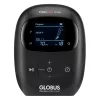
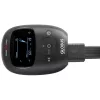
- 1 unit PressCare G250 control unit (5 air chambers, 2 modes)
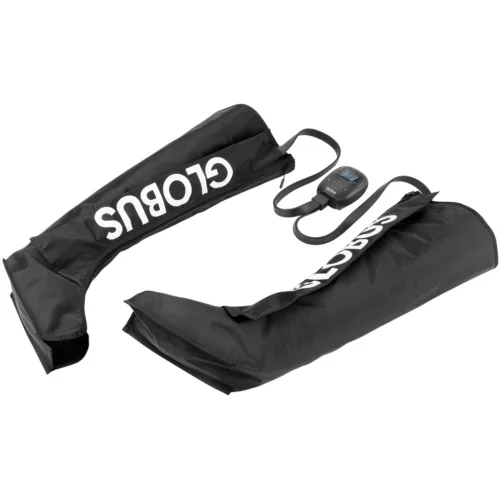
- 2 units leg cuffs of the same size (S, M or L, according to the version ordered)
- 1 unit mains power supply (100–240 V AC, 50/60 Hz)
- 1 unit user manual
Separately available accessories: extender (S/M/L, +7 cm at the ankle and +9 cm at the thigh) and a 5-chamber abdominal belt (125 × 35 cm) for the abdomen, hips and buttocks, with its own 40 × 35 cm extender.
Switch off the control unit and unplug it before cleaning. Do not use thinner, petrol, alcohol or aggressive chemicals. The leg cuff contains air chambers and hose connectors, so it is not washable and must not be put in a washing machine. Wipe it with a slightly damp cloth and allow it to dry completely before the next use.
This is especially important after training: a cuff pulled over sweaty skin becomes smelly sooner. Wear thin sports trousers or long socks underneath. This also helps the cuff last longer. Release the air before storage and avoid sharp folds. Always pull the hoses out by the connector, not by tugging on the cable.
Use the device only with the supplied Globus cuffs and power supply. Cuffs from other manufacturers may have a different number of chambers and different connectors. Repairs may be carried out only by a professional or authorised service centre.
Do not leave the device unattended where it is accessible to children or people with limited abilities. During treatment, the cuff must not cover an open wound, fresh scar or skin lesion. Do not wear jewellery or a tight strap on the leg, as pressure could become trapped beneath it.
PressCare G250, G280 or G400 – which one is right for you?
All three models use five air chambers, so the basic compression principle is the same. The difference lies in the programmes, the precision of adjustment, the maximum treatment time and whether the device can be used away from a socket.
| PressCare G250 | PressCare G280 | PressCare G400 | |
| Number of air chambers | 5 | 5 | 5 (overlapping design) |
| Pressure range | 40–160 mmHg | 40–180 mmHg | 40–220 mmHg |
| Intensity settings | 13 | 15 | 19 |
| Modes | 2 (gentle activation, deep massage) | 3 (+ combined sequence) | 6 (LymphoFlow, PulseTone, FlowSculpt, AirSync, calf, thigh) |
| Smart Area chamber selection | none | 14 combinations | 14 combinations |
| Heating | no | no | 2 levels |
| Timer | 10–30 minutes | 10–30 minutes | 10–60 minutes |
| Power supply | mains | mains + Li-ion battery | mains + Li-ion battery |
| Control unit weight | 645 g | 745 g | 1.2 kg |
| Control unit dimensions | 172 × 133 × 71 mm | 172 × 133 × 71 mm | 228 × 155 × 87.5 mm |
| Carry case included | no | no | yes |
| Leg cuff sizes | S / M / L | S / M / L | S / M / L |
| Abdominal belt (available separately) | yes | yes | yes |
| Arm cuff | none | none | none |
The G250 is enough if the device stays at home in one place and your goal is post-training recovery or relief from heavy legs in the evening. It fully supports the basic recovery protocol of 20–30 minutes at around 80 mmHg and is the lightest and easiest-to-use model in the range.
The G280 is worth considering if you want to use it without a socket: in a gym bag, changing room, competition venue or hotel. It also gives you a third combined mode and Smart Area chamber selection, allowing you to target the calf or thigh separately.
The G400 is for people who need longer and more varied treatment: a 60-minute timer, six programmes including the longer, slower LymphoFlow, heated feet and the finest 19-step adjustment. The trade-off is a larger and heavier device, supplied with a carry case.
It is worth keeping one thing clear: a higher maximum pressure is not an advantage in itself. Few people use 220 mmHg in practice, while around 80 mmHg is the established setting in sports-recovery studies. The real differences between the models are the programmes, treatment time and portability – not which one applies more pressure.
If you are specifically looking for a lymphoedema device, all three PressCare models can be used for this, but the Power Q-1000 Premium is the more advanced choice for this task: lower starting pressure, 60-minute programmes, individual chamber adjustment, protocol memory, and arm and torso cuffs.
Technical specifications
| Product name | PressCare G250 pressotherapy device |
| Number of air chambers | 5 (sequential inflation from bottom to top) |
| Pressure range | 40–160 mmHg, in 10 mmHg steps |
| Intensity settings | 13 |
| Modes | 2 preset programmes: A – gentle activation, B – deep massage |
| Timer | 10–30 minutes, in 5-minute steps |
| Power supply | mains, 100–240 V AC, 50/60 Hz (no battery) |
| Control unit dimensions | 172 × 133 × 71 mm |
| Control unit weight | 645 g |
| Leg cuff sizes | S: 75 cm length / 76 cm thigh / 47 cm ankle · M: 86 / 80 / 48 cm · L: 97 / 84 / 49 cm |
| Extender (available separately) | S/M/L – +7 cm at the ankle, +9 cm at the thigh |
| Abdominal belt (available separately) | 5 chambers, 125 × 35 cm; extender: 40 × 35 cm |
 When must you NOT use the device?
Pneumatic compression directs fluid towards the torso. Therefore, treatment must not be used in the following conditions, or may be started only with your doctor’s approval:
- Acute deep vein thrombosis or suspected deep vein thrombosis
- Severe heart failure
- Active skin infection in the treated area (erysipelas, cellulitis)
- Severe peripheral arterial disease (arterial narrowing in a limb)
- Untreated high blood pressure
- Active malignant tumour
- The period immediately after surgery
- First trimester of pregnancy and complicated pregnancy
- Open wound, leg ulcer or fresh scar in the treated area
- Acute phase of a recent muscle or ligament injury in the treated limb
- Loss of skin sensation in the treated limb (for example, advanced diabetic neuropathy)
Not sure? Consult your doctor before use.
 Important information
The PressCare G250 is a pressotherapy device for home use (intermittent pneumatic compression) that the manufacturer intends to support circulation, recovery after physical exertion and relief of heavy-leg sensations. The device bears the CE marking. This description is not medical advice, and the device does not replace examination, diagnosis or the treatment recommended by your doctor for leg swelling or circulatory symptoms.
Persistent, recurring or one-sided leg swelling must always be investigated. It may have a venous, cardiac, renal or thyroid-related cause. If swelling develops suddenly and is accompanied by pain, warmth or redness, urgent medical assessment is required. If you have a chronic illness, take regular medication, or have had thrombosis or vascular surgery, discuss use of the device with your doctor beforehand. Your doctor or physiotherapist should determine how to return to activity after a sports injury. Only a doctor may change existing treatment.
This description is for information only and is not medical advice. Pressotherapy is an adjunctive procedure and does not replace the treatment recommended by your doctor. Results may vary between individuals and can be assessed with regular use.