
Runner Pro sports muscle stimulator
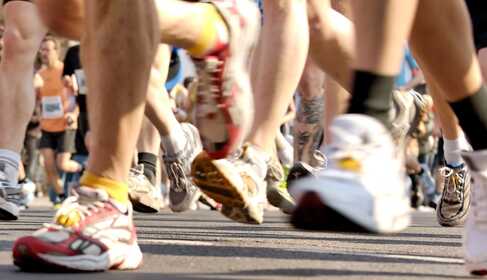
In our country there are tens of thousands of runners. Some run on city asphalt roads, on tartan tracks in sports fields or parks, others cover kilometers on forest or mountain trails. The harder and more frequent the training, the more common the associated complaints, pains and injuries become. The Globus Runner Pro sports muscle stimulator was created for them. My article discusses what it can be used for.

What is the Runner Pro?
The Runner Pro is a 4-channel electrotherapy device assembled specifically for runners. It can be used to prevent and treat problems that make a runner's preparation difficult or miserable. These include, among others, recurring injuries, nagging muscle and joint pains, slowed muscle regeneration, increased muscle stiffness, loss of strength due to injury, etc.
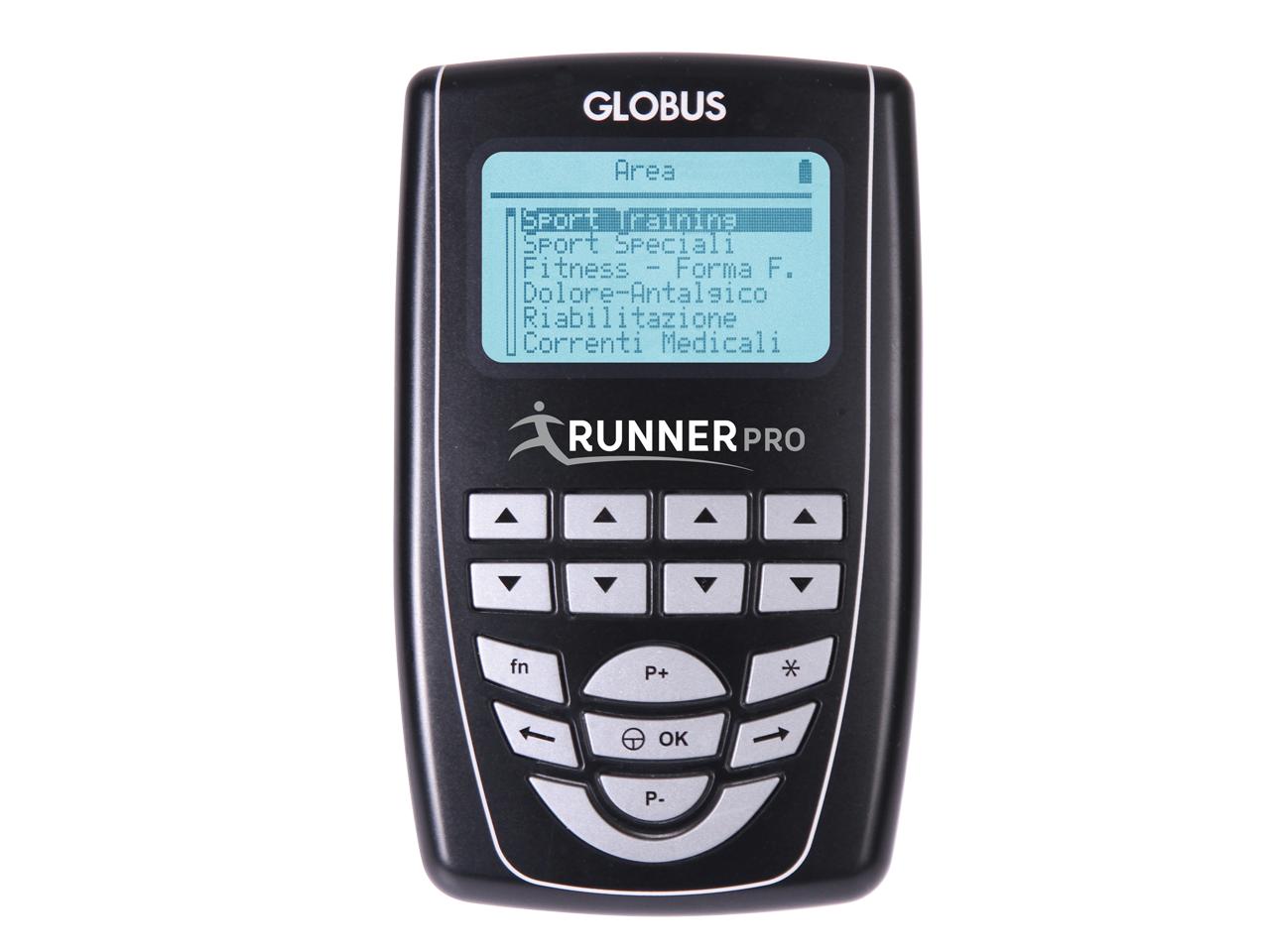
The programs are grouped around four main goals.
Prevention programs aim to drastically reduce runners' injuries
- strengthening the ankle to prevent sprains and overuse inflammations
- strengthening the foot muscles to avoid muscle injuries
- stabilizing the kneecap to prevent overuse injuries
- strengthening the trunk muscles to prevent back pain during training.
Goals of muscle efficiency improvement programs
- development of fibers responsible for endurance
- improving oxygen supply capacity through increased capillarization
- improving resistance to metabolites
- reducing and delaying muscle fatigue
- speeding up muscle regeneration
- improving running speed (endurance strength)
The injury-treatment programs aim to address traumas and recurring problems such as
- reducing muscle contractures and muscle stiffness
- treating Achilles tendon inflammation
- treating back pain
- treating sprains, strains and muscle injuries
- treating foot pain and shin pain
The goals of the recovery programs are
- relieving post-training and post-race muscle fatigue
- accelerating the removal of lactic acid from the muscle
- relieving muscle stiffness
- preventing muscle cramps.
A complete "toolbox"
The Runner Pro is a high-capability device that provides several types of electrotherapy treatments. These are applied to different tasks, and within each type there are many treatment programs, which makes hundreds of possible uses.
- TENS: pain relief treatment. It quickly alleviates pains caused by muscle, tendon and ligament injuries, bruises, strains, kicks and hematomas. It is drug-free, so it is particularly important that it can avoid doping issues.
- EMS: muscle stimulation, used to treat muscles. Depending on the impulse settings it can have different effects, such as increasing muscle blood circulation, capillarization, warming up, relieving muscle stiffness, aiding recovery of muscle strength, increasing muscle mass, etc.
- Iontophoresis: using electric current to deliver a drug deep into the muscle or joint. This ensures a stronger local effect because most orally taken medication breaks down and little reaches the injury site.
- Microcurrent (MENS): pain-relieving, but its main strength lies in healing inflammatory processes. Excellent for quickly eliminating the consequences of injuries.
Think of the Runner Pro as a healing "toolbox", full of programs that help "repair" a malfunctioning or poorly functioning body. The fact that it provides 23 different microcurrent programs is like having 23 sizes of wrench in a set. That's a big enough "selection" to tackle all sorts of problems.
You cannot treat the entire body simultaneously with it. The device does not replace or substitute training — it is not intended for that at all! It is suitable for treating 1-2 larger joints or muscle groups at a time, meaning you can concentrate on solving one defined problem.
As important as a good running shoe
Treat the Runner Pro as a technical tool that supports sport, as important to a runner as a good shoe. Imagine how far you'd get barefoot!?
Although with consistent use the muscle stimulator can even improve running performance, its primary role is to help maintain and restore the health of your muscles and joints so you can enjoy your favorite sport lifelong.
Examine what problems you have. If you are affected by any of the following, you will get a lot of benefit from it.
Typical injuries
Runners — whether professional or amateur — regularly encounter numerous complaints that they can acquire during training and races alike. Since everyone's musculature, bone structure, etc. differ, the occurrence and intensity of complaints can vary individually. I won't list every possible problem, only the most common ones.
- Inflammation of the Achilles tendon and plantar fascia, heel spurs, piriformis syndrome: these are mostly caused by overuse and neglecting recovery exercises and treatments after training.
- Knee pain usually indicates overload of the joint. Often it is caused by the relative weakness of the thigh muscles (i.e., weakness relative to the high load).
- Back pain is surprisingly common among runners. Many people "just" run and rarely do strengthening or gym workouts. During running, the gluteal and trunk muscles are forced to exert large forces. These must stabilize and properly support the body. If they are not strong enough, the shock energy of each step is transmitted to the spine, hip, knee joint and ankle. Weak trunk muscles can cause not only back pain but also pain in the lower limb joints.
- Muscle and ligament injuries mostly occur because of lack of warm-up or muscle fatigue. A sudden pothole, a misstep and the muscle fibers or ligament overstretch and partially or completely tear.
- Loss of strength after an injury is a natural process. If intensive training is interrupted by an injury, the body quickly "dismantles" unused muscle mass and strength. After a minor injury it can take months to regain strength and muscle mass. If this does not happen, the risk of re-injury increases.
Areas where the Runner Pro can be used
The device can be deployed both for prevention and for treating already developed complaints. Of course, if you know your knee often hurts, you won't let inflammation develop from training — you'll stabilize the joint by strengthening your thigh muscles. Strong supporting muscles prevent knee pain.
Let's look at some important treatment possibilities. Again, this is only a taste of the many options.
Warm-up
It is common, especially among amateurs, to head out for training straight from work or family dinner. They close the garden gate behind them and start sprinting at race pace without meaningful warm-up, watching to maintain their usual x min/km pace from the first second.
An un-warmed muscle, however, is stiff. "It doesn't understand how it suddenly went from the calm beside the desk to the middle of an intense race." In the first kilometers it literally fights for its life to get the blood circulation going to match the pace, to heat up to "operating temperature", to loosen its stiffness.
Tendons have even poorer blood circulation than muscles, so they need more time to warm up. Since you didn't do that, tiny tears occur in the ligaments and especially at the attachment points to bone. This leads to overuse inflammation, which is painful and prevents correct movement execution, thus hampering training.
A 10–20 minute muscle stimulation before training increases blood flow to the muscle and its associated tendons 3–8 times. It warms and makes the muscle and tendon more flexible, preparing them for high exertion.
With proper warm-up you can significantly reduce the chance of injuries such as Achilles tendon and plantar fascia inflammation, piriformis syndrome, heel spurs, etc.
Speeding up muscle regeneration
After the age of 30 your body doesn't regenerate like it used to. If you train regularly, you know that after a demanding run it's sometimes hard to get out of bed the next day. Aches and tightness appear here and there.
You know that during movement the muscle produces the energy needed for function, but metabolites are produced in the process. Over time their accumulation causes muscle fatigue, stiffness and even pain. The longer they remain in the muscle, the worse it gets.
Most metabolites are broken down in the liver, so the sooner they reach it, the sooner muscle stiffness and fatigue resolve.
The problem is that metabolites cause capillary dilation, which after exercise slows blood flow and prevents their removal.
Numerous studies show that muscle stimulation can increase blood flow in the treated area by up to 300%. This significantly speeds up the pumping out and rinsing of waste products from the muscle.
Therefore, it reduces metabolite levels and, through this, muscle fatigue and stiffness more effectively than other cooldown methods. It's best if you treat within 90 minutes after exercise.
The increased circulation not only aids removal but also helps refill muscle energy stores. A treated muscle will be noticeably fresher and more rested for the next training session, allowing for more effective loading.
By improving muscle regeneration you reduce stiffness and tightness, thereby lowering the risk of strains, sprains and tears during your next activity.
If you haven't used a stimulator yet, start with the muscle recovery treatments! The effect is noticeable immediately.
Developing an underperforming muscle
If your back, knee or hip hurts by the end of a workout, there's a strong suspicion that your trunk, thigh and gluteal muscles aren't strong enough.
These muscles stabilize the structures they surround. If they are weak in absolute or relative terms, pain appears.
You can strengthen them with weight training. However, if you subject a painful back or knee to heavier loads, you may worsen the problem.
This is where the muscle stimulator comes in: it allows you to strengthen a muscle or muscle group without putting any load on the joint. With impulses in the appropriate frequency range you can induce contractions without heavy weights.
With a stimulator you can strengthen the muscle to the extent in a few weeks that conventional strengthening can then take over.
Avoiding relapse
You've probably been in a situation where you got injured during training, making exercise impossible for weeks.
You may have experienced how strength gains achieved over months vanished in 2–3 weeks. Then it takes months again, and often the whole season isn't enough to catch up.
Use the Runner Pro in such cases!
Although you can't load the joint or perform movement, stimulation can maintain the condition of your muscles. The stimulator creates muscle contractions without moving or loading the joint. Your muscles won't atrophy even though you're not moving.
More relevant for elite athletes: those who train for hours daily may find travel to a distant competition problematic. During a 30+ hour flight muscles stiffen, and at that level even a two-day break shows. For them a muscle stimulator is priceless. It fits in a pocket, can be used on a plane, and maintains your most important muscles fully. Upon arrival you won't notice muscle fatigue or performance drop.
Healing muscle injuries
Muscle stimulation originally began as a medical, hospital treatment used to restore muscle diseases. In sports injuries it's important to return to training as soon as possible.
Muscle stimulation does not move the joint, so you can already start muscle-preserving treatments a day after any tendon, ligament, joint capsule or cartilage injury!
After a muscle injury you should wait a few days for bleeding to stop. But 2–3 days after the injury you can already apply it.
It increases blood and lymph circulation, which brings the nutrients necessary for healing to the injury site. This speeds up the restoration of muscle fibers.
Runner and the Runner Pro
Whether you run competitively or just for pleasure, first check whether any of the above issues affect you.
If so, I recommend using the Runner Pro muscle stimulator, because it helps in ways that other methods cannot.

