
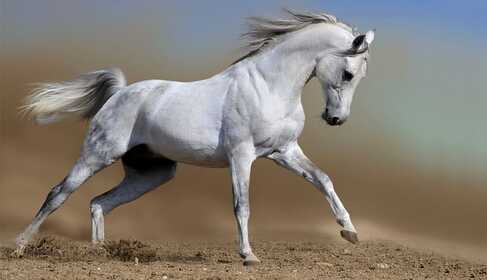
A Tale about the Peasant and His Horse
Once upon a time there was an old peasant everyone liked. They called him Uncle Matyi. Like many in those days, he kept a horse. He rose at dawn, harnessed it to the cart or the plough, and they worked the fields from spring to late autumn. Winter came, snow up to his waist, mud to his knees… but even then Uncle Matyi would get up, lead the horse out of the stable and, with a lead rein, they would trudge along the street. Up and down, in rain, wind, frost, every day.
Children ran after them, joined in, and listened to his stories about horses and the small things in life. He passed on everything he had once heard from his grandfather, adding the wisdom he had gathered in his long life. “If the horse just stands idle in the stable, muck piles up around it, it gets intestinal torsion, and then it dies. That’s why you must put the horse to work every day.”
I know, it’s a short tale… but this is my favorite lesson from him. It has stayed deep in my memories. And maybe there is a lesson for you too, dear Reader!
Let’s find the moral
You’ve probably gotten used to the fact that in my writings I don’t beat around the bush; I’m not trying to sugarcoat things. I focus on making physiological processes and their drivers clear. You won’t be disappointed this time either! :)
Picking up the thread of the tale, I’ll continue by talking about what happens to your body if you don’t move daily. The sequel is a thriller, a horror story! I hope it’s chilling enough to make you wake up… before it’s too late.
The trap of lifestyle
Lately I receive desperate questions both on my blog and on my Facebook page. Many are looking for the reason behind sudden changes in their bodies.
They wonder why their muscle strength and mass are plummeting, why their legs suddenly swell, why they feel weaker and sicker by the day.
When I ask, they all say that fear of COVID and the restrictions made them lock themselves away in their homes, they gave up their previous activity, they chose voluntary house arrest.
But it’s not only them — most Hungarians struggle with similar problems. The majority spend 8–10 hours at work, where they usually sit at a desk or stand in one place. This happens on the commute too — on the bus, train, or in the car. Add 6–8 hours of sleep and 4–6 hours of TV watching. The day passes in complete immobility.
And that does not come without consequences.
Adaptation — your body’s response to demands
Your body constantly adapts its functions to the load it faces. It’s an extraordinary machine that can change dramatically depending on how you treat it, how you feed it, and what physical activity and demands you place on it.
If you exercise regularly, it tunes muscle strength and mass, bone structure, blood circulation and heart rate, breathing and oxygen uptake, metabolism, and even the cells’ energy production accordingly.
If you don’t move, it scales back the performance of all these systems. If you have to sprint 100 steps to catch a bus, you’re out of breath, your heart races, you sweat… or you can hardly push yourself up from the armchair.
Balance above all
Your body strives for balance. It settles at the level you demand of it. If you’re indifferent (i.e., you don’t move), it won’t maintain big muscles or optimized functioning. That would be wasteful.
The most vivid example comes from bodybuilders. When they start "building", they force their bodies with enormous effort and repeated heavy lifts to adapt to that workload — in other words, to increase muscle mass. The muscles respond: with hard training they gradually grow larger.
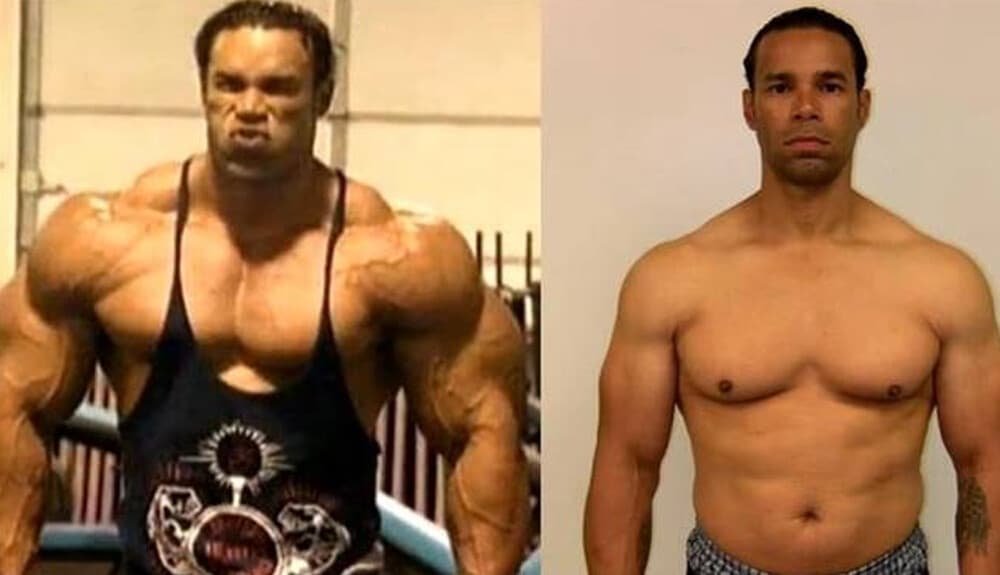
However, while building muscle requires months or years of hard work, breaking it down happens much faster. When an athlete stops lifting heavy weights, those large muscles shrink within weeks, like a pair of pants left in the corner.
Look at these pictures and you’ll see it yourself. Hard training leads to muscle growth, stopping the load leads to muscle loss — that’s the body’s response.
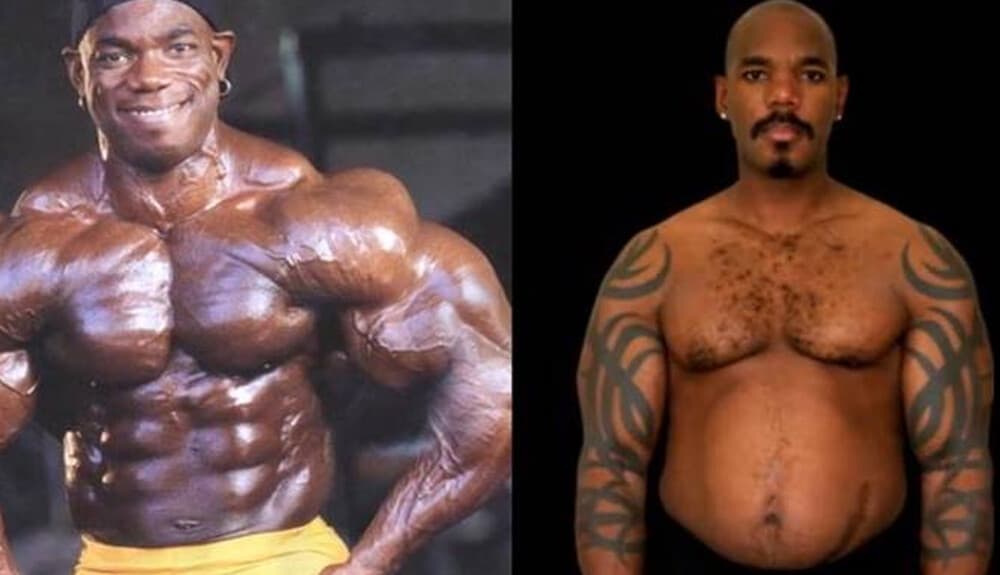
But that’s only the muscles! Lack of movement affects your whole body. Let’s go through what else changes.
Consequences of lack of movement
Slowing of circulation
Your heart is the primary motor of circulation. It pumps blood around your body. Returning that blood, however, is the job of your muscles — the secondary motor. When they contract, they squeeze the veins and lymph vessels between them and direct the blood back toward the heart.
Without movement and the rhythmic contraction of muscles, your venous and lymphatic circulation slows. Your ankles start to swell, and your organs receive less fresh blood, less oxygen and fewer nutrients.
Slow blood flow cannot remove the “waste,” so toxins and metabolic by-products accumulate in your body. This is a breeding ground for inflammation. A few weeks of sitting already sets the stage, for example, for chronic joint inflammation.
Loss of muscle mass and strength
Without movement your muscles receive no stimulus, so unnecessary muscle mass is broken down. In a few weeks your thigh circumference shrinks, your arms thin out. Within weeks you may find it hard to push yourself up from an armchair.
Bone structure breakdown
The structure, density and support of your bones are also directed by loading. If you move, your bones remain strong.
Lack of movement is unfavorable for bones because they do not need to bear anything. The result is deterioration and weakening of bone structure.
If hormonal changes join this, it can become pathological. This is osteoporosis. Your bones become so weak that they can "break on their own" with a sudden movement.
Degeneration of joint ligaments
With no movement, your joint ligaments stiffen, reducing the range of motion of the joints. You can’t reach a book from a shelf because your frozen shoulder won’t let you lift your arm. Your knee gets stuck at a right angle and won’t straighten to stand.
Weakening of the heart muscle
Your heart also loses efficiency. While you sit in the armchair there’s no problem. But when you stand to walk to the corner shop, your heart races, your temples throb, your blood pressure spikes. You sweat as if you’d had a shower, though the exertion was almost nothing.
Respiratory muscle atrophy
Leaning against the comfortable back of the armchair, your respiratory muscles atrophy too, so when needed you can’t draw enough air into your lungs. If you have to climb ten flights of stairs, you gasp for air like a fish thrown ashore.
This is still reversible
You have already set a cascade — a chain of events — in motion, a vicious circle where problems amplify each other and progressively worsen your condition.
Here is the point where the process is still reversible. If you stop loafing now, you can avoid disease.
If you do not turn back, the process accelerates and becomes brutal.
The beginning of the end: extra kilos
Despite minimal movement you won’t restrict your diet. In fact, sitting makes you crave snacks more and gives you the time to polish off a coal-miner’s daily calories. A few kilos pile on quickly. In a year maybe 5–10…
Weak muscles — wearing joints
The extra weight is too much even for your weakening muscles. They can’t support your weight, so the load shifts directly to the bones forming the joint. With every step the joint surfaces press and wear against each other. Joint pain begins, then inflammation, and soon cartilage wears away.
Pain lets you move even less, so you "accumulate" more kilos.
High blood pressure
Your heart was not "designed" to supply this hugely overweight body, but the original, smaller one. It can only feed the creature you’ve become by raising blood pressure.
Alongside the painkillers you took for your joints you’re prescribed a few blood pressure pills. And since there are side effects — for example constant stomach pain, allergic rashes — you get more drugs for those. A large portion of your income now goes on medicines.
Blood pressure drugs may delay stroke and paralysis, but they also further limit your heart function. In other words, medicated, you tolerate even less exertion.
Diabetes
A poor doctor at this point will already forbid physical activity. "Take it easy!" he says. It’s a mistake to listen — you’ll pile on more kilos again.
If you didn’t have it before, by now diabetes appears.
Great! That was the last thing missing…
Diabetes is one of the sneakiest diseases. It doesn’t hurt, but it systematically ruins the health of your blood vessels. All over your body. In your legs, your kidneys, your heart, your brain.
Atherosclerosis
Fat and calcium deposit on the walls of your vessels and narrow them. Your already poor circulation slows further. Your cells, tissues and organs choke from lack of oxygen, even though you lie in bed.
Then suddenly disaster strikes.
Heart attack, stroke, dementia, amputation
If you’re lucky, you’ll get a heart attack, you’ll simply fall off your chair and won’t know who arranges your funeral.
Or the worst artery disease may be in your legs. You’ll still be alive, but your toes begin to rot. They amputate them in slices until sepsis takes you.
If the vessels in your brain are worst affected, you simply become dull, stupid; your relatives struggle with you in ignorance or you end up locked away in an institution.
If you suffer a stroke, you’re paralyzed and lose the ability to speak. You’re trapped inside your body’s prison, unable to move or communicate. Helpless, at the mercy of others.
You’ve barely turned 60… and your body has quit on you
And nothing particularly special happened!
You simply didn’t give your body its most basic need: physical activity. Over years, slowly, you "killed" your body and your health with doing almost nothing.
And now you expect your dim-witted doctors to fix with a few pills what you ruined by huge inactivity?
How old are you, my child? …And you still believe in fairy tales????
But it would be so simple!
All you would have to do is get your butt up from the armchair every day and move.
You don’t have to prepare for the Olympics, just for a healthy old age. So the last 20 years of your life are liveable. So you can raise your arm and hug your child or grandchild. So you can tell them: I love you. So your body lets you live.
Nothing else is needed, just what Uncle Matyi did with his horse in the opening tale. Move it every day, in snow and frost. 50–60 minutes of walking, hiking, cycling, swimming, yoga. Anything — just get moving.
For your life. And of course for the well-being of your family.

