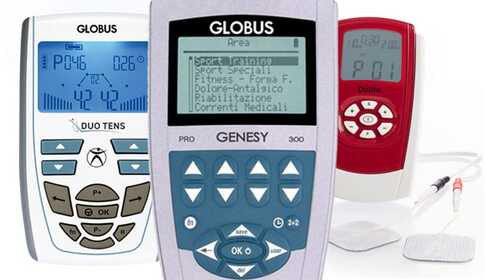

In my experience, users most often regret three things after purchase: receiving too few programs, a single-channel device, or non-durable pads. This article helps you avoid those pitfalls and choose the device that matches your complaint.
 Key point
Choosing a TENS depends primarily on your complaint and how often you will use it: for occasional home pain relief an entry-level model is sufficient (e.g. Dolito); for daily use and treating multiple body areas a mid-range 2-channel device is recommended (e.g. Globus Elite SII or TensCare UniPro); for users with chronic, multiple problems the multifunctional Genesy series is the solution.
 Six main points when choosing a TENS
| Aspect | What it means | Why it matters |
|---|---|---|
| 1. Channel count | 1, 2 or 4 channels (1 channel = 2 pads) | 2-channel: two body areas can be treated simultaneously. 4-channel: covers large muscle groups. |
| 2. Number of programs | Entry: 4–8, mid: 10–25, premium: 50+ programs | More programs = more adjustment options. Useful to avoid habituation. |
| 3. Impulse quality | Precise square pulse vs. distorted waveform | Precise impulses feel more comfortable at the same intensity. |
| 4. Current intensity | Maximum output current (mA), typically 60–100 mA | Stronger maximum allows higher-intensity settings when needed. |
| 5. Multifunction | Only TENS, or TENS+EMS, MENS, IF, iontophoresis | If you have several types of complaints, a broader feature set is worth considering. |
| 6. Other (display, battery, cable) | Display size, rechargeable battery vs. replaceable cells, wireless | Long-term user comfort. |

 Entry, mid and premium categories
The TENS market can be divided into three main segments based on price, feature set and target user.
Features: 1 or 2 channels, 4–8 preprogrammed modes, basic parameters, compact size. Battery or cell-powered.
Who it suits: occasional home pain relief, beginner users, simple chronic low back/neck/calf pain.
Typical model: Dolito – compact, battery-powered, with basic TENS functions.
Features: 2 channels, 10–25 programs, often TENS+EMS combination, finer intensity control, LCD display.
Who it suits: daily use, treating multiple body areas, muscle strengthening also important (athlete, rehabilitation).
Typical models: Globus Elite SII (TENS+EMS), TensCare UniPro (4-in-1: TENS+EMS+MENS+IF), Globus Genesy SII.
Features: 2 or 4 channels, 50–200+ programs, modulated TENS protocols, multifunctional (TENS+EMS+MENS+IF+Kotz+iontophoresis), refined impulse quality, professional display.
Who it suits: users with chronic, multiple complaints, sports physiotherapists, rehabilitation specialists, clinical practice.
Typical models: Globus Genesy 600, Genesy 1500, Genesy 3000.
 Program types – which to use?
Whether your device has 4 or 50 programs, TENS protocols can be grouped into four main families (see the TENS pillar article):
A strong tingling sensation that, based on gate-control theory, can help reduce pain signals. Recommended for acute pain (sprain, muscle soreness) or for beginners. The most commonly used program.
Slower program accompanied by small muscle contractions. It may promote the release of endogenous opioids (endorphin, enkephalin), giving longer-lasting effects. Useful for chronic pain—e.g., fibromyalgia, long-standing low back pain.
1–4 bursts per second, with high frequency within each burst. Combines gate-control and endorphin-mediated effects. Many users find it more comfortable than pure low-frequency stimulation.
Frequency, amplitude and pulse width continuously vary. This is the key to avoiding habituation during long-term use. The 2003 Bjordal et al. paper (Eur J Pain) discusses TENS dosing rules, including the importance of parameter variation. For chronic pain, modulated programs are the basis of effective long-term use.
 It worked great the first days, then stopped?
Many users find that TENS significantly reduced pain during the first one to two weeks, then the effect gradually lessened. This is the phenomenon of habituation: the nervous system becomes accustomed to the constant stimulus and responds less.
The solution is not a new drug or a more expensive device, but parameter variation:
 Avoiding habituation
- Rotate programs – don't stick to a single frequency. One day use conventional, another day acupuncture-like, a third day burst.
- Use a modulated program – these continuously change parameters, reducing adaptation.
- Respect treatment durations – one session 20–45 minutes, 2–3 times daily; continuous use for many hours usually doesn't increase effectiveness.
- Rest day – 1–2 days off per week "re-sensitizes" the nervous system.
- Vary electrode placement – don't always place the pads on exactly the same spot.
 Specific model recommendations based on your complaint
Dolito (entry TENS)
Who it suits: users with occasional low back, neck or calf pain. Beginners and infrequent TENS users. Compact, battery-powered, with a few basic programs.
Globus Elite SII (mid TENS+EMS)
Who it suits: for daily use when muscle strengthening is also needed in addition to pain relief (e.g., post-surgery rehab, sports recovery). 2 channels, well-controllable intensity. Details: muscle stimulation after surgery.
TensCare UniPro (4-in-1)
Who it suits: if you want a multifunction device at a favorable price. TENS, EMS, MENS and IF in one unit, mid-range pricing. An entry point into the multi-tech world.
Globus Genesy SII (premium TENS)
Who it suits: chronic, long-term TENS users who value modulated programs and precise impulse quality. Athletes and users seeking higher comfort.
Globus Genesy 1500 / 3000 (PRO multifunctional)
Who it suits: sports physiotherapists, rehabilitation centers, clinical practice, or home users who need "clinical-level" performance. Hundreds of programs, professional parameterization.
Sport-specific devices: if you have specific sport needs, the Cycling Pro, Runner Pro, Triathlon Pro are optimized for sport protocols. For a general buying guide: comparison of cheap vs. professional muscle stimulators.
 Simple decision process
 Ask yourself these 4 questions:
- How often will I use it? 1–2× weekly → entry. Daily → mid. Multiple times daily, multiple body areas → premium.
- Pain relief only, or muscle strengthening as well? Only TENS → entry. TENS+EMS → mid. Complex (TENS+EMS+microcurrent+IF) → premium / multifunctional.
- One body area, or several in parallel? One → 1–2 channels. Several → 2–4 channels.
- Whose complaint is it? Only mine → focused model. Other family members will use it → multifunctional + many programs.
More help: the TENS, EMS and MENS differences article helps decide which method suits your complaint.
 Before buying – check contraindications
TENS treatment is not suitable in certain conditions. Details: general electrotherapy contraindications.
- Pacemaker, ICD or other active implant
- Cancerous disease in the area to be treated
- Pregnancy (treatment over the lower abdomen and lumbar area is forbidden)
- Acute fever, infection, open wound in the treatment area
- Acute deep vein thrombosis (within 3 months)
Frequently Asked Questions
Low-priced (5–15k HUF) TENS units come with compromises: few programs, poor impulse quality, less durable pads, shorter lifespan. If you plan occasional use for minor complaints and have no chronic condition, these can work. For chronic, daily use it's worth choosing at least from the 30–40k HUF range and a branded device with CE certification.
1 channel (2 pads) is enough if you want to treat only one area at a time and perform treatments sequentially. Most users choose 2 channels: to treat two areas simultaneously (e.g., both knees, both calves), or to cover a larger area (e.g., 4 pads around the lower back). Choose a 4-channel device if you regularly stimulate large muscle groups (quadriceps, gluteus, back) with EMS or have multiple joints to treat.
The ideal TENS impulse is a clean square pulse: fast rise and fall, constant amplitude. Cheaper devices often have a waveform that doesn't approximate this (distorted, rounded peaks, longer transitions), which can feel less comfortable at the same current setting. Professional devices (e.g., Globus Genesy series) deliver precise impulse shapes, which are more comfortable during long treatments and can produce significantly different effects.
A rechargeable (Li-Ion) device is more convenient, charges via USB, and is cheaper over the long term. Battery life is typically 2–4 years with regular use. Battery-powered (AA/AAA) devices have the advantage that you don't need to wait for charging—just replace the cells when depleted. Basic devices often use replaceable batteries, while mid and high-end devices tend to have rechargeable batteries.
Branded (Globus, TensCare, MTR) CE-certified devices are typically designed for 8–10 years of service life. Pads naturally need more frequent replacement (every 15–20 applications). Batteries may need replacement every 2–4 years. Details about pads: electrode selection.
Wireless TENS units (e.g., smartphone-controlled, with small modules attached to pads) are more convenient for movement—they can be worn during running, training or work. Downsides: smaller battery (shorter usage time), less manual control, higher price. They don't always replace a cabled device, rather serve as a complementary option. For a home's basic setup, it's worth starting with a classic cabled device.
 Summary
A buying guide for TENS devices: six main points (channel count, programs, impulse quality, current intensity, multifunction, other), three price segments (entry/mid/premium), concrete model recommendations based on your complaint.
First-time TENS buyers who are unsure which device meets their needs. Users who want to upgrade their existing device.
Choosing a TENS is simplified by considering usage frequency, type of complaints and parameter needs. Entry (Dolito), mid (Elite SII / TensCare UniPro) or premium (Genesy series) – there is a suitable solution for everyone.
Read the TENS pillar article, or check the TENS product category. For polarity and pad questions: polarity article, pad selection.
Scientific references
- Bjordal JM, Johnson MI, Ljunggreen AE. Transcutaneous electrical nerve stimulation (TENS) can reduce postoperative analgesic consumption – a meta-analysis with assessment of optimal treatment parameters – European Journal of Pain, 2003. PubMed: 12600800
- Johnson MI, et al. Efficacy and safety of transcutaneous electrical nerve stimulation (TENS) for acute and chronic pain in adults – BMJ Open, 2022. PubMed: 35144946
- Johnson MI. Transcutaneous Electrical Nerve Stimulation (TENS): Research to Support Clinical Practice – Medicina (Kaunas), 2021. PubMed: 33919821