
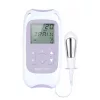






Who do I recommend it for?
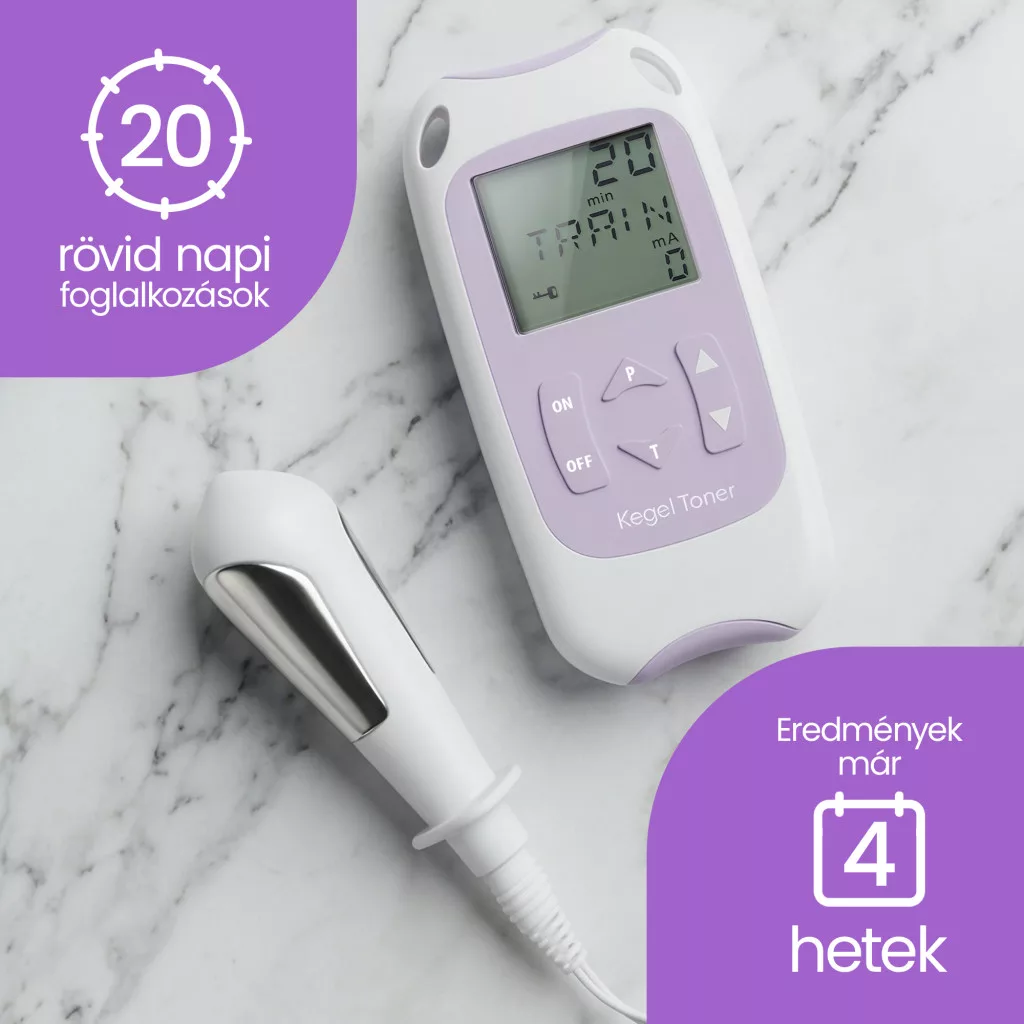
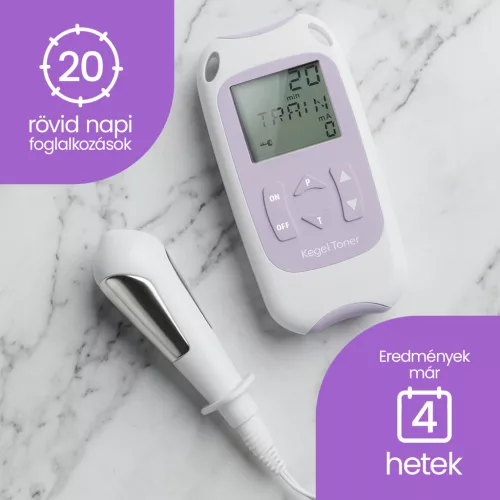
Urine leaks with coughing, laughing, or physical exertion – but symptoms are still mild and manageable. The Kegel Toner Train program is specifically designed to train the sphincter muscles. With a daily 20-minute treatment, improvement can be felt within 4–12 weeks.
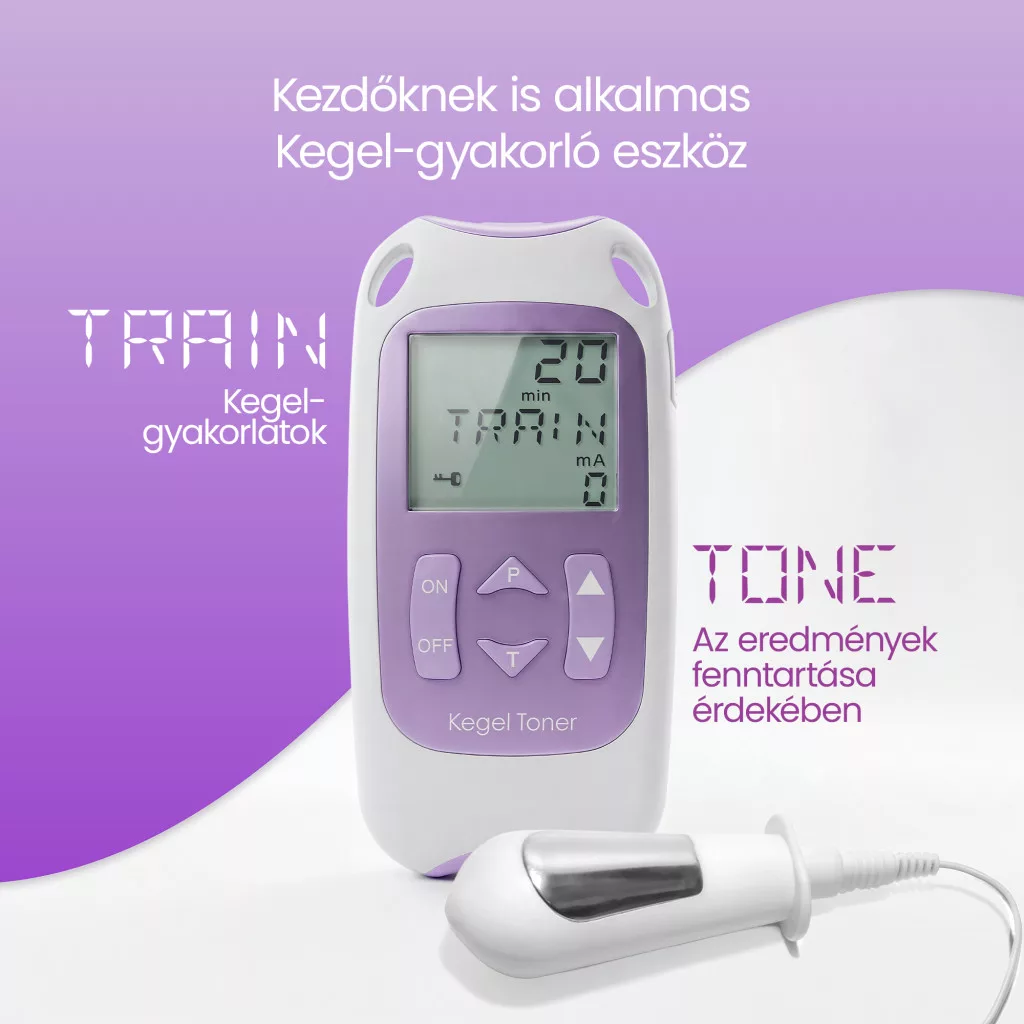
Offers a simple home solution to train pelvic floor muscles weakened during childbirth. Treatment may begin after the 6-week postpartum medical check-up. Use Train to build strength and Tone for maintenance.
If your pelvic floor muscles are still in good condition but you want to prevent weakening – for example before menopause or with regular sports activity – the Tone program, used 2–3 times weekly, can help maintain muscle strength.
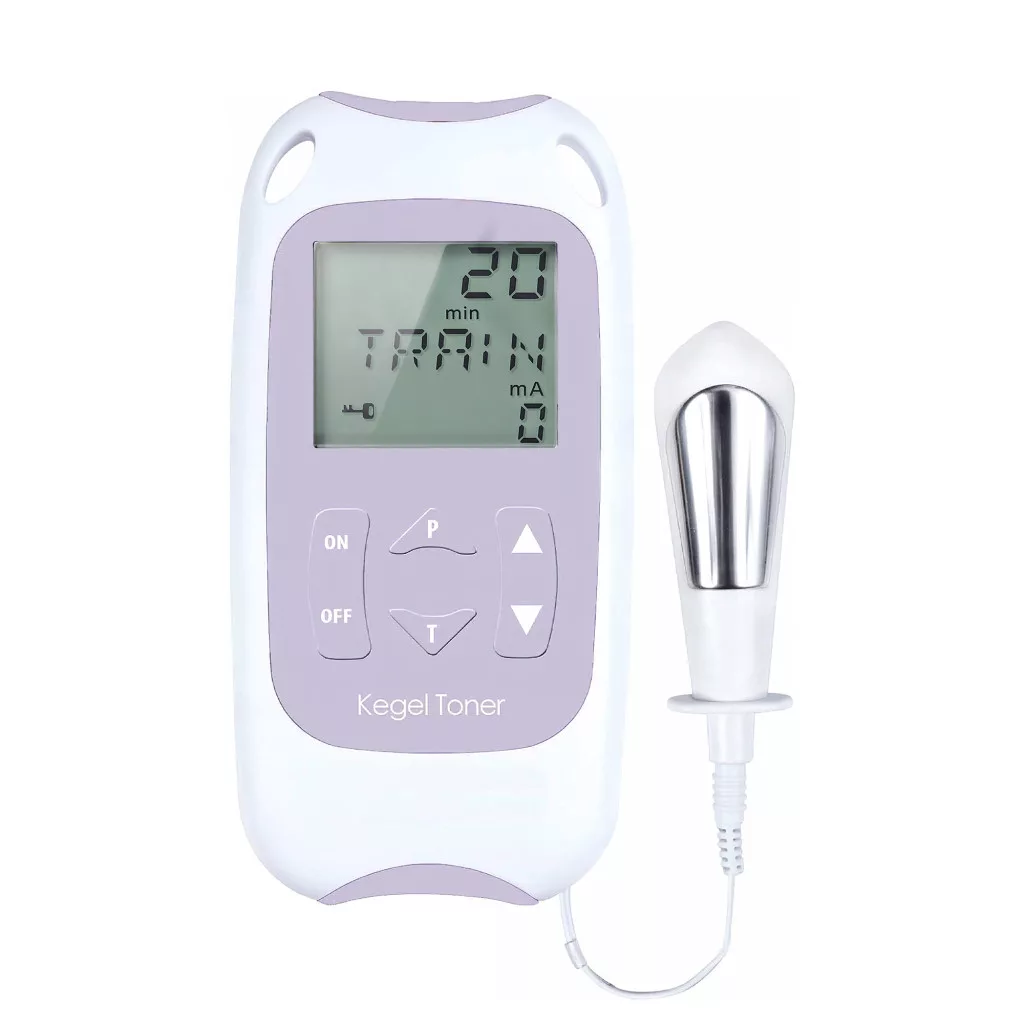
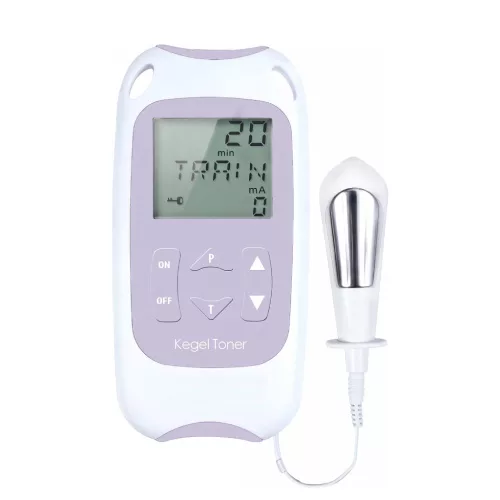
If you have never used an electrostimulation device, the Kegel Toner is an ideal entry: 2 programs, an easy-to-understand colour display, and automatic shut-off. No medical background is needed to use it. If you later want more, you can step up to the Perfect PFE or the evoStim P.
How does electrostimulation work?
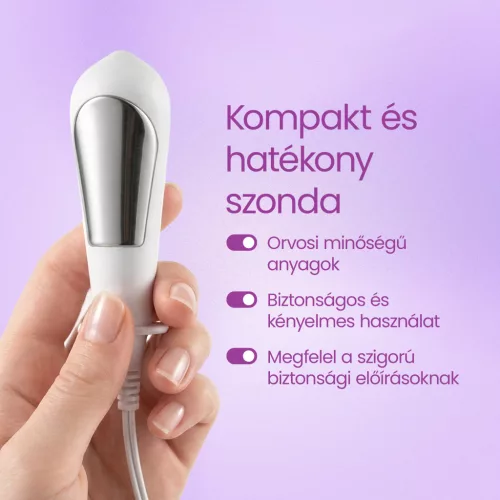
The Kegel Toner delivers gentle electrical impulses to the pelvic floor muscles via the vaginal probe. The impulses cause the muscles to contract and relax – this cyclic training is an effective variation of traditional Kegel exercises because electrical stimulation targets muscles that are difficult to contract consciously.
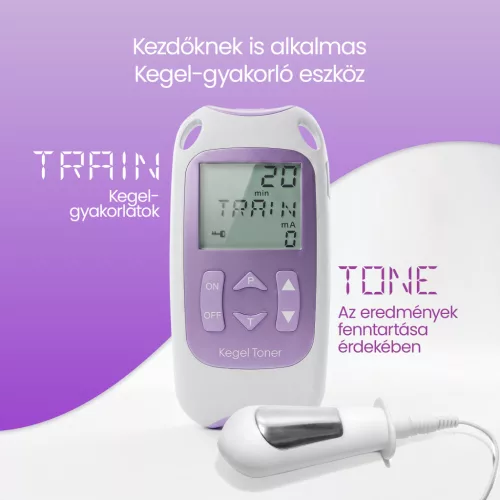
The Train program uses more intensive stimulation to build muscle strength. The Tone program is milder and intended for maintenance – to preserve results and prevent symptom recurrence.
The Kegel Toner does not include a biofeedback function – the device does not measure muscle activity. If you need objective feedback or symptoms do not improve, consider the Perfect PFE (4 programs, for multiple incontinence types) or the evoStim P (pressure-biofeedback) devices.
Frequently asked questions
If you have mild stress incontinence (dribbling when coughing or sneezing), the Kegel Toner's 2 programs are sufficient. If you have urgency or mixed incontinence (sudden urge to void), or more severe symptoms, the Perfect PFE (4 programs) or the Biolito (6 programs, 2 channels) are more flexible options.
No. Electrostimulation devices must not be used during pregnancy or while trying to conceive. You can begin treatment after the 6-week postpartum medical check-up.
Train: more intensive stimulation to build muscle strength – 20 minutes daily for weeks. Tone: maintenance program to preserve results – 2–3 times weekly, long term. Start with Train and switch to Tone when you notice improvement.
No. You will feel mild tingling and firm muscle contractions. If you experience pain, reduce the intensity. The treatment should never be painful.
The Kegel Toner is designed exclusively for urinary incontinence treatment with a vaginal probe. For faecal incontinence a rectal probe treatment is required – the Biolito (with PeriProbe Analis probe) is suitable for that.
With regular daily 20-minute use, improvement is typically felt within 4–12 weeks. Once muscle strength is achieved, you can switch to the Tone program for maintenance.
How to use the Kegel Toner?
1
Select the program
You can choose between two programs: Train (build muscle strength – daily use) or Tone (maintenance – 2–3 times weekly). The colour display clearly shows the selected program.
2
Insert the probe
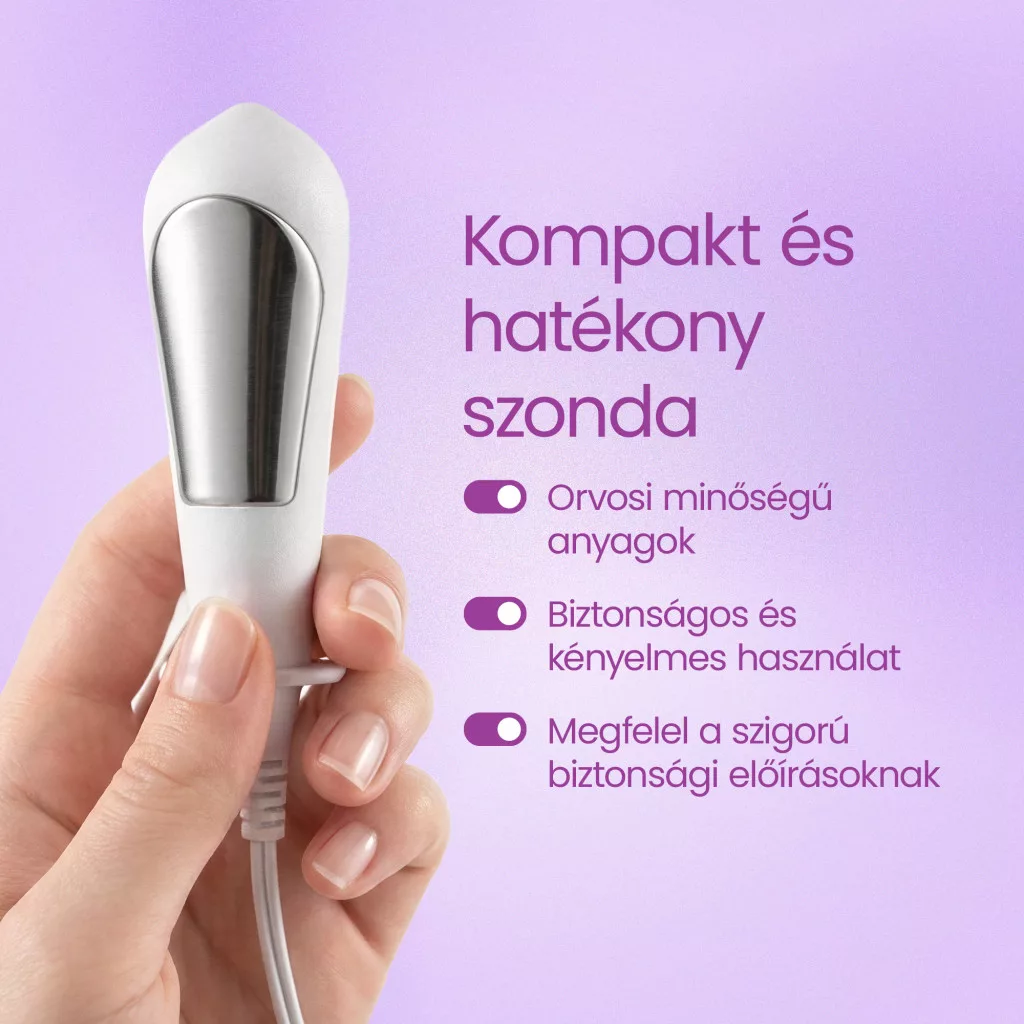
Moisten the supplied vaginal probe with water or contact gel and insert it comfortably. Connect the cable to the device.
3
Set the intensity
Gradually increase the intensity until you feel a firm but comfortable muscle contraction. The treatment should not be painful.
4
Complete the 20-minute treatment
The program automatically controls the impulses. The device switches off automatically after 20 minutes – you don't need to watch the time.
5
Use regularly
Train program: once daily, 20 minutes. Improvement is typically noticed within 4–12 weeks. When muscle strength is achieved, switch to the Tone program (2–3 times weekly) for maintenance.
Package contents
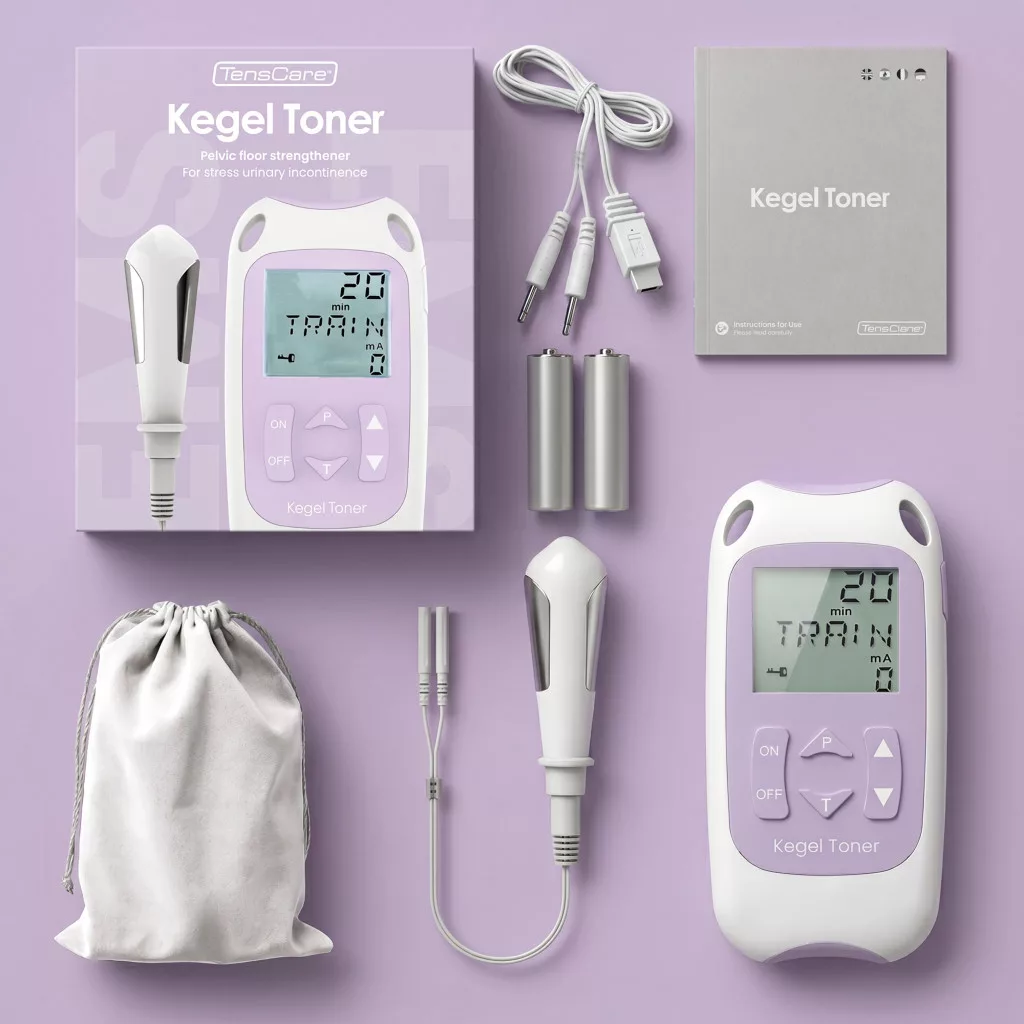
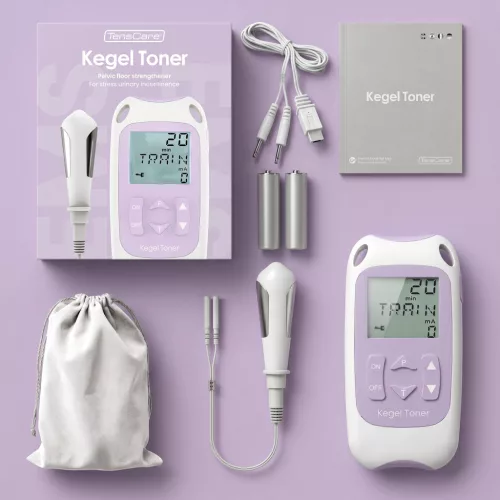
The Kegel Toner arrives with the following accessories – everything is included in the box:
- 1 pc TensCare Kegel Toner device
- 1 pc vaginal probe
- 1 pc stimulation cable
- 2 pcs 1.5V AA battery
- 1 pc storage pouch
- 1 pc user manual
The probe is intended for personal use for hygiene reasons. Spare probes can be purchased in the incontinence category.
Technical specifications
| Channels | 1× stimulation |
| Programs | 2 (Train, Tone) |
| Train program | Pelvic floor muscle strengthening, 20 minutes, once daily |
| Tone program | Maintenance, 20 minutes, 2–3× per week |
| Biofeedback | Not included |
| Probe | Vaginal probe (included) |
| Display | Colour display |
| Automatic shut-off | 20 minutes |
| Power supply | 2× 1.5V AA batteries |
| Manufacturer | TensCare Ltd |
| Certification | CE Class II medical device (MDR, ISO 13485) |
 When NOT to use the device?
- Heart rhythm pacemaker or implanted defibrillator
- Pregnancy or trying to conceive
- Active urinary tract or vaginal infection
- Within 6 weeks after childbirth or pelvic surgery
- Severe urinary retention disorder (retentio)
- Reduced sensation in the pelvic region
Not sure? Consult your treating physician before use!
 Important information
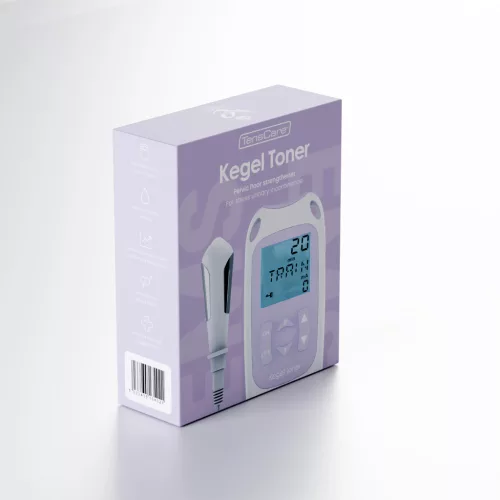
The TensCare Kegel Toner is CE-marked, a Class II medical device (manufactured according to MDR, ISO 13485), designed to complement medical treatment. A medical evaluation to determine the type of incontinence is recommended before starting treatment.
The effectiveness of pelvic floor muscle training complemented by electrostimulation is supported by clinical studies. The Cochrane review of 2022 provided an overview of conservative treatments for incontinence.1
The information on this page is for guidance only. Home therapeutic devices are intended to complement medical treatment, not replace it. Consult your treating physician in case of complaints.
Scientific background
Clinical evidence supports the effectiveness of pelvic floor muscle training supplemented with electrostimulation:
- Todhunter-Brown A, Hazelton C, Campbell P, et al. (2022). Conservative interventions for treating urinary incontinence in women: an Overview of Cochrane systematic reviews. Cochrane Database Syst Rev. 9(9):CD012337. PubMed
- Dumoulin C, Cacciari LP, Hay-Smith EJC. (2018). Pelvic floor muscle training versus no treatment, or inactive control treatments, for urinary incontinence in women. Cochrane Database Syst Rev. 10(10):CD005654. PubMed
 Managing incontinence at home – complete guide →
 Treatment in practice – step by step →
 Urinary incontinence and its treatment →
 Pelvic floor exercise guide →
 Perfect PFE – 4-program alternative →
 All incontinence devices →