Reducing Knee Pain at Home with a Magnetic Therapy Device
Knee pain is one of the most common musculoskeletal complaints. It can be a dull, constant discomfort or a sharp, stabbing sensation that makes climbing stairs, walking, or even resting difficult. If you’re among those whose knee occasionally “acts up”, you’ve probably already searched for many solutions from creams to medications. Now I introduce an option that’s simple to use at home and supports the body’s natural self-healing processes: pulsed electromagnetic field therapy (PEMF). In this article I’ll also walk you through how to apply it.
When does pulsed magnetic therapy help the knee?
Magnetic therapy is a physiotherapeutic method in which the pulsed magnetic field generated by the device penetrates tissues and acts at the cellular level.
This technology is the meeting point of modern medicine and physics, and it can provide support for several common knee problems you may encounter in everyday life:
- Osteoarthritis (arthrosis): Pain and stiffness resulting from wear of the knee joint cartilage is one of the most typical cases. PEMF can help relieve chronic pain and improve joint mobility by supporting regenerative processes.
- Sports or overuse injuries: Sprains, strains, or minor inflammations — for example irritation of the knee ligaments or tendons. The magnetic field can reduce inflammation and speed the healing of injured tissues.
- Chronic joint inflammations: Conditions such as bursitis (inflammation of the bursa) or tendinitis, which cause persistent pain.
- Post-operative rehabilitation: After a more serious procedure, such as knee surgery, the therapy can help reduce swelling, ease pain, and support a faster recovery.
Magnetic therapy eases symptoms, improves joint function, and activates the body’s own restorative mechanisms.
How is the at-home treatment done?
One of the greatest advantages of at-home pulsed magnetic therapy is that it’s extremely simple and convenient. No complicated preparations or outside help are required.
- Choose a time when you can sit or lie down comfortably for about 20–30 minutes.
- Get comfortable.
- Place the applicator on your knee, over the painful area. In the image below, the 30x10 cm flexible magnetic applicator is shown on the left and the Pocket Pro applicator on the right.
It doesn’t matter which one you have! Place the magnet coils so they sit on opposite sides of the knee — you can position them laterally or front-and-back — and secure them with the Velcro strap. 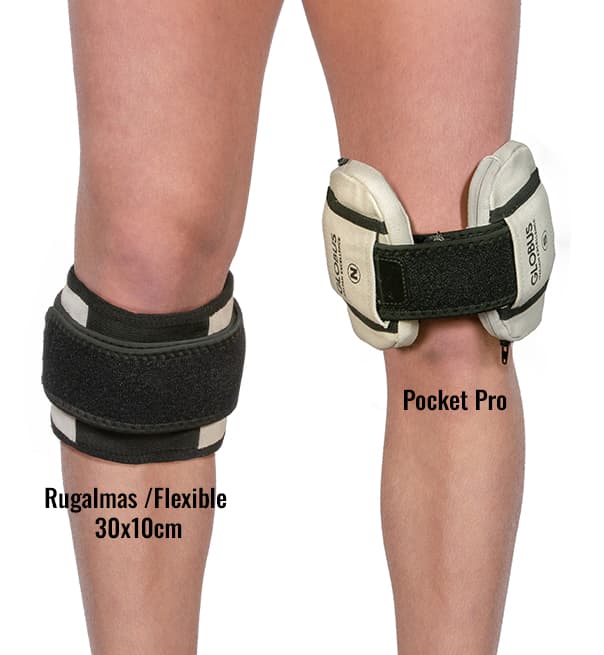
- Connect the applicator cable to the device and switch the device on.
- From the menu select the knee pain / knee arthritis or joint pain program and start it.
- The program runs automatically and the device turns off at the end of the session.
Modern devices operate with pre-set programs optimized for the specific problem, so you only need to start the program.
While the device works, you can read, watch TV, or simply rest. You don’t have to do anything; the magnetic field works quietly and unobtrusively.
The frequency of treatments depends on the condition, but generally 1–2 times daily is recommended during the initial, intensive phase.
What can you expect from the therapy and how long does it take to take effect?
Pulsed magnetic therapy is a method that provides longer-term support, not an instant painkiller like some medications.
Although many people may feel relief after the first treatments, achieving lasting and significant effects requires time.
- Immediate effect (first days): You may notice that the joint feels looser in the hours after treatment, or you might fall asleep more easily at night due to reduced pain. This is a first sign that your body is responding to the therapy.
- Short-term effect (1–3 weeks): The most noticeable changes are expected in this period. Pain may gradually decrease, morning stiffness in the joint may ease, and range of motion generally increases. Inflammatory processes slowly subside.
- Long-term effect (week 4 and beyond): After a full 4–6 week course, most people report significant and lasting improvement. The goal is for the knee to become more loadable again and for pain-free periods to lengthen. It may be worthwhile to repeat the course occasionally or perform maintenance treatments to preserve the symptom-free state.
Be patient! Chronic knee problems did not develop overnight, so healing also needs time. Magnetic therapy relies on regularity and persistence.
If you feel that knee pain is severely affecting your daily life and you want a convenient at-home solution that supports natural processes, it may be worth getting to know pulsed magnetic therapy.
Consult your physician or physiotherapist to design the best treatment plan, but remember: you can perform the treatment yourself in the comfort of your home!