The Masseur and the Technology That Assists Them
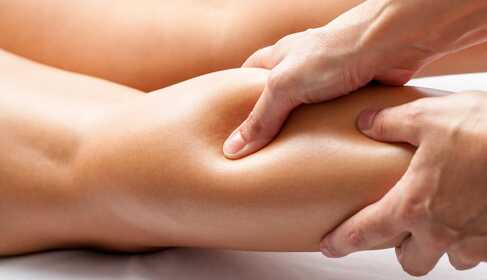
Massage is one of the oldest natural methods for treating muscles and thereby improving joints, ligaments, and, indirectly, the general condition of the whole body. For millennia massage has been performed by a masseur using his two strong arms as tools. Until now it made little sense to reconsider this, but technological development has reached a level that may make it worthwhile. […]

Massage is one of the oldest natural methods for treating muscles and thereby improving joints, ligaments, and, indirectly, the general condition of the whole body. For millennia massage has been performed by a masseur using his two strong arms as tools. Until now it made little sense to reconsider this, but technological development has reached a level that may make it worthwhile. Nowadays the masseur’s work can be both simplified and made more effective. I will go through how.
On technological development
According to common scientific opinion, tool use was one of the triggers of becoming human. Technological progress continuously changes humanity. The generations alive today may be fortunate witnesses to the greatest acceleration of development.
Countless devices make our lives more comfortable and safer. In recent decades the conditions of many professions have also changed. Some trades were made unnecessary by progress, others became more efficient, and many new ones were created.
What would carpenters do without a chainsaw, drill and screwdriver? What would agriculture be like without tractors and combines, or medicine without anesthesia machines and operating tables? How would you do your work without a computer? How would you communicate without a phone?
Whether you like it or not, technology changes things. That is a fact.
What is massage and who is the masseur
Massage is one of the oldest natural methods used to prevent and treat illnesses and to improve well-being. The masseur performs specific maneuvers on the body surface with both hands. These mechanical stimuli produce the effect. Massage affects the skin, muscles, circulation and nerves, and thus helps the healing process.
Its greatest effect is on the muscles. It activates the parasympathetic nervous system and relieves involuntary muscle tension. By stimulating sensory nerve endings it creates a sense of safety, pleasure, self-confidence, warmth, energy and strength. This contributes to an improved immune response and defensive capacity. It also stimulates blood flow in the muscles, aiding the removal of waste products and supporting regeneration.
Most people turn to a masseur when their muscles are tense, when they suffer from muscle-originating pain, or when they feel tired and listless. The masseur relieves tension and eases complaints by working the muscles gently or forcefully, and with touch “recharges the energy stores.” In most cases this can be achieved using just the two hands.
Multimodal treatment
You have surely noticed that every person is different. Even identical twins show differences. On top of that everyone lives differently, eats different foods, performs varying amounts of exercise, etc. Because everyone is different, there is no single “one-size-fits-all” solution for treating illnesses. There is currently no medical method that produces the same effect and complete recovery for every patient.
Because every person is unique, everyone requires individualized, different treatment. It is not possible to predict in advance which treatment will be best for a given individual. For example, you may have noticed that two clients who appear to have the same complaint respond differently to the same massage: one may feel relief after the first session, while the other may actually worsen.
A large proportion of today’s conditions require multimodal treatment. This means that more than one method should be applied simultaneously to treat the condition or state.
A simple example is back pain caused by working at a monitor. Poor sitting posture, a monitor placed at the wrong height and prolonged static positions lead to this. Continuous tension in the neck, shoulder and upper back muscles, and stiffening of the chest muscles cause the neck to bend forward, the back to round and the shoulders to slump.
Massage alone can only relieve the condition for a short time. Without replacing the chair, raising the monitor, loosening the chest muscles and strengthening the neck and back muscles, you can massage as many times as you like and you will not solve the problem. A single method therefore does not provide a solution; however if you apply several approaches at once, their beneficial effects add up and produce improvement together.
My usual DIY example: if you want to build a birdhouse but only have a hammer, it will never be finished. You need a saw to cut the boards to size, a drill to make the entrance hole, a hammer and nails to assemble the boards, and a hook to hang it on a branch.
Even if you have all the tools, but use them incorrectly (trying to cut with a hammer or hammer with a saw), the result will not be good. If you use them correctly and in the right order, the birdhouse gets built.
For every condition several methods can be used. But the order in which you apply them and the combinations you choose differ each time. That requires knowledge—for example, how a device works and how it can help. Let’s look at some examples!
Masseur and technology
If you are a masseur, it can make sense to complement your practice with technical devices, because a well-chosen device provides an added benefit for you and your patient that cannot be achieved by hand. This makes your treatment more effective than massage alone.
For example, acute pain can be aggravated by massage. You touch a painful spot and the surrounding muscles reflexively tense even more, increasing the pain. Yet the client came to you for relief. Although you can gradually reduce pain with touches, you may not be able to eliminate it. A TENS or microcurrent (MENS) treatment applied before the massage, however, switches off the pain-transmitting nerve pathways and thus the perception of pain. You cannot achieve that with your hands.
Or take tendon inflammations (such as Achilles or plantar fascia): improving and increasing blood flow would aid healing. Manual techniques achieve only minimal circulation improvement. Not so with therapeutic ultrasound or a muscle stimulator, which can increase blood flow three to fourfold. They also relax and prepare the muscle–tendon for treatment. You can then massage more effectively.
No matter how many medicinal creams you use, active ingredients penetrate only a few millimeters because the skin’s role is to prevent foreign substances from entering. Ultrasound and iontophoresis treatments loosen the skin, open pores, and allow you to “pump” the active ingredient deeper into the skin, tendons, muscles and joints, thereby enhancing the effect.
You can knead a patient’s muscles weakened after surgery as much as you like, but you will not increase muscle strength that way. Muscle stimulation is exactly for that. Complement your massage with stimulation and you will get better results and more satisfied clients.
You cannot meaningfully influence joint inflammations with massage alone because you cannot stimulate cellular energy production by hand (this is needed to speed up healing). Softlaser, pulsed magnetic therapy or microcurrent, however, help precisely in this by increasing the cells’ energy production up to eightfold, restoring cell membrane potential and boosting mitochondrial protein synthesis.
I could list many more applications.
One thing I am sure of: technical devices help the masseur achieve better results. Your client will be more satisfied. And good news spreads quickly.