
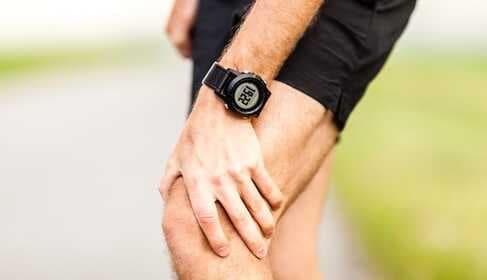
Treatment and Prevention of Muscle Strain
A muscle strain is an injury that occurs when your muscles are overstretched or overloaded. This condition is accompanied by pain, swelling and a limited range of motion, something anyone who leads an active lifestyle will encounter a few times. It can vary in severity from a mild strain (merely a few torn muscle fibers) to a complete muscle rupture.

What causes a muscle strain?
There are many causes of a strain, but it generally happens when a muscle is subjected to a sudden, intense force.
The risk increases significantly if you start intense physical activity without a proper warm-up.
Training with fatigued muscles can have a similar effect, because muscles are not in an optimal state and are thus more prone to injury.
Neglected rehabilitation after a previous injury also increases the chance of recurrence.
Muscle strains are particularly common in sports that involve frequent sudden changes of direction, quick, intense movements and sprints. Examples include ball games, combat sports, tennis, badminton, etc.
Imbalances in muscle strength — for example if one muscle group is significantly stronger than its antagonist — can also contribute to strains.
As we age, muscle elasticity decreases, so older people may be more prone to muscle strains.
Poor technique, an incorrect movement or overtraining also increase the risk of a strain. If you feel your muscle tight or painful, it is worth reducing the intensity.
Symptoms of a muscle strain
Recognizing a strain is very important to start appropriate care. The most characteristic symptom is a sudden, sharp pain that occurs at the moment of injury.
Subsequently, swelling develops in and around the injured area as a result of tissue damage, bleeding and the inflammatory response. If the injury is superficial, bleeding may appear on the skin as a purple patch, although this is not common.
The injured muscle is tender to the touch and feels tight.
Pain, swelling and reflex muscle guarding limit the range of motion — moving the affected muscle in any direction becomes difficult.
In severe strains, the injury may be accompanied by an audible sound (a pop or snap), and you may be unable to load the muscle.
The symptoms of a muscle strain are classified into three grades according to severity. In the mild form there is minimal pain and swelling of the affected area and function is only slightly limited. In a moderate (grade II) injury there is more significant pain and swelling and partial loss of function. In severe strains there is almost complete loss of function and intense pain, which may require immediate medical attention.
Treatment of muscle strain
Treatment should ideally begin as soon as possible after the injury. Acute immediate care primarily aims to reduce pain, limit bleeding into the tissue, decrease inflammation and initiate the healing process.
In medical practice the RICE protocol (Rest, Ice, Compression, Elevation) is the standard for managing muscle strains (rest, icing, compression, elevation).
Rest means protecting the injured muscle from further damage, but this (except in severe injuries) does not mean complete immobilization! Early, controlled movement is more beneficial for healing.
Icing the muscle may be useful during the first 24–48 hours after a strain. Never apply ice directly to the skin and do not use it for longer than 15–20 minutes at a time.
Cooling reduces pain, constricts blood vessels, lowers bleeding and decreases swelling of the affected area. However, do not continue using ice beyond the first two days, since it can then inhibit the healing process.
Compression, for example with an elastic bandage, reduces swelling.
Elevation also helps reduce swelling by promoting the drainage of fluid (e.g., bleeding) from the injured area.
Painkillers such as paracetamol or ibuprofen can help alleviate the unpleasant symptoms caused by a muscle strain. Non-steroidal anti-inflammatory drugs (NSAIDs) reduce both pain and inflammation. Because they can have various side effects, use them only when necessary and justified by pain.
The role of physiotherapy in recovery
Physiotherapy methods play a crucial role in accelerating recovery.
With a muscle strain, appropriately timed and professionally executed treatment speeds up recovery, reduces pain, aids effective regeneration and helps prevent future injuries.
Physiotherapy is particularly effective for chronic strains or after the acute phase has passed.
After the initial stage subsides (usually 48–72 hours) you can begin controlled movement therapy. This helps restore the injured muscle's elasticity and strength and improves circulation, which is essential for healing.
Start with low-intensity, isometric exercises (where the muscle contracts but does not change length), then gradually progress to eccentric exercises (where the muscle lengthens under load).
Massage can also be effective, especially in the later stages of healing. It helps release tension, improves blood flow and promotes the elasticity of scar tissue. However, remember that too early or too aggressive massage can be harmful and may worsen the condition.
The effect of therapeutic ultrasound on muscle strain
Therapeutic ultrasound is one of the most widely used physiotherapy methods for this condition.
Ultrasound is a high-frequency sound wave that converts to mechanical energy in tissues. This energy aids healing in several ways.
Tissue temperature increases, improving local circulation. Better blood supply delivers more oxygen and nutrients to the injured area and assists in removing metabolic waste. This accelerates the natural healing process.
Ultrasound's micromassage effect works at the cellular level, reducing tissue tension and promoting collagen reorganization, which leads to higher-quality scar tissue. The injured muscle becomes more elastic and functional after healing.
Always use gel with ultrasound to help the sound waves penetrate the skin and underlying muscles. With a home ultrasound device (for example the M-Sonic 950), the applicator should be moved in circular motions over the strained area. Treatment is usually performed with low-intensity ultrasound for 5–10 minutes. Treat once a day and, for optimal results, continue for at least 10–15 days.
Therapeutic ultrasound is particularly effective for chronic muscle strains. Start using it after the acute stage when the initial inflammation has subsided. It is generally not recommended in the first 24–48 hours after injury, because its thermal effect can increase inflammation and bleeding.
The effect of microcurrent therapy on muscle strain
Microcurrent electrical stimulation (MENS, MCR) is an innovative treatment method. It uses extremely low-current impulses that stimulate the cells' natural bioelectrical processes.
The current is so low that the treatment is usually not felt. Microcurrent increases cellular ATP (adenosine triphosphate) production, which is the cells' energy source. Increased ATP speeds cell regeneration and the repair of damaged tissues.
Another advantage of microcurrent is that it reduces inflammation in the strained area. It stimulates protein, especially collagen synthesis, and enhances cellular transport mechanisms. These effects together promote muscle regeneration. It also improves local circulation, delivering more nutrients to the injured muscle.
The treatment requires adhesive electrodes placed around the strained area. The procedure is completely painless and produces a pleasant sensation. A typical session lasts 20–30 minutes. Up to 3–4 sessions per day are possible, and a minimum of 30 days of treatment is recommended.
Microcurrent therapy can be started immediately after the injury. It does not produce heat, so it does not worsen bleeding or inflammation. It also has a significant pain-relieving effect, which is why it can practically be applied right away after a strain.
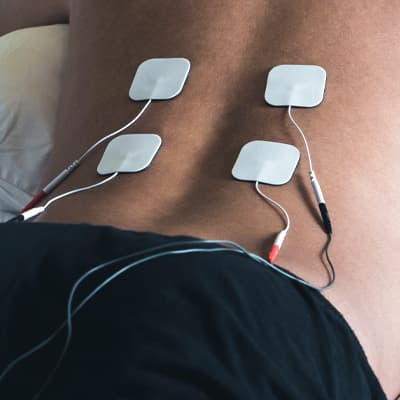
Product recommendation: microcurrent therapy devices
Microcurrent therapy is a form of electrical treatment and one of the newest pain-relieving (MENS) and anti-inflammatory (MCR) procedures.
The effect of softlaser therapy on muscle strain
Softlaser therapy, also known as low-level laser therapy (LLLT) or photobiomodulation (PBM), is an increasingly popular method for muscle injuries. It is a non-invasive technique that uses low-energy laser light to stimulate tissue regeneration.
The laser beam's energy penetrates the tissues and acts at the cellular level. The light is absorbed in the mitochondria (the cells' energy-producing organelles) and enhances ATP production, giving injured cells extra energy for regeneration and thereby promoting healing.
Softlaser therapy reduces inflammation caused by muscle strain by inhibiting the production of proinflammatory cytokines and stimulating anti-inflammatory processes. This helps reduce pain and shorten recovery time.
It also improves microcirculation, which promotes the delivery of nutrients and oxygen to the strained area.
Softlaser therapy can be performed in two ways. For point treatment, the device is placed directly on the skin and held on a specific point for the required energy delivery time. Some devices emit low energy, so a point may need 3–5 minutes of treatment; higher-intensity devices may require only a few seconds per point. After the time elapses, the device is moved to another treatment point. The other method is "scanning," where the device is held a few millimeters above the skin and continuously moved over the entire painful area. Scanning delivers the energy dose less precisely.
Complete treatment of the injured area usually lasts 5–20 minutes, depending greatly on the device type and output.
Softlaser therapy can be used even in the early stages because it does not produce heat and therefore does not increase inflammation. Numerous studies have shown that softlaser therapy accelerates scar formation and improves the functional capacity of healed muscle after a strain.
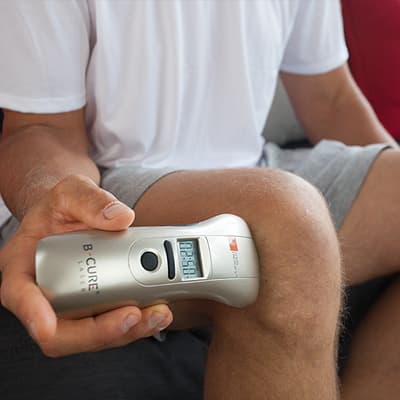
Product recommendation: our softlaser devices
The primary effect of a softlaser device is to support cell regeneration processes and thus speed up healing; it also provides pain relief by stimulating endorphin production.
The effect of compression massage on muscle strain
Compression massage, also known as pressure therapy, can be an effective treatment, especially in the middle and late stages of healing.
Compression massage helps reduce developed scar tissue and release adhesions.
Scar tissue is an important part of healing, but if it remains disorganized it can limit muscle elasticity and functional capacity. Targeted compression helps these tissues to reorganize, resulting in better functional outcomes.
Compression massage also improves local blood circulation and lymph flow. This helps remove metabolic waste and reduces swelling. The result is faster healing and less pain.
Performing compression massage is simple. The therapy cuff is placed over the injured area. Set the device to the appropriate pressure (maximum 60–80 mmHg) — the machine does the rest.
Do not use compression massage immediately after the injury; wait for the first week. Applying it too early may worsen bleeding and inflammation, delaying healing.
A comprehensive rehabilitation approach
Optimal treatment of a muscle strain usually requires a combination of several therapeutic methods. Different interventions may be most effective at different stages of recovery. In the early stage of a strain — if pain requires it — pain relief and anti-inflammatory measures come to the fore, while later functional restoration becomes more important.
A rehabilitation program can combine pain relief and anti-inflammatory measures (rest, ice, compression, elevation, medications), physiotherapy modalities (ultrasound, microcurrent, softlaser), manual therapy (massage, mobilization) and a gradually built exercise program.
These components should be applied individually, taking into account the strain's severity, location and the person's individual goals.
The principle of gradual progression is key in rehabilitation. Moving too quickly is more likely to cause complications, while progressing too slowly may delay full functional recovery.
Pain is a good indicator of how you are progressing: mild pain is acceptable discomfort during rehabilitation, but sharp pain signals that you should reduce intensity.
Returning to full activity usually occurs gradually after a muscle strain. Start with basic movements, then progress to more specific, sport- or activity-related movements, and finally return to full-intensity activity.
Complete healing of muscle fibers takes 90–120 days! This is the time needed to reach the final state — of course this does not mean that you must rest that long for a mild strain — in such cases expect a few weeks off. After a complete muscle rupture you cannot expect to be back to sport in a week!
Prevention strategies
Preventing muscle strains is far more effective than treating them. You can apply several strategies in daily life to minimize the risk of strain.
Lack of warm-up is a major risk, so a proper warm-up before any physical activity is essential. It increases muscle temperature and blood flow, improves elasticity and prepares muscles for load, thus reducing the chance of strain.
After exercise, especially when muscles are fatigued, stretching and foam rolling are important. In sports stimulation devices, post-workout recovery protocols that help flush metabolites are among the latest methods. The older you are, the more recommended regular muscle regeneration treatments become.
Muscle strength balance is also important in preventing strains. Make sure you don't train only the "show" muscles (like chest or biceps), but also stabilizers and antagonist muscles. Unilateral training can lead to muscular imbalance and increase the risk of strain.
Follow the principle of gradual progression when increasing training load. Increasing intensity, duration or frequency too quickly does not give muscles enough time to adapt, leading to strains. A general rule is not to increase any parameter by more than 10% per week.
Pay attention to proper technique in all exercises. Poor technique not only reduces effectiveness but also increases the risk of muscle strain. If unsure, seek professional help to avoid strains.
Proper hydration and nutrition also contribute to muscle health and strain prevention. Dehydrated muscles are more prone to injury, and lack of nutrients slows regeneration. Protein intake is especially important, as it is the building block of muscle tissue.
Summary
Muscle strain is an injury that almost everyone encounters in their lifetime, whether athlete or ordinary person. Early recognition and treatment, as well as the use of appropriate therapeutic methods, can significantly shorten recovery time and improve outcomes.
Modern physiotherapy offers many effective methods for treating muscle strains, such as ultrasound, microcurrent, softlaser and compression massage. Each helps healing by different mechanisms, and their combination often gives the best result.
Ask an expert to tailor the treatment plan so that the therapy is personalized to your individual needs.
The key to successful rehabilitation is patience and gradual progression. The injured muscle needs time to heal, and loading it too early or too intensely can cause another strain. Listen to your body and follow the advice of professionals during recovery.
Finally, by applying proper prevention strategies you can significantly reduce the risk of recurrent strains. Thorough warm-up, stretching, foam rolling, recovery stimulation, balanced strengthening and good technique all contribute to muscle health and movement without strains.
Treating a muscle strain is a dynamic process in which your active participation and cooperation with professionals are essential for successful healing and full functional recovery.

