
 Muscle stimulation for disease treatment – the clinical EMS pillar
In this article I will guide you through the six main clinical areas where muscle stimulation can provide realistic, evidence-based help: relieving muscle stiffness, improving circulation, addressing joint pain via muscle stabilization, recovering muscle strength after illness, delaying muscle atrophy, and treating paralyzed muscle.
 Key idea
The highest-evidence clinical applications of EMS: (1) muscle re-strengthening after intensive care, (2) post-stroke motor function (3) muscle preservation in denervated muscle, and (4) NMES combined with exercise for knee osteoarthritis.1, 2, 5, 7 EMS is not a miracle cure, but in certain clinical situations it is one of the most effective rehabilitation tools.
What is muscle stimulation? – Two basic forms
The essence of EMS treatment: an electrode placed on the skin (self-adhesive, metal, or rubber) delivers an electrical impulse in the milliampere range to the treated muscle. The impulse initiates muscle contraction. By adjusting frequency, intensity and duration you can determine the type of contraction, how much of the muscle bundle it covers, and at what speed and frequency it occurs.
The treatment is concentrated on a specific muscle or muscle group, so the effect appears only in the treated area. The mechanism of muscle contraction is physiologically the same as voluntary contraction – the same metabolic processes occur and the muscle fatigues similarly.
There are two fundamental forms of muscle stimulation, which require distinctly different devices and protocols:
- Treatment of a muscle with an intact motor nerve – classic NMES for muscles with intact innervation. Used for central paralysis after stroke, post-operative muscle rehab, and training support.
- Treatment of a muscle with an injured (denervated) motor nerve – with a special stimulator using long pulse widths (10–500 ms). Used for peripheral nerve injuries (peroneal paresis, brachial plexus, Bell’s palsy). Details: Szelektív ingeráram denervált izomra.
 The two types CANNOT be substituted
Classic NMES (short pulse width, biphasic square wave) DOES NOT work on denervated muscle. Selective current (long pulse width, triangular/trapezoid wave) can be used on innervated muscles as well, but it is less comfortable, more fatiguing for the muscle and less efficient. Always clarify with the treating physician or physiotherapist which type of paralysis or muscle problem you have before treatment.
 6 main clinical application areas
The most common muscle-stiffness problem is the “slept-on” neck: you wake up unable to turn your head to one side. With muscle-relaxing sessions every 4–5 hours it typically resolves within 1–2 days.
After casting or long immobilization the muscles can form contractures. EMS can help “work them back into motion” within 8–10 days – otherwise stiffness may resolve only over months (or not at all).
Muscle-relaxing EMS treatments are useful for shoulder pain, frozen shoulder, rotator cuff syndrome, epicondylitis and piriformis syndrome.
Spasticity (after stroke, in MS or ALS) causes certain muscle groups—e.g. forearm flexors—to become stiff and painful. Properly configured EMS targeting the antagonist muscle can bring hours-long relief. Details: Spasticity and NMES therapy.
In peripheral arterial disease (vascular narrowing) and diabetic neuropathy, severe nighttime leg cramps can be prevented by a muscle-relaxing EMS session before bed.
During healthy exercise, contractions of the leg muscles compress the veins and “pump” blood toward the heart. With immobilization (bed rest, illness, severe injury) this natural “muscle pump” stops – circulation slows and varicose veins or thrombosis may develop.
A 2025 systematic review (8 studies, 311 patients with chronic venous disease) found that NMES, by activating the muscle pump, improves edema, leg pain, ulcer healing and quality of life.10 A 2025 meta-analysis (14 RCTs) showed that NMES significantly increases peak femoral venous velocity and ejected blood volume – thus reducing thrombosis risk.11
For a detailed sequential protocol see the 3S sequential stimulation article.
One of the most common causes of joint complaints is weakness of the muscles surrounding the joint. Ligaments and the joint capsule hold the joint together, but stability is provided by the strength of the surrounding muscles. If the muscles are weak, the bones that form the joint collide with each step – strong muscles would prevent this, which is why knee, hip, back and spinal pain often stem from muscle weakness.
EMS’s clinical role here is strengthening the muscle without loading the joint. A 2024 clinical trial (75 women with knee OA, 12 sessions) found that NMES combined with exercise produced significantly better results in flexion range of motion, thigh circumference, vastus medialis thickness and WOMAC pain-function scores than either method alone.7
For a spine-herniation-specific protocol see: EMS and physiotherapy in disc herniation rehabilitation.
Note: a 2024 meta-analysis (6 RCTs) found that NMES alone is NOT superior to conventional exercise for pain reduction in knee OA12 – therefore NMES works best AS AN ADD-ON to exercise, not instead of it.
After serious illness, prolonged bed rest or surgery, muscle strength is rapidly lost. On first standing it is often difficult to rise from a chair or push yourself up from bed. EMS offers a major advantage in these situations because it does not move the injured/operated joint, it only activates the muscle.
Evidence for EMS in ICU rehabilitation is particularly strong. A 2024 network meta-analysis (23 RCTs, 1,312 mechanically ventilated adults) showed that NMES combined with physiotherapy provided nearly 6-fold higher odds of extubation success compared with usual care (OR=5.89).2 EMS here is one of the highest-ranked rehab strategies.
After recent knee or ligament surgery you can begin treating the muscles as early as the next day – since EMS does not move the joint it is safe. Besides preserving muscle strength, EMS increases blood flow which may aid healing. For detailed protocol see: Using muscle stimulation after surgery.
Muscle atrophy is not only caused by lack of movement. There are diseases that directly damage muscle tissue or the nerves supplying them – e.g. muscular dystrophies, ALS, spinal cord injury, peripheral nerve injuries. Affected muscles gradually lose strength and mass.
Muscle stimulators can slow disease progression in these cases and help prevent or relieve stiffness, pain and cramps. They do not cure the underlying disease, but can significantly improve quality of life. In denervated muscles, a 2020 Kern-Carraro study showed that long-pulse home FES produced a 35% cross-sectional area increase and more than tenfold strength gain over two years in completely denervated thigh muscle.5
For detailed protocols see: Peroneal palsy rehabilitation, MS and muscle stimulation, ALS and FES.
Muscle stimulation is key in treating paralysis. However, the type of paralysis determines the device to be used:
Central paralysis (stroke, MS, brain injury) – the muscle and nerve are intact, but the brain’s motor center is damaged. Classic NMES (biphasic square wave) is appropriate. A 2021 meta-analysis (20 RCTs, 659 patients) found that NMES measurably improves activities of daily living after stroke – especially in the subacute phase and in severe paralysis.1
Peripheral paralysis (denervated muscle, peroneal paresis, brachial plexus injury) – classic NMES DOES NOT work. A special long pulse width (10–500 ms) triangular/trapezoid waveform is required. For details see: Szelektív ingeráram denervált izomra.
For a detailed pillar article see: Home rehabilitation after limb paralysis.
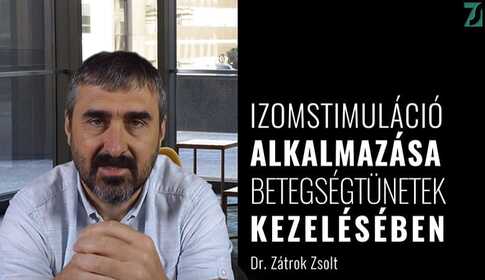
See it in action – EMS in disease treatment
In this video I show how a muscle stimulator can be used in various disease situations – demonstrating the basics:
 Re-teaching the nerve–muscle connection after paralysis
After stroke or other central paralysis, EMS plays a key role in retraining the neuromuscular connection. Other brain areas can take over the tasks of the damaged region – this requires active, voluntary attempts combined with real muscle contraction. EMS ensures that an attempt is followed by an actual contraction, providing the brain with reinforcing feedback.
Motor learning research shows that extensive repetition is required for appropriate brain "rewiring" – a 2009 study (Lang et al.) reported that in conventional stroke rehab patients receive only about 32 upper-limb repetitions per session on average, far below the high repetition counts suggested by motor learning research.3 A 2010 feasibility study (Birkenmeier et al.) showed that a 1-hour session can achieve 300+ repetitions and yields measurable ARAT improvement in chronic stroke patients.4
EMS helps achieve high repetition counts: every attempt is followed by a true muscle contraction and provides sensory feedback to the brain. A 2019 synthesis of motor learning (Maier et al.) states that activity-dependent brain plasticity depends on the intensity, density and task-specificity of repetitions.9
 ETS – an even more effective form for treating paralysis
Modern ETS devices (EMG-triggered stimulation, e.g. DuoBravo N) detect the patient’s weak voluntary attempt and respond with stimulation. This active, intention-driven rehab is crucial: when the patient "wants" to move, the device helps. Details: ETS – biofeedback-controlled stimulation.
What does the research say about clinical EMS?
“Does EMS really help daily activities after stroke?”
Yes. A 2021 systematic review and meta-analysis (20 RCTs, 659 patients) found that NMES measurably improves performance of activities of daily living (dressing, hygiene, eating) after stroke – especially in the subacute phase and in severe paralysis.1
“How much does EMS help after intensive care?”
One of the highest evidence-level EMS applications. A 2024 network meta-analysis (23 RCTs, 1,312 mechanically ventilated adults) found that NMES combined with physiotherapy increased the odds of extubation success by nearly 6-fold compared with usual care (OR=5.89).2 EMS is one of the highest-ranked strategies in ICU rehab.
“Does EMS really help in knee OA?”
Yes, when combined with exercise. A 2024 clinical trial (75 women, 12 sessions) found that NMES plus exercise produced measurable improvements in flexion range, thigh circumference, vastus medialis thickness and WOMAC pain-function scores compared with either method alone.7
“What does EMS give in venous disease?”
A 2025 systematic review (8 studies, 311 patients with chronic venous disease) found that NMES, by activating the muscle pump, clearly improves edema, leg pain, ulcer healing and quality of life.10 A 2025 DVT-prevention meta-analysis (14 RCTs) demonstrated a significant increase in peak femoral venous velocity.11
“Can muscle mass really be preserved in denervated muscle?”
A long-term (2-year) study (Kern & Carraro 2020) showed that long-pulse home FES applied to completely denervated thigh muscle led to a 35% cross-sectional area increase and more than tenfold strength gain.5 This means: with persistent stimulation the muscle does not simply waste away but can regress toward a viable state.
The clinical takeaway
The clinical evidence level for EMS is area-specific. Strong evidence: ICU rehab, post-stroke motor recovery, venous disease, DVT prevention, preservation of denervated muscle. Moderate-strong (when combined): knee OA + exercise, COPD + pulmonary rehab, reduction of exercise-induced muscle soreness, isolated muscle-preservation during short immobilization. Clinical EMS protocols should always be decided by the full rehab team – do not start home treatment without specialist consultation.
 Device selection by clinical goal
Choosing a clinical EMS device depends on the goal and the type of paralysis:
Central paralysis, stroke rehab, post-ICU rehab
DuoBravo N
Clinical-level ETS (EMG-triggered) device specifically for stroke rehab. It detects voluntary intent and reinforces it with stimulation. Ideal for both main application areas (stroke rehab, incontinence).
Globus Genesy 300 Pro
NMES + TENS device with Hungarian menu. Works well on innervated muscle (central paralysis, muscle strength recovery). An affordable entry-level clinical choice.
Peripheral (denervated) muscle
PeroBravo
Stimulator specialized for denervated muscle with triangular, trapezoid and long pulse-width waveforms. Suitable for peroneal paresis and brachial plexus injuries. NOT for spasticity!
Globus Genesy 600 / Genesy 1500 / Genesy 3000
Versatile high-end Globus models – include classic NMES and selective (triangular/trapezoid) waveforms. Ideal for mixed cases (ALS, late-stage MS, post-injury rehab) because one device can cover both types of paralysis.
Postoperative muscle-preservation, joint support
Globus Premium 400
Globus device with rehab and sports programs. Ideal for preserving muscle strength after knee, hip or shoulder surgery. Also an excellent choice for general muscle strength recovery.
MyoBravo
Entry-level 4-channel TENS + EMS + FES device. For central rehab and general strengthening. NOT for denervated muscle!
 My advice for choosing
DO NOT buy a device before the treating physician (neurologist, physiatrist, physiotherapist) has clarified the type of paralysis and the goal. The wrong device is not only useless but also a loss of time – which can be critical for recovery. During consultation it is also worth having the I/t curve measured if denervated muscle is suspected.
 Before you start home clinical EMS treatment
EMS is contraindicated or requires specialist consultation in the following situations:
- Undiagnosed paralysis or muscle problem – first clarify the type (central vs peripheral) with your physician.
- Implanted pacemaker, ICD or other active implant – electrical treatment is forbidden nearby.
- Pregnancy – abdominal and lumbar treatment is contraindicated in all stages of pregnancy.
- First 24 hours after acute stroke – intensive stimulation too early is contraindicated.
- Active deep vein thrombosis (DVT) – urgent medical care is required, do not start home treatment.
- Active malignant tumor in the treatment area – avoid the affected region.
- Freshly operated area – gentle EMS may be started the next day on the muscle (not the wound) – always with medical approval.
- Skin disease, injury or severe sensory loss in the treatment area – the skin must be intact and sensitive.
- Epilepsy or other seizure disorders – stimulation can be a trigger.
- Severe cardiovascular disease – request cardiology approval in cases of arrhythmia or heart failure.
Further reading
For the full contraindication list and technology-specific information read our article on contraindications for electrical treatment.
Frequently asked questions
Your treating physician (neurologist, physiatrist) can determine this – based on physical examination, nerve conduction studies (EMG/ENG), imaging (MRI) and history. Post-stroke paralysis is central; peroneal paresis (foot drop after injury or compression) is peripheral. DO NOT choose a device until this is clarified.
After stroke, once the acute phase has passed (generally 1–2 weeks), with the treating physician’s approval. After recent surgery: you can often start gentle muscle treatment the next day (respecting wound healing), since EMS does not move the joint. Always consult your physiotherapist for exact protocols.
It depends on the area. Motor recovery after stroke proceeds over months to years. In knee OA combined treatment shows measurable improvement after 12 weeks.7 In post-ICU rehab EMS can yield significant results within 1–2 weeks.2 Persistence is key across all areas – don’t give up after the first 2–3 weeks.
Partially, and only if combined with exercise. Modern literature shows NMES + exercise yields measurable improvements in knee OA range of motion and pain.7 NMES alone does not provide better pain reduction than exercise.12 Avoiding surgery depends on many factors – weight, activity level, joint condition, age. EMS complements that portfolio.
Properly configured NMES targeting the antagonist muscle can bring hours-long relief for patients with spasticity (after stroke, MS, ALS). IMPORTANT: selective long-pulse devices like the PeroBravo are FORBIDDEN for spasticity – they can increase stiffness. Details: Spasticity and NMES therapy.
No. Clinical EMS is an adjunct to conventional rehab, physiotherapy and medical treatment. The 2024 knee OA trial showed: NMES provides a significant measurable addition when combined with exercise.7 Diagnosis, protocol selection and surgical decisions are always the responsibility of the specialist physician and physiotherapist.
 Summary – Quick overview
Home rehabilitation after limb paralysis (pillar) ←→
NMES in rehabilitation and sports (clinical evidence) ←→
Regaining lost muscle strength ←→
Using muscle stimulation after surgery ←→
ETS – biofeedback-controlled stimulation ←→
Selective current for denervated muscle ←→
Sources
- Kristensen MGH, Busk H, Wienecke T. (2021). Neuromuscular Electrical Stimulation Improves Activities of Daily Living Post Stroke: A Systematic Review and Meta-analysis. Archives of Rehabilitation Research and Clinical Translation 4(1):100167. PubMed: 35282150
- Xu C, Yang F, Wang Q, Gao W. (2024). Effect of neuromuscular electrical stimulation in critically ill adults with mechanical ventilation: a systematic review and network meta-analysis. BMC Pulmonary Medicine 24(1):56. PubMed: 38273243
- Lang CE, Macdonald JR, Reisman DS, Boyd L, et al. (2009). Observation of amounts of movement practice provided during stroke rehabilitation. Archives of Physical Medicine and Rehabilitation 90(10):1692-1698. PubMed: 19801058
- Birkenmeier RL, Prager EM, Lang CE. (2010). Translating animal doses of task-specific training to people with chronic stroke in 1-hour therapy sessions: a proof-of-concept study. Neurorehabilitation and Neural Repair 24(7):620-635. PubMed: 20424192
- Kern H, Carraro U. (2020). Home-Based Functional Electrical Stimulation of Human Permanent Denervated Muscles: A Narrative Review on Diagnostics, Managements, Results and Byproducts Revisited 2020. Diagnostics (Basel) 10(8):529. PubMed: 32751308
- Grinsell D, Keating CP. (2014). Peripheral nerve reconstruction after injury: a review of clinical and experimental therapies. BioMed Research International 2014:698256. PubMed: 25276813
- Moezy A, Masoudi S, Nazari A, Abasi A. (2024). The effects of combined exercise and neuromuscular electrical stimulation in patients with knee osteoarthritis: a randomized controlled trial. BMC Musculoskeletal Disorders 25(1):158. PubMed: 38378564
- Liou YG, Chang SL, Hu S, Chen MZ, Yeh JT. (2024). Effect of adding neuromuscular electrical stimulation for patients with moderate to severe chronic obstructive pulmonary disease: Systematic review and meta-analysis. Complementary Therapies in Clinical Practice 57:101867. PubMed: 38901395
- Maier M, Ballester BR, Verschure PFMJ. (2019). Principles of Neurorehabilitation After Stroke Based on Motor Learning and Brain Plasticity Mechanisms. Frontiers in Systems Neuroscience 13:74. PubMed: 31920570
- Santos M, Pires R, Ferreira J, Dias-Neto M. (2025). Effects of neuromuscular electrical stimulation on symptoms of chronic venous disease of the lower limbs: A systematic review. Vascular Medicine 31(1):114-123. PubMed: 41055697
- Xu Y, Li Y, Chai Z, Tao Y, Lin H, Zheng C. (2025). Effectiveness of neuromuscular electrical stimulation in preventing venous thromboembolism: A meta-analysis based on randomized controlled trials. Clinical and Applied Thrombosis/Hemostasis 31:10760296251366423. PubMed: 41105602
- Carvalho MTX, Guesser Pinheiro VH, Alberton CL. (2024). Effectiveness of neuromuscular electrical stimulation training combined with exercise on patient-reported outcomes measures in people with knee osteoarthritis: A systematic review and meta-analysis. Physiotherapy Research International 29(1):e2062. PubMed: 37926438
- Harmon KK, Girts RM, Rodriguez G, Beausejour JP, et al. (2024). Comparison of neuromuscular electrical stimulation and action-observation/motor-imagery training during short-term knee immobilization on muscle size and strength. Experimental Physiology 109(7):1145-1162. PubMed: 38687158