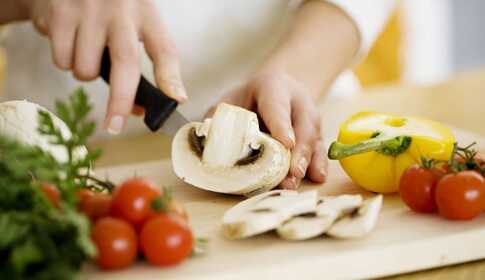
Vegetarian Diet – A Natural Remedy
There can be many reasons to switch to a vegetarian diet. For example, to preserve or regain your health, because of spiritual beliefs, concerns about animal welfare, fear of antibiotics and hormones used in animal husbandry, or to avoid excessive exploitation of environmental resources, etc.

I Became a Vegetarian by Choice
Animal husbandry was part of my childhood. My grandparents, parents, aunts, godparents, relatives, acquaintances, neighbors… everyone kept pigs, chickens, rabbits, pigeons. I can safely say we ate a lot of meat from childhood. As an adult I often ate meat; I liked steaks and breaded cutlets… At the time I never thought I would ever give it up…
I switched to a plant-based diet when, in 2012 at the age of 45, I discovered I had high blood pressure. For weeks I repeatedly measured values of around 160/110, despite cycling 60–90 minutes 3–4 times a week or running a few kilometers.
As an internist who also worked in a hypertension clinic, I knew the condition well. I was frightened because medical knowledge says high blood pressure is not curable and requires lifelong medication. Seeing the numbers, my colleagues recommended starting an immediate “medication cocktail” of four drugs. I, however, did not start taking them.
My wife had already switched earlier to a plant-based, vegetarian diet, which made it easier for me to change. I joined her.
And the result? Two weeks later the values began to normalize; after two months I was measuring only normal numbers. In the years since, I have never measured a value exceeding 130/80. I didn’t take a single antihypertensive drug and I didn’t change my lifestyle—only my diet changed…
To me that was enough “scientific” proof. Since I changed nothing else, I consider the disappearance of my high blood pressure to be the effect of the vegetable-based diet. That is why I have remained vegetarian ever since.
Animal Products on the List of Carcinogens
Vegetarianism received a significant boost when, based on study results, WHO and medical organizations dealing with cancers classified consumption of red meats, processed meats and cured meat products as “probably” carcinogenic.
Since then, worldwide more and more people avoid any meat, fish or poultry. Many more have stopped eating red meat and processed meats but still eat chicken or fish.
Vegans, who completely eliminate animal meats and other animal-derived products such as milk, cheese, eggs and gelatin, are the fewest.
Research on Vegetarian Diets: Then and Now
Earlier research on vegetarianism often aimed to demonstrate nutritional deficiencies to prove the dangers of plant-based diets. When they could not substantiate these claims, the focus shifted and nowadays most studies address the health benefits of meat-free eating.
As a result, the current position of the American Dietetic Association states that “appropriately planned plant-based diets, including total vegetarian or vegan diets, are healthful, nutritionally adequate, and may provide health benefits for the prevention and treatment of certain diseases.”
Being Vegetarian Does Not Mean Chewing Green Leaves and Roots All Day!
Many think a vegetarian just nibbles carrots all day… but a vegetarian is not a masochist who tortures themselves with tasteless and exclusively raw food—simply they eat healthier foods.
Try an experiment! Cook a piece of meat without salt or spices and eat it. How does it taste? Nothing—it's tasteless! So you don’t like the taste of meat itself, but the seasoning!
Simply keep the seasoning, but use vegetables, legumes, etc. instead of meat.
Variety Is Important!
An incredible diversity of cereals, seeds, vegetables and fruits is available, from which you can create a very varied menu, whether raw, boiled, steamed or baked.
Becoming vegetarian is increasingly easy thanks to fresh vegetables and fruits available year-round and the thousands of other products that make a varied diet possible.
The internet and media help you learn about and prepare plant-based dishes from distant cultures. I can confidently say the culinary arts of the world's peoples provide huge variety—you just have to learn from them.
I use an online Indian cookbook that alone contains several hundred vegetarian recipes. And that's just India. Look through Mediterranean cuisine—Italian, Spanish, Greek dishes. Check out Mexican or Peruvian recipe collections! The ingredients are available in any supermarket or health food store.
A plant-based diet can be tasty, varied, nourishing and healthy!
If You Eat a Veggie Pizza with Cola, You're Already “Vegetarian” 🙂
A vegetarian diet is not monotonous! Let variety be your motto. Eat whole grains (breads and pastas made from them), vegetables, fruits and seeds in every possible combination, prepared in different ways and spiced differently.
Of course, even as a vegetarian remember: consuming too many calories still leads to weight gain. Snacking on oily nuts, for example, can easily backfire.
Some Evidence of the Harmful Effects of Hungarian Cuisine
Since tastes are formed in childhood, it is very hard to deviate from the diet of your grandmother's kitchen or your mother's cooking. You prefer the foods you were given a lot as a child and grew to like.
Official health statistics confirm that the once abundantly consumed and indeed tasty Hungarian dishes are seriously damaging the health of their consumers.
Two thirds of the population are overweight, 50% of adults suffer from one or more chronic diseases, and we are world leaders in deaths caused by cardiovascular disease and cancers. Healthy life expectancy barely exceeds 50 years. I could cite many other data as evidence.
Need I say more? Hardly!
The “Trap” of Mom’s Cooking
As a parent or grandparent, it can be a serious challenge to decide what to put on your child's or grandchild's plate!
If you serve the traditional Hungarian dishes you loved and grew up with, you may be condemning them to:
- become sick by age 50, just like you.
- spend decades living with illnesses.
- have the highest risk in the world of dying prematurely from cancer or cardiovascular disease.
If you want to protect them from this, give them healthy food!
You Don’t Have to Change Overnight
Scientific data indicate you need about 0.4 g of animal-derived protein per kilogram of body weight per day. For a 50 kg woman that's 20 g, and for an 80 kg man it's 32 g! A typical restaurant schnitzel almost covers a week’s requirement.
Since it's hard to change all at once, start with small steps. I suggest two methods.
First advice: reduce the proportion of meats in the meals you eat and increase vegetables. Eat a few fresh fruits each day as well.
Second advice: start getting acquainted with Indian, Mexican or Mediterranean cuisines and prepare their dishes. These are known to be associated with lower disease risk. Their recipes emphasize plants more and use meats more sparingly.
Our Ancestors Lived Mainly on Plant Foods!
Before writing this article I read a number of ethnographic studies. Ethnography deals with, among other things, what our ancestors' eating habits were.
Until World War II, various cereals (spelt, oats, barley, rye, millet, buckwheat, etc.) made up nearly two-thirds of the Hungarian diet. Breads and porridges made from these were flavored with vegetables and small amounts of animal fat or dairy (sour cream, curd). The share of meats was well below 10%, mostly poultry.
My grandparents raised one pig a year. Only one, because that amount of swill, leftovers and feed was available. The animal, reaching 90–100 kg, was slaughtered before Christmas and processed. Meats, bacon and sausages were smoked and rationed out to be consumed until the autumn harvest. A daily slice of bacon or a few slices of sausage were allotted per family member. So it’s not true that our grandparents devoured meats the way modern generations do.
Things changed after World War II. Full employment and the incomes that came with it made foods accessible that had once been consumed only by the “lords.” Meat became one of those foods and turned into a symbol of prosperity, appearing more and more on plates. Meanwhile, the proportion of cereals, vegetables and fruits decreased. I remember my father speaking with disgust about corn porridge (polenta), which had been an almost daily food in his childhood. It reminded him of poverty and was fed only to pigs—never allowed on our table.
Then came white bread and refined sugar… but maybe I’ll write about those another time.
Healthy for a Lifetime
The slogan of my blog is “Healthy for a Lifetime.”
It means you should live your everyday life from a young age in a way that does not jeopardize your quality of life in old age.
If your diet is unhealthy, you don't exercise enough, your job causes stress, or you damage your body with harmful addictions, you can expect illnesses by the age of 50.
These are cruel “companions.” They don’t let you live your days cheerfully and easily. Diseases torment you and ruin your quality of life. If you are ill, you must spend savings you set aside earlier to restore what you lost. Meanwhile, because of your complaints you can work less, so your income also declines. Constant financial problems make a peaceful life impossible and often limit access to care.
Therefore it should be clear to you that the appearance of disease is undesirable and you should do everything to prevent it!
A plant-heavy diet is a proven way to prevent chronic diseases.
It's up to you to try it!