
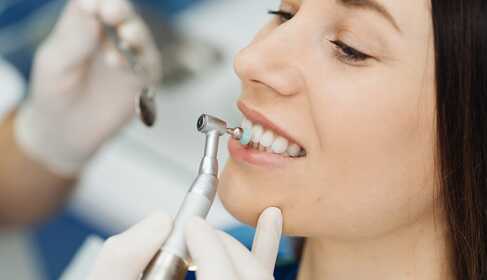
What does a dental hygienist do?
Most of you are probably already familiar with the term dental hygienist, and I’ve even heard you call this type of professional an oral hygienist. However, if asked to explain exactly which areas fall within their scope, you might find it difficult — I’d like to fill that gap now with this summary article.
I’ll start with the basics. Dental work is a team effort: solving dental problems requires from the very first moment a team with different roles, where everyone is excellent in their own responsibilities — both professionally and personally. The work is usually coordinated by the dentist, but the work of dental assistants, dental hygienists, dental technicians and the administrative staff and receptionists who handle background tasks is also indispensable. Dental knowledge — and thus the professional tasks — have increased to such an extent that several specializations became necessary to ensure proper execution. Dental hygienists are therefore professionals who perform certain dental tasks independently, under medical supervision.
Who is a dental hygienist?
The term dental hygiene refers not only to the teeth but to the health of the entire oral cavity. Essentially, maintaining the health of the oral cavity is the responsibility of the whole dental team.
So what exactly does a dental hygienist do, or as they are nowadays officially called, a clinical dental hygienist?
They work under the supervision of the dentist just like a dental assistant. At the same time, similar to dental technicians, they possess specialized knowledge and perform independent tasks. What are these tasks?
It’s useful to split their duties into two parts:
Dental hygiene counseling
- Keeping in touch with patients; general awareness-raising (e.g., why are semi-annual/annual check-ups important?)
- Introducing and practicing proper oral hygiene techniques (e.g., modified Bass technique, interdental cleaning)
- Advice on various oral care tools (different toothbrushes and their lifespan, dental floss, interdental brushes)
- Advice regarding removable orthodontic appliances
- Supporting the motivation needed for correct oral care habits
- Oral care advice tailored to the individual needs of patients
- Nutritional advice related to oral hygiene
- Advice on the use of removable prostheses
- Information on the enamel-supporting effects of fluorides
Tasks and procedures performed by the dental hygienist
In addition to their advisory role, dental hygienists also perform simpler procedures. Of course, not all practices assign all of these tasks to hygienists; this usually depends on the cooperation and agreement between the dentists and assistants working in the given practice:
- Teeth whitening
- Tartar removal (ultrasonic cleaning, polishing, etc.)
- Placement and removal of tooth gems
- Fissure sealing
- Taking impressions
- Oral cancer screening
- Fabrication of temporary crowns and bridges
- Fluoride application
- Treatment of cold sores and aphthous ulcers
Questions – answers
I will write about all these tasks in a little more detail later, but now here are a few thoughts from you — questions that you might get answers to through this article.
“I’ve managed without them so far — why would it become necessary now to visit a dental hygienist regularly?”
The tasks listed above are relatively time-consuming and don’t fit well into a dentist’s daily routine; proper execution can take roughly an hour. For perfection, dentists ask for the help of dental hygienists who are specialized in these tasks. During the annual dental check-up it becomes clear whether any of the above treatments are needed and, if so, how they should be scheduled and integrated into other dental treatments.
In my experience, in recent years the condition of people’s periodontal tissues has deteriorated significantly, affecting increasingly younger age groups, for which many factors can be held responsible. In any case, increased attention must be paid to prevention and maintenance.
“Why do I have to have my teeth cleaned before crowns are made? My tooth will be ground down anyway and a new nice porcelain crown will be put on. Isn’t this just another way to rip me off?”
Any gum irritated by tartar or plaque is inflamed, swollen and prone to bleeding. After a proper tartar removal the gum becomes healthy and firm again, it relaxes a little and the inflammation and swelling subside. If tartar removal and tooth preparation (grinding) happen at the same time and the impression is taken soon after, the margin of the crown will not fit the gum margin precisely at the time of bonding, and the lifespan of the prosthesis will be significantly shortened. So which is the rip-off? The correct work at a moderately higher price, or the somewhat cheaper option that most likely lasts only half as long?
If any degree of gingival inflammation is present, it is advisable to start every dental procedure with cleaning. Even when placing fillings, it matters whether blood seeps under the filling or not, or whether there are hidden cavities under swollen gums. During an extraction or any other oral surgery, a bacterial colony maintained by tartar does not help the healing process.
“They told me that after implant placement I must appear for a check every year and have professional cleaning performed. But I brush properly and even use mouthwash!”
Before implant placement we always draw attention to the importance of enhanced oral hygiene. The relationship between implants and the bone–gum interface is different from that of natural teeth and their supporting structures. Around implants there isn’t the same complex, natural protective zone as around natural teeth, so inflammation can develop almost unnoticed and without pain, which can ultimately lead to implant loosening. That is why it is very important to maintain maximum cleanliness and be free of tartar, and to detect any pathological process early when it is still stoppable. For example, implant warranties are often valid only if the patient regularly attends check-ups and takes advantage of the professional cleaning performed by the dental hygienist.
“She cleaned and polished my teeth for an hour. I couldn’t even see anything wrong before. But since then my teeth seem whiter and shinier, my gums don’t bleed, and I don’t have bad breath… Somehow it’s also easier for me to keep them clean…”
It often happens that tartar is located just below the gum line and the person is unaware of it; at most halitosis, occasional bleeding, wandering, vague pain or sensitivity draw attention to something being wrong. (Unfortunately, sometimes the bone resorption processes hidden by the gum are discovered late as a result of the inflammation.) Therefore the dental hygienist does not only remove the tartar that is clearly visible on the lower front teeth, but thoroughly cleans every surface of both the upper and lower teeth. Professional work is completed with routine ultrasonic tartar removal and surface polishing, because completely smooth surfaces are less likely to attract tartar again.
“...and for an hour she just kept telling me: how, when, how many times, with what… Anyway, I learned a lot during that time about maintaining oral hygiene and about dental problem solutions that I didn’t know before!”
A dental hygienist is a prepared, well-trained professional who understands dental problems, the nature of treatments, and of course all the options for maintaining oral hygiene, which they explain in a personalized way. Feel free to ask them questions; they complement the information given by dentists or explain parts that were not understood. Dentists and hygienists cooperate closely and work together to ensure that patients remember dental visits as a positive experience in the long term.
In summary, a dental hygienist plays a very important role in various dental treatments, and through their advisory function they greatly contribute to the development of healthy oral care habits.
Make an appointment with me!

Book a full dental cleaning with me and be part of preserving your own teeth while also helping to protect the teeth of your friends, relatives and children — saving the most time, energy and money in the long run.
Looking forward to seeing you!
Borbála Rák
[email protected]

