
Biofeedback – an effective aid in rehabilitation
The English term biofeedback literally means biological feedback — a signal about how the body is functioning. It is a technique with which you can learn to control certain functions of your body. Biofeedback requires sensors that collect information about your body. Based on the feedback received, you can make fine adjustments, for example relaxing certain muscles to reduce pain.
A simple example of biofeedback is learning movement in front of a mirror. You control the execution of the movement with vision and refine performing it by repeating it again and again. Biofeedback provides an opportunity to learn and practice new ways to control your body.
There are many areas of application. One is therapeutic use, primarily for rehabilitation following the loss of some function to aid recovery.
Types of biofeedback
The therapist can choose from various biofeedback methods depending on the health problem and treatment goal.
Types of biofeedback may include:
- Brain waves. Sensors placed on the scalp monitor the brain's electrical activity (brain waves). The device used for this is an electroencephalograph (EEG).
- Respiratory rate. Sensors placed on the abdomen or chest monitor the breathing rate and speed.
- Pulse rate. The most common method uses sensors placed on the chest or wrist that measure the heart's electrical activity (based on the electrocardiograph (ECG)). Pulse and pulse variability can be determined. Sensors placed on the finger or earlobe detect the peripheral pulse and even changes in blood volume (the device is a photoplethysmograph or pulse oximeter).
- Muscle contraction. Sensors are placed on the skeletal muscles and an electromyograph (EMG) records the electrical activity associated with muscle contraction.
- Pressure. A pressure sensor placed in a body cavity (vagina, rectum) can record the pressure generated during contraction.
- Sweat gland activity. Electrodermograph (EDG) sensors attached to your fingers, palm, or wrist measure sweat gland activity and the amount of perspiration on the skin, indicating anxiety.
- Temperature. Sensors attached to the fingers or toes measure blood flow in the skin. Under stress, blood vessels constrict, reducing flow and skin temperature. Monitoring this change can signal that it's time to start relaxation techniques.
Biofeedback devices
Biofeedback used to be common only in physiotherapy clinics, doctors' offices and hospitals. Nowadays more and more biofeedback devices are marketed for home use, including:
Heart rate monitor watches. These help track pulse rate. They are particularly important for heart and lung patients whose heart rate increases with exertion (which can be anything from working to walking to the shop). Using a heart rate monitor, the patient can find an activity intensity at which the pulse rises only moderately and does not cause symptoms.
Electromyogram (EMG)-based devices. These indicate muscle activity. They play a key role in regeneration of the nerve-muscle connection and relearning movement after stroke. They also make it easier to learn to release and eliminate muscle tension caused by stress. The method is increasingly used in treating urinary and/or fecal continence problems caused by weakening of the pelvic floor muscles, because feedback significantly improves the effectiveness of pelvic floor exercises (incontinence).
EMG-based devices can also be used in stress management. By monitoring muscle tension and watching the feedback, you can learn to relax muscles and achieve relaxation.
Click here to find EMG-based biofeedback devices (evoStim E, DuoBravo N, PeroBravo, SineBravo).
Pressure-based devices help restore the ability to retain stool and urine. They can monitor the strength of the vaginal or anal sphincter muscles and guide recovery of strength. They also help regain control in cases of nerve injury after prostate surgery.
Click here to find a pressure-based biofeedback device (evoStim P).
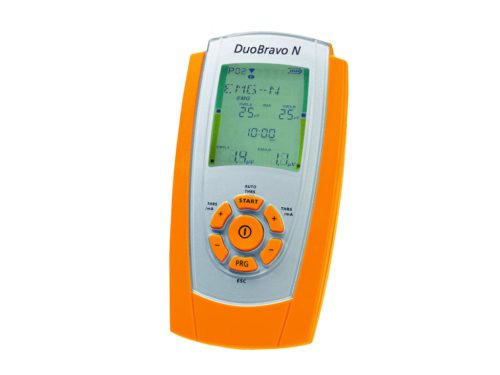
Product recommendation: Biofeedback devices
Biofeedback means biological feedback — a signal about how the body is functioning. It is most effectively used in rehabilitation treatments, for example for relearning movement and improving function.
In Western rehabilitation practice, the use of interactive computer programs is rapidly spreading. Some types of biofeedback devices measure physiological changes in the body, for example hand displacement and its direction. The sensors connect to a computer. Computer graphics help with muscle relaxation or contraction, track movement and thus assist in relearning movement.
Another type of biofeedback uses a headband to monitor brain activity. Its signals tell you when your mind is calm and when it is active. This helps you learn how to control the stress response.
What can biofeedback be used for?
It can be applied in the treatment of numerous physical and mental problems
- Anxiety or stress (learning stress-relief techniques, stress management)
- Asthma (strengthening breathing control)
- Attention deficit or hyperactivity disorder (ADHD) (learning to concentrate)
- Chronic pain
- Constipation
- Fecal incontinence (EMG and pressure biofeedback). Devices: evoStim E, evoStim P
- Fibromyalgia
- Headache
- High blood pressure
- Heart disease – monitoring exercise tolerance
- Irritable bowel syndrome
- Raynaud's disease
- Tinnitus
- Stroke (EMG-based devices, with ETS – they help relearn movement and regain muscle strength. Devices: DuoBravo N, PeroBravo)
- Temporomandibular joint disorder
- Difficulty with urinary retention — both EMG and pressure biofeedback. Devices: evoStim E, evoStim P
Benefits of biofeedback
- Non-invasive (it collects data from the body surface, so it does not cause discomfort)
- It can reduce or eliminate the need for some medications
- It can enhance the effect of medications
- It can help those who, for example, cannot take medications during pregnancy
- It helps make health more controllable

