
Blog
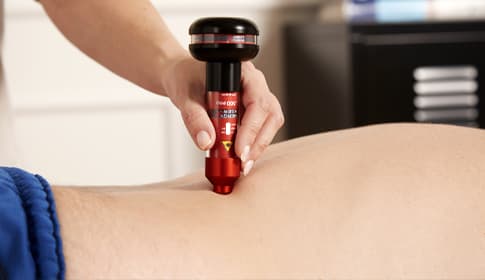
Back pain and lower back pain are among the most widespread lifestyle-related health problems today. If you are one of the people who has experienced a herniated disc or chronic lower back pain, you know how much it can affect everyday life. The good news is that low-level laser therapy is a side-effect-free method that can also be used at home and may help ease your symptoms.
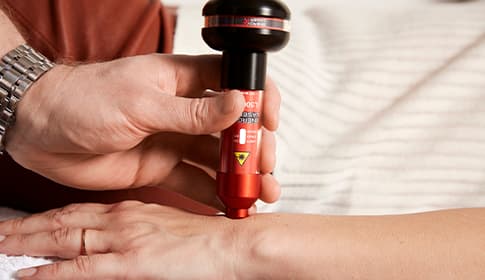
Tendon inflammation (tendinitis) is one of the most common musculoskeletal complaints – it affects both athletes and people who work at desks. If you have already felt that persistent, pulling pain in your shoulder, elbow, or knee, you know how hard it can be to get rid of it. Softlaser therapy can help support the healing process.
Knee pain is one of the most common musculoskeletal complaints today. If you are among those who have trouble getting moving in the morning, wince when climbing stairs, or experience pain after a longer walk, you should know: there is a solution. Low-level laser therapy is a side-effect-free method that can be used at home and may support the healing process.
If you suffer from recurrent cold sores, you know how frustrating the limited effectiveness of conventional treatments can be. Low-level laser therapy (LLLT) can offer an alternative approach: research indicates it may favorably influence symptom course and support regeneration. In this article I explain how the treatment works, what scientific studies say, and how you can apply it at home.
You surely know the feeling: something hurts, you go to the doctor and expect to be given a tablet that will put everything right. Then you leave disappointed because it turns out the matter is much more complicated than that.
You are not alone. Most people imagine recovery in exactly this way – and that is precisely why they do not understand why it does not always work.
In this article, I explain what you need to know about the true nature of healing. Once you understand this, it will be much easier to work together with your doctor – and you will have a much better chance of getting better.
If you live with psoriasis, you’ve probably heard of light therapy as a treatment option. It’s important to clarify: medical laser treatment for psoriasis and home softlaser therapy are not the same. In this article I explain the differences and what someone can realistically expect if they want to treat their psoriasis with a home softlaser device.

Acne is the most common skin condition. It does not affect only teenagers – for many people, it persists or returns in adulthood. Conventional treatments (creams, antibiotics, isotretinoin) do not work for everyone or may cause side effects. Light therapy, including low-level laser therapy, may offer an alternative approach. In this article, I take an honest look at what we know – and what we do not know – about low-level laser treatment for acne.

Does this sound familiar? After waiting weeks or months, you finally get into hospital. They examine you. They treat you for a few days. Then they send you home — but you're not recovered. Your lower back hurts just as much, your blood sugar is still just as high, and your leg is still just as swollen. And then comes the bitter conclusion: “this hospital is useless”. Yet the hospital did its job — but its task is often not what you expected it to be.
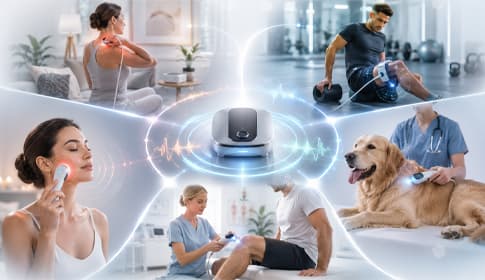
When we talk about home medical devices, most people think only about treating illnesses. Low back pain, arthritis, muscle tension – and the devices that can help.
But there is something few know: the same technologies that treat illnesses have proven effective in other areas as well.
This is not marketing copy. It is one of the most exciting developments in modern physical therapy.
If you haven't read why home medical devices matter at all, start with this article →
If you've made it this far, you already know: modern physiotherapy technologies can be applied in many areas. But now comes the real question:
Which one should I choose?
This isn't a simple question because every technology works differently. Electricity is not the same as light. Magnetism does something different than ultrasond. And what is excellent for one problem might not be the best choice for another. In this article I review the main technologies so that you can make an informed decision.
If you haven't yet read what home medical devices are actually for, start with this introduction →

Suddenly, from one day to the next, you cannot close your eye, one side of your mouth droops, and a stranger’s face looks back at you from the mirror. Facial nerve palsy – medically known as Bell’s palsy – is frightening, but in most cases it can be treated successfully. The key is to start comprehensive treatment as soon as possible, in which soft laser therapy and electrostimulation may play an important role.

