
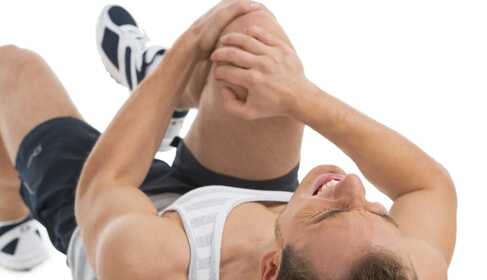
Causes of Leg Pain
We speak of leg pain when pain is felt in the lower limb (the area from the thigh to the toes). Leg pain can appear suddenly or gradually. It can be constant or intermittent. It may affect the whole leg or only a localized area, such as the shin, the ankle or the knee. The sensation can take many forms, for example stabbing, sharp, pulling, dull, burning, […]

Leg pain refers to pain felt in the lower limb (the area from the thigh to the toes). Leg pain can start suddenly or develop gradually. It can be constant or intermittent. It can affect the whole leg or just a well-defined area, for example the shin, the ankle or the knee. The sensation itself can take many forms such as stabbing, sharp, pulling, dull, burning, aching or tingling. Some forms of leg pain are merely unpleasant, while more severe forms can affect walking and even the leg's ability to bear weight.
In this article I list conditions for which leg pain is one of the symptoms or even the main symptom. The list is not ordered by importance but alphabetically by the condition name.
Causes of leg pain
Achilles tendinitis
An overuse injury of the Achilles tendon. The Achilles tendon attaches the calf muscles on the back of the lower leg to the heel bone.
Its inflammation most often occurs in runners who suddenly increase the intensity or duration of their runs. It is also common in middle-aged "weekend athletes" who occasionally play sports like tennis or basketball. Read my article on the importance of warm-up.
Most cases of Achilles tendinopathy can be treated fairly simply at home. Self-care measures are usually needed to prevent recurrence. Severe or neglected cases can lead to tendon rupture, which may require surgical intervention.
Achilles tendon rupture
An injury affecting the back of the lower leg. The Achilles tendon is a strong fibrous "rope" that connects the muscles at the back of your calf to the heel bone. If you overstretch this tendon, it can tear completely or partially.
The rupture is often accompanied by a popping sound, followed by immediate sharp pain at the back of the ankle and in the lower leg. It is very likely to affect your ability to walk. Restoration often requires surgery, although non-surgical treatment can be equally effective in many people.
It mainly occurs in recreational athletes. Inadequate warm-up is an important factor—people sometimes jump into high-intensity activity the moment they get out of the car. Read my article on the importance of warm-up.
Pseudogout (calcium pyrophosphate deposition disease)
A form of arthritis characterized by sudden, painful swelling of one or more joints. These episodes may last days or weeks. The knee is the most commonly affected joint.
Also called calcium pyrophosphate deposition disease. The term “pseudo, i.e. pseudogout” is used because it resembles gout. Both conditions are caused by crystal deposits within the joint, although the type of crystals differs.
It is not clear why crystals form in the joints and cause pseudogout, but the risk increases with age. Low-level laser, therapeutic ultrasound and other physiotherapy treatments can help relieve pain and reduce inflammation.
Baker's cyst
A fluid-filled cyst that causes a bulge and a feeling of tightness behind the knee. Pain may increase when bending or straightening the knee and during activity.
If you notice swelling only behind one knee, it is usually a Baker's cyst.
A Baker's cyst is essentially an outpouching of a knee bursa. A bursa cushions and reduces friction between structures around a joint. Imagine it like the inner tube bulging out through a tear in your bicycle tire.
Also called a popliteal cyst. It often accompanies joint inflammation or osteoarthritis. In both cases excessive fluid can accumulate in the knee, leading to a Baker's cyst. Treating the underlying issue usually brings relief.
Ankylosing spondylitis (Bechterew's disease)
An inflammatory disease that over time can cause the vertebrae of the spine to fuse. This fusion reduces spinal flexibility and can lead to a stooped, forward-leaning posture. If the ribs are affected, deep breathing may become difficult.
The disease worsens because healing processes generate increased bone formation. Newly formed bone gradually bridges the gaps between vertebrae, and in some segments the vertebrae fuse together. This causes the spine's natural curves to flatten and become rigid. The posture becomes characteristically stiff and stooped.
It affects men more often than women. Signs and symptoms typically begin in early adulthood. Inflammation may also occur in other parts of the body—most commonly in the eye.
There is no cure for ankylosing spondylitis, but treatments can relieve inflammatory symptoms and may slow disease progression.
Bursitis (inflammation of a bursa)
Small, fluid-filled sacs called bursae cushion the bones, tendons and muscles near joints and reduce friction between moving parts. Bursitis occurs when these bursae become inflamed.
The most common sites are the shoulder, elbow and hip, but bursitis can also develop at the knee, heel and base of the big toe. It often occurs near joints that perform frequent repetitive motion.
Treatment usually involves resting the affected joint and protecting it from further injury. In most cases bursitis pain resolves within a few weeks with appropriate treatment, but recurrences are common.
Read more about this topic here.
Claudication (vascular insufficiency pain)
Caused by insufficient blood flow to muscles during exertion — it can occur when walking or using the arms. Most commonly this pain develops in the legs after walking at a certain pace for a certain distance, depending on the severity of the condition.
The problem is also called intermittent claudication because the pain is usually not constant. It starts with exercise and stops with rest. However, as it worsens, pain may also occur at rest.
Claudication is a symptom of peripheral arterial disease, commonly known as arterial narrowing. In this condition the diameter of the arteries supplying the limbs gradually decreases, usually due to material depositing on the vessel's inner wall. The arteries become stiffer and blood flow through the narrowed lumen is reduced by fatty deposits (plaques).
Treatments focus on improving circulation, reducing pain, increasing mobility and preventing tissue damage.
Thigh muscle injury
Thigh muscle injuries most often involve strains, pulls or tears of the hamstring muscles running along the back of the thigh.
They are very common in soccer, basketball, tennis and similar sports. Runners and dancers can also experience them. Thigh injuries typically occur during sudden starts and stops and are especially common during the first 10–20 minutes of activity, often due to inadequate or absent warm-up.
Self-care methods such as rest, ice and elevation are basic steps. Microcurrent and softlaser treatments speed up regeneration of damaged cells and help athletes return to sport sooner.
Sacroiliac joint inflammation
Inflammation of one or both sacroiliac joints, which connect the lower spine and the pelvis. It can cause pain in the buttock or lower back and may radiate into one or both legs. Prolonged standing or climbing stairs can worsen the pain.
It can be difficult to diagnose because it can be confused with other causes of low back pain. It is associated with a group of diseases that cause inflammatory arthritis of the spine. Treatment includes medications and physiotherapeutic anti-inflammatory methods such as therapeutic ultrasound, softlaser, microcurrent, and magnetotherapy.
Bone tumor
Can originate in any bone but most commonly affects the pelvis or the long bones of the arms and legs. Bone tumors are rare, accounting for less than 1% of all cancers.
The term bone tumor does not include cancers that begin elsewhere in the body and spread to bone (metastases). Those are named after their site of origin, for example breast cancer that has metastasized to bone.
Some types occur mainly in children, while others affect adults. Surgical removal is the most common treatment, often combined with chemotherapy and radiotherapy. Decisions on surgery, chemotherapy or radiotherapy depend on the type of tumor cells.
Bone fracture
A leg fracture is a break or crack in one of the bones of the leg. Common causes include falls, motor vehicle accidents and sports injuries.
Treatment depends on the location and severity of the injury. Fractures with bone displacement may require surgery to insert hardware or implants to maintain proper alignment during healing. Other injuries can be treated with casts or splints. Rapid diagnosis and appropriate treatment are crucial for full recovery.
Bone healing and integration of implants can be aided and accelerated by pulsed electromagnetic field therapy, which helps build stronger bone structure.
Osteomyelitis (bone infection)
Infections can reach the bone via the bloodstream or by spreading from nearby tissues. Less commonly, bacteria can reach the bone directly through an injury (e.g. an open fracture).
Smokers and people with chronic conditions such as diabetes or kidney failure are at higher risk of osteomyelitis. The diabetic foot is a significant risk factor for bone infection.
Once considered incurable, osteomyelitis can now often be successfully treated with strong antibiotics. If bone necrosis occurs, surgery may be necessary.
Nocturnal leg cramps
Nocturnal calf cramps are painful, involuntary contractions or spasms of the leg muscles that typically occur when you are in bed and trying to rest. They usually affect the calf muscles, though foot or thigh muscles may cramp as well. Forceful stretching of the contracted muscle relieves the pain. Evening muscle stimulation can be an excellent preventive measure. Read more about this in my article.
Anterior cruciate ligament (ACL) tear
The anterior cruciate ligament is one of the major ligaments of the knee that connects the femur and the tibia. It is a key stabilizer of the knee. ACL injuries most commonly occur in sports involving sudden stops or changes of direction, jumping and landing, such as soccer, basketball, tennis, volleyball and skiing.
Many people hear a pop or feel a "popping" sensation in the knee when an ACL is injured. The knee may swell, feel unstable when standing, and be too painful to bear weight.
Treatment depends on severity and may include rest and rehabilitation exercises to regain strength and stability, or surgical reconstruction of the torn ligament followed by rehabilitation. A proper training program can reduce injury risk. Read about ACL rehabilitation in this article.
Spinal stenosis
Narrowing of the spaces within the spine can put pressure on the nerves that travel through the spine. It most often occurs in the lower back and neck.
Some people with spinal stenosis have no symptoms. Others experience pain, tingling, numbness and muscle weakness. Symptoms may worsen over time.
Stenosis is most often caused by degenerative changes related to spinal osteoarthritis. In severe cases doctors may recommend surgery to create more space for the spinal cord or nerves. It can occur in one or multiple levels of the spine.
Posterior cruciate ligament (PCL) injury
Less common than ACL injuries. The PCL, together with the ACL, connects the femur to the tibia. Tearing either ligament can cause pain, swelling and a sense of instability.
Tendinitis (tendon sheath inflammation)
Inflammation or irritation of tendons — the thick fibrous "cords" that attach muscle to bone. This condition causes pain and tenderness near the affected joint.
Any tendon can be affected, with the shoulder, elbow, wrist, knee and heel being most common. Some common tendon conditions include:
- Tennis elbow
- Golfer's elbow
- Thrower's shoulder
- Swimmer's shoulder
- Jumper's knee
Most cases respond well to rest, physiotherapy and pain-relieving medications. If severe and leading to tendon rupture, surgery may be required.
Sciatica
Pain that follows the path of the sciatic nerve from the lower back through the hip and buttock and down the leg. It is usually unilateral (one-sided).
It occurs when a herniated disc, bone spur on the vertebra, or spinal stenosis compresses part of the nerve. This causes inflammation, pain and often numbness in the affected leg.
Although the associated pain can be severe, most cases resolve within weeks without surgery. Surgery is considered if there is significant leg weakness or bowel or bladder dysfunction along with the pain.
Muscle cramp
A sudden, involuntary contraction of one or more muscles. If you've ever woken up at night because of one, you know it can cause severe pain. Although usually harmless, it can temporarily prevent the use of the affected muscle. Prolonged exercise or physical labor, especially in hot weather, can cause cramps. Certain medications and some diseases can also trigger them. They are often manageable at home with self-care, and muscle stimulation relaxation treatment can be especially effective.
Muscle strain
Juvenile idiopathic arthritis
Previously called juvenile rheumatoid arthritis. It is the most common form of arthritis in children under 16.
Gout
An arthritis associated with high uric acid levels. A common condition that can affect anyone. It is characterized by sudden, severe pain, swelling, redness and sensitivity in one or more joints, most often the big toe.
Gout attacks can start suddenly, often waking you at night with the sensation that your big toe is on fire. The affected joint feels hot, swollen and so sensitive that even the weight of the bedclothes can be unbearable.
Symptoms usually come and go, but there are ways to treat symptoms and prevent attacks.
Meniscus tear
One of the most common knee injuries. Any activity that forcefully twists or rotates the knee, especially when putting your full weight on it, can cause a meniscus tear.
There are two C-shaped pieces of cartilage in each knee that act as cushions between the tibia and the femur (menisci). Tearing one causes pain, swelling and stiffness. It can restrict knee movement and make full straightening difficult.
Conservative treatment — such as rest, ice and softlaser therapy — can sometimes be enough to relieve pain and allow the injury to heal on its own. Often, however, surgery is required.
Meralgia paresthetica
Also called burning thigh pain. A condition characterized by tingling, numbness and burning pain in the outer thigh. It is caused by compression of the lateral femoral cutaneous nerve, which supplies sensation to the upper thigh.
Tight clothing, obesity, weight gain and pregnancy are common causes. Meralgia paresthetica can also result from local trauma or systemic disease, such as diabetes.
In most cases symptoms can be relieved with conservative measures like wearing looser clothing.
Deep vein thrombosis (DVT)
Occurs when a blood clot (thrombus) forms in one or more deep veins of the body, usually in the legs. It can cause leg pain or swelling, but sometimes there are no symptoms. A clot in a leg vein can cause pain, warmth and tenderness in the affected area.
Certain health conditions affect clotting risk. You can develop a clot if you're immobile for a long time, for example after surgery or injury, during long travel or bed rest.
DVT can be very serious because clots can break free, travel through the bloodstream and lodge in the lungs, blocking blood flow (pulmonary embolism). Pulmonary embolism can occur without clear signs of DVT. When DVT and pulmonary embolism occur together, it is called venous thromboembolism (VTE).
Growing pains
Described as pain or throbbing in the legs — often in the front of the thighs, the calves or behind the knees. They usually affect both legs, occur at night and can wake a child from sleep.
It is important to know that although we call them growing pains, there is no evidence that growth causes the pain. They may be related to lower pain thresholds or, in some cases, psychological issues.
There is no specific treatment. You can make your child more comfortable with a heat pack and massage of the sore muscles. They usually disappear without trace by adolescence or after.
Growth plate fractures
Affect the the growing tissue near the ends of a child's bones. Growth plates are the softest and weakest parts of the skeleton—sometimes even weaker than surrounding ligaments and tendons. An injury that would cause a dislocation in an adult can cause a growth plate fracture in a child.
They often require immediate treatment because they can affect bone growth. Improperly treated growth plate fractures can result in a bone that is crooked or shorter than its counterpart. With proper treatment (for example PEMF) most cases heal without complications.
Osgood-Schlatter disease
Can cause a painful, bony bump on the shinbone just below the knee. It typically occurs in children and adolescents going through growth spurts during puberty.
It most often affects children who play sports involving running, jumping and quick changes of direction — such as soccer, basketball, figure skating and ballet.
While it was once more common in boys, the gender gap has narrowed as more girls engage in intense sports.
Osgood-Schlatter typically occurs in boys aged 12–14 and girls aged 10–13. The difference is because girls usually enter puberty earlier than boys. The condition generally resolves on its own when the child's bones finish growing.
Osteoarthritis
The most common form of arthritis, affecting millions worldwide. It develops when the protective cartilage cushioning the ends of bones deteriorates. It can affect any joint but most commonly impacts the hands, knees, hips and spine.
Symptoms are generally manageable, though joint damage is not reversible. Staying active, maintaining a healthy weight and certain treatments can slow progression and help relieve pain and improve joint function.
Osteochondritis dissecans
A condition in which a segment of bone under the joint cartilage dies due to lack of blood flow. The dead bone and cartilage may break loose, causing pain and possibly interfering with joint movement.
It most commonly affects children and adolescents. Symptoms can appear immediately after a joint injury or after months of repetitive joint loading, particularly activities that involve high impact such as jumping and running. It most often occurs in the knee but can affect the elbow, ankle and other joints.
Doctors stage osteochondritis dissecans by the size of the lesion, whether the fragment is partially or fully detached, and whether it remains in place. If the loosened fragment stays in place, the patient may have few or no symptoms. In young children whose bones are still developing, the lesion may heal spontaneously.
Surgery may be required if the fragment detaches and becomes lodged among moving joint parts or causes persistent pain.
Paget's disease of bone
Disrupts the body's normal bone recycling process, in which new bone gradually replaces old bone. Over time bones can become fragile and deformed. The pelvis, skull, spine and legs are most commonly affected.
The risk increases with age and if family members have the disease. For reasons unknown to doctors it has become less common and generally less severe in recent years. Complications can include fractures, hearing loss and nerve compression in the spine.
Medications used to strengthen weakened bone are the mainstay of treatment. Surgery may be needed for complications. Physiotherapy and muscle treatments can also help.
Patellar tendinitis
An injury to the tendon that connects the kneecap (patella) to the shinbone. The patellar tendon works with the muscles at the front of the thigh to straighten the knee for kicking, running and jumping.
Also known as "jumper's knee." It typically affects athletes whose sports involve frequent jumping—such as basketball and volleyball—but it can also occur in runners, especially those who train on uneven terrain.
Treatment focuses on stretching and strengthening the muscles around the knee and anti-inflammatory physiotherapy.
Patellofemoral pain syndrome
Pain at the front of the knee around the kneecap (patella). Sometimes called "runner's knee," it is more common in people who run or participate in sports with jumping.
Knee pain often worsens when running, going up or down stairs, sitting for long periods, or squatting. Simple measures such as rest and ice often help, but physiotherapy may be necessary to relieve patellofemoral pain.
Peripheral arterial disease (PAD)
A common circulatory problem in which narrowed arteries reduce blood flow to the limbs.
When it occurs your legs (and sometimes arms) don’t receive enough blood (and oxygen) to meet demand. This causes leg pain when walking (claudication).
PAD often indicates atherosclerosis — fatty buildup in the arteries. This narrows arteries and reduces blood flow to the legs and sometimes arms.
Often it can be successfully treated with exercise, healthy eating and quitting smoking. Device-based treatments are considered if exercise is limited for some reason.
Peripheral neuropathy
Damage to peripheral nerves outside the brain and spinal cord. It often causes weakness, numbness and pain, usually in the hands and feet. It can also affect other areas and body functions including digestion, urination and circulation.
The peripheral nervous system sends information from the brain and spinal cord to every part of the body and returns sensory information to the brain.
It can result from traumatic injuries, infections, metabolic problems, inherited causes and exposure to toxins. One of the most common causes is diabetes.
Pain is usually described as stabbing, burning or tingling. In many cases symptoms improve, especially if the underlying cause is treatable. Medications and some physiotherapy treatments can reduce peripheral neuropathy symptoms.
Herniated disc
Refers to a problem with one of the rubbery cushions (intervertebral discs) between the vertebrae.
A disc has a soft, jelly-like center (nucleus) surrounded by a tougher, rubbery outer ring (annulus). A herniated disc, sometimes called a slipped or ruptured disc, occurs when part of the nucleus is pushed out through a tear in the annulus.
It can occur at any level of the spine and irritate a nearby nerve, causing pain, numbness or weakness in an arm or leg depending on the disc's location.
Many people have no symptoms from a herniated disc. Surgery is usually not required; relaxing and then strengthening the spinal support muscles helps.
Psoriatic arthritis
A form of arthritis that affects some people who have psoriasis — a condition that causes red patches of skin covered with silvery scales. Psoriasis results from skin cells accumulating too quickly, forming thick, silvery scales and itchy, dry, red patches that can be painful. For most people psoriasis appears years before arthritis, but in some cases joint problems start before or at the same time as the skin lesions.
Main signs and symptoms are joint pain, stiffness and swelling. It can affect any part of the body including the fingertips and the spine, and ranges from mild to severe. Both psoriasis and psoriatic arthritis can have flare-ups and remissions.
There is no cure. Treatment aims to control symptoms and prevent joint damage. Without therapy it can lead to disability.
Sprain
In a sprain some of the ligaments that hold a joint together are torn; in a strain some muscle fibers are stretched or torn by overuse. Strains are generally less severe than sprains. A sprain causes severe pain, swelling and bruising. Dislocation is when a joint is forced out of position, typically causing pain, swelling and restricted movement.
The most common site of ligament stretching or tearing is the ankle. Most ankle sprains involve damage to the three ligaments on the outer side of the ankle. Ligaments are tough fibrous tissues that stabilize joints and help prevent excessive movement. An ankle sprain occurs when you twist, roll or turn your ankle awkwardly, stretching or tearing the ligaments that hold the ankle bones together.
Initial treatment includes rest, ice, compression and elevation. Mild sprains can often be treated at home; severe cases sometimes require surgery to repair torn ligaments.
Reactive arthritis
Joint pain and swelling triggered by an infection in another part of the body—most commonly the intestines, genitals or urinary tract. It usually affects the knees and the ankle and foot joints. Inflammation may also affect the eyes, skin and urethra.
Previously sometimes called Reiter's syndrome, characterized by eye, urethral and joint inflammation.
It is not common. Most people experience symptoms that come and go and resolve within about 12 months.
Rheumatoid arthritis
A chronic inflammatory disease that can affect more than just the joints. In some people the condition can damage many body systems, including the skin, eyes, lungs, heart and blood vessels.
It is an autoimmune disease in which your immune system mistakenly attacks your own tissues.
Unlike the wear-and-tear damage of osteoarthritis, rheumatoid arthritis affects the lining of the joints, causing painful swelling that can eventually result in bone erosion and joint deformity. As the synovium (the tissue that lines the joint) becomes inflamed and thickened, fluid accumulates and the joints are eroded and damaged.
Associated inflammation can affect other parts of the body. Newer medications have dramatically improved treatment options, but advanced disease can still cause physical disability.
Shin pain
Refers to pain along the shinbone (the large bone you can feel at the front of the lower leg). It is common in runners, dancers and military recruits.
Also called tibial stress syndrome or commonly referred to as shin splints. It often follows a drastic change in a training program. Sudden long-distance walking can also trigger it. Increased activity overloads muscles, tendons and bone tissue.
Most cases are treated with rest, ice and other self-care measures. Proper footwear and gradual increases in training load help prevent recurrence.
Stress fracture
Cracks in bones caused by repetitive force, often from overuse. For example, repetitive jumping, squatting or long-distance running during training can cause them. They may also result from normal use of bones weakened by conditions such as osteoporosis.
They most commonly occur in the weight-bearing bones of the lower leg and foot. Athletes and military recruits carrying heavy packs over long distances are at high risk, but anyone can get a stress fracture. Starting a new training program and suddenly doing too much of an exercise can cause one.
Septic arthritis
A painful joint infection, which may arise from bacteria carried in the bloodstream from another part of the body. It can also occur if an injury, such as an animal bite or trauma, introduces bacteria directly into the joint.
It is most likely in infants and older adults. People with artificial joints are also at risk. The knee is most commonly affected, but hips, shoulders and other joints can also be involved. The infection can rapidly and severely damage the cartilage and bone of the joint, so immediate treatment is essential.
Treatment involves draining the joint with a needle or surgically and administering antibiotics.
Thrombophlebitis (vein wall inflammation)
An inflammatory process that causes blood clots and occlusion of one or more veins, usually in the legs. The affected vein can be close to the skin surface (superficial thrombophlebitis) or deep in the muscle (deep vein thrombosis or DVT).
Causes include trauma, surgery or prolonged inactivity. A clot in a leg vein can cause pain, warmth and tenderness in the affected area.
Thrombosis increases the risk of serious health problems. It is usually treated with anticoagulant medications. Superficial thrombophlebitis is sometimes also treated with anticoagulants.
Varicose veins
Twisted, swollen, enlarged veins. Any superficial vein can become varicose, but they most commonly affect the legs because standing and walking increase pressure in the leg veins.
Normally veins return blood from the rest of the body to the heart so it can circulate. To return blood to the heart the leg veins must work against gravity. Varicose veins may be caused by weakened valves in the veins that allow blood to pool instead of flowing toward the heart.
For many people varicose and spider veins are a cosmetic problem. For others they cause pain and discomfort and sometimes more serious problems.
The best approach includes regular exercise, but you can also use physiotherapy measures such as muscle stimulation or a compression therapy unit. Vein ablation or removal by a physician should be a last idea.
Leg pain often accompanies many of the conditions listed above. Always consult a doctor for an accurate diagnosis. Only start treatment once you know what needs treating—self-treatment without a clear diagnosis can be inappropriate.
Seek immediate medical or emergency care for leg pain if
- You have a leg injury with a deep cut or exposed bone or tendon;
- You cannot walk or cannot bear weight on the leg;
- You feel pain, swelling, redness or warmth in your calf;
- You hear popping or grinding sounds at the time of injury.
See a doctor promptly if:
- You notice signs of infection in or on your leg, such as redness, warmth or tenderness, or if you have a fever higher than 37.8 ℃;
- Your leg is swollen, pale or unusually cool;
- Your calves hurt, especially after prolonged sitting such as a long car or plane trip;
- Both legs are swollen accompanied by breathing difficulties;
- You have any severe leg symptoms that occur without an obvious cause.
Make an appointment in the near future if:
- You have pain when walking or after walking;
- You notice swelling in both legs;
- Your pain is worsening;
- Your symptoms do not improve after a few days of home rest and treatment;
- You have painful varicose vein symptoms.

