What is a muscle stimulator and what is it used for?
With a muscle stimulator device you can apply electrical stimulation to muscles — medically abbreviated as EMS (electrical muscle stimulation) or NMES (neuromuscular electrical stimulation) — both terms refer to the same principle.
The device delivers a mild electrical impulse to the muscle via electrodes placed on the skin, triggering the muscle to contract — similar to the signal normally coming from the brain. By adjusting frequency, intensity and duration, you can control the type, depth and strength of the contraction.
This leads to a wide range of uses: relieving muscle stiffness, improving blood circulation, regaining muscle strength, slowing muscle atrophy, and supporting the rehabilitation of paralyzed muscles.
 Can't decide which one to choose?
Two things determine it: your goal (strengthening, rehabilitation, circulation improvement on a healthy muscle — or treatment of a denervated, nerve-denervated muscle), and what device level you need (simple EMS vs. multifunctional, 4-channel). In the detailed buying guide below we go through all of this.
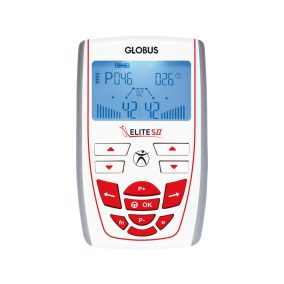


Elite SII electrotherapy device. TENS / EMS / FES. 2 channels, battery powered.



Premium 400 multifunctional electrotherapy device. TENS / EMS / MCR-MENS / FES / iontophoresis. Specialized programs: running, cross-country skiing, combat sports, tennis, football, cycling. 4 channels, battery operated.
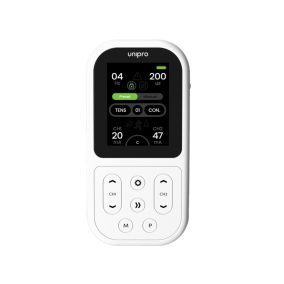
The UniPro is a two-channel, multifunctional electrotherapy device providing TENS, EMS, microcurrent and interferential (IF) treatments.
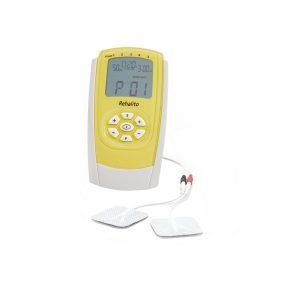
Entry-level muscle stimulator (EMS) device
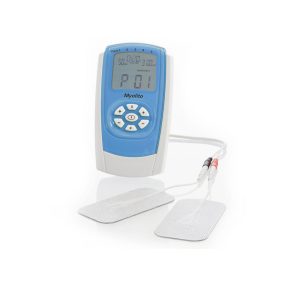
Myolito electrotherapy device with TENS, EMS and FES (incontinence) programs
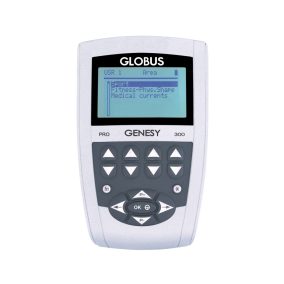


Genesy 300 Pro multifunctional electrotherapy device. TENS / EMS / MCR-MENS / FES / iontophoresis. 4 channels, battery-powered.
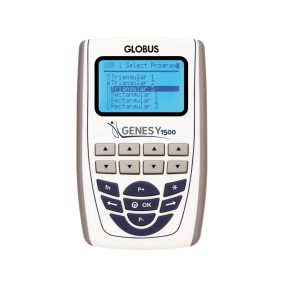


The Globus Genesy 1500 — one device for hundreds of complaints.
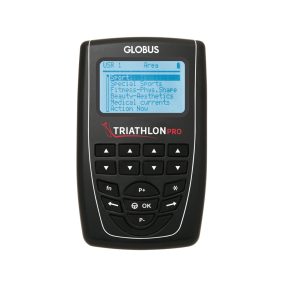


Triathlon Pro: multifunctional electrotherapy device. TENS / EMS / MCR-MENS / FES / iontophoresis. Special sport: triathlon. 4 channels, battery powered.
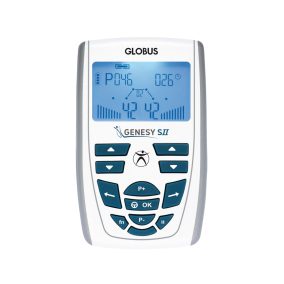


2-channel TENS | EMS | iontophoresis device. 60 types of pain-relief, rehabilitation, iontophoresis and incontinence programs.
Which device should you choose?
| If you are looking to solve this… | We recommend these |
|---|---|
| Neck muscle stiffness, stiffness after cast removal | Rehalito, Myolito, UniPro |
| Complaints affecting one muscle group (shoulder, upper arm, forearm, calf) | Elite SII, Myolito, UniPro, Genesy SII, MyoBravo |
| Bilateral complaints: herniated disc, ACL surgery, muscle atrophy | Premium 400, Genesy 300 Pro, Genesy 1500, Genesy 3000 |
| Paralysis due to stroke | Premium 400, Genesy 1500, DuoBravo N |
| Peripheral paralysis, nerve injury, denervated muscle | PeroBravo, Genesy 600, Genesy 1500, Genesy 3000 |
| Fitness and body shaping | UniGlo, Elite SII, Elite 150, Premium 400, Activa 700 |
| Facial wrinkles, sagging facial muscles | UniGlo, Elite 150, Activa 700 |
| Sports – preparation and muscle recovery | Premium 400, Cycling Pro, Runner Pro, Soccer Pro, Triathlon Pro, The Champion |
For pain relief, most devices listed here also offer a TENS program — if that is your main goal, check the TENS devices. Spare electrodes can be found among TENS electrodes.
 How does it work?
An electrode delivers impulses in the milliampere (mA) range through the skin to the targeted skeletal muscle, causing it to contract. The stimulated muscle contracts by the same mechanism as a voluntary movement, the same metabolic processes occur, and it is worked in the same way. The effect is localized to the treated muscle, not the whole body. It does not significantly affect smooth muscles (internal organs).
What can muscle stimulation be used for?
- Relieving muscle stiffness: e.g. a "stiff" neck from lying down, stiffness after cast removal, frozen shoulder, relaxation of spastic muscles. It may also help prevent nighttime calf cramps.
- Improving blood circulation: if movement is limited, stimulation can "replace" the pumping action of muscles and contribute to venous circulation support and thrombosis prevention.
- Joint stability, muscle strengthening: strengthening the muscles around a joint can help address muscle weakness underlying knee, hip and spine complaints.
- Maintaining muscle strength after surgery: because stimulation does not move the joint, it can support muscle maintenance even in the early phase when loading is still prohibited — aiding rehabilitation.
- Slowing muscle atrophy: inactivity-related muscle weakness can often be reversed; for certain neuromuscular diseases the aim may be to reduce stiffness, spasms and pain and support quality of life.
- Rehabilitation of paralyzed muscle: supporting relearning of movement (see below the important difference between central and peripheral paralysis).
Central or peripheral paralysis? – this is important!
Before treating a paralyzed muscle, it must be clarified whether the paralysis is central or peripheral!
 The key difference
In central paralysis (e.g. after stroke) the nerve to the muscle and the muscle itself are intact, only the brain control is damaged — in this case the short biphasic square wave used for healthy muscles is appropriate. In peripheral paralysis (the nerve to the muscle is damaged — a "denervated" muscle) this is not suitable; instead a long-pulse selective stimulation is required. Accurate diagnosis and correct settings are essential here, preferably under professional supervision.
If treating a denervated muscle is the goal, check the selective stimulation devices. For relearning movement after stroke, feedback-providing biofeedback devices can also help.
 Dr. Zátrok's advice
Before or during surgery or prolonged bed rest, it is worth considering early muscle stimulation: maintaining important muscles (e.g. the quadriceps after knee surgery) can contribute to a shorter recovery — and stimulation does not move the freshly operated joint.
Timing matters after paralysis: the earlier, the better — every day, persistently, together with repetition of the movement. Relearning the neuromuscular connection requires many repetitions.
The best device is not the one with the most programs, but the one that fits your goal. For denervated muscle do not use a general EMS — selective stimulation is required there.
 When NOT to use it?
Muscle stimulation is generally well tolerated, but in the following cases seek medical advice before purchase and use:
- Pacemaker or other implanted electronic device
- Severe cardiac arrhythmia
- Pregnancy
- Epilepsy
- Cancerous disease in the treated area
- Active deep vein thrombosis
- Damaged, inflamed or irritated skin surface – do not place electrodes on such skin
The device does not replace medical evaluation
Muscle stimulation is an adjunct to rehabilitation and does not replace specialist medical care. In cases of paralysis, nerve injury or more serious muscle disease, start treatment preferably after consultation with a professional.
muscle stimulation - made simple
In this video Dr. Zsolt Zátrok demonstrates how simply muscle stimulation can be performed.