Diabetic foot – what can you do to prevent it?
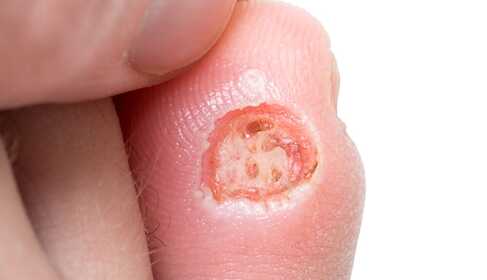
One of the most feared complications of diabetes mellitus is the diabetic foot (also called the diabetes-related foot), which at first appears as pain and sensory disturbances but can lead to much more serious consequences over time. Due to worsening circulation, tissues can die in small areas and a skin wound (ulcer) can form. If the process progresses, tissue death may extend to the toes and even the foot. Treating the diabetic foot and avoiding serious outcomes largely depends on you — on what and how much you eat, how much you exercise, and whether you follow medical instructions.

The success of diabetes treatment — meaning the avoidance of complications — depends on two things:
- Whether you recognize and understand that your diabetes and its consequences largely depend on you, i.e., you can do the most to improve and keep it balanced.
- Whether you understand that medical treatment (whether pills or even insulin injections) is worthless if you continue the lifestyle that you practiced before your diabetes was diagnosed.
The goal of diabetes treatment is to keep blood glucose within the normal range. In this, medications and even insulin are secondary!
The most important factor is what and how much you put in your mouth and your level of physical activity. You may have the best insulin available, but if you eat erratically, don't exercise, and don't follow instructions, there is no miracle doctor who can manage your blood sugar for you.
Neuropathic pain, the appearance of the diabetic foot, other dreadful complications, ulcers, gangrene of the toes and amputation can only be avoided by careful attention.
If you don't take care of yourself and the symptoms of diabetic foot have already appeared, then you'll be trying to catch up after the wagon has left.
Complications of diabetes
Neuropathy (sensory disturbance)
You can read details here: Causes and treatment options for peripheral neuropathy
Arterial disease (arterial narrowing)
Read more here: Causes and treatment of atherosclerosis and arterial narrowing
Diabetic foot and delayed wound healing
In diabetic foot, peripheral arterial disease (PAD, also known as arterial narrowing) is considered the cause of impaired blood supply. Poor blood supply (ischemia) is the main factor that hinders wound healing.
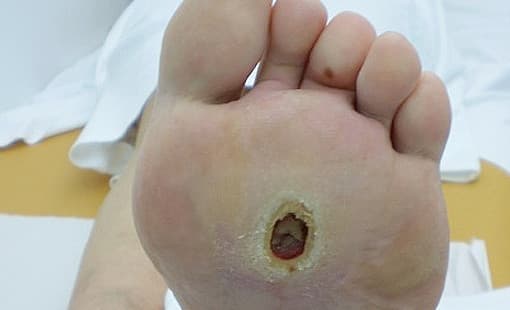
The combination of diabetic neuropathy and impaired blood supply is called neuroischemia. The more severe the circulation disorder, the worse the wound-healing tendency.
Among those who have both diabetes and neuropathy, 7–10% develop an ulcer. Within one year after an ulcer appears, 5–8% of patients undergo amputation. In 85% of diabetes-related amputations a foot ulcer is also present.
Diabetes increases the risk of amputation eightfold in patients over 45 years old, 8–12-fold in those over 65, and 23-fold in those aged 65–74.
Symptoms of diabetic foot
- muscle weakness in the muscles of the foot, ankle, lower leg, and also in the hands
- compensatory posture and pain while walking
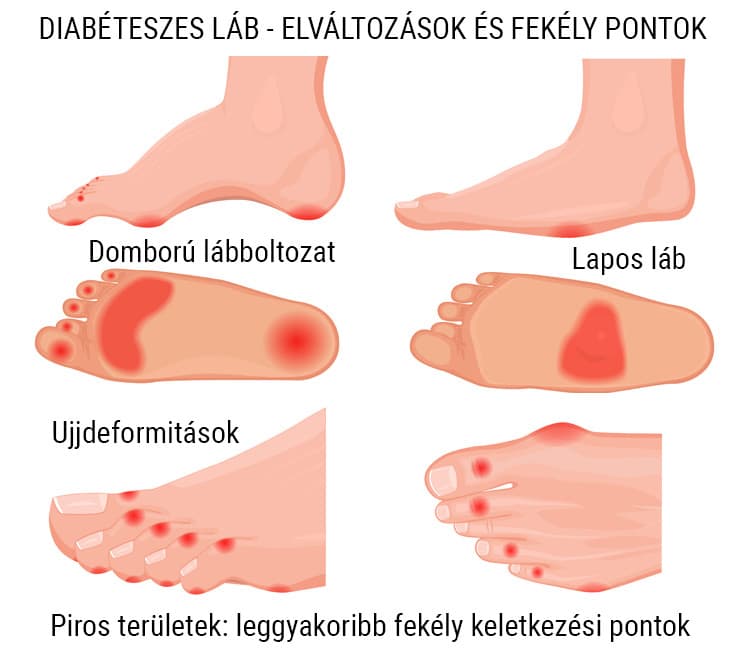
- high-arched or very flat feet
- numbness in the legs, arms, and hands
- Infection. The most common sign is increased wound discharge. Without treatment, infections can spread rapidly to other parts of the body and may even lead to life-threatening generalized septic infection.
Medical treatment of the diabetic foot
- Prevention is the most important measure, focusing on keeping diabetes balanced and blood glucose values within the normal range
- Treatment of developed diabetic wounds by cleaning, disinfecting and dressing
- Antibiotic therapy is recommended for every infected wound, combined with wound care [1]
- Surgery is required if, as a result of infection,
- an abscess forms
- the infection spreads to bones or joints
- significant necrosis, gangrene, or necrotizing fasciitis occurs [1]
Physical therapy treatment for the diabetic foot
The goal of using physical therapy methods is twofold.
-
- On the one hand, to prevent the development of complications.
- On the other hand, to relieve the symptoms of established diabetic foot. [4]
Physiotherapists and especially podiatrists also play an important role in patient education
-
- teaching foot care and wound care
- teaching correct posture, foot position and walking [4]
- explaining how to prevent amputation
For symptomatic treatment of neuropathy-related (most often nighttime) pain, sensory disturbances and numbness, you can use TENS treatment with sock or glove electrodes. TENS treatment is symptomatic — it does not cure or improve the underlying disease.
Many clinical studies have demonstrated the effectiveness of TENS in reducing pain caused by diabetic neuropathy. [5]
Softlaser treatment
Recent studies report favorable effects of softlaser treatment both in healing diabetic ulcers and in relieving neuropathic symptoms. For treatment of diabetes-related ulcers I recommend the B-Cure or the Personal Laser L400 softlaser devices.
During softlaser treatment, the laser beam must be directed directly at the ulcer. The laser energy supports and stimulates cell regeneration processes. With persistent treatment, slow epithelialization begins from the edge of the wound, and a wound that has not closed for one and a half to two years can heal within 1–2 months. Ulcers treated with softlaser heal significantly faster than without treatment. Softlaser may also relieve neuropathic symptoms. However, softlaser treatment has no effect on blood glucose levels or the general vascular disease caused by diabetes, so an ulcer may reappear elsewhere. The device can be used again for such treatment.
Sources
- Lepäntaloa M, Apelqvistc J, Setaccie C, Riccof JB, de Donatoe G, Beckerg F, Robert-Ebadig H, Caoh P, Ecksteini HH, De Rangok P, Diehml N. Chapter V: Diabetic Foot. European Journal of Vascular and Endovascular Surgery. 2011;42(S2):S60-74.
- Zakaria HM, Adel SM, Tantawy SA. The Role of Physical Therapy Intervention in the Management of Diabetic Neuropathic Foot Ulcers. Bull. Fac. Ph. Th. Cairo Univ. 2008 Jul;13(2).
- Youtube Video: The Diabetic Foot Exam
- Kalra S, Kalra B, Kumar N. Prevention and management of diabetes: the role of the physiotherapist. Diabetes Voice. 2007;52 (3)
- Dubinsky RM, Miyasaki J. Assessment: Efficacy of transcutaneous electric nerve stimulation in the treatment of pain in neurologic disorders (an evidence-based review) Report of the Therapeutics and Technology Assessment Subcommittee of the American Academy of Neurology. Neurology. 2010 Jan 12;74(2):173-6.
- Pedrosa HC, Leme LA, Novaes C, Saigg M, Sena F, Gomes EB, Coutinho A, Borges Carvalho WJ, Boulton A. The diabetic foot in South America: progress with the Brazilian Save the diabetic foot project. International Diabetes Monitor. 2004;16(4):17-23.
- Turan Y, Ertugrul BM, Lipsky BA, Bayraktar K. Does physical therapy and rehabilitation improve outcomes for diabetic foot ulcers? World journal of experimental medicine. 2015 May 20;5(2):130.