
 What is magnetic therapy (PEMF) and what is it used for?
A magnetic therapy device is a medical physiotherapy instrument used worldwide as an adjunct treatment for musculoskeletal conditions. Therapeutic devices use coils to create a pulsed electromagnetic field (PEMF – Pulsed Electromagnetic Field). Home devices typically operate at 100–500 Gauss intensity, which is well suited for independent home use.
 Can't decide which Magnum model to choose?
The main differences between models are the number of treatment channels, magnetic intensity, and the number of treatment programs. In the detailed advisor below the products you will find the complete comparison table and the program list as well: detailed buying guide.
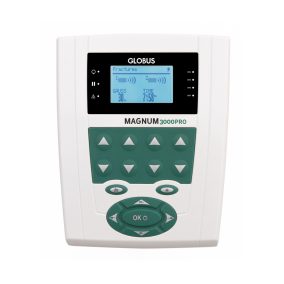


Magnetic therapy (PEMF) device. 2 channels / 400 Gauss total magnetic intensity. 70 programs
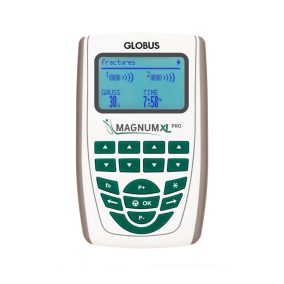


Pulsed electromagnetic field (PEMF) device. 2 channels / 400 Gauss total magnetic intensity. 46 programs. For home use.


Magnetic therapy device (PEMF). 2 channels / 320 Gauss total magnetic intensity. 52 programs
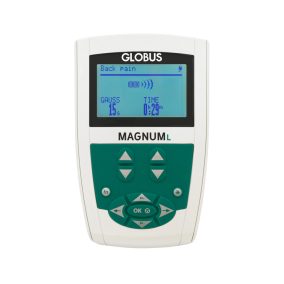


Magnetic therapy (PEMF) device. 1 channel / 120 Gauss total magnetic intensity. 8 programs. For home use.
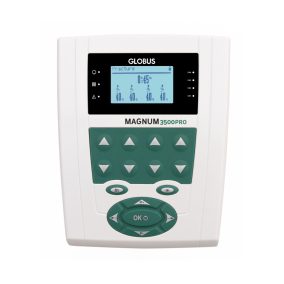


Pulsed electromagnetic field (PEMF) device. 4 channels / 800 Gauss total magnetic intensity. 70 programs. 2+2 mode. For therapists and professional users.
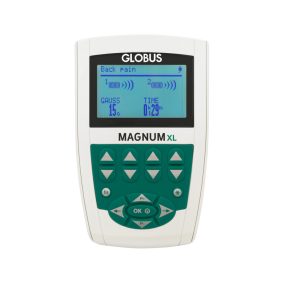


Magnetotherapy (PEMF) device. 2 channels / 280 Gauss total magnetic intensity. 26 programs. For home use.
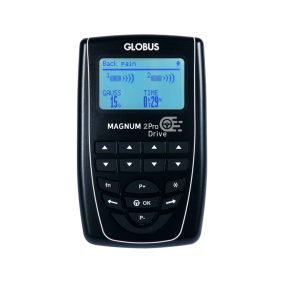


Pulsed electromagnetic field (PEMF) device. 2 channels / 400 Gauss total magnetic intensity. 41 programs. Operates from mains, battery and car cigarette lighter.
A magnetic therapy device is a medical physiotherapy instrument used worldwide as an adjunct treatment for musculoskeletal conditions. If you want to understand how magnetic therapy works and how you can use it at home, read our detailed guide.
For therapeutic use, devices employ electric coils to generate a pulsed electromagnetic field (PEMF). Devices should not be ranked solely by Gauss value: the number of channels, the same-program / 1+1 / 2+2 mode, the types of applicators included, the treatable body area, and programmability are just as important. The “total Gauss” shown in the tables is the combined device capacity across channels, not the intensity delivered to a single anatomical site.
 The biological effects of magnetic therapy
The clinical effect of PEMF depends on indication, program, and applicator placement. Evidence is not equally strong for every complaint or every factory program. The most studied areas include:
- Joint pain and stiffness – some osteoarthritis studies have observed short-term pain and function improvements.
- Support for bone healing – used as adjunctive therapy for selected fractures, delayed union, and certain postoperative situations.
- Bone edema – with appropriate protocols pain may decrease and load tolerance may improve; a model with a specific bone-edema program is recommended.
- Orthopedic rehabilitation – some devices include specific programs for prosthesis surgery, ACL surgery, cartilage surface treatment, spinal fusion or osteotomy.
- Local inflammatory and edematous reactions – adjunctive effects are possible, but the cause of swelling should be clarified first.
- Tendon and soft tissue complaints – PEMF is at most an adjunct to load management, physiotherapy and other baseline treatments.
- Not a universal “cell-regenerating” miracle – higher Gauss, more programs or longer treatment alone do not guarantee better outcomes.
Indications for magnetic therapy
Magnetic therapy is mainly considered as adjunct treatment in the following musculoskeletal and orthopedic situations. Not every Magnum model contains all listed programs:
- Bone cracks and fractures – adjunct support for bone healing, if needed through a cast or immobilizer.
- Delayed union, non-union (pseudoarthrosis) and osteonecrosis – only as part of a medical treatment plan.
- Bone edema – a model with a dedicated bone-edema program is recommended for this indication.
- Osteoporosis – as a supplement to medication, adequate nutrition and weight-bearing exercise, using an appropriately sized applicator.
- Femoral neck fracture and rehabilitation of other large-bone fractures.
- Rehabilitation after prosthetic and orthopedic surgery – knee and hip prosthesis, ACL, cartilage, spinal fusion or osteotomy programs are available only in certain models.
- Arthrosis, joint pain and stiffness – as a complement to movement therapy and load management.
- Arthritis, tennis elbow, golfer’s elbow, tendinitis and carpal tunnel complaints – with a confirmed diagnosis.
- Traumatic edema, contusions and ankle sprains – after excluding dangerous causes of swelling.
- Ulcer and wound programs are present only in a few higher-end models; they do not replace wound care but can be used to complement therapy.
How to choose among the Magnum models?
When choosing a device, the operation of channels, number and size of applicators, required programs, comfort for long treatments, battery use and programmability are more important than the raw program count or aggregated Gauss figure alone.
Number of treatment channels
The Magnum L is a single-channel model. It is intended for regular treatment of one local area and the basic package includes one flexible applicator.
The Magnum XL and Magnum XL Pro operate two outputs, but the same program runs on both outputs. The XL standard package contains one applicator, the XL Pro package contains two.
The Magnum 2500, Magnum 2 Pro Drive and Magnum 3000 Pro can run two different programs in 1+1 mode, one per channel. The Magnum 3000 Pro is a professional clinic model.
The Magnum 2 Pro Drive’s built-in battery allows more mobile use. Use it in a parked vehicle, at rest or as a passenger; self-treatment while driving is not recommended. Other models do not include a battery by default, but an optional battery can be purchased for most.
The Magnum 3500 Pro is a four-channel professional system. In 2+2 mode two different programs can run, each program using two channels.
Magnetic intensity
The intensities listed in the table are average values provided by the manufacturer for a given flexible applicator. “200 Gauss/channel” and “400 Gauss total” are not the same: 400 Gauss is the combined capacity of two active channels and not the intensity for a single knee, hip or spine.
It is also important that the maximum intensity per channel is distributed across the magnet coils of the connected applicator. For example, a 30x10 cm flexible applicator contains 2 magnet coils. If the device’s maximum intensity is 140 Gauss, then the maximum per coil is 70 Gauss.
Actual exposure is determined not only by Gauss but also by frequency, duty cycle, treatment duration, the number of coils, polarity, spacing and placement. Higher Gauss alone does not reliably mean deeper, faster or better treatment.
Number of treatment programs
The number of programs is valuable only if the device includes the necessary indications. The Magnum XL and XL Pro include Beauty/Fitness programs, the Magnum 2500 has open frequency programs, and the 3000 Pro and 3500 Pro include open and night programs.
Higher-end models also allow saving custom programs, offer 1+1 or 2+2 parallel modes, a Rental function, and support larger or multiple magnetic applicators.
Don’t look for the most programs—choose the configuration that covers the treated area and the required daily treatment time:
- Magnum L – for a single local area with simple program selection.
- Magnum XL – expandable to treat two identical areas; the second applicator is sold separately.
- Magnum XL Pro – two factory applicators, 46 factory and up to 15 custom programs; includes beauty and wellness programs; the same program runs on both channels.
- Magnum 2500 – home 1+1 system with 52 programs and up to 5 custom programs.
- Magnum 2 Pro Drive – built-in battery 1+1 system with two flexible applicators and Soft 4 mattress.
- Magnum 3000 Pro – professional desktop 1+1 system with 70 factory and up to 10 custom programs.
- Magnum 3500 Pro – professional four-channel 2+2 system with comprehensive applicator package.
Various magnetic therapy accessories are available for the devices – local applicators, Soft 4, Mat 100 and Total Body mats, straps and Y-cables. Always check the channel requirements and compatibility for the chosen device.
Comparison aid for Magnum devices
| Feature | L | XL | XL Pro | 2500 | 2 Pro Drive | 3000 Pro | 3500 Pro |
|---|---|---|---|---|---|---|---|
| Number of channels | 1 | 2 | 2 | 2 | 2 | 2 | 4 |
| Parallel mode | 1 program | same program ×2 | same program ×2 | 1+1 | 1+1 | 1+1 | 2+2 |
| Different programs runnable simultaneously | 1 | 1 | 1 | 2 | 2 | 2 | 2 |
| Intensity/channel (average Gauss) | 120 | 140 | 200 | 160 | 200 | 200 | 200 |
| Total device capacity (average Gauss) | 120 | 280 | 400 | 320 | 400 | 400 | 800 |
| Health/Rehab programs | 8 | 16 | 32 | 36 | 41 | 41 | 41 |
| Open / night programs | – | – | – | 16 open | – | 26 open + 3 night | 26 open + 3 night |
| Beauty/Fitness programs | – | 10 | 14 | – | – | – | – |
| Total factory programs | 8 | 26 | 46 | 52 | 41 | 70 | 70 |
| Custom program slots | none | 1 | up to 15 | up to 5 | up to 5 | up to 10 | up to 10 |
| Standard factory applicators | 1 flexible | 1 flexible | 2 flexible or 2 Pocket Pro | 2 flexible or 2 Pocket Pro | 2 flexible + Soft 4 | 2 flexible or 2 Pocket Pro | 2 flexible + 4 Pocket Pro + Soft 4 |
| Built-in battery | no | no | no | no | yes | no | no |
| Larger mattress / applicator | optional, limited | optional | optional | optional | Soft 4 included | optional Total Body | Soft 4 included; Total Body optional |
| Primary use | home | home | home and professional | home | home, mobile | professional | professional |
Important: total Gauss is the combined capacity of multiple channels. It is not the intensity for a single anatomical site and therefore alone is not suitable for clinically ranking devices.
Comparison of preset treatment programs
| Indication / program group | L | XL | XL Pro | 2500 | 2 Pro Drive | 3000 Pro | 3500 Pro |
|---|---|---|---|---|---|---|---|
| Bone fracture | yes | yes | yes | yes | yes | yes | yes |
| Separate cast fracture program | no | no | no | yes | yes | yes | yes |
| Osteoporosis | yes | yes | yes | yes | yes | yes | yes |
| Bone edema program | no | no | no | yes | yes | yes | yes |
| Pseudoarthrosis | no | no | no | no | yes | yes | yes |
| Arthrosis | yes | yes | yes | yes | yes | yes | yes |
| Arthritis | yes | no | yes | yes | yes | yes | yes |
| Joint pain program | no | no | yes | yes | yes | yes | yes |
| Tennis elbow | yes | no | yes | yes | yes | yes | yes |
| Carpal tunnel program | no | yes | yes | yes | yes | yes | yes |
| Edema / contusion | no | Beauty | Health + Beauty | yes | yes | yes | yes |
| Scar program | no | Beauty | Beauty | no | no | no | no |
| Ulcer program | no | no | no | no | yes | yes | yes |
| Open frequency programs | no | no | no | 16 | no | 26 | 26 |
| Night programs | no | no | no | no | no | 3 | 3 |
| Postoperative / surgical programs | |||||||
| Knee prosthesis | no | no | yes | yes | yes | yes | yes |
| Hip prosthesis | no | no | yes | yes | yes | yes | yes |
| After ACL surgery | no | no | yes | yes | yes | yes | yes |
| Cartilage surface / cartilage injury | no | no | yes | yes | yes | yes | yes |
| Spinal fusion | no | no | no | no | yes | yes | yes |
| Osteotomy | no | no | no | no | yes | yes | yes |
 Before you start – when NOT to use it?
Manufacturer manuals treat pacemakers or other permanent electrostimulators as absolute contraindications. In the following situations treatment should be avoided or requires prior medical assessment:
- Implanted pacemaker, defibrillator or other permanent electrostimulator
- Cardiac arrhythmia or severe cardiovascular condition
- Pregnancy (over the abdomen and pelvic area)
- Ferromagnetic or magnetisable implant in the treatment area
- Electric or acoustic prosthesis, or intrauterine device
- Active bleeding, bleeding disorders or severe ischaemic condition
- Fever, active infection or tuberculosis
- Cancer – consult an oncologist beforehand
- Age under 15 years, or direct treatment of the head, heart, ovaries or other sensitive organs
If you are unsure, consult your treating physician before using magnetic therapy!
 Learn more about magnetic therapy
If you are interested in more detail about how magnetic therapy works and home application options, read our comprehensive PEMF therapy guide.
Interested in how to apply magnetic therapy to specific problems? Here are some of our detailed articles:
- Osteoporosis and magnetic therapy – home adjunct treatment
- Supporting bone fracture healing with magnetic therapy
- Femoral neck fracture rehabilitation – how PEMF can help?
- Treating knee pain at home with a magnetic therapy device
- Supporting implant integration with magnetic therapy
- BEMER therapy and its effects – what is the difference from traditional PEMF?
Not sure whether magnetic therapy is the right technology for you? See our comparative guide: Which technology is good for what?

