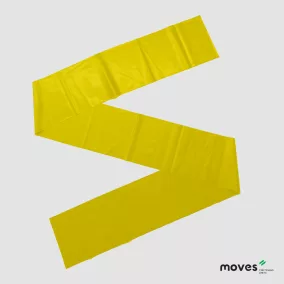

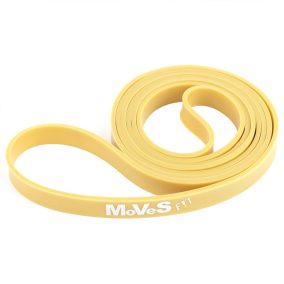
The Moves Band is a reliable tool for professionals in physiotherapy, rehabilitation, and fitness. This dust-free, latex-based, premium quality resistance band is an ideal choice for everyday use, whether for muscle strengthening, mobilization, or functional training. The Moves Band not only helps increase range of motion but also develops muscle strength and the coordinated function of muscle groups.
What's in the package?
- Yellow - 1 pc - 1.0 to 2.3 kg resistance band
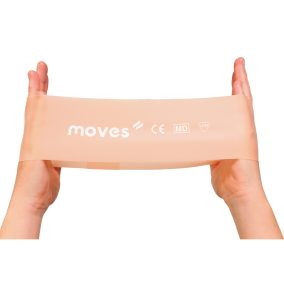


The Moves Wide Loop is a highly practical and versatile 7.5 cm wide elastic band loop that can stretch up to 200%. It’s an ideal choice for muscle strengthening, stretching, and rehabilitation. Small size with multiple resistance levels. Excellent for home or professional use, suitable for athletes and patients alike.
Price includes: 1 beige Moves Loop (30 x 7.5 cm)
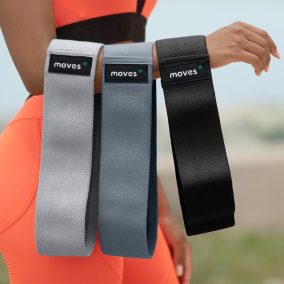


The Moves Resistance Fabric Loops set is a modern and comfortable solution for those who want to effectively develop their muscle strength, mobility, or stability. The set, containing three fabric loops with different levels of resistance, is an ideal choice for functional training, rehabilitation, and body shaping.
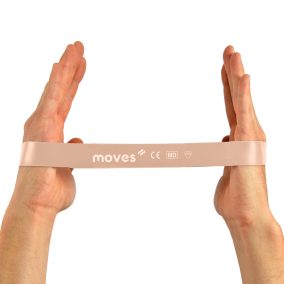
The Moves Loop is an extremely practical and versatile rubber loop, ideal for muscle strengthening, stretching, and rehabilitation purposes. Thanks to its small size and various resistance levels, it is an excellent tool for home or clinical use, suitable for both athletes and patients.
Price includes: 1 piece beige Moves Loop (30 x 2.5 cm)
The Moves Fit Superloop is an extra-long (104 cm) closed rubber loop ideal for stretching and strengthening larger muscle groups. Suitable for rehabilitation, fitness, and strength training purposes.
Price includes: 1 peach-colored Moves Fit Superloop (104cm length, 1.5cm width, 3.0mm thickness)
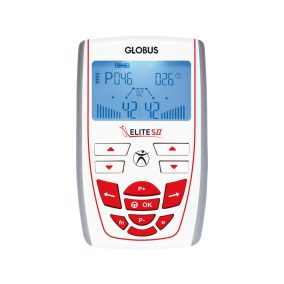


Elite SII: multifunctional electrotherapy device. TENS/EMS programs. 100 programs. 2 channels.
Price includes: Elite SII device, 2 cables, 4 pcs 50x50mm and 4 pcs 50x90mm TENS electrodes, battery charger, carrying bag
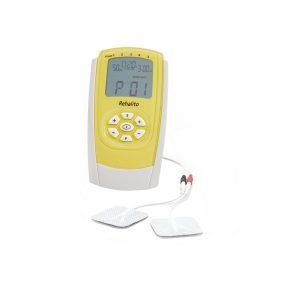
EMS muscle stimulation device that helps treat muscle problems (muscle pain, muscle stiffness) and recover lost muscle strength. Excellent for reducing neck muscle tension due to stress and treating heavy leg symptoms.
Price includes: Rehalito device, 2 stimulating cables, 4 self-adhesive TENS electrodes (40x80 mm), 1 piece 9V battery



Premium 400: multifunction electrotherapy device. TENS /EMS /MCR-MENS /FES /iontophoresis. Specialized programs for running, cross-country skiing, combat sports, tennis, football, cycling. 4 channels, battery operated.
Price includes: 1x Premium 400 device, 4x colored stimulating cables, 2x cables for microcurrent treatment, 4x 50x50mm and 4x 50x90mm TENS electrodes, 1x battery charger, 1x carrying bag
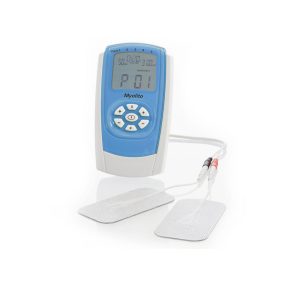
Myolito multifunctional electrical stimulation device.
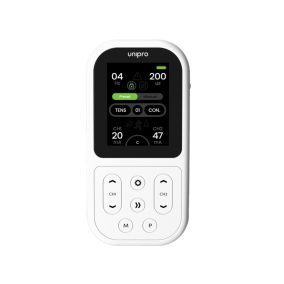
What is it used for?
- Chronic back pain
- Lower back pain, neck pain
- Joint pain, arthritis
- Tennis elbow
- Rehabilitation, muscle strength recovery
- Tissue regeneration, oxygenation
- Scar treatment
Price includes:
- Unipro TENS and EMS device (1 pc)
- Cable (2 pcs)
- 5x5 cm electrode (4 pcs)
- Power adapter (1 pc)
- 1 belt clip (1 pc)
- Storage case (1 pc)
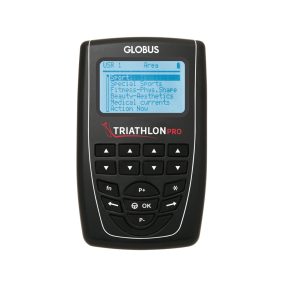


Triathlon Pro: multifunctional electrotherapy device. TENS /EMS /MCR-MENS /FES /iontophoresis. Special sport: triathlon. 4 channels, battery powered.
Price includes: Triathlon Pro device, 4 colored cables, 2 cables for microcurrent treatment, 4 pieces 50x50mm and 4 pieces 50x90mm TENS electrodes, battery charger, carrying bag
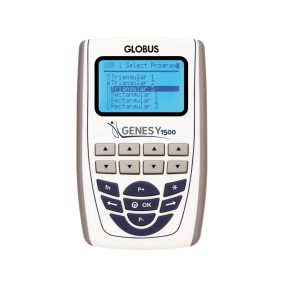


Genesy 1500: multifunctional electrotherapy device. TENS /EMS /MCR-MENS /FES / denervated / Kotz / IF / iontophoresis. 4 channels, battery and power supply operation.
Price includes: device, 4 cables, 2 cables for microcurrent treatment, 4 pcs 50x50mm and 4 pcs 50x90mm TENS electrodes, battery charger, carrying bag
Muscle atrophy is one of the most severe muscle diseases, characterized by a continuous decrease in functional muscle mass and, in parallel, muscle strength. True muscle atrophy must be distinguished from transient atrophy that occurs due to inactivity (for example, immobilization from a bone fracture or surgery), as “unused” muscle rapidly loses mass and strength. There are various forms of the disease, each with different outcomes.
Occurrence of Muscle Atrophy
Fortunately, muscle atrophy is rare, affecting on average 10 out of every 100,000 people. The disease is usually rooted in some genetically determined enzyme or metabolic disorder; it can be hereditary or arise spontaneously.
It is important to know that inactivity (lack of movement) can also cause symptoms similar to muscle atrophy. If your muscles are not used for a prolonged period, they begin to atrophy—such a state can be caused by immobilization after a fracture or surgery, which is why physical therapy is crucial.
Certain diseases that primarily affect nerves rather than muscles can also lead to muscle atrophy. For example, a stroke affects the motor areas of the nervous system, resulting in muscle degeneration.
If you notice your muscles becoming thinner and weaker without explanation, consult a doctor as soon as possible. You can start with your general practitioner or go directly to a neurologist.
Types of Muscle Atrophy
The most common childhood-onset form of the disease is Duchenne muscular dystrophy, while a somewhat milder form is Becker muscular dystrophy, also seen in children. The most frequent adult form of muscle degeneration is myotonic dystrophy.
- Duchenne Muscular Dystrophy affects only boys, as it is always inherited in an X-linked manner (girls can only be carriers, as their second X chromosome “corrects” the defect). During the disease, a protein called dystrophin fails to regulate ion flow within the cell, ultimately leading to the destruction of muscle cells. The muscle cells break down and are replaced by tissue incapable of muscle work. Duchenne syndrome is extremely severe; patients are usually unable to walk by around age 13, and since the disease also attacks respiratory and heart muscles, they rarely reach adulthood.
- In the less common Becker Muscular Dystrophy, the mutation is milder, so the disease progresses more slowly, and symptoms appear between ages 6 and 19.
- Adult-onset muscle atrophy has a milder course. Myotonic Dystrophy affects both men and women and can appear at any age. The disease is characterized by weakness and muscle stiffness, and its causes can include various metabolic disorders—typically defects in enzymes related to sugar and fat metabolism.
- Secondary Muscle Weakness occurs when atrophy is indirectly caused by another disease. Examples include excessive growth hormone production, thyroid disorders, metabolic diseases, or liver disease.
- In Autoimmune Muscle Disease, the body recognizes muscle tissue as foreign and produces antibodies against it.
Possible Treatments for Muscle Atrophy
Medical science has much information on the progression of muscle atrophy, but the underlying cause remains unknown, and there is no specific cure yet. However, it is possible to slow the progression, alleviate symptoms, and improve quality of life.
In childhood muscle atrophy, steroid treatment can somewhat slow the process; a true solution is hoped for in the future, possibly through stem cell therapy.
Never Stop Moving!
Physical therapy plays a vital role in treating muscle atrophy. Regular movement helps prolong the life of healthy muscle fibers. To perform appropriate exercises, always consult a physiotherapist, movement therapist, or medical fitness instructor.
Supporting Tools
Rehabilitation tools and medical devices complement and enhance the effectiveness of exercises. Attention! These tools are not a substitute for physical therapy (except in very severe cases) but serve as supplementary solutions!
Ultrasound
Before exercise, prepare atrophied and stiff muscles with an ultrasound treatment. The ultrasound waves help relax and warm the muscles and tendons, making physical therapy easier.
Muscle Stimulator
Muscle stimulators deliver mild, painless electrical impulses to the skin, triggering muscle contractions. A 30–40-minute session can increase muscle strength similar to exercise. This method can help prevent, reverse, or at least slow muscle atrophy.
On Dr. Zsolt Zátrok’s blog, you can find a training plan that helps maintain muscle strength.
Muscle stimulation treatment is highly effective in preventing muscle mass and strength loss. Of course, a single session has no substantial effect, just as a single workout cannot increase strength. With regular use (1–2 times daily), significant improvement can be seen in 2–3 months.
Basic muscle stimulators for mild complaints and small areas are available from 20,000 HUF. The best devices range between 100,000 and 150,000 HUF.