Magnetotherapy in Practice
Magnetotherapy is a widely used physiotherapy method in Western Europe. However, in our country it is used far less than it deserves. The electromagnetic energy is produced by a current flowing through a coil. Magnetotherapy accelerates microcirculation and tissue regeneration processes. In this article you can read which conditions magnetotherapy is suitable for. Here I write about how to apply magnetotherapy to achieve the best possible results.
Main parameters of magnetotherapy
The magnetic field has specific characteristics defined by four parameters: field strength (Gauss), frequency (Hz), time (hours and minutes) and duty cycle (DC).
Field intensity is still often indicated in Gauss even though the SI system uses Tesla. Magnetic intensity is an important parameter for treatment effectiveness.
For comparison: the Earth's magnetic field is about 0.3–0.7 Gauss (30–70 µTesla). At the other extreme, intensities above 1000 mTesla (10,000 Gauss) can cause permanent genetic damage.
For home magnetotherapy treatments, intensities below 10 mTesla (100 Gauss) are used for biostimulation and regeneration-supporting treatments, while intensities between 10–100 mTesla (100–1000 Gauss) are applied for therapeutic treatments.
Medical magnetotherapy devices generally use low-frequency treatments (between 1–200 Hz). The lower frequency range is mainly used for bone and joint disorders, while the higher frequencies are for soft tissues (tendons, ligaments, muscles, blood vessels, nerves).
Individual treatment durations depend on the condition. Bone formation disorders, such as delayed fracture healing, nonunion, or bone necrosis, typically require daily 6–8 hour treatments (for 1–2 months). For low back pain, tendon inflammations and similar complaints, shorter treatment times are appropriate: daily 30 minutes for 20–30 days.
The electromagnetic field can be continuous or pulsed. The duty cycle (DC) determines whether the field is pulsed. If the duty cycle is 100%, the magnetic field is continuous. If it is below 100%, the emission is pulsed. For example, in Magnum devices the duty cycle is set to 50%, which means that the magnetic phase and the pause are of equal length — the field is alternately on and off. Continuous magnetism produces a stronger effect on tissues, but that does not necessarily mean it is better!
Pulsation often gives better results. Think of hammering a nail into a board: if you press the hammer continuously on the nail head it won't go into the wood, but if you strike it repeatedly it will. This example—although not entirely precise—illustrates how intermittent impulses differ.
When should you change the preset programs?
The parameters of the individual programs in Magnum magnetotherapy devices were set according to medical guidelines. Generally—unless your treating physician advises otherwise—you do not need to modify them.
Field intensity should be increased if the treated area is covered by a thick dressing, plaster cast or other immobilizer. Although the magnetic field penetrates these materials, raising the field intensity is necessary. The frequency and duty cycle associated with each program were determined based on medical research, so you do not need to change the frequency either.
In severe bone conditions (nonunion, osteoporosis, fracture) the default program durations are set to the minimum required level. In these cases longer treatments are better; if possible set several hours of daily treatment.
Generally, for home use only modify preset values on the device if your doctor specifically recommends it.
A pulsed magnetic field is produced by an electric current flowing through a coil. The magnet coil is a metal core surrounded by a series of windings. The direction of the current defines polarity, so each coil has a north and a south pole. "S" marks the coil's southern pole (South) and "N" its northern pole (North). The field therefore forms both under and above the coil.
Poles are significant when positioning the treatment accessory.
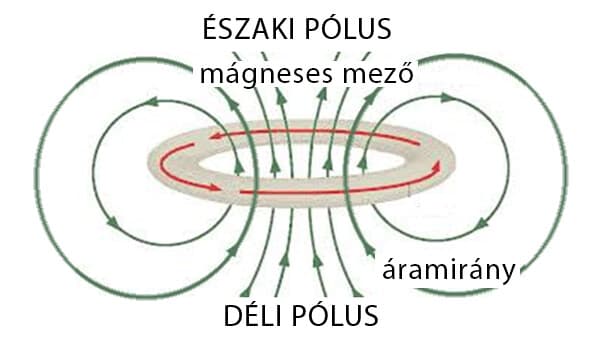
Adjacent magnet coils
If you place a magnet coil on the body surface with one of its poles, its magnetic field penetrates the body and exerts its effect under the coil and in its immediate vicinity. If the treatment area is large (e.g. the spine from neck to lower back), several magnet coils are needed. If you have only one coil, multiple sessions are necessary: first the neck, then between the shoulder blades, the back, and finally the lower back. Of course, that means 4 times the time.
If you have multiple magnet coils, you can treat a larger area simultaneously. In such cases place each coil with the same pole facing the skin. This creates a uniform magnetic field.
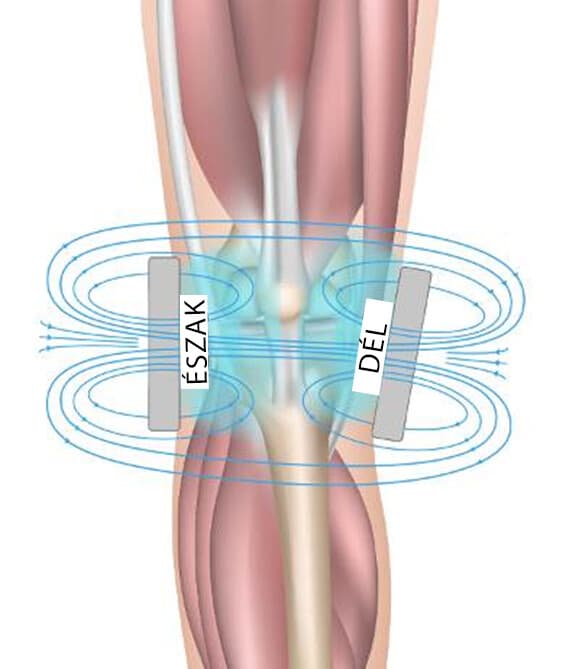
Oppositely placed magnet coils
In many cases the treated area is small, e.g. a wrist or lower leg fracture. In such cases the magnet coils should be placed on either side of the injured area. The two magnetic fields then link and create a larger, deeper-penetrating field.
A continuous magnetic field connection is only possible if the coils are properly positioned! Identical polarity is required, as shown in the illustration. The two coils should face each other as parallel as possible; otherwise the fields will not connect (and the effect remains somewhat reduced).
When you hold a magnetic treatment accessory in your hand, the first thing to do is check the polarity. This determines where and how it should be placed on the body and what it is suitable to treat.
Magnetic treatments can be performed lying down, but coils can also be secured with Velcro straps. This allows treatment even while working at a desk.
Treatment duration
Like all physiotherapy methods, magnetotherapy is not "instantaneous". Biostimulation means stimulating biological-physiological processes. For example, fracture healing is a process that takes months; a cut may close in a few days, but the scar reaches its final strength in 90–100 days. Repeated, long-term biostimulation treatments (over weeks) support and somewhat accelerate these processes, but they do not shorten them to a few days! The application area of magnetotherapy is the treatment of bones, joints and ligaments, which heal particularly slowly, so patience and persistence are required for magnetotherapy. Below I list some conditions and the general treatment principles, frequency and duration associated with them. Ask your treating physician for a personalized treatment protocol. If you do not receive one, follow the general recommendations. The treatments can be found in Magnum magnetotherapy models, but not in all of them. Check the program list before purchase to see if the device helps in a given case.
GENERAL TISSUE REGENERATION
This treatment is typically used for larger-area disorders such as neuropathy. The main cause is damage to nerves and receptors and insufficient regeneration. It can also be used to generally support the immune system as prevention—for example, starting 2–3 weeks before the spring-autumn flu season or before the season for allergy sufferers helps strengthen the immune system.
General protocol: daily 6–8 hours for 12 weeks
FRACTURES
Programs for treating fractures can be used from the first day after injury. Treatment can be performed through plaster or plastic immobilizers. In such cases we recommend increasing the power by 50–60% because the thickness of the cast increases the distance between the coils and the bone. Opposite placement of the coils is important! Place the coils corresponding to the fracture location. If you have multiple applicators you can use both to create a stronger magnetic field. This is particularly useful for treating areas with a large diameter, such as around the femur or tibia.
General protocol: daily 8 hours for 30 days
BONE NECROSIS
Used after diagnosis by X-ray or MRI or in cases of insufficient blood supply. This condition often follows injury; in other cases long-term corticosteroid use or excessive alcohol consumption causes it.
General protocol: daily 8 hours for 5 months
BONE EDEMA
Used for bone contusion or periosteal injury. The trauma causes abnormal fluid accumulation around the bone. The main cause of this condition is a strong blunt impact. The second most common cause of bone edema is osteoarthritis.
General protocol: daily 8 hours for 30 days
DELAYED FRACTURE CONSOLIDATION
Used when a fracture does not heal properly. This may occur in osteoporosis or vascular/metabolic disorders. Less commonly, inadequate fixation can be the cause—if the fracture fragments can move. Place the magnet coils opposite each other whenever possible. Daily treatment time can vary from a few hours up to 10–12 hours.
General protocol: daily 3–8 hours for 30 days
NONUNION
Recommended when fracture healing exceeds nine months. The patient often has had surgery and/or requires synthesis devices (plates, screws or external fixators), which can make proper coil positioning and fixation difficult. Therefore consultation with the treating physician is essential because specific, targeted recommendations may be needed for the given situation.
General protocol: daily 8 hours for 5 months
OSTEOPOROSIS
Magnetotherapy may be necessary in progressive weakening of bone structure. Bone tissue is vital for body support and undergoes continuous remodeling throughout life. In osteoporosis this remodeling mechanism is disturbed, leading to progressive structural weakening of bone. Pulsed electromagnetic fields activate bone-building functions and improve the balance between osteoblasts (cells responsible for bone formation) and osteoclasts (cells responsible for bone resorption). For treating larger areas it can be useful to use MAT 100 or TotalBody mattresses (sold separately).
General protocol: daily 8–10 hours for 12 weeks
ARTICULAR CARTILAGE WEAR, CARTILAGE LOSS, JOINT INFLAMMATION, JOINT PAIN, BACK PAIN
General protocol: daily 30 minutes for 6 weeks
JOINT PAIN
General protocol: daily 15–40 minutes for 3 weeks
BACK PAIN
General protocol: daily 20–45 minutes for 3 weeks
ALGODYSTROPHY / SUDECK'S SYNDROME
In algodystrophy syndrome magnetotherapy can be used after immobilization with a plaster cast. It is also applicable for microtrauma of the foot, dorsum of the foot, wrist and hand. In the early phase the affected limb shows swelling, redness, warmth and intense pain, especially under load.
General protocol: daily 4–6 hours for 4–8 weeks
HIP AND KNEE PROSTHESES
Magnetotherapy supports regeneration after implantation of prostheses. It strengthens prosthesis incorporation and the development of strong bone tissue around it. Medical literature recommends at least 3–4 hours of daily treatment, but the treating physician may suggest a different duration.
General protocol: daily 3–4 hours for 60 days
POST-OPERATIVE KNEE TREATMENT
Used after anterior cruciate ligament (ACL) reconstruction or cartilage debridement. Pulsed magnetic treatment can begin in the first days after surgery, reduces pain, edema and inflammation, and accelerates healing.
General protocol: daily 4–6 hours for 60 days
CARPAL TUNNEL SYNDROME
Magnetotherapy can be used from the first appearance of symptoms. The greatest improvement is seen in this early stage. Carpal tunnel syndrome is caused by compression of the median nerve as it passes from the forearm through the carpal tunnel to the fingers. Magnetotherapy helps reduce pain, has an anti-inflammatory effect and improves hand and finger mobility.
General protocol: daily 30 minutes for at least 15 days.
If necessary, this cycle can be repeated.
TENDONITIS, TENNIS ELBOW
General protocol: daily 30 minutes, 5 days a week, for 3 weeks
ROTATOR CUFF TENDON DISORDERS
General protocol: daily 3–8 hours for 4 weeks
For tendonitis, tennis elbow and rotator cuff disorders place the coils over the painful area, preferably in opposite positions. In the acute phase magnetotherapy is used in combination with other physiotherapies and medications prescribed by the physician; in the subacute phase it can be performed as a standalone treatment.
Accessories providing treatment and their use
Various magnet coils are available for Magnum magnetotherapy devices, each suitable for different treatments. Choose based on the area and condition to be treated.
Magnum flexible applicator, standard

The manufacturer supplies one (or in some devices two) 30x10 cm flexible magnet coil(s) by default.
It actually contains 2 coils with opposite polarities. Therefore it is especially suitable for fractures of the arm and leg bones, and for treating injuries and inflammations of the hand, foot, wrist, elbow, shoulder, ankle, knee and hip. It should be placed like a blood pressure cuff, i.e. wrapped around the area to be treated. This design ensures the two coils are positioned on opposite sides of the bone or joint and that their magnetic fields connect.
Magnum flexible applicator, large

Optionally available is a large 40x15 cm flexible magnet coil for treating larger areas.
It contains 4 coils with the same polarity. Therefore it is particularly suitable for treating the spine, pelvis, hip or longitudinal femoral fractures. This cuff is not placed circumferentially but, for example, laid along the spine. The coils create a large-area but not very deep magnetic field.
Magnum Soft4 treatment mattress
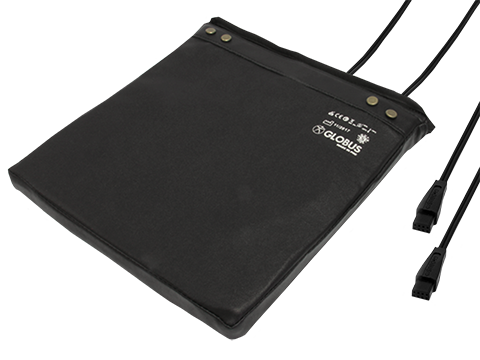
This applicator contains 4 coils in soft foam pockets. The smooth side of the cover is the coil's south (S) pole, the north (N) pole is on the opposite side where the strap slot is located. Its size is 25x25 cm, ideal for the back, lower back, pelvis and hip. It is a good solution for tennis elbow, epicondylitis, carpal tunnel syndrome and tenosynovitis when placed under the affected limb. This allows treatment even while working at a desk.
Magnum Pocket Pro applicator

This applicator contains 2 coils in a zippered, replaceable fabric cover. The cover clearly marks the south (S) and north (N) poles. The coil is suitable for treating smaller areas. If you have multiple Pocket Pros you can place them side by side with the same polarity for larger area treatment or in opposite positions for fracture or joint injury treatment. It can be secured with a Velcro strap.
Magnum treatment mattresses
Three types of mattresses are available. The smallest is the MAT 100 mattress, measuring 70x45 cm. It contains 4 coils in a fabric cover and memory foam. Therefore treatment can be performed while sitting on a chair or armchair. It is ideal for treating the femur, hip, pelvis, lower back, back and shoulder-neck region. It is therefore excellent for long-duration, multi-hour treatments.
TotalBody 200 and 400 treatment mattresses
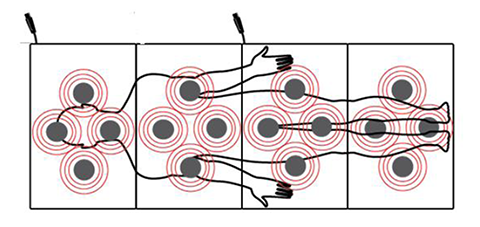
I recommend these large mattresses for long-duration, multi-hour treatments when the whole body or a large part of it needs to be treated simultaneously. For example: osteoporosis, multiple joint inflammation, spinal complaints, allergies, immune strengthening, or circulation improvement. The TotalBody mattress has an overall size of 70x180 cm. It can be placed on the bed under the sheet, allowing treatment during sleep. The mattress actually consists of 4 smaller units.
In the Total Body 200 only 2 of the 4 mattress parts contain coils (4 coils each). By varying the mattress elements different distributions can be created.

In the Total Body 400 there is no compromise: each section has 4 coils, enabling full-body treatment.
How to choose among Magnum magnetotherapy device models?
The main differences between devices are the number of treatment channels, the magnetic field intensity, and the number of treatment programs.
Number of treatment channels
The Magnum L device accepts only a single magnetic applicator, so buy it if, for example, you want to accelerate healing of a fracture on one wrist or elbow. The Magnum XL, 2500, XL Pro and 3000 Pro devices operate two channels simultaneously. On the 3000 Pro it is possible to start different programs on the two channels (for example a fracture program on one output and a joint inflammation program on the other). This matters if you treat two patients at once or your partner also has musculoskeletal problems. With the Magnum XL, 2500, XL Pro you can operate two applicators simultaneously but only with the same program. For example, you can treat inflammation in both knees at the same time. The Magnum 3500 Pro is four-channel, allowing treatment on up to four channels simultaneously. In 2+2 mode different programs can be set on outputs 1–2 and 3–4, so two patients and even two full-body mattresses can operate at the same time.
Magnetic intensity
As mentioned above, intensities below 100 Gauss are used for biostimulation/regeneration-supporting treatments, while intensities between 100–1000 Gauss are used for therapeutic treatments. Thus higher intensity yields stronger therapeutic effect. The higher the device's magnetic field intensity, the higher its price. You need to find a compromise that suits both your condition and your budget.
Low magnetic intensity does not mean the device is ineffective! With a lower-intensity device you will need more sessions to achieve improvement or healing. It's like driving a car: if you go slower it takes more time to reach your destination, but you will get there.
Number of treatment programs
The more expensive a device is, the more pre-configured treatment programs it contains. Programs are created based on medical experience and guidelines. Different frequency, intensity and treatment time are needed for a small inflammation (e.g. wrist tendon) than for an Achilles tendon or a femoral neck fracture or osteoporosis.
If a device has few programs, they provide "general" treatments (for example, general bone fracture). More expensive devices split these into more precise programs, offering specialized programs for wrist, upper arm, tibia or femur fractures, etc.
You do not necessarily need the device with the most programs! You need the one that suits your current needs, which could even be the Magnum L. The Magnum XL and XL Pro also offer rehabilitation and cosmetic/wellness programs. The Magnum 2500, 3000 Pro and 3500 Pro can be suitable not only for home use but also for physiotherapy clinic treatments.
Comparison of Magnum devices
| Magnum device version | L | XL | 2500 | XL Pro | 3000 Pro | 3500 Pro |
| number of channels | 1 | 2 | 2 | 2 | 2 | 4 |
| multiple patients treated simultaneously | no | no | no | no | Yes 1+1 ch. | Yes 2+2 ch. |
| intensity / channel (Gauss) | 120 | 140 | 160 | 200 | 200 | 200 |
| max. intensity (Gauss) | 120 | 280 | 320 | 400 | 400 | 800 |
| rehabilitation programs | 8 | 16 | 52 | 32 | 70 | 70 |
| cosmetic/wellness programs | none | 10 | none | 12 | none | none |