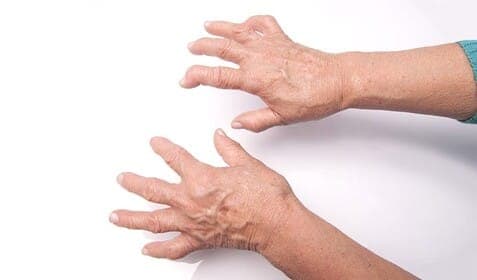
Rheumatoid arthritis, one of the most serious musculoskeletal diseases
The rheumatoid arthritis (shortly RA or rheumatism) — that is, chronic polyarthritis — is one of the most severe forms of rheumatologic diseases and is accompanied by intense pain. In Hungary roughly 80–100 thousand people struggle with RA symptoms. Although in a smaller portion of cases it may even regress spontaneously, for the majority of patients the condition tends to slowly and continuously worsen over time. What causes […]

The rheumatoid arthritis (shortly RA or rheumatism) — that is, chronic polyarthritis — is one of the most severe forms of rheumatologic diseases and is accompanied by intense pain. In Hungary roughly 80–100 thousand people struggle with RA symptoms. Although in a smaller portion of cases it may even regress spontaneously, for the majority of patients the condition tends to slowly and continuously worsen over time.
What causes rheumatoid arthritis?
Rheumatoid arthritis is a persistent form of joint inflammation that affects multiple areas at once. It is three times more common in women than in men.
The exact cause of the disease is not known. Both hereditary and external factors can contribute to its development. When several factors are present, the chance of developing rheumatoid arthritis is higher — for example, if an inborn predisposition is combined with environmental and lifestyle factors (such as smoking, using contraceptives, stress, and certain infections), this may pave the way to the autoimmune disease.
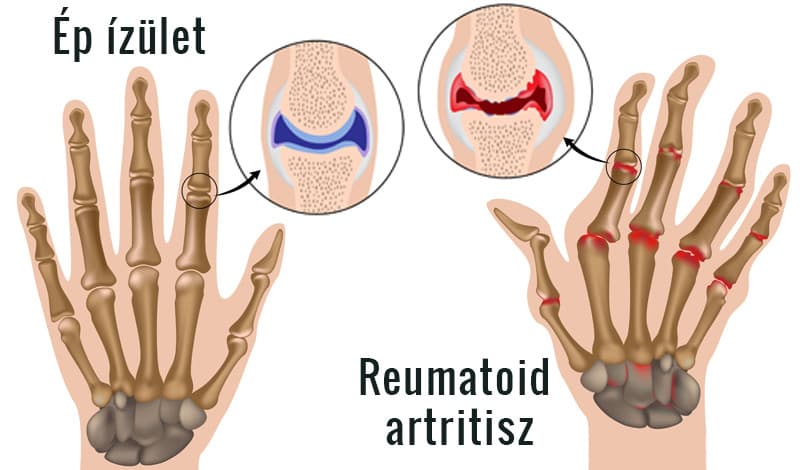
Very simply put: an autoimmune process means that your body's defense system, which should neutralize and destroy pathogens and foreign substances, due to some error turns against itself. In rheumatoid arthritis the white blood cells function abnormally.
The cell layers that line the joint perceive tissues as foreign and "go to war" against them. Your body damages its own cells and tissues. The result of this "battle" is inflammation: the inner membrane lining the joint capsule becomes congested with blood, the joints and their surroundings swell, redden and become painful. If the condition persists, inflammatory enzymes gradually destroy the joint cartilage and the bones as well.
The onset of rheumatoid arthritis
- it can start slowly and gradually, with morning stiffness in the hands and painful swelling of the hand joints (symmetrically, on both sides), accompanied by malaise and weight loss;
- but it can also begin suddenly with severe pain, fever, and swelling of the small joints of the hands and feet as well as the wrist, knee, shoulder and ankle joints, sometimes causing inflammations that make walking impossible.
It is important that as soon as you notice these symptoms you consult a doctor immediately.
Requires ongoing care
According to current medical knowledge, rheumatism cannot be cured, but with early diagnosis and timely initiated treatment you can keep the disease under control and thereby preserve your quality of life. There are several methods available for home treatments.
In addition to the drug treatments prescribed by the doctor, regular physical activity is important, including thorough exercise of your joints. Strive to maintain an ideal body weight, since excess weight places an additional burden on your joints and worsens the condition.
If the inflammation is in a quiescent phase, heat therapy and warm mud packs, as well as paraffin treatments, are very useful. Heat reduces pain and relaxes the joint ligaments and muscles.
During an acute flare-up of rheumatoid arthritis, cooling relieves pain and muscle spasms.
In addition, you can use a number of physiotherapy devices designed for home use.
Product recommendation
Devices for the treatment of the joint symptoms of rheumatoid arthritis
TENS device
provides pain relief with electrical impulses. If RA specifically affects the hands and toes, TENS treatment is technically difficult because the fingers are too small to attach treatment electrodes. Effectiveness can be enhanced with glove and sock electrodes. These should be used instead of the electrode, similar to how I demonstrated for neuropathy.
Muscle stimulation (EMS)
treatment primarily helps prevent loss of muscle strength and muscle wasting. Strong pain from an RA flare-up can force inactivity, causing muscles to quickly atrophy and weaken. This can be prevented with muscle stimulation.
microcurrent treatment
has a stronger effect than TENS and is one of the most effective anti-inflammatory methods, but while it is excellent for treating larger joints, it is cumbersome to apply to small joints.
ultrasound therapy devices
have pain-relieving and anti-inflammatory effects. After 10–15 treatments the same area should not be treated again for a few months.
softlaser devices
have powerful analgesic and effective anti-inflammatory effects. Because they can be used long-term without side effects, the softlaser device is one of the best and most effective tools for treating rheumatoid arthritis.