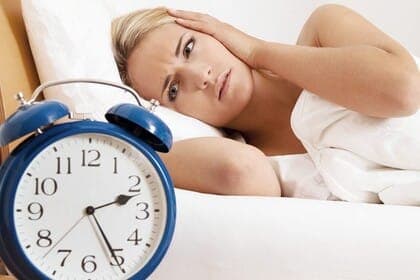

 What is a sleep disorder – and why is it more than an inconvenience?
We tend to see sleep as wasted time – yet it is the body's most important maintenance shift. During sleep, memory traces are organised, tissues regenerate, and the immune and hormonal systems are recalibrated. If you sleep poorly for a long time, this maintenance is missed night after night – and there is a price to pay: research shows that disturbed sleep measurably increases inflammatory marker levels and, in the long term, also raises the risk of cardiovascular and metabolic diseases.2
The good news is that insomnia is the sleep disorder for which the most thoroughly developed treatment exists – it just does not start where most people look for it. Not with sleeping pills, and not with a device.
 Key point
According to international guidelines, first-line treatment for chronic insomnia is not medication, but cognitive behavioural therapy for insomnia (CBT-I) and putting your sleep habits in order – sleeping pills are a short-term adjunct under medical supervision.1 Your daily routine – exercise, caffeine, screens and bedtime – does more for your sleep than any tablet or device.
 How much sleep do you need – and which sleep disorder do you have?
Most adults need 7–9 hours of sleep; sleep becomes more fragmented in later life, but the need does not decrease significantly. “Sleep disorder” is an umbrella term – it is worth clarifying which form you are dealing with:
| Type | How can you recognise it? | What to do |
|---|---|---|
| Insomnia | Difficulty falling asleep, waking during the night, waking too early, unrefreshing sleep – several nights a week for at least 3 months | This article is about it: sleep hygiene + CBT-I |
| Sleep apnoea | Loud snoring, pauses in breathing (noticed by your bed partner), morning headaches, daytime sleepiness | Assessment in a sleep laboratory – I wrote about this in the article on snoring and sleep apnoea |
| Restless legs syndrome | Unpleasant sensations in the legs in the evening or at night, with an urge to move that prevents you falling asleep | A separate condition requiring separate treatment – see the detailed article here |
| Excessive sleepiness and other disorders | Abnormal daytime sleepiness despite sufficient sleep; sleepwalking, nightmare disorder | Medical assessment, including a sleep laboratory if needed |
 Why can't you get to sleep?
Two things need to come together for you to fall asleep: sleep pressure, which builds up during the hours you spend awake during the day, and the signal from your internal clock, which is controlled by the light–dark cycle. In people with chronic insomnia, however, the brain is overstimulated and remains stuck in alert mode – the stress system's activity does not decrease in the evening either. That is why the advice to “just try to sleep” does not work: trying itself creates alertness.
The most insidious feature of insomnia is that it feeds itself. After a few bad nights, worry appears: “Will I be able to sleep tonight?” – and this anxiety produces precisely the alertness that prevents you from falling asleep. The bed gradually becomes conditioned as a place for lying awake, while “catch-up sleep” at the weekend disrupts your internal clock. The guideline-recommended first-line treatment, CBT-I, breaks this circle – which is why it works where sleeping pills merely cover up symptoms.1
The most common sleep disruptors are caffeine consumed in the afternoon or evening (its effects last 6–8 hours); alcohol (it makes you fall asleep, but fragments sleep in the second half of the night); screen use in the evening (blue light delays melatonin production, while the content keeps you alert); persistent stress; lack of exercise; a warm, bright bedroom; and pain – if pain wakes you at night, treat that first; your sleep will then improve on its own.
 How can it be treated? The steps – in order of evidence
Step 1: sleep hygiene – building the foundations. Set fixed bedtimes and wake-up times, including at weekends; have your last coffee in the early afternoon at the latest; never use alcohol as a sleeping aid; during the last hour, read on paper or listen to quiet music instead of using screens; keep the bedroom cool (17–19 degrees), dark and quiet; use the bed only for sleeping – not watching television or working; eat dinner at least 2–3 hours before bedtime; and exercise regularly during the day – research shows that people who exercise regularly fall asleep faster and sleep better.3 The timing of exercise also matters: finish strenuous training 3–4 hours before bedtime.
Step 2: CBT-I – the first-line treatment. The guideline-recommended first choice for chronic insomnia is cognitive behavioural therapy for insomnia: a structured programme lasting several weeks that addresses anxiety about sleep, unhelpful habits and how time in bed is organised – either in person or digitally.1 In Hungary, it is available from psychologists specialising in sleep therapy and at sleep clinics. If your insomnia has lasted for months, look for this – not a stronger sleeping pill.
Step 3: medication – short term, under medical supervision. Sleeping pills may help as a short-term bridge for a few weeks; according to the guideline, generally for no more than 4 weeks – both starting and stopping them are medical tasks. What you should know: the evidence does not support the effect of over-the-counter “sleeping pill” products or fast-release melatonin; prolonged-release melatonin may be considered over the age of 55 on medical advice.1
Step 4: complementary methods. Light therapy and regular exercise are useful additions to treatment according to the guideline.1 Evening relaxation – breathing exercises, progressive muscle relaxation and meditation – quietens the alertness that prevents you from falling asleep. Home-use devices also belong here – I will discuss them honestly below.
 My advice
Here is one rule that most poor sleepers break: if you still cannot sleep after 20–30 minutes, stop tossing and turning – get up, go to another room, read something boring in dim light, and return to bed only when you are genuinely sleepy. Hours spent awake in bed teach your brain that the bed is a place for tossing and turning – you need to teach it the opposite lesson. Also keep a sleep diary for two weeks: bedtime, waking time, night-time awakenings, caffeine, alcohol and exercise – the pattern will tell you more than any smartwatch.
What can home-use devices do – honestly?
Let me say this plainly: there is no “switch it on and sleep” device for sleep disorders, and no device replaces guideline-based treatment (sleep hygiene + CBT-I). Two device families may have a complementary role, in two different ways:
Nurosym
If your insomnia is linked to an overstimulated nervous system or persistent stress, non-invasive vagus nerve stimulation applied to the ear may support evening calming through the body's “calming” neural pathway. Think of it as part of an evening relaxation routine – it addresses the stress side, it does not “put you to sleep”.
Magnum 2500
The low-frequency evening programmes of pulsed magnetic therapy (PEMF) may support relaxation. The honest context is important: only a small number of small studies are available on its effect on sleep, so regard it as complementary – it is primarily a reasonable choice if you would also use the device for another purpose, such as joint or musculoskeletal complaints, and include it in your evening routine. I have written about the method in detail in the magnetic therapy guide.
You can find the full range in the sleep disorder category. And the order cannot be reversed: first put your sleep habits and stress in order – a device can support this at most.
 Before using a home-use device
- Pacemaker or another implanted electronic device – neither magnetic therapy nor electrical stimulation may be used
- Pregnancy – only after medical consultation
- Cancer – treatments only with the approval of the treating physician
- Epilepsy – only with the treating physician's permission
 When should you see a doctor?
If your bed partner notices pauses in your breathing, or if you regularly fall asleep during the day despite loud snoring – suspected sleep apnoea requires assessment because, if untreated, it places strain on the heart and blood vessels. You should also see a doctor if you have been taking sleeping pills for months; if insomnia is accompanied by worsening low mood or hopelessness (in a crisis, call the free 116-123 mental health helpline); or if poor sleep is linked to pain, frequent night-time urination or another physical complaint – in these cases, the cause must be treated, not the sleep.
Frequently asked questions
If you wake refreshed without an alarm and do not struggle with sleepiness during the day, you may be one of the rare people who genuinely need little sleep. For most people, however, 5–6 hours means persistent sleep deprivation. The body does not “get used to it”; it is worn down by it – research links disturbed, short sleep with inflammatory burden and the risk of chronic diseases.
Yes, for the short term and under medical supervision – but they are not the solution in the long term. Guidelines generally recommend sleeping pills for no more than 4 weeks because dependence can develop, and they do not treat the root problem – the vicious circle of insomnia. If you have been taking sleeping pills for months, do not stop suddenly: discuss gradual withdrawal with your doctor, along with CBT-I.
The disappointing news is that the evidence does not support the effect of fast-release pharmacy melatonin on chronic insomnia – the European guideline specifically does not recommend it. An exception is the prolonged-release form over the age of 55, on medical advice and for no more than a few months. Melatonin is more useful for circadian disruption, such as jet lag or shift work, than for classic insomnia.
Partly – it reduces the worst effects, but sleeping for 10–11 hours at the weekend disrupts your internal clock, and on Monday the struggle to fall asleep starts again. A better strategy is to protect your weekday sleep time and allow no more than a 1-hour difference at the weekend. If you need an afternoon nap, keep it short (20–30 minutes) and take it early in the afternoon; otherwise you reduce your night-time sleep pressure.
If sleep apnoea is suspected (snoring + pauses in breathing + daytime sleepiness); if evening restlessness in your legs prevents you falling asleep; if your insomnia does not improve despite treatment; or if unusual behaviour during sleep, such as sleepwalking, shouting or limb movements, occurs. Your GP or neurologist will decide whether a referral is needed.
No – and anyone who promises this is misleading you. The low-frequency evening PEMF programmes may support relaxation, but there is little reliable research on their effect on sleep. The backbone of insomnia treatment is sleep hygiene and CBT-I; a device may at most be one support for winding down in the evening.
 What does the research say?
“What is the real, evidence-based treatment for insomnia?”
The European guideline for sleep medicine is clear: first-line treatment for chronic insomnia at every age is cognitive behavioural therapy for insomnia (CBT-I), either in person or digitally. Medication may be considered if this is not enough: sleeping pills for no more than a few weeks, while over-the-counter products and fast-release melatonin are specifically not recommended. Light therapy and exercise are useful additions.1
“Can poor sleep really cause illness?”
The link is measurable. According to an analysis combining data from more than 50,000 people, disturbed, unrefreshing sleep is associated with higher levels of inflammatory markers circulating in the blood – CRP and IL-6. This is one pathway through which persistent sleep disturbance increases the risk of cardiovascular and metabolic diseases – and why it is a full-value pillar of the programme against chronic inflammation.2
“Does exercise really improve sleep?”
Yes – and not only in theory. According to an analysis of the field, people who exercise regularly fall asleep faster and sleep more efficiently and with better subjective quality; even a single exercise day measurably improves the night. The effect did not depend on the type of exercise chosen – regularity was what mattered.3 If you sleep poorly, a daily walk is one of the cheapest “sleeping aids”.
 Summary – Quick overview
Read more
Scientific sources
- Riemann D, Espie CA, Altena E, et al. (2023). The European Insomnia Guideline: An update on the diagnosis and treatment of insomnia 2023. Journal of Sleep Research, 32(6), e14035. DOI: 10.1111/jsr.14035
- Irwin MR, Olmstead R, Carroll JE (2016). Sleep Disturbance, Sleep Duration, and Inflammation: A Systematic Review and Meta-Analysis of Cohort Studies and Experimental Sleep Deprivation. Biological Psychiatry, 80(1), 40–52. DOI: 10.1016/j.biopsych.2015.05.014
- Kredlow MA, Capozzoli MC, Hearon BA, Calkins AW, Otto MW (2015). The effects of physical activity on sleep: a meta-analytic review. Journal of Behavioral Medicine, 38(3), 427–449. DOI: 10.1007/s10865-015-9617-6