
 Magnetotherapy device (PEMF) – which Magnum model should you choose?
A magnetotherapy device is a medical physiotherapy device used worldwide as a complementary treatment for musculoskeletal conditions. These medical devices use coils to create a pulsed electromagnetic field (PEMF – Pulsed Electromagnetic Field); home-use devices typically operate at an intensity of 100–500 Gauss. The main differences between the Magnum models in our range are the number of treatment channels, magnetic intensity and number of treatment programmes – the detailed guide below will help you choose.
 Do not simply look for the most programmes or the highest Gauss value
The right choice is not about the highest Gauss value or the largest number of programmes. It is about whether the device covers the area to be treated and the required indication. The Magnum Insomnia is an important exception: while the other Magnum models treat one body area locally with an applicator (joint, bone or soft-tissue complaints), this model uses a full-body mat and was specifically designed for some forms of sleep disturbance and regeneration. Below, we explain what each model is intended for.
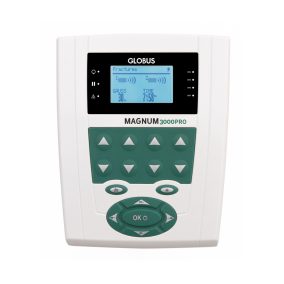


Magnetic therapy (PEMF) device. 2 channels / 400 Gauss total magnetic intensity. 70 programs
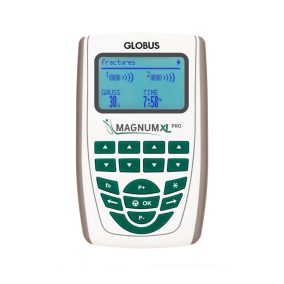


Pulsed electromagnetic field (PEMF) device. 2 channels / 400 Gauss total magnetic intensity. 46 programs. For home use.
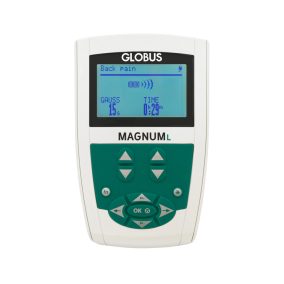


Magnetic therapy (PEMF) device. 1 channel / 120 Gauss total magnetic intensity. 8 programs. For home use.


Magnetic therapy device (PEMF). 2 channels / 320 Gauss total magnetic intensity. 52 programs
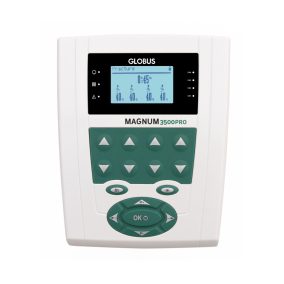


Pulsed electromagnetic field (PEMF) device. 4 channels / 800 Gauss total magnetic intensity. 70 programs. 2+2 mode. For therapists and professional users.
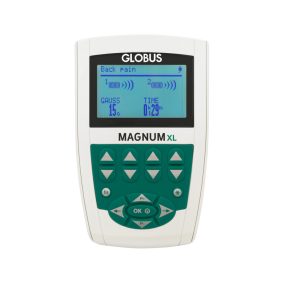


Magnetotherapy (PEMF) device. 2 channels / 280 Gauss total magnetic intensity. 26 programs. For home use.
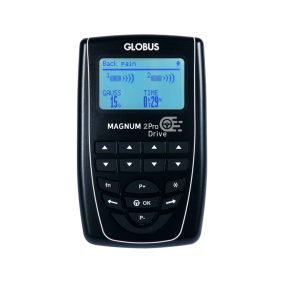


Pulsed electromagnetic field (PEMF) device. 2 channels / 400 Gauss total magnetic intensity. 41 programs. Operates from mains, battery and car cigarette lighter.
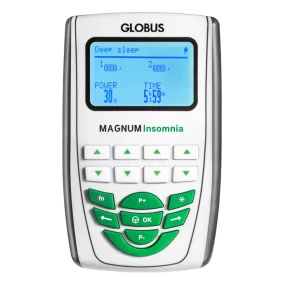


Magnetotherapy (PEMF) device with mattress for treating certain forms of sleep disturbance.
 Biological effects of magnetotherapy
The clinical effect of PEMF depends on the indication, programme and applicator placement. The evidence is not equally strong for every complaint or every factory programme. The most extensively studied areas include:
- Joint pain and stiffness – some osteoarthritis studies have observed short-term improvements in pain and function.
- Support for bone healing – used as a complementary treatment for selected fractures, delayed union and certain postoperative situations.
- Bone oedema – pain may decrease and weight-bearing capacity may improve with certain protocols; a model with the appropriate programme is required.
- Orthopaedic rehabilitation – some devices contain dedicated programmes for use after joint replacement, ACL surgery, cartilage-surface treatment, spinal fusion or osteotomy.
- Local inflammatory and oedematous reactions – a complementary effect is possible, but the cause of the swelling must first be clarified.
- Tendon and soft-tissue complaints – PEMF is at most a complement to load management, physiotherapy and other basic treatments.
- Not a general “cell-regenerating” miracle cure – a higher Gauss value, more programmes or longer treatment does not in itself mean a better result.
 Uses of magnetotherapy
Magnetotherapy may be considered mainly as a complementary treatment in the following musculoskeletal and orthopaedic situations. The list is intended to help with device selection: not every Magnum model contains every programme listed, so check which model is suitable for the indication relevant to you. Our detailed articles provide more information about the background and home use.
- Bone cracks and fractures – complementary support for bone healing, including through a plaster cast or brace when necessary.
- Delayed union, non-union and osteonecrosis – only as part of a medical treatment plan.
- Bone oedema – a model with a dedicated bone-oedema programme is recommended.
- Osteoporosis – as a complement to medication, appropriate nutrition and weight-bearing exercise, using an applicator of the appropriate size.
- Hip fracture and rehabilitation after other major bone fractures.
- Rehabilitation after prosthetic and orthopaedic surgery – programmes for knee and hip replacement, ACL surgery, cartilage treatment, spinal fusion or osteotomy are available only in certain models.
- Arthrosis, joint pain and stiffness – as a complement to movement therapy and load management.
- Arthritis, tennis elbow, golfer’s elbow, tendinitis and carpal tunnel complaints – where the diagnosis is known.
- Traumatic oedema, bruising and ankle sprain – after dangerous causes of the swelling have been ruled out.
- An ulcer and wound programme is available only in some advanced models; it does not replace wound care but may be used as a complement to treatment.
- Some forms of sleep disturbance and regeneration – the Magnum Insomnia full-body mat model was specifically designed for this purpose; Magnum models intended for local treatment are not suitable for it.
 How do you choose between the Magnum models?
When selecting a device, channel operation, the number and size of applicators, the programmes required, comfort during long treatments, battery operation and programmability are more important than the programme count or total Gauss figure viewed in isolation.
Number of treatment channels
The Magnum L is a single-channel model. It is intended for the regular treatment of one local area and the basic package includes one flexible applicator.
The Magnum XL and Magnum XL Pro operate two outputs, but the same programme runs on both outputs. The standard XL package contains one applicator, while the XL Pro package contains two.
The Magnum 2500, Magnum 2 Pro Drive and Magnum 3000 Pro can run two different programmes in 1+1 mode, one per channel. The Magnum 3000 Pro is a professional clinic model.
The Magnum 2 Pro Drive has a built-in battery for more mobile use. In a vehicle, use it only when stationary, during a rest break or as a passenger; we do not recommend self-treatment while driving. The other models do not include a battery in the price, but a battery can be purchased optionally for each of them.
The Magnum 3500 Pro is a professional four-channel system. In 2+2 mode, two different programmes can run, using two channels per programme.
The Magnum Insomnia is a separate category: instead of local applicators, it uses a 180 × 70 cm full-body mat with 10 magnetic coils and 2 channels. It was not designed for joint or bone complaints, but to support some forms of sleep disturbance and physical and mental regeneration – treatment takes place during sleep, while lying on the mat. This model should therefore be considered for sleep-related needs, not musculoskeletal indications.
Magnetic intensity
The intensity shown in the table is the average value specified by the manufacturer for a flexible applicator. “200 Gauss per channel” and “400 Gauss in total” do not mean the same thing: 400 Gauss is the total device capacity of two operating channels, not the amount delivered to a single knee, hip or spine.
It is also important to understand that the maximum intensity per channel is distributed among the magnetic coils of the connected applicator. For example, the 30x10cm flexible applicator contains 2 magnetic coils. If the maximum intensity of the device is 140 Gauss, the highest adjustable value is 70 Gauss per coil.
Actual exposure is determined not only by Gauss, but also by frequency, duty cycle, treatment time, the number, polarity, distance and placement of the coils. A higher Gauss value alone does not reliably mean deeper, faster or better treatment.
Number of treatment programmes
The number of programmes is useful only if the device contains the indication you need. The Magnum XL and XL Pro also include Beauty/Fitness programmes, the Magnum 2500 includes open frequency programmes, and the 3000 Pro and 3500 Pro also include open and night programmes. The Magnum Insomnia comes with its own set of programmes specifically arranged for sleep and regeneration.
More advanced models also offer the option to save custom programmes, 1+1 or 2+2 parallel operation, the Rental function and the use of larger or multiple magnetic applicators.
Do not look for the largest number of programmes. Look for the configuration that covers the area to be treated and the required daily treatment time:
- Magnum L – for one local area, with simple programme selection.
- Magnum XL – expandable for two identical areas; the second applicator must be purchased separately.
- Magnum XL Pro – two factory applicators, 46 factory programmes and up to 15 custom programmes; beauty-care and wellness programmes are also included; the same programme runs on both channels.
- Magnum 2500 – home-use 1+1 system with 52 programmes and up to 5 custom programmes.
- Magnum 2 Pro Drive – built-in battery 1+1 system with two flexible applicators and a Soft 4 mat.
- Magnum 3000 Pro – professional desktop 1+1 system with 70 factory programmes and up to 10 custom programmes.
- Magnum 3500 Pro – professional four-channel 2+2 system with an extensive applicator package.
- Magnum Insomnia – full-body mat system to support sleep disturbance and regeneration; 10 sleep and regeneration programmes (Deep Sleep, Calm Mind, Circadian Rhythm, Grounding, Vitality, Energising Sleep, Night 15/50/75 Hz), average field strength of 100 Gauss, for night-time treatment courses lasting up to 8 hours. Its intended use differs from that of Magnum models for local treatment – it is intended for some forms of sleep disturbance and post-exertion regeneration.
Various magnetotherapy accessories are available for the devices – local applicators, Soft 4, Mat 100 and Total Body mats, straps and Y-cables. Always check the channel requirements and compatibility of the specific device.
Guide to comparing Magnum devices
| Feature | L | XL | XL Pro | 2500 | 2 Pro Drive | 3000 Pro | 3500 Pro |
|---|---|---|---|---|---|---|---|
| Number of channels | 1 | 2 | 2 | 2 | 2 | 2 | 4 |
| Parallel operating mode | 1 programme | same programme ×2 | same programme ×2 | 1+1 | 1+1 | 1+1 | 2+2 |
| Different programmes running simultaneously | 1 | 1 | 1 | 2 | 2 | 2 | 2 |
| Intensity/channel (average Gauss) | 120 | 140 | 200 | 160 | 200 | 200 | 200 |
| Total device capacity (average Gauss) | 120 | 280 | 400 | 320 | 400 | 400 | 800 |
| Health/Rehab programmes | 8 | 16 | 32 | 36 | 41 | 41 | 41 |
| Open / night programmes | – | – | – | 16 open | – | 26 open + 3 night | 26 open + 3 night |
| Beauty/Fitness programmes | – | 10 | 14 | – | – | – | – |
| Total factory programmes | 8 | 26 | 46 | 52 | 41 | 70 | 70 |
| Custom programme slots | none separately | 1 | up to 15 | up to 5 | up to 5 | up to 10 | up to 10 |
| Standard factory applicators | 1 flexible | 1 flexible | 2 flexible or 2 Pocket Pro | 2 flexible or 2 Pocket Pro | 2 flexible + Soft 4 | 2 flexible or 2 Pocket Pro | 2 flexible + 4 Pocket Pro + Soft 4 |
| Built-in battery | no | no | no | no | yes | no | no |
| Larger mat / applicator | optional, limited | optional | optional | optional | Soft 4 included | optional Total Body | Soft 4 included; Total Body optional |
| Primary use | home use | home use | home and professional use | home use | home use, mobile | professional | professional |
Important: total Gauss is the combined capacity of multiple channels. It is not the intensity delivered to a single body area and is therefore not suitable on its own for ranking devices clinically. The table compares Magnum models intended for local treatment; the Magnum Insomnia is not included because it has a different intended use (sleep and full-body mat) – see the paragraphs above for more information.
Comparison of preset treatment programmes
| Indication / programme group | L | XL | XL Pro | 2500 | 2 Pro Drive | 3000 Pro | 3500 Pro |
|---|---|---|---|---|---|---|---|
| Fracture | yes | yes | yes | yes | yes | yes | yes |
| Dedicated plaster-cast fracture programme | no | no | no | yes | yes | yes | yes |
| Osteoporosis | yes | yes | yes | yes | yes | yes | yes |
| Bone-oedema programme | no | no | no | yes | yes | yes | yes |
| Non-union / pseudoarthrosis | no | no | no | no | yes | yes | yes |
| Arthrosis | yes | yes | yes | yes | yes | yes | yes |
| Arthritis | yes | no | yes | yes | yes | yes | yes |
| Joint-pain programme | no | no | yes | yes | yes | yes | yes |
| Tennis elbow | yes | no | yes | yes | yes | yes | yes |
| Carpal-tunnel programme | no | yes | yes | yes | yes | yes | yes |
| Oedema / bruising | no | Beauty | Health + Beauty | yes | yes | yes | yes |
| Scar programme | no | Beauty | Beauty | no | no | no | no |
| Ulcer programme | no | no | no | no | yes | yes | yes |
| Open frequency programmes | no | no | no | 16 | no | 26 | 26 |
| Night programmes | no | no | no | no | no | 3 | 3 |
| After knee replacement | no | no | yes | yes | yes | yes | yes |
| After hip replacement | no | no | yes | yes | yes | yes | yes |
| After ACL surgery | no | no | yes | yes | yes | yes | yes |
| Cartilage surface / cartilage injury | no | no | yes | yes | yes | yes | yes |
| Spinal fusion | no | no | no | no | yes | yes | yes |
| Osteotomy | no | no | no | no | yes | yes | yes |
The programme table above shows the musculoskeletal and orthopaedic indications available in Magnum models intended for local treatment. The Magnum Insomnia has a different, sleep- and regeneration-focused set of programmes (Deep Sleep, Calm Mind, Circadian Rhythm, Grounding, Vitality, Energising Sleep, Night 15/50/75 Hz), so it is not included in this comparison.
 Before you start – when should you NOT use it?
The manufacturer’s manuals regard a pacemaker or other permanent electrical stimulator as an absolute contraindication. Treatment should be avoided or requires prior medical assessment in the following additional situations:
- Implanted pacemaker, defibrillator or other permanent electrical stimulator
- Cardiac arrhythmia or severe cardiovascular condition
- Pregnancy (on the abdomen and pelvic area)
- Ferromagnetic or magnetisable implant in the treatment area
- Electrical or acoustic prosthesis, or an intrauterine device
- Active bleeding, bleeding disorder or severe ischaemic condition
- Fever, active infection or tuberculosis
- Cancer – prior consultation with an oncologist
- Age under 15, or direct treatment of the head, heart, ovaries or another sensitive organ
If you are unsure, consult your doctor before using magnetotherapy!
Frequently asked questions
Not necessarily. Total Gauss is the combined capacity of several channels, not the intensity delivered to a single body area, so it is not suitable on its own for ranking devices. Actual effects are determined not only by Gauss, but also by frequency, treatment time, and the number and placement of the coils. The right choice is not about the highest Gauss value, but whether the device covers the area to be treated and the required indication.
That depends on what you want to treat. For one local area, choose the Magnum L; for two identical areas, the XL or XL Pro; for running two different programmes in parallel (1+1), the 2500, 2 Pro Drive or 3000 Pro; and for clinic use with four channels, the 3500 Pro. If you need mobile, battery-powered use, choose the 2 Pro Drive. If you are specifically looking for support with sleep disturbance or regeneration, choose the Magnum Insomnia (full-body mat). The most important factor is whether the required indication programmes are available.
The other Magnum models use applicators (flexible applicators) to treat individual body areas locally – for joint, bone and soft-tissue complaints. The Magnum Insomnia, by contrast, uses a 180 × 70 cm full-body mat with 10 magnetic coils and was specifically designed for some forms of sleep disturbance and regeneration; treatment takes place during sleep, while lying on the mat. It is therefore not an alternative to the local-treatment models, but a device with a different intended use – your needs determine which one is right for you.
The Magnum 2 Pro Drive has a built-in battery for more mobile use, for example during a rest break, while travelling or as a passenger. The other models do not include a battery in the price, but one can be purchased optionally for each model. In a vehicle, use the device only when stationary or as a passenger – we do not recommend self-treatment while driving.
A pacemaker or other implanted electrical stimulator is an absolute contraindication. Cardiac arrhythmia, pregnancy (abdomen/pelvis), a metal or electrical implant in the treatment area, active bleeding, fever, infection and cancer (after consultation with an oncologist) should also be avoided or require medical assessment. It is also not recommended for children under 15 or for direct treatment of sensitive organs. If you are unsure, consult your doctor before use.
 Find out more about magnetotherapy
If you would like more information about how magnetotherapy works and the possibilities for home use, read our comprehensive guide to PEMF therapy. Some of our detailed articles cover specific problems:
- Osteoporosis and magnetotherapy – complementary home treatment
- Supporting fracture healing with magnetotherapy
- Hip-fracture rehabilitation – how may PEMF help?
- Treating knee pain at home with a magnetotherapy device
- Supporting implant integration with magnetotherapy
- BEMER therapy and its effects – how does it differ from conventional PEMF?
Not sure whether magnetotherapy is the right technology for you? See our comparison guide: Which technology is used for what?

