The Common Cold and Its Treatment
This piece was also "inspired by life." A mother sent a terrified letter. She had taken her child to the doctor because of a cold and a mild sore throat picked up at kindergarten, and they left the clinic with prescriptions for three different medications. They were given a steroid inhaler, an anti-asthma drug (bronchodilator) and an antibiotic. The lady asked in panic: does this mean my child has asthma now?
Is medical treatment even necessary for a cold? I will state right away that in the vast majority of cases, absolutely not. Why do I say this? You will find out from my article.
General information about the common cold
It seems that for mothers of young children, the "nightmare" of today is the common cold. The child sneezes once and they rush to the doctor... then they are surprised to see antibiotics, steroids, anti-asthma medications, expectorants, etc. prescribed.
The common cold (also called a cold or upper respiratory infection) is one of the most frequent illnesses in young children. It typically begins when the child enters group care (daycare, kindergarten). From then on they may have several colds each year, especially during the autumn and winter months.
The cold is caused by a viral infection. The pathogens settle on the nasal and throat mucosa and cause inflammation and irritation.
Most often rhinoviruses are responsible, but more than 200 different viruses can cause it.
How does a cold develop?
For the disease to develop, the child must come into contact with the cold virus. It is typical that when one child in a group catches a cold, it "sweeps" through the entire group.
Those children who were infected earlier "spit" the viruses into the air by sneezing or coughing. The cough or sneeze expels the viruses from their throat into the air. When other nearby children inhale this air, they also inhale the virus, which then adheres to the lining of the nose or throat.
Another route is that the viruses settle and persist on toys and objects. The virus transfers from the toy to the hands, and since children frequently touch their eyes, mouth or nose, it eventually "enters" everyone.
Why are colds common in young children?
A child's immune system is still immature at birth. Over their life — as they encounter different pathogens — a stronger defense system develops. But during childhood it is not as strong as an adult's.
Resistance is strengthened precisely through encounters with these minor colds. That is why the frequency of colds usually begins to decrease after the age of 6–8 (because their immune system becomes stronger and "learns").
When are colds most common?
Respiratory illnesses mostly occur in autumn and winter, when children spend more time indoors. If the indoor air humidity is low, the mucous membranes dry out and the risk of infection increases.
In daycare, kindergarten or after-school care, colds spread easily because many children are gathered in a smaller space.
In addition, young children tend to forget the importance of handwashing and "smear" the virus from toys into their eyes, nose or mouth. This is the most common way pathogens spread.
Symptoms of the common cold
Cold symptoms begin 1–3 days after the child was exposed to the virus. If you see someone sick in the group, you should prepare for the possibility that your child will soon "catch" the pathogen too.
Symptoms usually last about a week, rarely longer. They can vary from child to child because each has a different immune "strength."
Mild cases
- Nasal congestion
- Watery, clear nasal discharge
- Difficulty sleeping
- Irritability
- Sneezing
- Coughing
- Mild sore throat
- Slight fever
Treatment of a mild cold
The common cold is not curable! There are no agents that destroy the virus! Any medication given for a cold only aims to relieve symptoms, not to cure it!
Despite this, in the vast majority of cases the common cold is harmless!
Most children recover on their own! It takes a few days for the immune system to recognize the virus, start producing antibodies and overcome the infection. This is a natural process and it will happen on its own — making the child increasingly resistant.
With mild cold symptoms you don't need to rush to the doctor, because medicines do not significantly help or speed up recovery! Because parents panic and despair over these mild symptoms and rush to the doctor, for "reassurance" the doctor may prescribe an expectorant, an antibiotic, this or that — not because the disease requires it, but to calm you down and make you feel you have done everything.
In fact, the right approach is to not run to the doctor and not to feed your child unnecessary medicines for mild cold symptoms!
When should you see a doctor?
In some cases a cold can become severe and complications may arise. Severe cases are less common than mild ones!
Watch your child's condition and reactions, and if symptoms do not improve after a few days or you notice any of the following symptoms, consult your pediatrician.
- Severe sore throat, difficulty swallowing
- Fever with chills
- Muscle and bone pain
- Headache, possibly dizziness
- Vomiting and diarrhea
- Nasal discharge turning yellow or green
- Listlessness, lethargy, the child is not playing
In such conditions treatment may be necessary — but only then.
For example, if nasal discharge becomes discolored or there is visible pus in the throat, this indicates a bacterial superinfection, which can respond to antibiotics and should be treated with an appropriate medication.
Fever is the body's natural response to infection, so only reduce it if it rises above 38.5 °C (101.3 °F).
What can you do for your child with a cold?
The most important thing is not to send them to kindergarten if they have a fever. If they have been fever-free for a day, they can return.
Give plenty of fluids, such as linden or rosehip tea, and warm, light soup. This prevents dehydration caused by a mild fever.
Let them rest! Don't drag a sick child shopping, to the cinema, to relatives, or even to your training session.
Use saline solution or saline nasal spray to relieve nasal congestion. These are available over the counter and are safe.
Keep your child away from cigarette smoke. Smoke worsens nasal and throat irritation.
Do not give them over-the-counter cold remedies or throat pain relievers intended for adults! These are freely available in pharmacies and gas stations, but they are not for children.
Attention! Antibiotics are ineffective against viruses. Since the common cold is caused by a virus, giving antibiotics for a mild cold is a mistake.
Focus on the measures I recommended above and be patient — the illness will pass on its own.
The role of "immune boosting"
Advertisements bombard you with immune-boosting products. Give this and that to your child and their immune system will get stronger... well, that's only partially true.
As I wrote above, the immune system is strengthened not by medicines but by the "experience" of encountering pathogens. When a previously unknown pathogen enters the body, it begins producing antibodies against it. Based on this, it "remembers" the bacterium or virus it has fought. If the same pathogen tries to infect again, the chance of illness is much smaller.
So contact with pathogens strengthens the immune system, and it usually defeats them within a few days. Therefore, don't panic over a small kindergarten virus!
That said, the immune system can work effectively only if it has all the necessary nutrients, minerals, vitamins and trace elements available for antibody production. A balanced, varied diet usually supplies these, so supplementation is generally not necessary.
But if, for example, your child refuses to eat vegetables and fruit, then you will unfortunately need to give vitamins, minerals and trace elements because they are necessary for an effective immune response. In such cases I recommend not giving just a single isolated element (for example only zinc or vitamin C), but a complex supplement that contains a little of everything (vitamins, minerals, trace elements).
I consider it a good approach not to accustom your child to taking pills daily from early childhood, but to encourage them to eat a variety of foods, soups and fruits. This is the most effective way to support the development of their immune system and make them more resistant to illnesses.
Of course this is general advice. There may be individuals who, due to specific medical conditions, must take medications.
SaltDome – a truly useful device for prevention
You can also support the immune system with other methods. Salt therapy, for example, helps neutralize pathogens and pollutants that enter the airways, thus indirectly supporting defense. The longer you stay in salty air, the more effective it is. Therefore, operate a SaltDome salt therapy device on a shelf or cupboard above your child's bed while they sleep.
Salt therapy not only helps relieve cold symptoms but, as researchers at Semmelweis University have shown, children treated with salt therapy fall ill with colds (and other upper respiratory infections) less often, and the course of illness is milder compared to those who did not receive treatment. Salt is a natural substance and should have no side effects (if salty air were harmful, coastal areas would be uninhabitable).
Use a salt therapy device in your child's room!
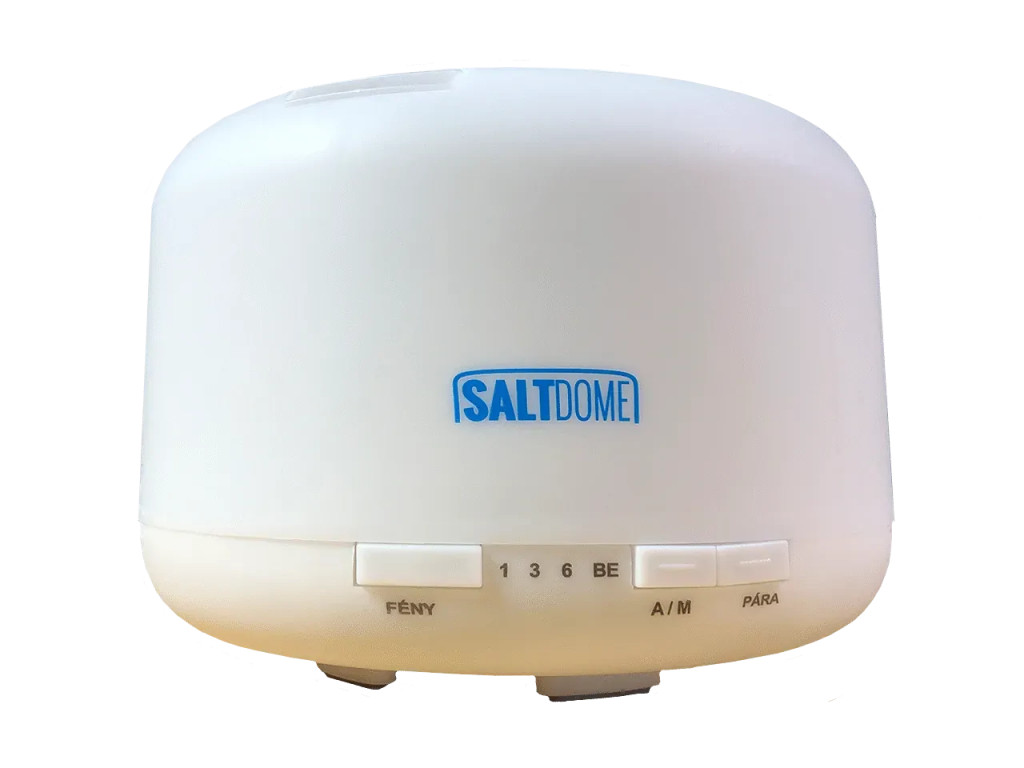
Product recommendation: SaltDome salt therapy device
If you want to generate beneficial salty air in the comfort of your home, choose the SaltDome ultrasonic salt therapy device. Read customer reviews to learn about users' experiences!
Another important step is to teach your child to wash their hands frequently. This is the best way to stop the spread of pathogens. During proper handwashing, lather with soap, rub hands together for 15–20 seconds, rinse and dry with a disposable paper towel. Shared textile towels in the bathroom are hotbeds of infection; do not use them.
Teach them to raise their hand in front of their mouth when coughing or sneezing (so they do not "spit" viruses into the air). Even better is to use a tissue rather than their bare hand.