
Carpal Tunnel Syndrome – What You Need to Know About Prevention and Treatment
Carpal tunnel syndrome is a common musculoskeletal condition today that can significantly affect daily life and work. It occurs because the nerve running through an anatomical tunnel in the wrist becomes compressed. The so-called carpal tunnel houses the median nerve (nervus medianus), bordered by muscles, ligaments and bones. When inflammation or swelling develops in this tight space, the nerve is compressed, causing various symptoms in the affected areas.
Anatomy and development of carpal tunnel syndrome
The carpal tunnel is a well-defined anatomical space in the wrist where several important structures pass. One of these is the median nerve, which provides sensation to the fingers and controls part of the hand muscles.
The tunnel is formed by bones and a strong ligament (the flexor retinaculum). It is a closed space that is very sensitive to increased pressure. If any structure within it swells, all other structures are put under pressure because the tunnel cannot "expand." The symptoms of carpal tunnel syndrome develop because the nerve becomes "trapped" or "compressed" in this confined space.
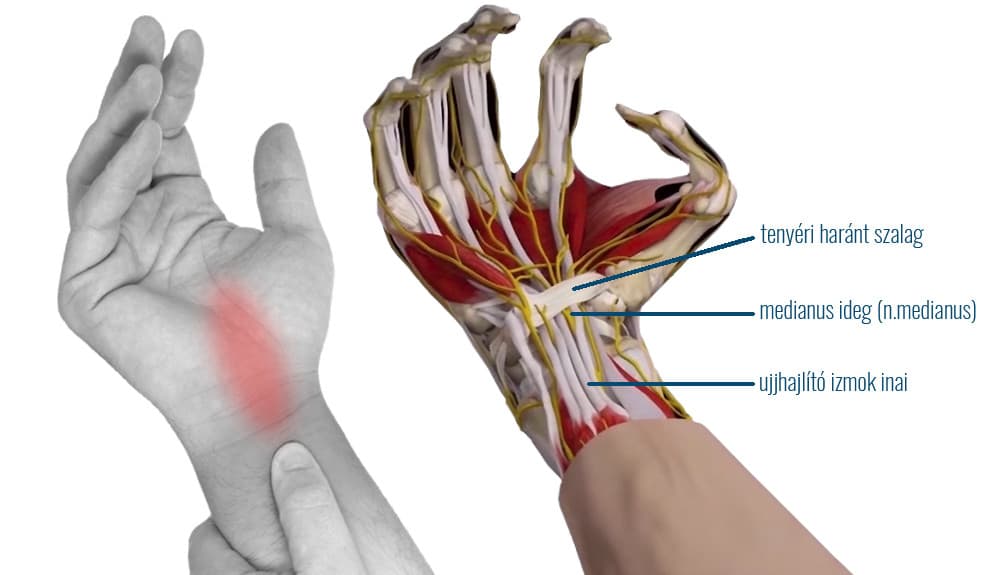
On the left the point of compression, on the right the anatomical detail is shown.
Many factors can contribute to the development of the condition
The most common trigger is repetitive, monotonous movements, especially of the wrist and hand. Among office workers, prolonged mouse use and typing can lead to overload and are common contributors. The use of modern digital devices, especially constant tapping on smartphones and tablets, also increases the risk.
Certain underlying conditions significantly raise the likelihood of developing carpal tunnel syndrome.
For example, diabetes can cause increased sensitivity of peripheral nerves.
Thyroid dysfunctions, particularly hypothyroidism, can result in tissue swelling.
Inflammatory processes in rheumatologic and autoimmune diseases can also contribute to symptom onset.
Hormonal changes play a particularly important role in the development of the condition. Due to hormonal and fluid balance changes during pregnancy, expecting women are at higher risk. Similarly, women in menopause may experience symptoms more often because of hormonal imbalance.
Characteristic symptoms of carpal tunnel syndrome
Early symptoms of carpal tunnel syndrome usually develop insidiously and gradually.
The first warning sign is often numbness in the hand, which initially occurs only in certain positions or at particular times of day. It typically affects the thumb, index and middle fingers, since these are innervated by the median nerve.
A marked feature of this condition is worsening of symptoms at night. You may wake up with a numb or painful hand, and the discomfort often eases only when you move the hand or let the arm hang down.
This is caused by keeping the wrist flexed during sleep, which increases pressure within the tunnel.
As the condition progresses, symptoms become more pronounced. Intermittent numbness can progress to constant sensory disturbance. Pain may appear and radiate upward from the wrist toward the arm.
Sensation in the affected fingers can decrease, making fine motor tasks more difficult. In advanced cases, weakness of the hand muscles supplied by the affected nerve can be observed, for example manifesting as clumsiness of the thumb movement.
Home treatment options
There are several home-applicable therapeutic methods available for treating carpal tunnel syndrome. These can complement doctor-prescribed treatments and significantly help relieve symptoms. Below I list the home therapy options and devices.
TENS treatment
TENS (Transcutaneous Electrical Nerve Stimulation) devices deliver electrical impulses that can effectively reduce pain.
During treatment, place the electrodes above and below the painful area. The maximum distance between the two electrodes should be 15–20 centimeters.
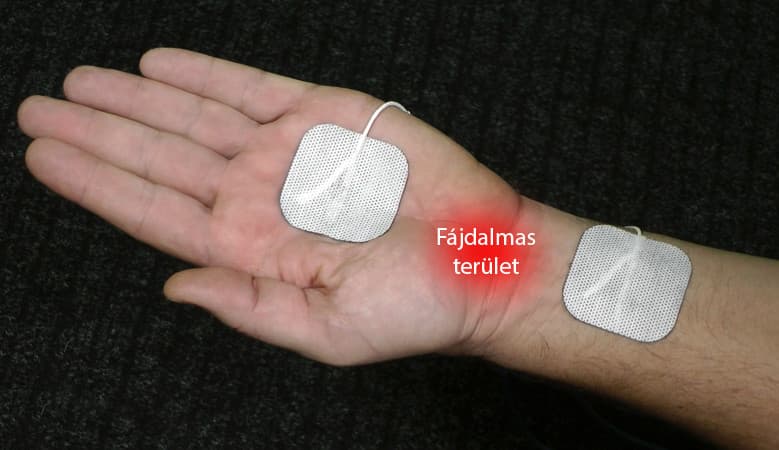
Modern TENS devices offer multiple programs, such as classic TENS, Endorphin TENS, BURST, HAN, and modulated TENS. Any of these programs can be used; try them to see which provides the best pain relief for you.
Treatment is recommended 2–3 times daily, for 20–30 minutes each session. It's important to know that TENS provides symptomatic relief and is effective at reducing pain, but its healing effect is absent or limited.
You can find a wide range of TENS devices here. Any of these devices can be a suitable choice for pain relief.
Microcurrent therapy
Microcurrent treatment (MENS – Microcurrent Electrical NeuroStimulation) is an effective therapeutic method. It not only relieves pain but also improves local blood circulation. The extremely low current used in the treatment helps reduce swelling, decrease inflammation and promote tissue regeneration.
Microcurrent therapy is recommended at least once daily for 20–30 minutes, and can be repeated 3–5 times a day if necessary.
Electrodes should be placed so they flank the painful area. The treatment can be particularly effective in early-stage carpal tunnel syndrome.
You can choose from microcurrent (MENS) devices here. All of these devices are suitable for effective pain relief.
Use of therapeutic ultrasound
Ultrasound treatment can also be an effective method for treating carpal tunnel syndrome.
Apply contact gel to the skin, then move the ultrasound head slowly in circular motions over the painful area. The ultrasound penetrates the tissues, warming them and thereby increasing blood flow, reducing swelling and accelerating healing.
Treatment can be performed once daily for 5–10 minutes at low or medium ultrasound intensity. Ultrasound therapy can be especially effective in chronic cases.
Find therapeutic ultrasound devices here. The M-Sonic 950 is designed specifically for home use, while the MediSound 3000 is recommended more for clinic use.
Softlaser treatment
Laser therapy is a modern treatment method that can be particularly effective for carpal tunnel syndrome. The laser beam penetrates deeply into tissues where it stimulates cellular activity, improves microcirculation, reduces swelling and inflammation, and relieves pain.
Treatment should be performed on the affected area. The applied energy is 5–8 Joules. Consequently, treatment time depends on the device type and the power of the emitted laser beam. The stronger the beam, the shorter the required treatment time. For B-Cure devices this is 8–10 minutes, for the Safelaser 500 about 5 minutes, while for the Personal Laser L400 the treatment time is as little as 20 seconds per treatment point.
The Personal Laser L400 offers the best price/performance ratio among the recommended devices.
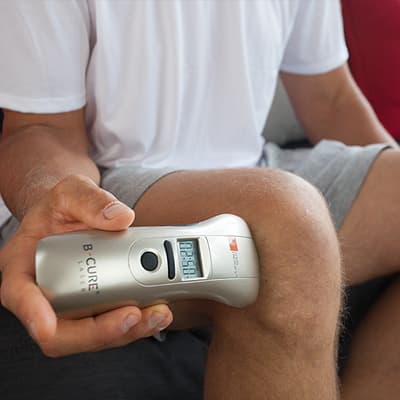
Product recommendation: our softlaser devices
The primary effect of softlaser devices is to support cell regeneration and thereby speed up healing; they also provide pain relief by stimulating endorphin production.
Use of magnetic therapy
Treatment with pulsed electromagnetic fields (PEMF) is also an effective therapeutic option for carpal tunnel syndrome.
During treatment, place the magnetotherapy applicator on the wrist, taking care with proper positioning.
The applicator should have two coils placed facing each other, with the north (N) pole on one side and the south (S) pole on the opposite side against the skin.
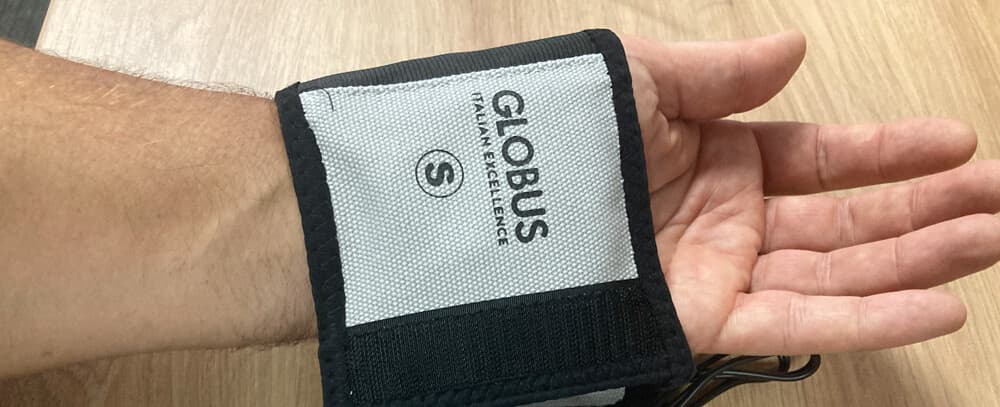

Magnetic therapy is recommended for 20–30 minutes daily.
It is important to note that only pulsed magnetic fields generated by electrical current are effective; results should not be expected from static magnets (for example, magnetic bracelets).
Study: Weintraub MI, Cole SP. A randomized controlled trial of the effects of a combination of static and dynamic magnetic fields
You can find the range of magnetic therapy devices here. Except for the Magnum L, every device includes a program specifically for treating carpal tunnel syndrome and all necessary accessories for that treatment are included in the price.

