What treatments can it be used for?
The device offers programs as adjunctive treatment for arthrosis, knee osteoarthritis, knee pain, hip pain, ankle sprain and bursitis.
Photobiomodulation can be used to influence pain and symptoms of surrounding soft tissues. It does not restore worn cartilage, ligament rupture, or other anatomical defects, and does not replace physiotherapy, load modification, or orthopedic assessment.
The program set includes manufacturer protocols for chronic back pain, acute lumbago, back pain with radiculopathy and lumbar syndrome.
For limb-radiating pain, muscle weakness, sensory disturbance, urinary or fecal dysfunction, trauma or rapid deterioration, a medical examination is required before starting laser therapy.
There are dedicated programs for neck pain, cervical syndrome, myofascial neck pain, shoulder pain and frozen shoulder.
The laser is an adjunct to rehabilitation. In frozen shoulder, shoulder joint instability or suspected rotator cuff injury, movement therapy and an accurate diagnosis are essential.
Point-treatment programs include epicondylitis, Achilles tendinopathy, carpal tunnel syndrome, tenosynovitis and trigger point treatment.
Effective treatment of tendon complaints usually also requires load modification and progressive strengthening. Symptom reduction alone does not mean the tendon is ready for full loading.
The plantar fasciitis program provides manufacturer settings for point treatment of the painful areas of the plantar fascia.
The laser does not remove a bony heel spur. The treatment aims to complement care of surrounding soft tissues together with load management, arch support and appropriate exercises.
The program list includes myalgia, muscle contracture, edema, injury rehabilitation, postoperative pain and adjunctive treatment for fibromyalgia.
For fresh injuries, first rule out fracture, complete rupture and other urgent conditions. After surgery, start treatment only according to the wound and surgical site status and in consultation with the treating physician.
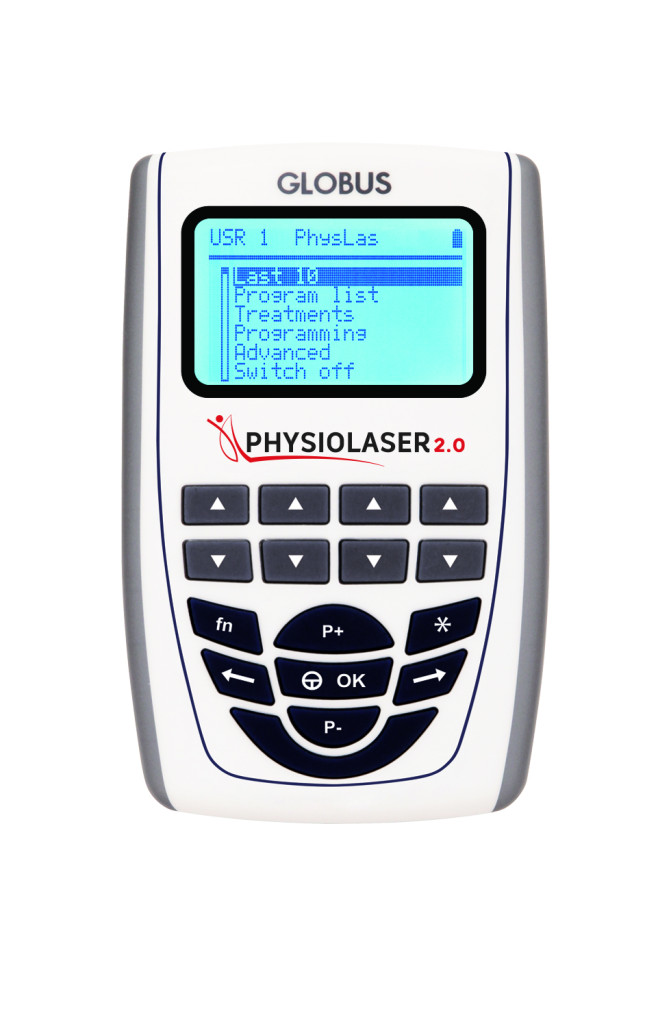
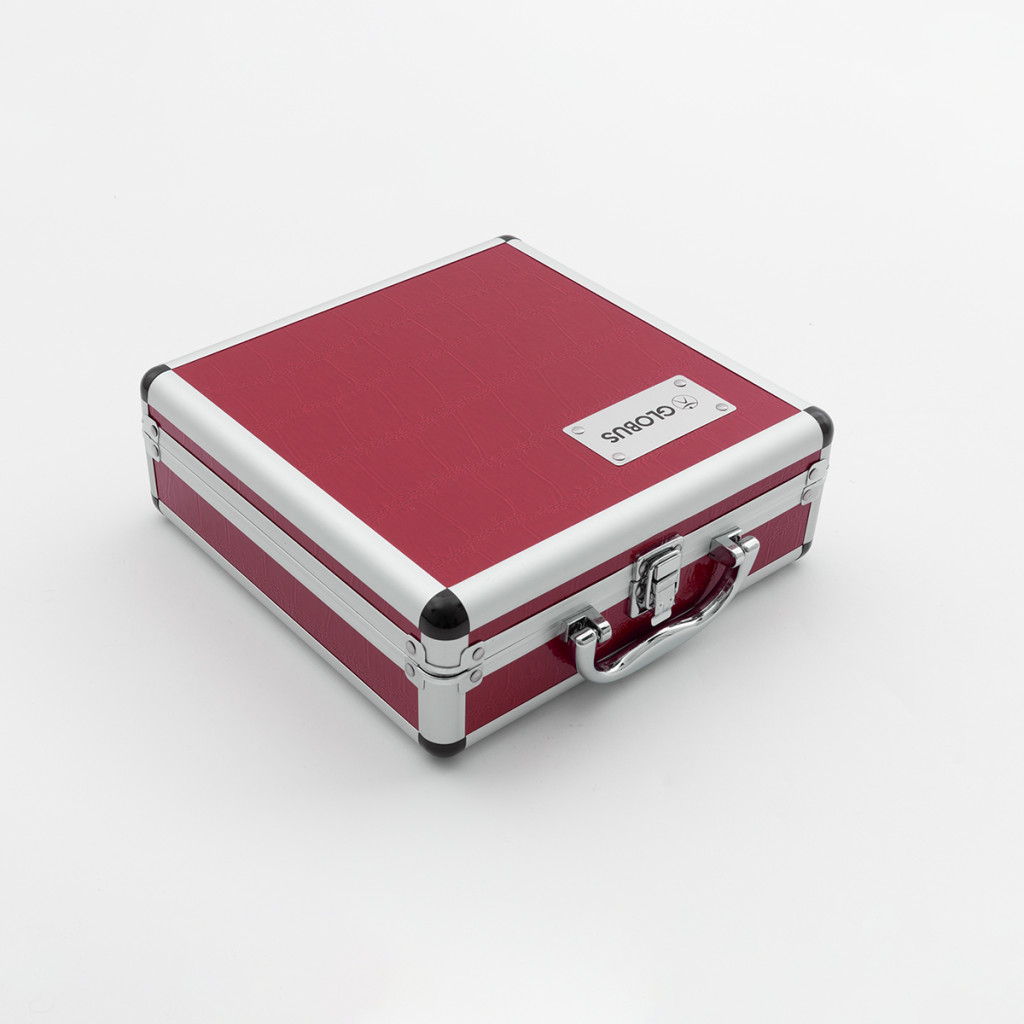
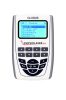
The central unit, weighing around 404 grams, operates from battery and mains. With the carrying bag it is easy to transport between clinic, sports club, rehabilitation center or other treatment locations.
Mobility does not reduce Class 4 safety requirements. At every location ensure appropriate eye protection, a controlled treatment area and removal of reflective surfaces.
Why choose the PhysioLaser 2.0?

2 W maximum optical output
At maximum continuous power up to 120 Joules per minute can be delivered. This enables faster delivery of the same dose compared to the 1 W model.

About 30 musculoskeletal protocols
The pre-set programs give a quick starting point for the most common joint, spine, tendon and soft tissue complaints.

Point and scanning treatment modes
Small insertion points can be targeted with the 11 mm optic, while larger muscle or joint areas can be treated by scanning.

Central unit weighing around 404 grams
The compact design, battery operation and carrying bag make it practical for therapists working at multiple locations.

Continuous and pulsed operation
Power and pulse parameters can be adjusted manually beyond the built-in protocols, with appropriate professional knowledge.

Two laser safety goggles and emergency stop
Operator and patient goggles required for Class 4 treatment, plus a safety emergency stop, are included in the package.
Is the PhysioLaser 2.0 right for you?
Might be a good choice if
you want to introduce professional laser therapy as a physiotherapist, physical therapist, sports rehabilitation specialist or physician.
Particularly practical if
you mainly treat musculoskeletal indications and do not need the broader program and accessory range of higher models.
Advantageous for mobile practice,
because it is lightweight, battery-powered and transportable in a carrying bag.
Do not choose this if
you are looking for a device for lay home use without goggles. The PhysioLaser 2.0 is a Class 4 laser for trained users only.
For high treatment volume or larger areas
6 or 12 W models are faster and their larger optics enable more efficient clinic workflow.
PhysioLaser 2.0 musculoskeletal protocols
The source indicates about thirty pre-set protocols. The groups below summarize the provided program list. Programs do not replace diagnosis and professional verification of treatment dose.
| Program | Mode | Wavelength |
|---|---|---|
| Arthrosis | Scanning | 808 nm |
| Knee osteoarthritis | Scanning | 808 nm |
| Knee pain | Scanning | 808 nm |
| Hip pain | Scanning | 808 nm |
| Ankle sprain | Point | 808 nm |
| Bursitis | Point | 808 nm |
| Program | Mode | Wavelength |
|---|---|---|
| Chronic back pain | Scanning | 808 nm |
| Acute back pain – lumbago | Scanning | 808 nm |
| Back pain with radiculopathy | Scanning | 808 nm |
| Lumbar syndrome | Scanning | 808 nm |
| Plantar fasciitis | Point | 808 nm |
| Program | Mode | Wavelength |
|---|---|---|
| Neck pain | Scanning | 808 nm |
| Cervical syndrome | Scanning | 808 nm |
| Myofascial neck pain | Scanning | 808 nm |
| Shoulder pain | Scanning | 808 nm |
| Frozen shoulder | Scanning | 808 nm |
| Program | Mode | Wavelength |
|---|---|---|
| Epicondylitis – tennis elbow | Point | 808 nm |
| Achilles tendinopathy | Point | 808 nm |
| Carpal tunnel syndrome | Point | 808 nm |
| Tenosynovitis | Point | 808 nm |
| Trigger point treatment | Point | 808 nm |
| Program | Mode | Wavelength |
|---|---|---|
| Muscle pain – myalgia | Scanning | 808 nm |
| Muscle contracture | Scanning | 808 nm |
| Edema | Scanning | 808 nm |
| Injury rehabilitation | Scanning | 808 nm |
| Postoperative pain | Point | 808 nm |
| Adjunctive treatment for fibromyalgia | Scanning | 808 nm |
Manual setting: power and pulse parameters can be modified. Use this only with knowledge of the relationship between power, frequency, duty cycle, treatment time, spot size and energy dose.
What does 2 W photobiomodulation mean?
During laser treatment tissues are irradiated with light of a specific wavelength and dose. Photobiomodulation can influence multiple cellular and tissue processes.
The nominal maximum output of the PhysioLaser 2.0 is 2 W. At maximum continuous power this means 2 Joules per second, i.e. up to 120 Joules per minute.
The primary advantage of higher power is faster energy delivery. With the same 808 nm wavelength and treatment geometry, 2 W does not, by itself, demonstrate twice the penetration depth or twice the clinical effect.
The actual dose is determined by power, continuous or pulsed mode, duty cycle, treatment time, spot size and handpiece movement together. Due to the higher power, continuously monitor skin and tissue reactions.
Professional treatment in four steps
1
Examine the patient and determine the indication
Clarify diagnosis, treatment goal, target tissue and contraindications. Do not use the program name as a diagnosis.
2
Select the protocol and verify the dose
Check power, mode, frequency, treatment time, spot size and area. In manual mode start from a documented protocol.
3
Ensure a Class 4 treatment environment
Both operator and patient must wear laser protective goggles suitable for 808 nm. Remove reflective objects, prevent unauthorized entry and keep the emergency stop within reach.
4
Perform and document the treatment
For point treatment keep the handpiece stable; for scanning move at an even speed. Document the area, parameters, energy dose and patient response.
Frequently asked questions
2 W is the maximum nominal optical output. At continuous maximum operation this corresponds to up to 120 Joules per minute energy delivery. Average energy in pulsed programs may be lower.
That is not the main difference. Penetration is primarily determined by wavelength, tissue optical properties and treatment geometry. The main advantage of 2 W is faster delivery of the same energy dose.
Yes. The PhysioLaser 2.0 is a Class 4 laser. Both operator and patient must wear certified laser protective goggles suitable for the 808 nm range for the entire treatment.
Stop the device and seek urgent ophthalmologic examination. Inform the clinician that the eye may have been exposed to an 808 nm Class 4 infrared laser of up to 2 W. Absence of symptoms does not exclude injury.
The laser is not electrical stimulation, so a pacemaker does not present the same type of risk as electrotherapy. For implanted electronic devices, severe heart disease or chest treatments, follow the manufacturer and treating physician approval.
According to the source the 11 mm optic treats a spot of about 0.95 cm². Larger surfaces require multiple point or scanning treatments. A 22 mm optic may be available separately; check compatibility and availability before purchase.
There is no fixed number valid for all indications. Course length should be determined by diagnosis, tissue status, dose, clinical response and the rehabilitation plan. The source estimate of 8–15 sessions can be used only as a general starting point.
The PhysioLaser 2.0 has a maximum output of 2 W, the 1000 model 1 W. The 2.0 delivers the same energy dose faster and is positioned for musculoskeletal professional use. The PhysioLaser 1000 offers more user and treatment memories and a wider health-aesthetic program set.
What's included in the package?
- 1 pc PhysioLaser 2.0 central unit
- 1 pc 808 nm laser handpiece with 11 mm optic
- 1 pc operator laser protective goggles
- 1 pc patient laser protective goggles
- 1 pc power adapter
- 1 pc rechargeable battery
- 1 pc safety emergency stop
- 1 pc carrying bag
- 1 pc user manual
For Class 4 treatment both operator and patient eyes must be protected. Use only goggles with the correct protection range for 808 nm that are undamaged and well-fitting.
Protect the optical surface from scratches, dust and oily contamination. Clean only with materials and methods permitted in the user manual.
Do not use the device if the handpiece, cable, connector, protective goggles or optical surface are damaged.
Which professional PhysioLaser fits your practice?
PhysioLaser 1000
– 1 W programmable model with 40 programs, MULTIuser function and LAST 10 memory. Advantageous for multiple therapists and mixed health-aesthetic use.
PhysioLaser 2.0
– portable, 2 W entry-level professional model, primarily for musculoskeletal indications. Good if faster dose delivery and mobility are more important than user profiles and aesthetic programs.
PhysioLaser 6.0
– preferred for higher treatment volume, shorter sessions and a wider accessory or program offering.
PhysioLaser 12.0
– for busy clinics and hospitals where maximum throughput and larger treatment optics justify higher investment.
Technical specifications
| Laser type | GaAlAs diode laser |
| Wavelength | 808 nm with the handpiece included in the package |
| Maximum optical output | 2 W, manufacturer tolerance: ±20% |
| Maximum theoretical energy delivery | 120 Joules per minute at maximum continuous power |
| Laser class | Class 4, CEI EN 60825-1 |
| Emission modes | Continuous and pulsed |
| Maximum frequency | 10 000 Hz |
| Optic | 11 mm diameter, approximately 0.95 cm² treatment spot |
| Programs | About 30, primarily musculoskeletal protocols |
| Display | 2.6-inch backlit LCD |
| Power supply | Power adapter and rechargeable battery |
| Dimensions | 100 × 160 × 35 mm |
| Weight | Approximately 404 grams |
| Optional accessories | According to the source a 22 mm optic and additional wavelength handpieces may be available; check compatibility separately |
| Medical device classification | CE MDD, Class IIb medical device |
| SKU | G5739 |
| Manufacturer | Globus Italia, Italy |
 When not to use the device?
- Never direct the laser beam into the eye or the immediate eye area.
- Do not use on the abdomen or pelvic area during pregnancy.
- Only use over malignant tissue with the explicit permission of the treating physician.
- Do not use over areas of active bleeding or significant bleeding tendency.
- With photosensitivity or medications that increase photosensitivity, obtain prior medical consultation.
- Postpone treatment in febrile or acute general illness.
- Do not treat directly over the thyroid and other endocrine glands.
- For epilepsy or head treatments follow the manufacturer's instructions and obtain medical approval.
For implanted electronic devices, severe heart disease, unexplained pain or swelling, review the full manufacturer instructions and obtain medical approval before treatment. Detailed contraindications and safety information →
 Important information
The PhysioLaser 2.0 is intended as an adjunctive treatment. It does not replace medical examination, diagnosis, prescribed treatment, physiotherapy or appropriate rehabilitation.
Due to its Class 4 classification the device should be used only by trained professionals in an appropriate laser safety environment. Built-in protocols do not replace dose verification, assessment of contraindications and documentation of the treatment.
Higher power enables faster energy delivery but also increases the risk of excessive dose and tissue heating in case of incorrect settings.
The product description is for information only and does not constitute personalized medical advice or laser safety training. Referenced studies have investigated high-power laser therapy methods and are not to be considered device-specific evidence for all PhysioLaser 2.0 programs.
Scientific background
Higher-power laser therapy has been studied in several musculoskeletal conditions. Different studies used varying wavelengths, power, doses and treatment protocols, so their results cannot be directly transferred to this device.
-
Ahmad MA et al.
(2021):
Effects of low-level and high-intensity laser therapy as adjunctive to rehabilitation exercise on pain, stiffness and function in knee osteoarthritis: a systematic review and meta-analysis.
Physiotherapy
.
PubMed
Systematic review of laser therapy combined with rehabilitation exercise in knee osteoarthritis. -
Abdildin Y et al.
(2023):
High-intensity laser therapy in low back pain management: a systematic review with meta-analysis.
Lasers in Medical Science
.
PubMed
Systematic review of high-intensity laser therapy in low back pain. -
Barassi G et al.
(2021):
Dual-wavelength high-power laser therapy and neuromuscular manual therapy in chronic neck pain: a randomized clinical trial.
Journal of Biological Regulators and Homeostatic Agents
.
PubMed
Randomized trial in chronic neck pain with a dual-wavelength device. -
Mostafa MSEM et al.
(2022):
Effect of High-Power Laser Therapy Versus Shock Wave Therapy on Pain and Function in Knee Osteoarthritis Patients.
Photobiomodulation, Photomedicine, and Laser Surgery
.
PubMed
Comparison of high-power laser and shock wave therapy in knee osteoarthritis. -
Abdelbasset WK et al.
(2021):
A Prospective Comparative Study of Pulsed High-Intensity Laser Therapy and Pulsed Electromagnetic Field on Chronic Nonspecific Low Back Pain.
Photobiomodulation, Photomedicine, and Laser Surgery
.
PubMed
Comparative study in chronic non-specific low back pain. -
Verma S et al.
(2022):
Effectiveness of High Power Laser Therapy on Pain and Isokinetic Peak Torque in Athletes with Proximal Hamstring Tendinopathy.
BioMed Research International
.
PubMed
Study in athletes with proximal hamstring tendinopathy.
Treatment guides and further information
 Soft laser therapy – comprehensive guide →
 PhysioLaser 6.0 – higher-power model →
 Soft laser contraindications and safety information →
 Soft laser devices – full range →
Looking for a portable entry-level professional laser mainly for musculoskeletal treatments?
The PhysioLaser 2.0 core strengths are mobility and professional treatment speed: 2 W maximum output, about 30 protocols, 11 mm optic, battery operation and Class 4 safety accessories.