Treatment Options for Tunnel Syndrome
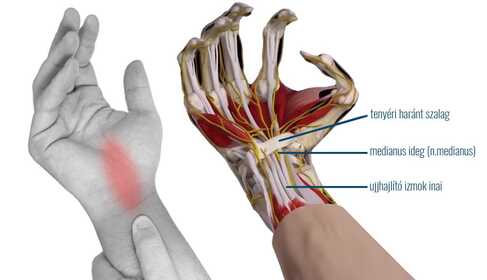
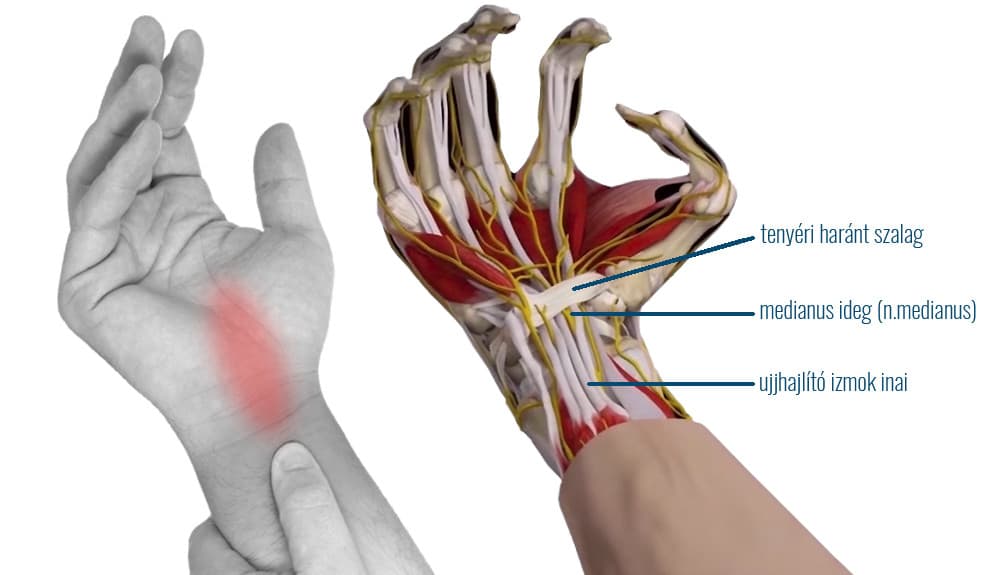
Tunnel syndrome is one of the most common musculoskeletal disorders today. It is a condition in which nerves running through anatomical “tunnels” in various parts of the body become compressed. These tunnels are formed by muscles, ligaments and bones. When inflammation or swelling occurs in this narrow space, the nerves are compressed, causing various symptoms in the affected areas.

The most common type is carpal (wrist) tunnel syndrome, but it can also develop at the elbow, around the brachial plexus that supplies the arm, in the groin, below the knee and on the dorsum of the foot.
Causes of tunnel syndrome
There can be many factors behind the condition. Among the most common triggers are repetitive, monotonous movements, especially those involving the wrist and hand. Office workers frequently suffer from prolonged mouse use and typing.
Certain underlying diseases significantly increase the risk of developing tunnel syndrome:
- Diabetes
- Thyroid dysfunction
- Rheumatologic diseases
- Autoimmune conditions
Hormonal changes also play a role, so pregnant women and people in menopause are at higher risk.
Typical symptoms and recognition
The initial symptoms of tunnel syndrome are often mild and intermittent. The most common complaint is numbness, which at first appears only in certain positions or at certain times of day. In carpal tunnel syndrome, this sensation is typically felt in the thumb, index and middle fingers.
As the condition progresses, symptoms worsen and become constant:
- Increasing pain
- Persistent numbness
- Sensory disturbances
- Reduced tactile sensitivity
- Muscle weakness
- Clumsiness of the affected area
It is particularly typical for symptoms to worsen at night, which can significantly impair sleep quality.
Home therapy options and devices
Once a diagnosis of tunnel syndrome has been made, several medical devices that can be used at home may help in the treatment. These can complement physician-prescribed medication and movement therapy and contribute to symptom relief.
Use of a TENS device
TENS (Transcutaneous Electrical Nerve Stimulation) devices reduce pain with electrical impulses. During treatment the electrodes should be placed above and below the painful area, approximately 3–5 centimetres apart. Modern devices offer several programs, such as conventional TENS, Endorphin TENS, BURST, HAN and modulated TENS. Any of these can be appropriate. Feel free to try them and use whatever gives you the best pain relief.
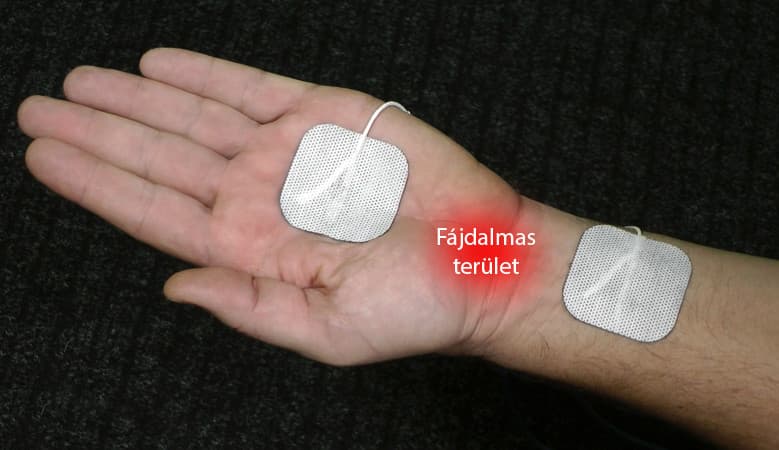
Treatment should be done 2–3 times daily for 20–30 minutes per session. It is important to note that TENS primarily provides symptomatic relief: it is effective in reducing pain but has limited curative effect.
Click here to view TENS devices in the store. Any of these are suitable for pain relief.
Microcurrent therapy
Microcurrent treatment (MENS – Microcurrent Electrical NeuroStimulation) not only relieves pain but also improves local blood circulation.
The extremely low current used in this therapy helps reduce swelling, decrease inflammation and promote tissue regeneration.
It is recommended to perform the therapy at least once daily for 20–30 minutes. If necessary, it can be repeated 2–3 times a day. Electrodes should be placed so that they flank the painful area.
Click here to view microcurrent (MENS) devices in the store. Any of these are suitable for pain relief.
Therapeutic ultrasound device
Ultrasound treatment is very effective for many people with tunnel syndrome. The applicator head should be coated with a special contact gel and moved slowly in circular motions over the painful area. Ultrasound raises tissue temperature, increasing blood flow and accelerating the healing process.
The recommended duration of treatment is 5–10 minutes, once daily. The therapy intensity can be gradually increased.
Click here to view therapeutic ultrasound devices in the store. The M-Sonic 950 device is suitable for home use, while the MediSound 3000’s advanced features and complex settings are better utilized in clinics.
Softlaser treatment
Laser therapy is a modern, painless treatment method.
The laser beam penetrates deeply into tissues where it stimulates cellular activity, improves microcirculation, reduces inflammation, relieves pain and accelerates healing.
Treatment should be applied to the affected area until the device delivers 5 Joules of energy to the tissues. The treatment time may vary by device type depending on how “strong” the device is, i.e. the power of the laser beam. The stronger the beam, the shorter the treatment time.
Recommended device: Personal Laser L400, for which the treatment time is 20 seconds per treatment point. About 8–10 points should be treated on the wrist (moving point by point along the painful area).
Magnetotherapy
Treatment with a pulsed magnetic field can also be effective for tunnel syndrome. The magnetotherapy applicator should be wrapped around the wrist with attention to correct positioning:
- The coils should face each other
- On one side the north (N) pole should be against the skin, and on the opposite side the south (S) pole
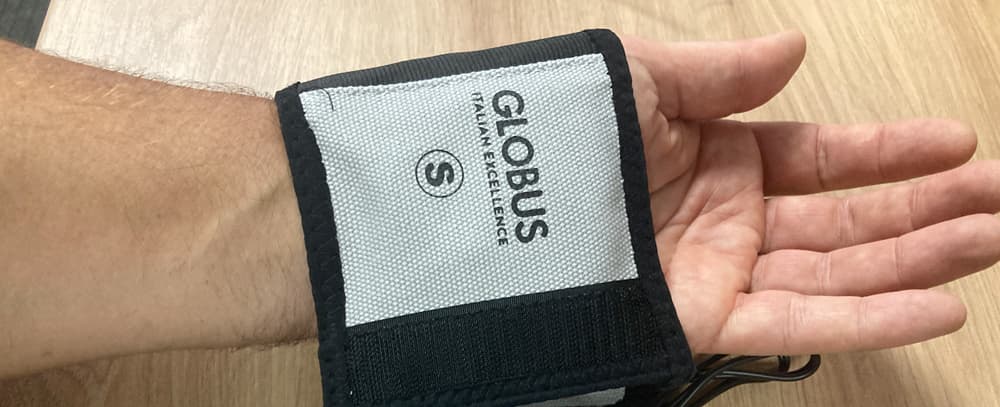

Treatment is recommended for 20–30 minutes daily. It is important to note that only pulsed magnetic fields generated by electrical current are effective; no effect is expected from static magnets (e.g. magnetic bracelets).
Click here to view magnetotherapy devices in the store. Except for the Magnum L, each device has a specific program for treating carpal tunnel syndrome.
Study: Weintraub MI, Cole SP. A randomized controlled trial of the effects of a combination of static and dynamic magnetic fields on carpal tunnel syndrome. Pain Med. 2008 Jul-Aug;9(5):493-504. doi: 10.1111/j.1526-4637.2007.00324.x. PMID: 18777606.
Prevention and lifestyle advice
The risk of developing tunnel syndrome can be reduced with proper prevention.
Particularly important:
Maintain correct posture while working. The monitor should be at eye level, and the keyboard and mouse positioned so the forearm can remain straight while using them.
Take regular breaks during repetitive movements. A 5–10 minute rest every hour to move and stretch the muscles.
Use ergonomic work tools, especially for office work.
Perform activities that load the wrist and hand with the correct technique.
When to see a doctor?
Although home treatments can significantly relieve symptoms, specialist examination is necessary in certain cases:
- If numbness or pain persists
- If symptoms gradually worsen
- If muscle weakness or clumsiness appears
- If nighttime symptoms significantly disturb sleep
Starting treatment in time is crucial for full recovery. If necessary, the specialist may order further tests, such as ENG (electroneurography) or ultrasound.