
 What is Achilles tendon inflammation?
The Achilles tendon is the largest and strongest tendon in the body. It connects the calf muscles to the heel bone and works with every step, when running, climbing stairs and standing on tiptoe. Think of it as a rope twisted from many thin strands — thousands of flexible protein fibres. When overloaded, tiny micro-injuries develop in these fibres: the neat, parallel bundles become disorganised, the tendon thickens and starts to hurt. The medical term is tendinopathy — and there is an important twist: research suggests that this is usually not classic inflammation, but the gradual fatigue and exhaustion of the tendon structure. This is why an anti-inflammatory tablet alone does not solve the problem — and why the approach discussed in this article does.
 Key point
The backbone of treating Achilles tendon trouble is not complete rest — that is now an outdated approach — but intelligent loading: reducing the strain, then gradually and deliberately rebuilding it. Home physiotherapy devices may support this process, but they do not replace it. If you only buy a device and do not exercise, you are leaving out half of the treatment — the more important half.
 Are you sure this is your problem?
Quick check: if the pain is ABOVE the heel, at the back of your ankle, along the tendon — this is the article for you. If the pain is instead BELOW the heel, especially with the first step in the morning, it is usually plantar fasciitis or a heel spur. I have written about that in detail here: Heel pain and heel spur treatment at home →
 How does it develop, and who is affected?
The tendon can bear load, but it adapts slowly — much more slowly than muscle. If the load increases faster than the tendon can develop, micro-injuries accumulate in the fibres: the orderly bundles become disorganised, the structure loosens and the tendon thickens. The Achilles tendon also has a poor blood supply to begin with — particularly in the 2-6 centimetre section above the heel bone — so tissue repair is slow. This explains the most frustrating feature of the condition: it develops quickly, but heals only over months.
Among runners, the Achilles tendon accounts for a significant share of all sports injuries — roughly one in ten — and it is more common in men. The typical trigger is “too much, too soon”: a sudden increase in training volume, a new type of training or harder ground. But athletes are not the only ones affected. Risk factors include a tight, shortened calf, flat feet and overpronation (the foot rolling too far inwards while walking), worn or unsuitable shoes, frequent use of high heels (a shortened tendon stretches more when suddenly placed in a flatter shoe), excess weight and age — tendon elasticity naturally decreases after 40.
Where the tendon hurts matters, because the two forms behave differently. The more common form affects the midportion, 2-6 centimetres above the heel bone — and it usually responds well to conservative treatment. Insertional disease, directly at the heel bone, is more persistent. Blood supply is poorer there, and it is often accompanied by bursitis (the fluid cushion that reduces friction between the tendon and bone also becomes inflamed) or a bone spur. Treatment also requires a more cautious approach. You will see the difference in the exercises.
 When should you see a doctor — and when urgently?
Always leave the diagnosis to a healthcare professional. Persistent Achilles pain may have another cause, and the most serious complication of untreated tendinopathy is tendon rupture, which may require surgery. Seek urgent medical attention if you feel sudden, sharp pain at the back of your ankle — many people also hear a snapping or popping sound, as if they had been kicked in the ankle from behind — and then cannot stand on tiptoe. This suggests a rupture and should not wait until the next day.
The backbone of treatment: the 4-step home programme
The good news is that Achilles tendinopathy can be put right at home without surgery in the vast majority of cases. The bad news is that this means 8-12 weeks of consistent work, not one or two sessions. The programme has four pillars:
| Step | What should you do? | Why? |
|---|---|---|
| 1. Reduce the load | Reduce or pause the activity that triggers the pain (typically running or jumping); instead, cycle, swim or use an elliptical trainer | You stop the micro-injuries from accumulating — but complete inactivity is harmful: the tendon needs stimulation to recover |
| 2. Loosen the calf | Daily stretching, SMR rolling and Fit Stretch — relaxing the calf muscles | A tight calf constantly pulls on the tendon; loosening it can meaningfully reduce symptoms on its own |
| 3. Strengthen eccentrically | Heel-lowering exercise, twice daily, for 12 weeks | This is the best-supported element of the treatment: slow, controlled loading helps organise the tendon fibre structure |
| 4. Return gradually | Increase the load by no more than 10% per week; never skip the warm-up | The tendon adapts slowly — impatience is the most common cause of relapse |
Eccentric heel lowering — the heart of the programme
Eccentric means that the muscle works while lengthening, acting as a brake. This basic exercise, used worldwide in Achilles rehabilitation, is performed as follows: rise onto your toes using both feet, then lift your unaffected foot and slowly lower your heel on the painful side over 3-4 seconds. Use the unaffected leg to rise back onto your toes and repeat. A typical dose is 3×15 repetitions, with both a straight and bent knee, twice a day — but set the starting volume with your physiotherapist.
 An important difference between the two types
If the midportion of the tendon hurts, you can do the exercise on a step, lowering the heel below the level of the step — this gives the greatest range of movement. If the pain is at the insertion, directly at the heel bone, DO NOT lower your heel below floor level: perform the lowering on a flat surface. The insertional form does not tolerate deep stretching well. A mild, post-exercise, muscle-soreness-like feeling during the exercise is acceptable — sharp pain that increases the next day means the load was too much: step back one level.
How can you support recovery?
Alongside exercise — not instead of it — several home physiotherapy methods may help reduce pain and support the tendon’s metabolism. During the acute, swollen and hot phase, ice is your friend: 15-20 minutes through a thin cloth, several times a day (only during the first 3-4 days). With chronic symptoms lasting several months, the opposite applies: heat may improve blood flow to the area.
Among device-based therapies, soft laser may support energy production in the cells of the painful area, and research suggests that, with appropriate dosing, it can produce measurable pain reduction in tendinopathy3 — it is simple to use: direct the light at the painful point and hold it there for a specified time (the time depends on the device's output. The higher the output, the shorter the required time).
Therapeutic ultrasound can move the deeper tissues through a micromassage effect and stimulate circulation — this may be particularly useful in the poorly vascularised Achilles region.
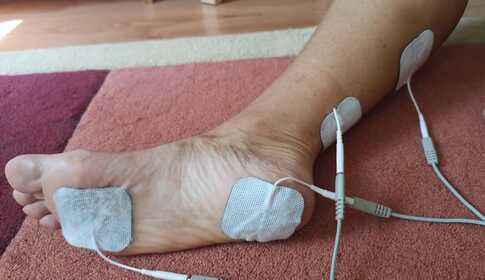
TENS may provide additional help by dampening pain signals, while microcurrent (MENS) may support the regeneration of damaged cells. Athletes may also benefit from warm-up and recovery electrotherapy programmes.
Kinesiology tape may take some strain off the tendon in everyday life, while a simple heel-lift insert reduces the stretching load on the tendon — it is inexpensive and can be surprisingly helpful during the transition period.
 Home devices for Achilles treatment
You do not need to buy everything at once. Most people start with a single device that suits their symptoms — and relaxation tools cost only a few thousand forints, so they can also serve for prevention.
Personal Laser L400 soft laser
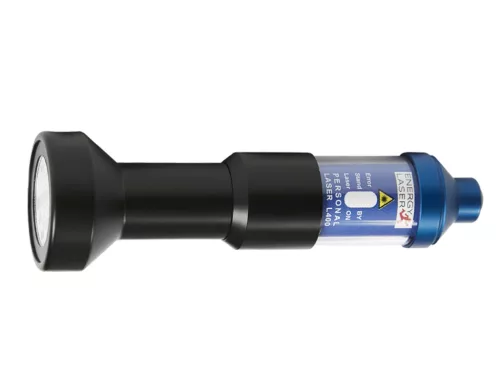 A home soft laser device that may support the metabolism of cells in the painful section of the tendon. It is simple to use: direct the light at the painful area each day. It can be used during both the acute and chronic phase and is a painless form of treatment.
SonicRelief therapeutic ultrasound
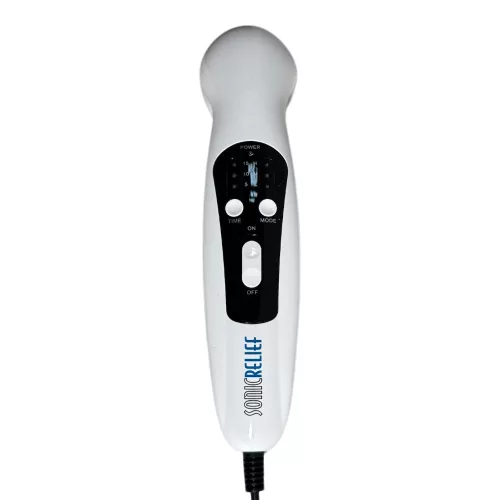 The micromassage effect of ultrasound may improve circulation in deeper tissues — this is its main value in the poorly vascularised Achilles region. It is a useful adjunct for a chronic, thickened tendon. Treatment rhythm: no more than 12 consecutive days, followed by a break.
Premium 400 electrotherapy device
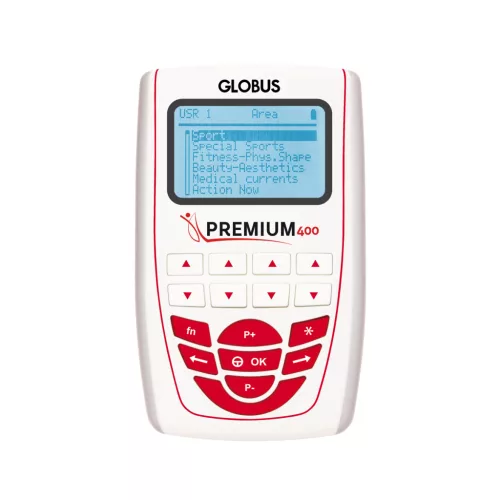 A four-channel device with TENS (pain relief), microcurrent (supporting recovery, 2-3×20 minutes daily) and EMS programmes — the latter can also support calf warm-up and recovery. For athletes, it is the most versatile choice: the sports programmes (warm-up and active recovery) are also useful during the return-to-sport period.
Mambo Max Fit Stretch calf stretcher
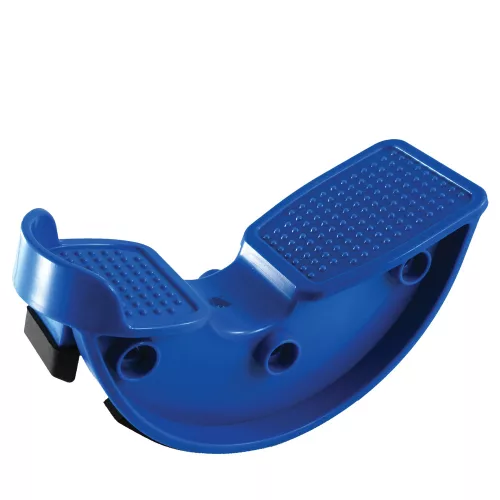 A device designed specifically to relax the calf and improve ankle movement — a daily aid for step 2 (calf relaxation). It stretches at a safe, controlled angle while you hold on for support. As an addition, the SMR massage roller helps release knots in the calf muscles.
 Before you start treatment
Home physiotherapy devices — electrotherapy, ultrasound and laser — have situations in which they must not be used, or may only be used with medical approval:
- Implanted active electronic device – electrotherapy is generally not recommended with a pacemaker, defibrillator (ICD) or neurostimulator.
- Pregnancy – home electrotherapy, ultrasound and laser treatment only after consultation with a doctor.
- Active or unknown-origin tumour in the treatment area – stimulation should be avoided.
- Recent deep vein thrombosis or vasculitis – stimulation and intensive massage or rolling are prohibited on the affected limb.
- Damaged, inflamed or infected skin at the treatment site – do not treat over an open wound or eczema.
- Fever or acute infection – suspend treatment and training until recovery.
Important information
Home therapy devices are intended to complement medical treatment and physiotherapy; they do not replace them. Never point a laser device's light into anyone's eyes. If your symptoms do not ease or get worse after 2-3 weeks of consistent home treatment, see a doctor.
 What does the research say?
“Does the tendon really recover through exercise? Shouldn't it be rested?”
This question marked a turning point in modern tendon treatment. In a now-classic Swedish study, athletes with chronic Achilles symptoms resistant to everything else performed 12 weeks of heavy-load eccentric calf training — and by the end of the programme, all of them had returned to running, while members of the comparison group treated traditionally (with rest and medication) ultimately needed surgery.1 Since then, international professional guidelines have recommended loading exercises as the foundation of treatment.2 Complete rest alone does not restore the tendon — correctly dosed loading is the stimulus that allows the tendon to rebuild its organised fibre structure.
“What do devices add if exercise is the key?”
You deserve an honest answer: according to the latest comprehensive analysis, no treatment method was clearly shown to be superior to the others — passive methods (device-based treatments) were useful for short-term pain relief, while loading exercises showed favourable effects in restoring function.2 The two are therefore not competitors but a division of labour: the device helps you get through the painful period so that you can do the exercises — and the exercises carry out the actual restoration.
“Does soft laser help with tendon inflammation?”
A comprehensive analysis of laser treatments for tendinopathy showed mixed results — but it also found the explanation: the outcome depends on the dose. Treatments using the appropriate dose consistently showed favourable effects, and specifically among people with Achilles symptoms, those treated with laser reported measurably less pain than the control group.3 The lesson is that laser is not a miracle device, but when correctly dosed it can be a valuable adjunct — which is why it is worth following the device protocol precisely.
Practical advice
Check your shoes. If the heel area is worn, the heel counter is too hard or the cushioning has deteriorated, replace them. Do not test the change for the first time at a race or on a long hike. If you have flat feet or overpronation, custom insoles can also reduce the load on the tendon.
The 10% rule. Increase your training volume — distance, pace or number of repetitions — by no more than 10% per week. Most Achilles problems arise from the “too much, too soon” mistake, and the same trap awaits you when returning to activity.
Never without a warm-up. A cold tendon is vulnerable. A few minutes of gradual warm-up — walking, light jogging and ankle circles — is a compulsory start to every training session. I have also written a separate article about warming up: The role and importance of warming up →
My advice
Allow 8-12 weeks, and keep a simple diary: what exercises you did, what treatment you used and how much it hurt (on a scale of 0-10) with the first steps in the morning. Morning pain is a reliable gauge of the tendon’s condition — if it decreases week by week, you are on the right track, even if you still feel it during training. And if you restart after missing a week, do not continue from where you stopped; start one level lower.
Frequently asked questions
With a recent problem lasting a few weeks, 6-8 weeks of consistent work typically brings meaningful improvement. With a chronic form that has been present for months, 12 weeks is a realistic minimum, and a process lasting several months is not unusual. The tendon is a slowly adapting tissue — here, patience is not a virtue but part of the treatment.
Moderately and sensibly — complete rest is not the goal, but you cannot continue unchanged with activity that increases the pain. A rule of thumb: mild pain during training (no more than 3-4 out of 10) that disappears by the next day is still acceptable; stronger pain or pain that increases by the following morning means you need to reduce the load. During the transition period, cycling, swimming and an elliptical trainer can maintain your fitness without loading the tendon.
It differs in the location and the tissue affected. Achilles trouble causes pain above the heel, at the back of the ankle, and involves the tendon connecting the calf to the heel bone. A heel spur and plantar fasciitis cause pain underneath the heel, especially with the first step in the morning, and involve the foot's flexible ligament system. The treatment logic is similar (load management + relaxation + physiotherapy), but the exercises are different — which is why there is a separate article on the two conditions.
Usually not on its own. Chronic Achilles trouble is largely not classic inflammation but fatigue of the tendon structure — medication may dull the pain, but it does not reorganise the fibre structure. There is also a trap: if you continue loading the tendon as before while the tablet suppresses the pain, the damage can quietly accumulate. Medication may offer short-term help on your doctor's advice — the loading programme carries out the recovery.
To a large extent, yes — the risk can be meaningfully reduced. The recipe is the same as for treatment, but at a maintenance dose: regular calf stretching and eccentric strengthening several times a week, shoes in good condition, gradual increases in load and a warm-up before every training session. Once you have had the problem, the tendon remains more sensitive — it is worth making the maintenance routine a permanent part of your training programme.
 Summary – Quick overview
Sources
- Alfredson H, Pietilä T, Jonsson P, Lorentzon R. (1998). Heavy-load eccentric calf muscle training for the treatment of chronic Achilles tendinosis. The American Journal of Sports Medicine. PubMed: 9617396
- Maetz R, Dubé MO, Tougas A, et al. (2023). Systematic review and meta-analyses of randomized controlled trials comparing exercise loading protocols with passive treatment modalities or other loading protocols for the management of midportion Achilles tendinopathy. Orthopaedic Journal of Sports Medicine. PubMed: 37284136
- Tumilty S, Munn J, McDonough S, et al. (2010). Low level laser treatment of tendinopathy: a systematic review with meta-analysis. Photomedicine and Laser Surgery. PubMed: 19708800