
 What is cellulite, and why does it develop?
Cellulite (cellulit) is the uneven, dimpled, "orange‑peel‑like" appearance of the skin surface — most commonly on the thighs, buttocks, hips and abdomen. It's important to be clear: it's not a disease, nor is it a sign of being overweight. Most women past puberty show some degree of it — even slim, athletic women.
Under your skin, the fat tissue is divided by connective‑tissue septa into compartments, and those septa anchor the skin to deeper layers. In women these septa run vertically, so fat lobules can more easily bulge between them — in men the lattice pattern usually prevents this. Research increasingly points to this connective‑tissue structure as the key factor, not just the fat or the skin itself.4 Added to that are hormonal influences (oestrogen), hereditary predisposition, and slowed local blood and lymph circulation, which makes interstitial fluid accumulation more visible.
 Key point
You can't change your hormones or your genes — but you can change circulation, muscle tone, diet and skin quality. Anyone promising total and permanent disappearance is misleading you. What you can reasonably expect is visible, gradual improvement — and that depends on your own regular effort; devices only amplify that work.
 Are you sure it's cellulite?
If your thigh or leg is painful to the touch, disproportionately thicker compared with your upper body, bruises easily, and the problem is pronounced symmetrically on both legs — that may not be simple cellulite but lipedema. That requires medical assessment. Details: Lipedema (fat oedema): symptoms, stages, treatment. If your legs swell regularly by evening, also read my article on leg swelling.
 What happens under your skin — and where can treatments act?
The dimples are caused by tightened connective‑tissue septa that pull the skin down — which is why cellulite doesn't simply disappear with weight loss.4 Methods that act on the septa — for example shockwave therapy — work by loosening and remodelling the connective tissue. That is why visible change usually requires not one or two sessions but a multi‑week course.
Slow venous and lymphatic flow leads to fluid pooling between tissues, which makes the skin look puffier and more uneven. Movement, manual lymphatic drainage and compression (machine lymphatic drainage) can reduce this pooling — and the skin may appear smoother, but maintaining the effect requires regular use.8 More about the method: Lymphatic drainage device — what it's for, how to choose.
The thinner and looser the skin, the more the underlying unevenness shows through. Methods aimed at skin tightening — radiofrequency, cosmetic ultrasound, microcurrent — can firm the skin by stimulating collagen production, so the dimples become less visible.1 These are also course‑based: effects build up gradually and will regress without maintenance.
What are the stages — and where are you?
Professionals divide cellulite into four stages. This isn't to label you, but because different steps suit different stages.
| Stage | What you see | Goal | Possible approaches |
|---|---|---|---|
| 0. | Smooth skin standing and lying down; no dimples when pinched | Prevention | Exercise, diet, hydration — no device needed |
| 1. | Smooth standing, but pinch test reveals the "mattress sign" | Prevention + circulation support | Lifestyle as foundation; periodic lymphatic drainage, body brushing |
| 2. | Dimples visible standing, smooth when lying down | Achieve visible improvement | Lifestyle + targeted device course (radiofrequency, ultrasound, lymphatic drainage) |
| 3. | Pronounced unevenness standing and lying down, deeper indentations | Reduction, slowing further progression | Combined home programme + consider professional treatments (e.g. shockwave) |
 Don't skip stages in your expectations
Stage‑3 cellulite that developed over years won't disappear in a few weeks — not with any method. A realistic goal is about one stage of visible improvement during a consistently followed 2–3 month course. If someone promises more, ask what they base that on.
What you can do yourself — depending on your situation
The honest order is: first lifestyle, then devices. No device works for you — exercise and diet are the foundation, and devices strengthen that foundation. Click the situation that fits you.
You're in the best position here: lifestyle changes will yield the most. Strengthen thighs and glutes 3–4 times a week (squats, lunges, bridges), 2–3 brisk walks or jogs of 30–40 minutes weekly, and 2–2.5 litres of water daily. Cutting processed foods, added sugar and excess salt will make a noticeable difference — salt binds water in the tissues. A device isn't strictly necessary at this stage.
This is completely normal and not your fault: the dimples are caused by the connective‑tissue septa, not simply the amount of fat.4 In this case target methods that firm the skin and act on connective tissue: radiofrequency or cosmetic ultrasound in a course, plus strengthening exercises so muscle can "fill out" the skin from below.
For you the congestive component is likely strong: slow venous and lymphatic flow causes fluid build‑up between tissues. Stand up for a few minutes every hour, do calf‑pump exercises (rise onto your toes), and consider a course of machine lymphatic drainage — every other day for 20–30 minutes, always moving from the foot toward the hip.8
Hormonal changes and connective‑tissue loosening during pregnancy make this common. Give yourself time: as hormones settle, the picture can improve on its own. During breastfeeding avoid device treatments until you discuss with your doctor — lifestyle basics (walking, gradual strengthening, diet) are safe to start.
At stages 2–3 a single method rarely suffices — studies support combination approaches: a treatment acting on connective tissue (shockwave or radiofrequency) + circulation support (lymphatic drainage) + regular exercise.1,5 Think in 12‑week programmes, document with monthly photos — and accept in advance that the goal is visible reduction, not perfect smoothness.
 Home devices — where to start, and what can come later?
You don't need — and it's not sensible — to buy several devices at once. The sequence below depends on your situation: pick the one that addresses your main problem, complete a full course with it, and only then consider adding others.
Power Q-1000 Plus lymphatic drainage device
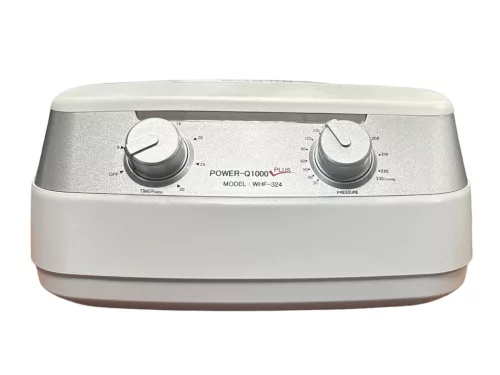 Start with this if you have the congestive type: you sit a lot and your legs feel heavy and tight by evening. The inflatable cuff moves pooled fluid from the leg toward the trunk with a wave‑like pressure — studies show both machine and manual lymphatic drainage can reduce local tissue thickness, but maintaining effect requires regular use.8 Every other day for 20–30 minutes; you can use it while watching TV.
RF Clinic Body radiofrequency device
 Choose this if loose, flaccid skin and loss of tone are your main problem — for example after weight loss or childbirth. Radiofrequency heats the deeper layers of the skin, which may firm the skin by stimulating collagen production. In comparative analyses it is among the best‑studied methods with measurable results.1 Use 2–3 times weekly, 15–20 minutes per area, for at least 8 weeks. More on the method: radiofrequency treatment at home.
Lipozero Excel cosmetic ultrasound device
 Ultrasound works like a micromassage under the skin and can improve penetration of topical agents — so it makes most sense combined with an anti‑cellulite cream. Creams alone have modest effects,7 and ultrasound can enhance delivery. This is a fine‑tuning tool: worth it when basics are already in place.
UniGlo cosmetic stimulator
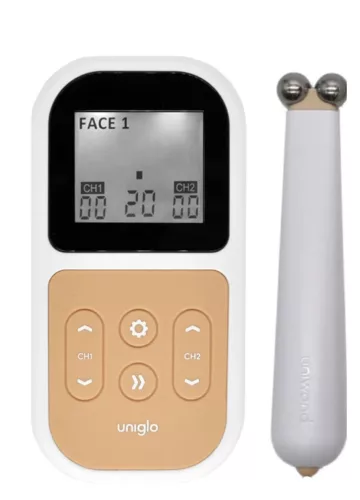 Entry‑level microcurrent device for maintaining skin tone — for small areas or as a budget first step. Use with realistic expectations: for larger areas with pronounced cellulite, the other devices above are more effective.
ShockWAVE 2000 Beauty shockwave device
 Shockwave therapy has the strongest clinical evidence in cellulite research: reviews report measurable improvement with 6–8 session courses.1,2 This is a professional‑grade device — I recommend it for salons and clinicians. Not for home use.
If you want to browse more:
 Body‑shaping treatments — full category →
 Lymphatic drainage devices →
 Radiofrequency devices →
 Cosmetic ultrasound devices →
 Before starting any device‑based treatment
Cellulite devices are intended for healthy people. Do not use them in the following situations, or only with your treating doctor's approval:
When not to start device treatment
- Pregnancy – regardless of the treated area, avoid the device‑based treatments mentioned here; during breastfeeding consult your doctor first.
- Deep vein thrombosis or suspected DVT – massaging or compressing the leg can be dangerous in this case.
- Untreated or inflamed varicose veins – seek vascular assessment before any machine treatment.
- Pacemaker or implanted electrical device – radiofrequency, microcurrent and electrostimulation devices must not be used.
- Active cancer – consider treatments only with your oncology team's approval.
- Skin injury, skin infection, inflammation at the treatment site – includes erysipelas; wait for full healing before treatment.
- Severe cardiovascular disease, uncontrolled high blood pressure – large‑area compression can impose circulatory load.
- Fever, acute infection – pause all courses until recovery.
When to see a doctor immediately?
If one leg suddenly swells, feels tight, painful, and the skin is warm or reddened — that's not cellulite or a cosmetic issue; it may be a thrombosis or skin infection. Do not treat at home; see your doctor the same day.
Important to know
The devices shown here are cosmetic, wellbeing‑oriented supplements. They do not replace medical assessment if your complaint suggests underlying disease (varicose veins, lymphoedema, lipedema).
 Practical tips — how to build your programme
The 12‑week basic programme
Weeks 1–4: lifestyle foundation — 3–4 strength sessions for thighs and glutes per week, 2–3 cardio sessions weekly, 2–2.5 litres water daily, less salt and sugar. From weeks 3–4: start a device course according to your type (congestive → lymphatic drainage every other day 20–30 minutes; loose skin → radiofrequency 2–3× weekly 15–20 minutes). Week 12: evaluate with photos, then move to maintenance (1–2 sessions weekly).
Photograph, don't just rely on the mirror
Take a photo once a month, in the same light and the same pose. Daily mirror checks can be misleading — a monthly photo series will show real change and carry you through weeks when it feels like nothing is happening.
Order matters
If you use lymphatic drainage and a skin‑firming treatment together: do radiofrequency or ultrasound first, then lymphatic drainage — this helps remove the tissue fluids mobilised by the treatment. With lymphatic drainage always work toward the heart, from bottom to top.
A frank word about expectations
No method currently removes cellulite completely and permanently — neither home devices, salon procedures, nor medical treatments. What consistent work can realistically give you: smoother skin, firmer tissues, about one stage of visible improvement — and maintaining that. If someone promises more, they are after your money, not your result. Also remember: even with persistence there are individual differences — you can't change your underlying predisposition.
Frequently asked questions
Based on current knowledge, no — the predisposition (hormones, connective‑tissue structure, genetics) remains. What you can achieve is visible improvement, even one stage, and maintaining that with regular upkeep. Be sceptical of methods that promise "permanent removal".
Realistically, noticeable change appears after 8–12 weeks of consistent work — encouraging signs (firmer feel, less heavy legs) can show after 3–4 weeks. Don't expect dramatic change after the first few sessions: connective tissue responds slowly.
Not necessarily. Weight loss can reduce the size of protruding fat lobules, but it doesn't act on the septa that cause the dimples — and rapid weight loss with loose skin can even make unevenness more visible. Gradual weight loss + strength training + skin‑firming measures is the right approach.
Let your main complaint decide. If your legs feel heavy by evening and you sit a lot: a lymphatic drainage device. If loose skin and lack of tone are the problem (e.g. after weight loss or childbirth): a radiofrequency device. Buy one and complete the course — finishing a programme matters more than owning two half‑used devices.
In men the connective‑tissue septa run in a crisscross pattern, so fat lobules can't bulge out as easily — additionally their skin is thicker and their hormonal milieu doesn't favour cellulite. Men may get it only rarely, typically with significant hormonal imbalance.
They are not opposites. Salon treatments (e.g. shockwave) offer stronger technology per session, but you pay per session and need repetition to maintain effects. Home devices offer consistency: that weekly 2–3 sessions that determine effect is easier to keep at home. Good combination: start with a salon course, use a home device for maintenance.
 Summary – Quick overview
Sources
- Lim SK, Gultekin G, Suresan S, et al. (2024). Comparative Analysis of Cellulite Treatment Modalities: A Systematic Review. Aesthetic Plastic Surgery. PubMed: 39547984
- Knobloch K, Kraemer R (2015). Extracorporeal shock wave therapy (ESWT) for the treatment of cellulite – A current metaanalysis. International Journal of Surgery. PubMed: 26209782
- Luebberding S, Krueger N, Sadick NS (2015). Cellulite: an evidence-based review. American Journal of Clinical Dermatology. PubMed: 25940753
- Bass LS, Kaminer MS (2020). Insights Into the Pathophysiology of Cellulite: A Review. Dermatologic Surgery. PubMed: 32976174
- Troia S, Moreira AM, Pisco D, et al. (2020). Effect of shock wave therapy associated with aerobic exercise on cellulite: A randomized controlled trial. Journal of Cosmetic Dermatology. PubMed: 33053245
- Longano C, de Faria Coelho C, Buslik SA, et al. (2024). Does electrophysical agents work for cellulite treatment? A systematic review of clinical trials. Lasers in Medical Science. PubMed: 38695965
- Turati F, Pelucchi C, Marzatico F, et al. (2014). Efficacy of cosmetic products in cellulite reduction: systematic review and meta-analysis. Journal of the European Academy of Dermatology and Venereology. PubMed: 23763635
- Bayrakci Tunay V, Akbayrak T, Bakar Y, et al. (2010). Effects of mechanical massage, manual lymphatic drainage and connective tissue manipulation techniques on fat mass in women with cellulite. Journal of the European Academy of Dermatology and Venereology. PubMed: 19627407
- Choi Y, Hur Y, Kwak S, Shin D (2024). Body contouring effects of at-home beauty device equipped with suction, radiofrequency, and electrical muscle stimulation functions. Journal of Cosmetic Dermatology. PubMed: 38571374