What is Ova good for and who is it for?
Primary dysmenorrhoea (primary menstrual pain) is the most common female complaint – 50–90% of young women experience it. It does not stem from an underlying disease but from uterine contractions combined with prostaglandin release. The classic treatment is a non-steroidal anti-inflammatory (ibuprofen, naproxen). Ova is a drug-free alternative: TENS blocks pain signals and heat therapy relaxes uterine muscle cramps. For many women the combination provides equal or better relief than a pill – without side effects.
Endometriosis is a chronic, progressive condition – the presence of endometrial tissue outside the uterus along pelvic organs. Pain usually occurs not only during menstruation but also in other phases of the cycle (during intercourse, bowel movements). Classic treatments are hormonal medications (combined contraceptives, GnRH agonists) and, in severe cases, surgery. Ova serves for symptomatic pain relief – A COMPLEMENT to gynaecological treatment.
IMPORTANT: endometriosis CANNOT be treated solely with TENS. Ova only relieves pain, it DOES NOT halt disease progression. Regular gynaecological monitoring (US, MRI, laparoscopy) is ESSENTIAL. For more information read the Pain relief for endometriosis article.
Uterine fibroids (uterus myoma) are benign tumours that grow in the uterine wall. They occur in about 30–40% of women aged 30–50. Fibroid-related pain – pressure sensation, lower abdominal discomfort, urinary or bowel symptoms, heavy menstrual bleeding – are managed under gynaecological supervision. Ova can be used for symptomatic pain relief. In SEVERE or rapidly worsening fibroid cases (requiring surgical or hormonal treatment) Ova does not replace gynaecological procedures.
Long-term use of ibuprofen and other NSAIDs can cause stomach problems, impaired kidney function and bleeding risk. Some women are hormonally sensitive or cannot take certain contraceptive combinations due to side effects. Ova is a drug-free pain relief option – usable without medication side effects. TENS stimulation does not produce tolerance, so effectiveness can persist long-term.
Primary dysmenorrhoea is especially common among adolescents (14–25 years). School attendance, sports and social activities often become impossible. Ova is a discreet, drug-free alternative that can be taken to school or training. NSAID use is still recommended for adolescents, but a drug-free alternative can reduce long-term gastric side effects. For children under 12–14 years, paediatric/gynaecological consultation is mandatory.
Ova's portability allows you to work, train, study or travel during painful menstruation. It can be worn discreetly under clothing and operates quietly. It is particularly valuable for athletic women: it can help with pre-competition or pre-training pain relief.
Increasingly more gynaecologists recommend TENS – especially for patients with chronic pelvic pain where classic drug therapy is limited (NSAID side effects, hormonal contraindication). Ova is a device developed specifically for this purpose. Use it according to protocol recommendations provided by your gynaecologist.
Clinical trials show TENS stimulation can reduce menstrual pain by 50–70% in most women. Some individuals may not experience clear relief. Ova is a clinically documented, well-designed device – BUT not a miracle cure. Reasonable expectation: evaluate results after the first 1–2 menstrual cycles. Keep a symptom diary: which program/intensity/duration helped most. If there is no clear improvement after 2–3 cycles, consider other alternatives.
How does Ova work?
Ova combines two mechanisms: TENS (transcutaneous Electrical Nerve Stimulation) + heat therapy. The two effects add up – so it can be more effective than TENS alone or a hot water bottle alone.
TENS stimulation affects pain via two mechanisms:
- Gate theory (Melzack-Wall): high-frequency stimulation excites thick, fast nerve fibers. These "occupy" the spinal pain gate so pain signals do not reach the brain.
- Endorphin release: low-frequency "endorphin TENS" triggers the central nervous system's natural opioids. These provide long-acting, internal pain relief.
Find a detailed explanation in the TENS treatment article.
The hot water bottle is a centuries-old method for treating menstrual cramps – for good reason. Heat:
- Improves circulation – increases oxygen supply to uterine muscles.
- Relaxes muscles – reduces spasm activity.
- Reduces sensitivity – activation of heat receptors suppresses pain at the nervous system level.
Ova's built-in, adjustable heat therapy operates within a precise comfortable temperature range – it does not burn but is noticeably warm. Unlike a classic hot water bottle, it is always even and controllable.
TENS and heat act on pain at different levels:
- TENS: at the nervous system level (gate theory, endorphins).
- Heat: at the muscle level (spasm relief, improved circulation).
The two ADD UP – they activate different pathways rather than duplicating the same mechanism. That is why the combination can be more effective than TENS or heat alone.
Clinical experience suggests combined TENS+heat devices can produce significant pain reduction in 70–80% of patients with primary dysmenorrhoea.
Using Ova DOES NOT exclude classic drug treatments:
- With NSAIDs (ibuprofen, naproxen): can be used concurrently. NSAIDs inhibit prostaglandin synthesis, while TENS+heat reduce pain perception and muscle spasm – two different mechanisms that do not conflict.
- With hormonal contraceptives: can be used concurrently.
- With endometriosis medications (GnRH agonists, progestins): can be used concurrently, but coordinate with your treating physician.
Many women find they can use lower NSAID doses with regular Ova use – particularly valuable for patients with sensitive stomachs.
Ova is designed for symptomatic pain relief. It DOES NOT treat the underlying disease:
- It does not stop endometriosis progression – monitoring with MRI/US and gynaecological protocol-based treatment remain necessary.
- It does not reduce fibroid size – size monitoring by ultrasound and decisions about surgical or hormonal indications remain a gynaecologist's task.
- It can relieve chronic pelvic pain at a symptomatic level, but investigation of causes (inflammation, nerve injury, myofascial dysfunction) is a specialist task.
Ova is an indispensable adjunct, but NEVER be the only approach for severe, chronic or progressive pain.
Frequently asked questions
No. Ova must NOT be used during pregnancy or if pregnancy is suspected. Electrical stimulation and heat applied to the lower abdomen are risky for the developing fetus. If you are uncertain about possible pregnancy, STOP use and take a pregnancy test. It should also be avoided in the postpartum period – consultation with a gynaecologist is required.
No. Pacemaker, implanted defibrillator (ICD) or any implanted electronic device is an absolute contraindication. An implanted intrauterine device (IUD/coil) is not a contraindication since it is not electronic – BUT consult your gynaecologist before use to ensure correct positioning.
The following symptoms should NEVER be ignored – SEEK emergency gynaecological care IMMEDIATELY, do NOT try to suppress them with Ova:
- Very severe, sudden lower abdominal pain (not typical menstrual pain).
- Severe, massive bleeding (heavy for 1–2 hours).
- Pain accompanied by fever.
- Loss of consciousness, pallor, heavy sweating.
- Rapid pulse + dizziness (suspected shock).
- Blood in urine or stool.
These may indicate ectopic pregnancy, uterine rupture, ruptured cyst, infection or other urgent conditions.
Yes, Ova is specifically designed for this purpose – it can be used DURING menstruation to relieve menstrual pain. Many women start TENS at the first signs of pain (even a few hours before bleeding) and use it regularly during the first days of menstruation. Tampons or other intimate hygiene products are not affected.
General recommendations:
- One treatment: 30–60 minutes, up to 1–2 hours depending on need.
- Number of daily sessions: NOT limited. Use TENS as often as needed.
- Heat function: moderate the heat level across sessions so the skin does not overheat.
Never use while driving or operating machinery. For new or unusually severe pain stop use and consult a gynaecologist.
Both use TENS technology but differ in purpose and functions:
- Ova: optimized specifically for female menstrual and pelvic pain. Built-in heat therapy. 4 specific programs (dysmenorrhoea, endometriosis, fibroid). Discreet, wearable under clothing.
- Dolito / general TENS: for any pain (back, shoulder, knee, lower back etc.). Multiple programs for various body areas. No heat therapy. Suitable for classic general use.
If you want a device specifically for menstrual/female complaints → Ova. If you want a multifunctional general pain device → Dolito or another general TENS.
TENS stimulation effect is usually felt within 15–30 minutes. Due to endorphin release, analgesic effects can persist after the treatment (for several hours). Heat therapy provides almost immediate spasm relief.
Decide whether Ova helps you based on experience during one cycle. Clinical studies show TENS+heat can provide significant relief in 70–80% of women with primary dysmenorrhoea.
How to use it step by step?
1
Charge the battery (with USB cable)
Before first use, a full charge is recommended. One full charge can provide up to 30 hours of runtime. You can charge from any standard charger via the USB cable. If your period is approaching, charge in advance.
2
Prepare the lower abdominal skin
Clean the skin of the lower abdomen – there should be no cream, oil, or sweat residue. For better adhesion, wipe the skin with a disinfectant wipe (e.g., Clinell). This can prevent skin irritation and extend electrode life. DO NOT use on broken, irritated or inflamed skin!
3
Apply the self-adhesive electrode pads
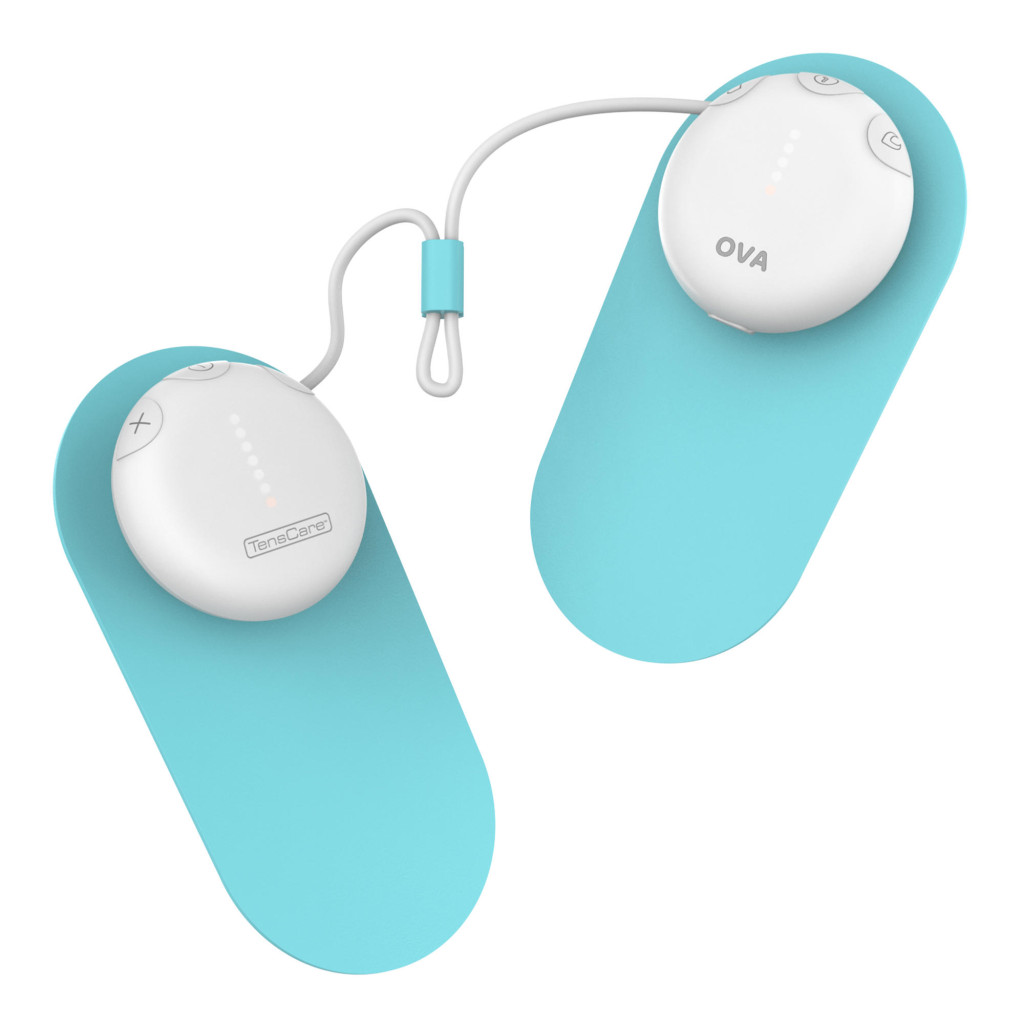
Place the two self-adhesive electrode pads on the lower abdominal area – in the zone below the navel, around the center of pain (generally oriented toward the uterus). The two pads MUST NOT touch each other. Connect them to the stimulation electrode cable. The Ova device can be carried in a pouch hidden under clothing.
4
Select the program
Ova offers pre-set programs for the four pain types:
- Primary dysmenorrhoea: classic menstrual cramp.
- Secondary dysmenorrhoea: due to an underlying condition.
- Endometriosis: chronic, cycle-independent pain.
- Fibroid: pressure-like, cramping pain.
Choose the appropriate program for your complaint and start. If unsure, begin with the primary dysmenorrhoea program.
5
Gradually set intensity + turn on heat
Start at low intensity and increase gradually. A good level is a noticeable tingling, BUT NOT painful. Optionally turn on the heat function – it simulates the classic "hot water bottle" effect. Set the heat level to a comfortable setting – never allow a burning sensation.
6
Treatment duration + aftercare
The induction treatment typically lasts 30–60 minutes. The program has an automatic timer. Multiple treatments per day are possible – tolerance does not develop. After use, switch off, remove the electrode pads (store them back on the protective film), and clean the lower abdominal skin. Replace pads after 1–2 weeks depending on adhesion.
What do you get in the package?
The complete Ova package – all accessories needed for immediate use.
- 1 pc Ova menstrual pain relief stimulator (TENS + heat)
- 2 pcs stimulating electrodes
- 1 pair self-adhesive electrode pads
- 1 pc USB charging cable
- 1 pc carrying case
- 1 pc Hungarian language user manual
The self-adhesive electrode pads are reusable – their lifespan depends on skin type and frequency of use. Tips:
- Clean the skin before each use: wipe the lower abdomen with a Clinell disinfectant wipe – it extends pad life.
- Storage: after use, place back on the original protective film and store in a cool place.
- Replacement time: after 15–30 uses, or when adhesion noticeably decreases.
- Spare pads: available to order separately in the webshop.
Ova can be complemented with additional accessories:
- Spare self-adhesive electrode pads: available in 4-piece packs.
- Clinell disinfectant wipes: for skin preparation – extend pad life.
- Replacement USB cable: if the original is damaged or lost.
Technical specifications – detailed
| Property | Value | What it means for you |
|---|---|---|
| Type | Combined TENS + heat therapy | Two mechanisms in one device – synergistic effect |
| Stimulation mode | TENS (transcutaneous electrical nerve stimulation) | Pain blocking (gate theory + endorphins) |
| Heat therapy | Built-in, adjustable heat level | Classic "hot water bottle" effect, controlled |
| Number of programs | 4: primary/secondary dysmenorrhoea, endometriosis, fibroid | Optimized for specific female indications |
| Placement | Lower abdomen (zone below the navel, above the uterus) | 2 self-adhesive electrode pads, centered on the pain |
| Package electrodes | 2 stimulating electrodes + 1 pair self-adhesive pads | Everything you need to start |
| Power supply | Lithium-ion battery, USB-chargeable | No battery changes |
| Battery runtime | Up to 30 hours on a full charge | Use across an entire menstrual cycle |
| Wearability | Compact, wearable under clothing | Take it to work, school, travel |
| Carrying case | Included | Discreet storage for portability |
| Tolerance | Does not develop (TENS technology) | Effective long-term |
| Certification | Class II medical device; MDR; ISO 13485 | European conformity, quality assurance |
| Manufacturer | TensCare Ltd (United Kingdom) | Manufactured according to UK quality standards |
 When NOT to use Ova?
Ova is a combined TENS + heat therapy device. Its use should be avoided in certain conditions. If any apply to you, do not start use without gynaecological or treating physician consultation.
- Pregnancy or suspected pregnancy (absolute contraindication)
- Pacemaker, implanted defibrillator (ICD) or any implanted electronic device
- Undiagnosed lower abdominal pain (medical evaluation REQUIRED first)
- Severe, sudden onset or fever-accompanied lower abdominal pain (emergency care required)
- Active or suspected cancer in the pelvic area
- Epilepsy or other seizure disorders (consult treating physician)
- Severe cardiovascular disease (uncontrolled high blood pressure, recent myocardial infarction)
- Acute skin inflammation, injury or a fresh surgical scar in the lower abdomen or uterine region
- Active pelvic inflammatory disease (PID), or undiagnosed pelvic infection
- Use of Ova outside the abdominal area (designed specifically for the pelvic zone)
- Bleeding disorders or coagulation abnormalities without physician approval
- Skin sensation disorders (loss of sensation in the treatment area)
- Children under 12–14 years without paediatric/gynaecological approval
Unsure? Consult your gynaecologist before use – especially if you have endometriosis, fibroids or another diagnosed pelvic condition. For new, unusual or undiagnosed lower abdominal complaints ALWAYS seek medical evaluation before using Ova – symptomatic treatment should not be started without knowing the cause of pain. Detailed information can be found in Dr. Zátrok Zsolt's article on contraindications of electrotherapy.
 Important information
Ova is a CE-certified, Class II medical device (manufactured under MDR and ISO 13485 quality assurance) intended for home use. Nevertheless, its use in no way replaces medical diagnosis, gynaecological specialist protocols, or prescribed drug treatments. The device is intended as a SYMPTOMATIC analgesic adjunct within comprehensive gynaecological therapy.
Ova is NOT a causal treatment. In cases of endometriosis, fibroids or other pelvic diseases it only relieves symptoms – it does not stop disease progression. Regular gynaecological monitoring (at least one pelvic ultrasound annually, MRI if indicated) is ESSENTIAL.
For new, unusually severe, rapidly worsening or fever-accompanied lower abdominal complaints NEVER use Ova to suppress symptoms – SEEK emergency gynaecological care IMMEDIATELY. Sudden, severe pain may indicate ectopic pregnancy, uterine rupture, ruptured cyst or other urgent conditions.
If pregnancy is suspected STOP IMMEDIATELY – TENS and heat therapy applied to the lower abdomen are risky for the developing fetus. If uncertain, take a pregnancy test before continuing use.
Do not drive or operate heavy machinery during or immediately after use. Proper pad storage, regular skin cleaning and timely pad replacement reduce the risk of skin irritation.
Use only original accessories. Keep the device out of reach of children at all times.
The information on this page is for general informational purposes and does not replace individual medical advice, diagnosis or treatment. Always consult your treating physician about your specific complaints.