What is a TENS device and what is it good for?
The TENS device is a medical device designed for home use, developed to provide drug-free relief for pain of various origins. It delivers mild electrical impulses to nerve endings via electrodes attached to the skin and can in many cases noticeably reduce pain. Treatments can be repeated as needed, even several times a day.
A good TENS device can be a useful companion for 8–10 years or longer, so it's worth choosing carefully. One thing determines whether you'll be satisfied: whether the device can do exactly what you need.
 Can't decide which to choose?
Two factors matter: the number of channels (how large and whether the painful area is one- or two-sided), and whether the device offers modulated TENS programs (this matters for chronic, long-standing pain to avoid habituation). We cover both in the detailed advisor below the products: detailed advisor.
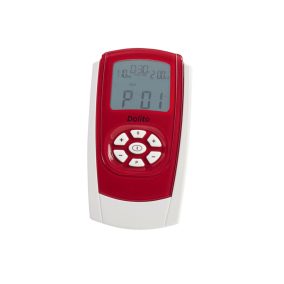
TENS device specialised for pain management
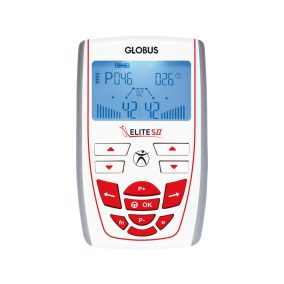


Elite SII electrotherapy device. TENS / EMS / FES. 2 channels, battery powered.
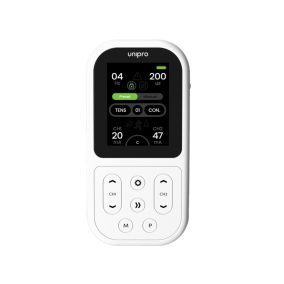
The UniPro is a two-channel, multifunctional electrotherapy device providing TENS, EMS, microcurrent and interferential (IF) treatments.



Premium 400 multifunctional electrotherapy device. TENS / EMS / MCR-MENS / FES / iontophoresis. Specialized programs: running, cross-country skiing, combat sports, tennis, football, cycling. 4 channels, battery operated.
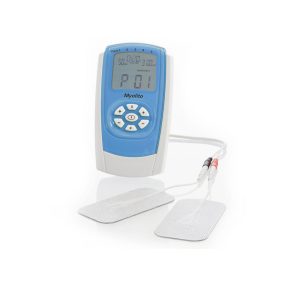
Myolito electrotherapy device with TENS, EMS and FES (incontinence) programs



Genesy 300 Pro multifunctional electrotherapy device. TENS / EMS / MCR-MENS / FES / iontophoresis. 4 channels, battery-powered.
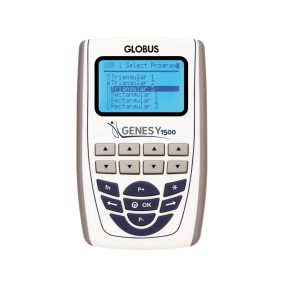


The Globus Genesy 1500 — one device for hundreds of complaints.



Triathlon Pro: multifunctional electrotherapy device. TENS / EMS / MCR-MENS / FES / iontophoresis. Special sport: triathlon. 4 channels, battery powered.
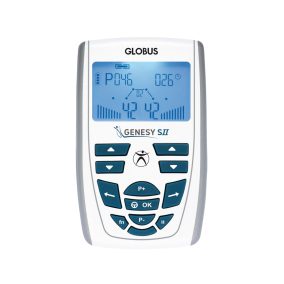


2-channel TENS | EMS | iontophoresis device. 60 types of pain-relief, rehabilitation, iontophoresis and incontinence programs.
What complaints can it be used for?
TENS can help alleviate pain in, among others, the following conditions:
- Arthritis and joint wear (arthrosis)
- Neck, back and lower back pain (e.g. herniated disc, lumbago, sciatica symptoms)
- Muscle injury (strain, bruise, sprain) and ligament injury
- Tendon inflammation (Achilles tendon, carpal tunnel), heel spur
- Diabetic neuropathic pain
- Postoperative and fibromyalgia pain
- Menstrual complaints, pelvic pain caused by endometriosis
Which device should you choose?
Our range includes everything from simple targeted pain relievers to professional multifunctional devices offering many programs. The table below helps you navigate.
| If you are looking for… | Check these first |
|---|---|
| Mild pain - neck, wrist, ankle (entry level) | Dolito, Myolito |
| Knee, lower back, shoulder, elbow (TENS + EMS and more) | UniPro, Genesy SII, Elite SII |
| Herniated disc, lumbago, sciatica, joint on both sides | Premium 400, Genesy 300 Pro, Genesy 1500, Genesy 3000 |
| Sports injury - sprain, ligament injury, overload (with sports programs) | Cycling Pro, Runner Pro, Soccer Pro, Triathlon Pro, The Champion |
| Neuropathic pain - glove/sock electrode needed | Dolito, Myolito, UniPro |
| Migraine, headache | Mynd, Zenowell Luna |
| My menstrual / endometriosis pain | Ova Period Pain Reliever, Ova Plus |
| Labour and menstrual pain | Perfect mama+ |
Several multifunctional devices (e.g. Myolito, Genesy SII) are also suitable for muscle stimulation and incontinence programs. If your primary goal is muscle strengthening, check our muscle stimulators. Adhesive spare electrodes for treatment are available among TENS electrodes.
How many channels should your TENS device have?
One pair of electrodes (one cable and its two ends) represents one treatment channel. The number of channels indicates how large and how many-sided an area you can treat at once. For home use, 1-, 2- and 4-channel devices are available.
| Number of channels | Electrodes | What is it enough for? |
|---|---|---|
| 1 channel | 2 pcs | A smaller, one-sided area (e.g. stiff neck). Nowadays rarely worth it. |
| 2 channels | 4 pcs | Two palm-sized or smaller, even two-sided areas – e.g. both sides of the knees simultaneously. |
| 4 channels | 8 pcs | Large or multi-sided areas at once (e.g. the entire back, both hips). The most future-proof choice. |
 Practical rule
Even with a four-channel device it is not "mandatory" to always use all channels: for small pain one channel is enough. But if your whole back or both hips hurt, the 4 channels impose no limits. For this reason, a four-channel device is generally the most flexible and enduring decision.
The most important: modulated or fixed-frequency TENS?
This is the point most people get wrong. Some devices deliver a fixed frequency program – in most people this leads to habituation: the good effect present in the first treatments may decrease after a few days and then disappear. In that case it is not the TENS method that is "bad", but the device choice was inappropriate.
Modern devices therefore offer modulated TENS programs, where habituation is much less common – so they can be used for long-standing, chronic pains as well.
 Dr. Zátrok's advice
If you want to relieve chronic, recurrent pain (arthrosis, arthritis, rheumatism), choose only a device that provides modulated TENS – that is what can provide lasting effect.
For short-term, acute complaints (stiff neck, ankle sprain, muscle bruise) older fixed-frequency TENS may be sufficient, because the cause usually resolves within 2–3 days and habituation does not develop in that time.
There is no single "magic frequency" that works for everyone. That's why it's worth choosing a device where you can at least adjust the frequency individually – so you can find the most effective setting for you.
 How does TENS work?
TENS acts on nerve endings with mild electrical impulses. The impulses create a "pricking" sensation that intensifies with increased current. The effect can occur in two ways, depending on frequency:
- High frequency (traditional): direct analgesic effect. It may inhibit the transmission of pain signals along nerve pathways toward the brain.
- Low frequency (endorphin): acts indirectly, contributing to the production of the body's own pain-relieving substances, endorphins.
TENS can be used alone or as a complement to other pain relief methods. You can read more about the practical application of TENS treatment here.
 When NOT to use it?
TENS treatment has few contraindications, but in the cases below seek medical advice before purchasing or using. Read more in our article on TENS contraindications.
- Pacemaker or other implanted electronic device
- Severe cardiac arrhythmia
- Pregnancy (on the abdomen and pelvic area, except for a dedicated childbirth program after medical consultation)
- Epilepsy
- Cancer in the treated area
- Electrode placed on the front of the neck, over the eye or over the heart
- Damaged, inflamed or irritated skin – do not place electrodes on such skin
Clarify the cause of the pain first
TENS provides symptomatic pain relief and does not eliminate the underlying cause. If you do not know what is causing your complaint, it is worth having it investigated first.