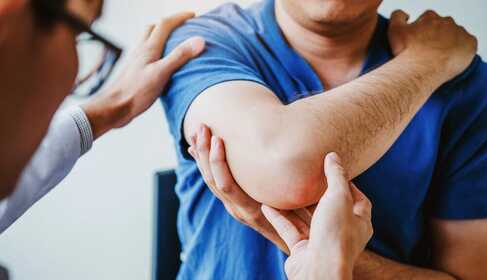
Causes of joint pain
Your body has roughly 300 joints, each playing a vital role in movement and flexibility. Joint pain occurs most often (but not exclusively) in older age and is one of the most widespread health problems in the world. Joints — which connect different parts of the body — are complex structures made up of several components. They contain cartilage, bone, ligaments, tendons, muscle, membranes, fluid and tissue. Because of this, joint pain can have many different causes. In this article I have grouped them into a "bouquet".

Your body has roughly 300 joints, each playing a vital role in movement and flexibility. Joint pain occurs most often (but not exclusively) in older age and is one of the most widespread health problems in the world. Joints — which connect different parts of the body — are complex structures made up of several components. They contain cartilage, bone, ligaments, tendons, muscle, membranes, fluid and tissue. Because of this, joint pain can have many different causes. In this article I have grouped them into a "bouquet".
Classification of joint inflammation
In terms of course it can be mild, causing pain only after certain activities. However, it may also lead to more severe consequences, limiting certain movements — making lifting and moving extremely painful in particular.
Joint pain can be divided into 3 basic groups:
- Arthritis: pain caused by inflammation or infection of the joint (most often accompanied by redness or swelling of the joint, and the pain often intensifies by evening)
- Osteoarthritis (degenerative joint disease): pain of mechanical origin, most commonly caused by wear and tear of the joint cartilage. A typical feature is that the joint is stiff and very painful on waking, and the pain gradually eases with movement as it "warms up".
- Accident, injury: joint pain can also be caused by an accident or injury, such as a blow or a fall.
Symptoms of joint pain
Symptoms may appear without any obvious cause, or during a particular movement, gradually or suddenly. Pain may decrease with rest or persist, and can last a short or long time.
- Joint stiffness after periods of inactivity, or in the morning
- Swelling
- Redness
- Warmth in the joint
- Reduced elasticity (flexibility)
- Reduced range of motion
Conditions that can cause joint pain
The causes of joint pain are diverse (I list possible causes here not in order of frequency).
Tenosynovitis (tendon sheath inflammation)
Inflammation or irritation of the tendons — the fibrous "ropes" that attach muscle to bone. This condition causes pain and tenderness outside but close to the joint.
It can occur in any tendon, but most commonly affects the shoulder, elbow, wrist, knee and heel areas.
Common names: tennis elbow, golfer's elbow, thrower's shoulder, swimmer's shoulder, jumper's knee
Tenosynovitis is most often successfully treated with rest (RICE treatment — rest, ice, compression, elevation), physiotherapy (recommended: therapeutic ultrasound, softlaser, microcurrent, pulsed electromagnetic field) and pain-relieving medications. If tendon inflammation is not treated properly, it can become chronic and lead to tendon rupture — in such cases surgery may be required.
Bone fracture
A fracture near a joint can cause pain in the adjacent joint.
Rheumatic fever
An inflammatory disease that can develop if a throat infection or scarlet fever is not treated properly. Throat infections and scarlet fever are caused by streptococcal bacterial infection. It most commonly affects children between 5 and 15 years old, although it can occur in younger children and adults as well. While sore throat is common, rheumatic fever is rare in developed countries (but still common in many developing countries).
Rheumatic fever can cause permanent heart damage, including damage to the heart valves and heart failure. Treatments can reduce inflammation-related damage, relieve pain and other symptoms, and help prevent recurrence of rheumatic fever.
Rheumatoid arthritis
A disease associated with chronic inflammation that can affect more than just the joints. In some people the condition can damage many different systems of the body, including the skin, eyes, lungs, heart and blood vessels.
Rheumatoid arthritis is an autoimmune disease in which your immune system mistakenly attacks the tissues of your own body.
Unlike the wear-and-tear damage of osteoarthritis, rheumatoid arthritis affects the lining of the joints, causing painful swelling that can eventually lead to bone erosion and joint deformity.
The associated inflammation is what can damage other parts of the body as well. Although newer medications have improved treatment options, severe rheumatoid arthritis can still cause physical disability.
Osteoarthritis
A disease that causes degeneration of the joints. It is the most common form of arthritis, affecting millions of people worldwide. It develops when the protective cartilage that cushions the ends of the bones wears down.
Although osteoarthritis can affect any joint, it most commonly affects the joints of the hands, knees, hips and spine.
Its symptoms are generally manageable, although cartilage loss cannot be reversed. An active lifestyle, maintaining a healthy weight and certain treatments (muscle-strength restoring EMS, softlaser, pulsed electromagnetic field) can slow disease progression and help improve pain and joint function.
Sprain
Stretching or tearing of ligaments — the fibrous tissues that connect two bones at a joint. The most common location is the ankle.
Initial treatment is rest, ice, compression and elevation. Milder forms can often be treated successfully at home. In more severe cases, surgery may sometimes be required to repair torn ligaments.
Dislocation
The place where two or more bones meet to form a joint. A dislocation is an injury in which the ends of the bones that form the joint are forced out of their normal positions. This painful injury temporarily deforms the joint and makes it immobile.
It most commonly occurs in the shoulders and fingers, but the elbow, knee and hip can also be affected. A dislocation is often obvious, but if you suspect one you should see a doctor immediately so your bones can be put back into place.
With proper treatment most dislocations recover normal function after weeks of rest and rehabilitation. However, some joints, such as the shoulder, may have an increased risk of recurrent dislocation. This can be prevented by EMS treatment to re-strengthen the muscles that stabilize the joint.
Bursitis
Inflammation of the bursae — small, fluid-filled sacs that cushion the bones, tendons and muscles near the joints. Bursitis occurs when these small sacs become inflamed.
Bursitis most commonly affects the shoulder, elbow and hip. But it can also occur at the knee, heel and the base of the big toe. It often occurs near joints that perform repetitive movements over a prolonged period.
Treatment usually involves resting the affected joint and protecting it from further injury. In most cases this type of pain resolves within a few weeks with appropriate treatment, although recurrent flare-ups are common.
Gout
This condition is related to a buildup of uric acid. It is a common and complex form of arthritis that can affect anyone. It is characterized by sudden, severe pain, swelling, redness and tenderness in one or more joints, most often the big toe.
A gout attack can come on suddenly, often waking you in the middle of the night with the feeling that your big toe is on fire. The affected joint is hot, swollen and so sensitive that even the weight of bedclothes can feel unbearable.
Gout symptoms "come and go", meaning recurrent attacks are common. But there are ways to treat symptoms and prevent flare-ups.
Fibromyalgia
Characterized by widespread musculoskeletal pain accompanied by fatigue, sleep, memory and mood problems. Researchers believe fibromyalgia amplifies painful sensations by affecting the way the brain and spinal cord process painful and non-painful signals.
Symptoms often start after a triggering event, such as physical exertion, injury, surgery, infection or significant psychological stress. In other cases symptoms gradually accumulate over time without a single triggering event.
Women are more likely to develop fibromyalgia than men. Many people with fibromyalgia also have tension headaches, temporomandibular joint (TMJ) disorders, irritable bowel syndrome, anxiety and depression.
Although there is no cure, various medications can help control symptoms. Exercise, relaxation and stress-reduction techniques are also helpful.
Ankylosing spondylitis (Bechterew's disease)
An inflammatory disease that over time can cause some of the spinal vertebrae to fuse. This makes the spine less flexible and can result in a hunched-forward posture. If the ribs are affected, deep breathing can become difficult.
Ankylosing spondylitis affects men more often than women. Signs and symptoms typically begin in early adulthood. Inflammation can also occur in other parts of the body — most commonly the eyes, causing sensitivity.
There is no cure, but treatments (relaxation and strengthening of spinal-supporting muscles with EMS, therapeutic ultrasound, pulsed electromagnetic field, softlaser) can relieve symptoms and may slow disease progression.
Adult-onset Still's disease
A rare type of arthritis that causes fever, rash and joint pain. In some people it occurs as a single episode, while in others the condition is persistent or recurrent. This inflammation can damage affected joints, particularly the wrist. Treatment includes medications such as prednisolone that help control the inflammation. Signs and symptoms of this disease can mimic other conditions like lupus and certain cancers such as lymphoma.
Avascular necrosis
Also called osteonecrosis (bone death). Death of bone tissue can be caused by diminished or interrupted blood supply. The bone is not "nourished" and weakens structurally, developing tiny fractures and eventually collapsing. A bone fracture or joint dislocation can tear the vessels that supply the bone and disrupt blood flow. Long-term, high-dose steroid medication use can also cause avascular necrosis. It is also linked to excessive alcohol use. It can affect anyone but most commonly occurs in people aged 30 to 50.
Bone cancer
Can originate in any bone, but most commonly affects the pelvis or the long bones of the arms and legs. It is rare, accounting for less than 1% of all cancers. Benign bone tumors are actually much more common than malignant ones.
The term "bone cancer" does not include cancers that start elsewhere in the body and then spread to the bone (i.e., metastases). These are named after the primary cancer, for example breast cancer that has metastasized to bone.
Some types of bone cancer occur mainly in children, while others predominantly affect adults. Surgical removal is the most common treatment, but chemotherapy and radiation may also be used. Decisions about surgery, chemotherapy or radiation depend on the specific type of bone cancer being treated.
Complex regional pain syndrome
A chronic pain condition resulting from dysfunction of the nervous system. It usually affects part of an arm or leg and often develops after injury, surgery, stroke or heart attack. The pain is disproportionate to the severity of the original injury. It is uncommon and its cause is not clearly understood. Treatment is most effective when started early. In such cases improvement or even remission is possible.
Gonococcal arthritis
This type of arthritis is a rare complication of the sexually transmitted infection gonorrhea. It typically causes painful inflammation of the joints and surrounding tissues. The inflammation usually affects women more than men. Gonorrhea is a bacterial infection, particularly common among teenagers and young adults.
Hypothyroidism
A condition in which the thyroid gland does not produce enough of certain vital hormones. In early stages it may not cause noticeable symptoms. Over time untreated hypothyroidism can cause a range of health problems such as weight gain, joint pain, infertility and heart disease.
Accurate thyroid function tests are available for diagnosis. Treatment with synthetic thyroid hormone is usually straightforward, safe and effective — your doctor will help you find the right dose.
Juvenile idiopathic arthritis
Previously called juvenile rheumatoid arthritis. Juvenile idiopathic arthritis (of unknown cause) is the most common arthritis in children under 16. It can cause persistent joint pain, swelling and stiffness. In some children symptoms last only a few months, while in others they persist for years. In some cases severe complications such as growth problems, joint damage and eye inflammation can occur. Treatment focuses on controlling pain and inflammation, improving function and preventing damage.
Leukemia
A cancer of the body's blood-forming tissues, including the bone marrow and the lymphatic system. There are many types. Some forms of leukemia are more common in children, while others mostly affect adults.
White blood cells are involved — they normally grow and divide in an orderly way as the body needs them. In people with leukemia the bone marrow produces too many white blood cells, which do not function properly.
Treatment for leukemia can be complex — it depends on the type and other factors.
Lupus
An autoimmune disease that occurs when the immune system attacks the body's own tissues and organs. Inflammation caused by lupus can affect the joints, skin, kidneys, blood cells, brain, heart and lungs. It can be difficult to diagnose because its signs and symptoms often mimic other diseases. The most characteristic sign of lupus is a butterfly-shaped rash across both cheeks, but this does not occur in every case. It can have genetic causes, but infections, certain medications or even sunlight can trigger it. Although incurable, treatments can help control symptoms.
Lyme disease
Lyme disease is the most common tick-borne illness and is transmitted by the bite of an infected tick. Several bacteria can cause it; in Europe and Asia Borrelia afzelii and Borrelia garinii are the most common. You are more likely to contract Lyme disease if you live in or visit grassy and heavily wooded areas where carrier ticks thrive. It is important to take appropriate precautions in these infected areas.
Osteomyelitis (bone infection)
The infection most often reaches the bone after an injury, spreading through the bloodstream or from nearby infected tissue. The infection can also start in the bone itself if bacteria reach the bone during an injury (e.g., in an open fracture where bone comes into contact with the ground).
Smokers, people with diabetes or those with kidney failure are at higher risk for osteomyelitis. In diabetics it can develop in the foot as a result of ulcers. Although once considered incurable, it is now treatable. Most people require surgery to remove dead bone tissue. After surgery, intensive antibiotic treatment is usually required, often administered intravenously in hospital.
Paget's disease of bone
A disease of the bones in which the normal process of bone remodeling is disturbed. Normally bone tissue is gradually renewed — old bone is broken down and replaced by new bone. In Paget's disease this process happens abnormally, causing bones to become fragile and deformed over time. It most commonly affects the pelvis, skull, spine and legs. Risk increases with age and if family members are affected. For unknown reasons this disease has become less common and milder in recent years. Complications may include fractures, hearing loss and pinched nerves in the spine. Treatment involves medication to strengthen weakened bones. Surgery may be required for complications.
Polymyalgia rheumatica
Causes muscle pain and stiffness, particularly in the shoulders and hips. Signs and symptoms typically begin quickly and are worse in the morning. Most people with polymyalgia rheumatica are over 65; it rarely affects those under 50. It is often associated with another inflammatory disease called giant cell (temporal) arteritis, which can cause headache, visual disturbances, jaw pain and scalp tenderness. The two conditions can sometimes occur together.
Pseudogout (calcium pyrophosphate deposition disease)
Characterized by sudden, painful swelling in one or more joints. These episodes can last days or weeks. The knee is the most commonly affected joint. It is also called calcium pyrophosphate deposition disease. The term "pseudogout" refers to its similarity to gout. Both conditions are caused by crystal deposits in the joint, but the types of crystals differ. It is unclear why crystals form in the joints and why they cause pseudogout, but risk increases with age. Physiotherapy treatments can help relieve pain and reduce inflammation.
Psoriatic arthritis
Affects some people who have psoriasis — a skin condition marked by red patches with silvery scales. In most people the skin symptoms appear first and the joint problems start later. Less often, joint problems begin before the skin patches appear.
Joint pain, stiffness and swelling are the main signs and symptoms of psoriatic arthritis. These symptoms can affect any part of the body, including the fingertips and the spine, and range from mild to severe. Both psoriasis and psoriatic arthritis can flare and then subside. There is no cure, so the focus is on controlling symptoms and preventing joint damage. Without treatment, psoriatic arthritis can lead to disability.
Reactive arthritis
Joint problems are most often triggered by an infection in the gut, genitals or urinary tract. It typically affects the knee and the ankle and foot joints, and less commonly the eye, skin or urethra. Reactive arthritis was previously sometimes called Reiter's syndrome, which featured eye, urethral and joint inflammation. It is uncommon. In most people symptoms come and go and resolve within 12 months.
Sarcoidosis
In sarcoidosis inflammatory cells (granulomas) form tiny lumps in any part of the body — most commonly the lungs and lymph nodes. It can also affect the eyes, skin, heart and other organs. The cause is unknown but is likely an immune response to an unknown substance. Some research suggests infectious agents, chemicals, dust or an abnormal reaction to the body's own proteins may trigger granuloma formation in genetically susceptible people. Sarcoidosis usually has a good prognosis and often resolves on its own or with minimal treatment. However, it can last for years and may cause organ damage.
Septic arthritis
A painful bacterial infection of a joint. The pathogen may reach the joint via the bloodstream from another infected area of the body, but more commonly bacteria enter the joint directly through a deeper wound, such as an animal bite or accident. People with artificial joints (prostheses) are at higher risk for septic arthritis. It most commonly affects the knee but can also involve the hip, shoulder and other joints. The infection can rapidly and severely damage the cartilage and bone in the joint, so immediate treatment is critical. Joint "drainage" is common, where accumulated fluid is removed with a needle or surgically. Antibiotics are usually also required.
When should you see a doctor?
Joint pain is rarely an emergency. Mild cases can often be successfully treated at home.
See a doctor if joint pain is accompanied by swelling, redness, tenderness and the area around the joint feels warmer than the surroundings.
Seek immediate medical attention if joint pain is caused by an injury and any of the following symptoms accompany it:
- joint deformity
- you cannot use the joint (immobile)
- severe pain
- sudden swelling
- fever
Home remedies
Try home remedies for mild joint pain. A few tips:
- rest the joint; avoid activities that trigger or worsen pain
- you can try over-the-counter pain relievers
- apply ice to the joint for 15–20 minutes several times a day (even a pack of frozen peas works). Read about the benefits of cold therapy here.
- use a heating pad, take a warm bath or a hot shower to relax muscles and improve circulation. Read about when heat is appropriate and when it is not.
- Transcutaneous electrical nerve stimulation (TENS) is excellent for relieving joint pain. Read about the TENS method here.
- More effective than TENS and with healing/anti-inflammatory effects is microcurrent therapy (MENS).
- For recurring pain, therapeutic ultrasound is often used and can even be done at home.
- Softlaser therapy is one of the newest and most effective anti-inflammatory methods and can help with joint complaints.
- Pulsed electromagnetic field (PEMF) therapy is primarily used to treat bone, ligament and joint conditions.
- BEMER therapy significantly stimulates microcirculation and when applied locally to an inflamed area it aids the healing of inflammatory processes.