
Blog

Peyronie's disease is a condition affecting the penis: hard lumps develop in the penis and cause increasing curvature. It is painful in some cases, and in an advanced stage it may make sexual intercourse difficult or impossible. Despite this, only a small proportion of those affected seek medical help – often because of embarrassment. If you notice such symptoms, see a doctor: a urologist or andrologist is the appropriate specialist. The sooner you start treatment, the greater the chance that progression can be stopped and symptoms reduced. Read the details!

In the summer of 2018 the ExtremeMan Long Distance Triathlon National Championship was won by Merida rider, Zoltán Petsuk. This is an ordeal consisting of a 3,800 m swim followed by 180 km cycling and finishing with a marathon (42 km) run. Zoli needed only 8 hours and 20 minutes to complete it. After the big success, however, a sneaky problem began to cast a shadow over his everyday life. He won the race despite agonizing pain around his heel, but the pain that had been tolerable earlier intensified by autumn to the point that it made quality work impossible. He received various treatments without results, and rest did not help. We met by chance. In our first conversation it became clear that he had lost his confidence and, struggling with the injury, wondered if this was the end of professional, performance-oriented competition for him.
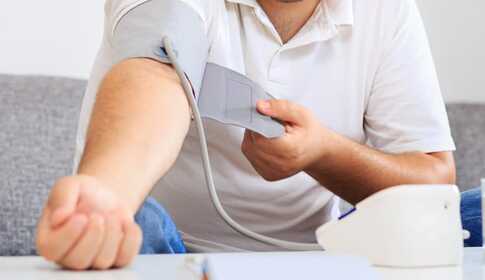
"A few weeks ago I had an accident. My kneecap cracked and a fragment broke off my tibia. I bought a Magnum XL magnetotherapy device to stimulate bone healing. Since I am on sick leave, I use it three times a day for two hours each. I've noticed that since I started using it my blood pressure has been getting lower and lower. I don't dare to use it because I feel practically dizzy. What do you think? Could it be caused by the device?" asked one of my readers.
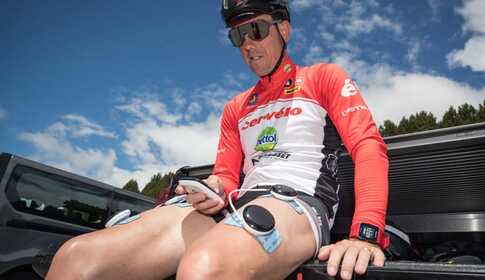
Preparing for a running race or a longer triathlon distance? Then endurance development is your top priority. You need to devote many hours to your preparation. If, however, you have little time to train… well, it's worth getting a little help. Of course, this only applies if you have spare time, for example when you do office work.

Back pain is one of the most common modern lifestyle ailments. You sit hunched in front of the computer all day, then jostle along in traffic in the car or bus, and can’t wait to plop into an armchair to watch your favorite series… Your physical activity approaches zero… and you wonder why your back starts to hurt. The more you rest, the more it hurts… It’s all due to weakening of the spinal-stabilizing muscles. But the more it hurts, the less you move. That way you can’t get rid of the unpleasant pain. But there is help!
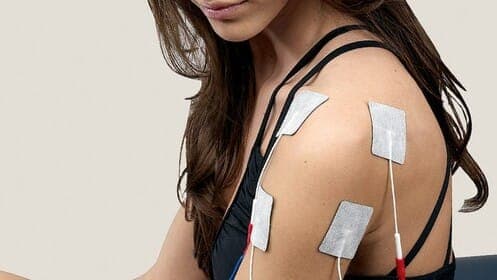
Modern TENS devices come with anywhere from 4 to 200+ programs, and users are often puzzled about which program to use for what. This article goes deeper technically than the main TENS primer: it discusses impulse parameters, the four core program families and technical approaches to avoid habituation.
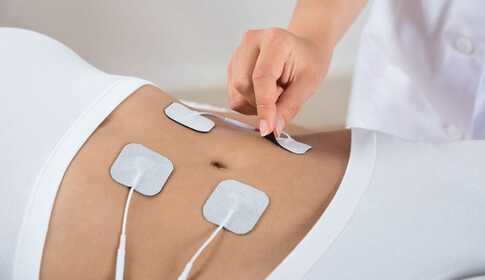
Electrotherapy — whether TENS, EMS, microcurrent, iontophoresis or interferential treatment — is generally well tolerated and associated with relatively few side effects. However, this does not mean that anyone can safely use it at any time or in any condition.

Limb paralysis means weakness, "clumsiness" or even complete inability to move one of your body parts. Dressing, washing, eating or drinking can become difficult, and in more severe cases self-care may be jeopardized. This is very frightening—but in most cases the condition can be improved.
The duration and success of recovery depend on several factors: is the paralysis central (affecting the brain or spinal cord) or peripheral (involving a nerve plexus or nerve fiber)? What caused it, how large an area is affected, and how quickly did acute care begin? Reaching the final outcome can take months or even years—so you must not give up despite a lack of results in the first days.
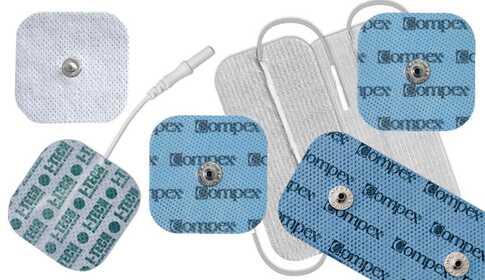
The electrotherapy pad (or electrode) is not just a TENS accessory — it is an essential component of any electrical treatment where the current reaches tissues through the skin. TENS, EMS, microcurrent, iontophoresis, interferential and selective stimulation — they all use the same pad principle.
If you're being treated for COPD (chronic obstructive bronchitis), it's important to know that the disease is currently not curable. Therefore, treatments aim to reduce or eliminate your symptoms. But they won't do much without you! If you don't take your medications or quit smoking, your symptoms will worsen. Breathlessness can even interfere with your everyday activities. Let's look at what you can and should do!

American researchers studied the effects of yoga and stretching training methods on chronic back pain, which affects an increasing portion of the population. They found that both yoga and intensive stretching exercises led to favorable results.

