

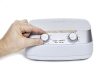
Who is the Power Q-1000 Plus recommended for?
If you were recently diagnosed with lymphedema or decided to start an important home treatment, this device can be a simple, easy-to-use tool for daily 30–60 minute maintenance machine therapy. 4-chamber technology is typically the foundation of home, everyday treatment. To learn more about the condition, the Lymphedema – forms and causes guide walks you through it.
For preventive and maintenance treatment of post-breast-surgery arm swelling, research recommends low pressures up to around 40–60 mmHg and sustained application over multiple weeks1 — the Q-1000 Plus holds this setting simply and stably. The arm cuff can be added in the selector above. Background: Radiation therapy and lymphedema.
For lipedema, the proven home routine is compression garment + daily machine IPC + exercise. Recent studies show regular home pneumatic compression can measurably reduce leg volume and improve quality of life.2 The Q-1000 Plus is the easiest device to learn for starting a routine. Background: Lipedema (fat edema) symptoms and treatment.
For chronic venous insufficiency, varicose symptoms and end-of-day heavy-leg sensation, home IPC combined with compression stockings can relieve symptoms — at low pressures of 20–40 mmHg. Background: Varicose vein disease: causes, symptoms and treatment.
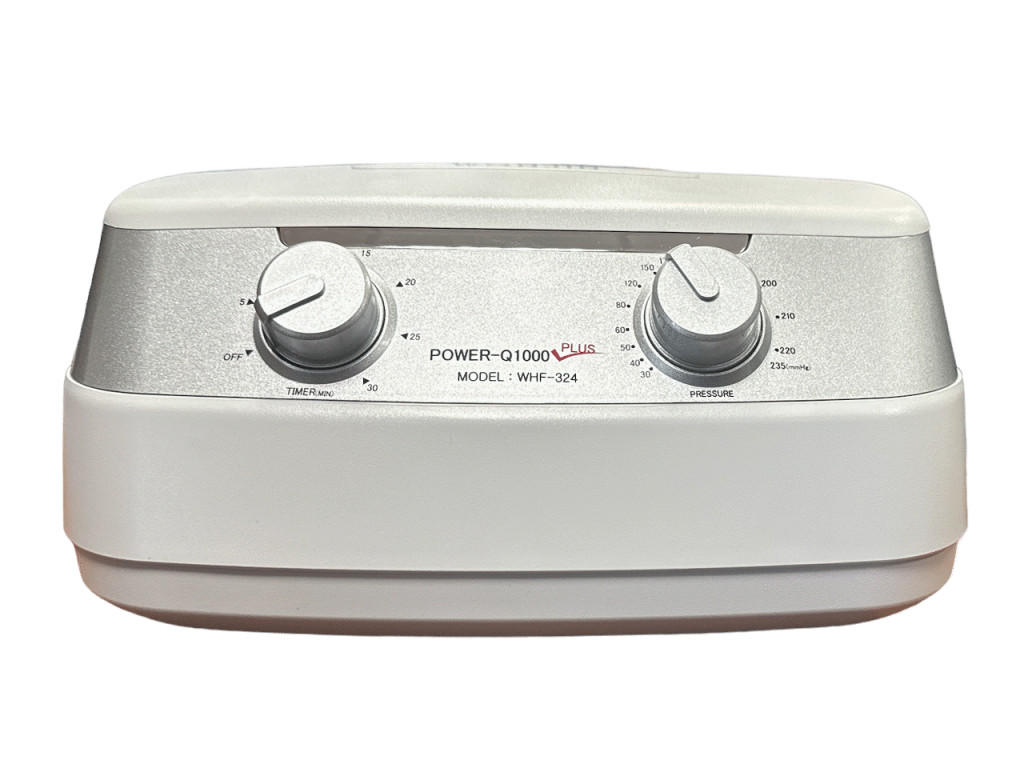
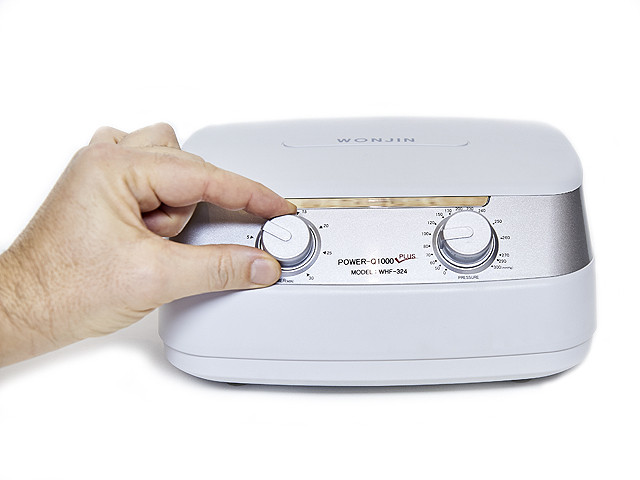
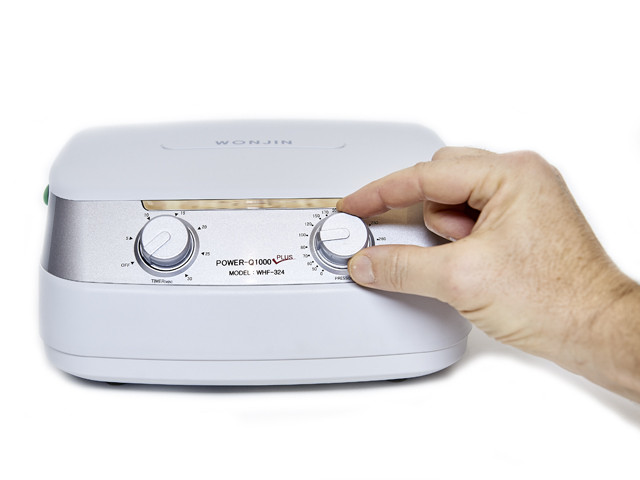
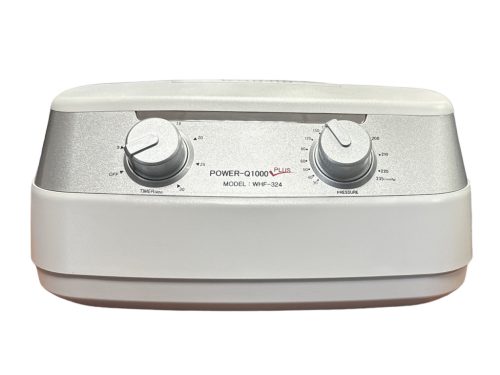
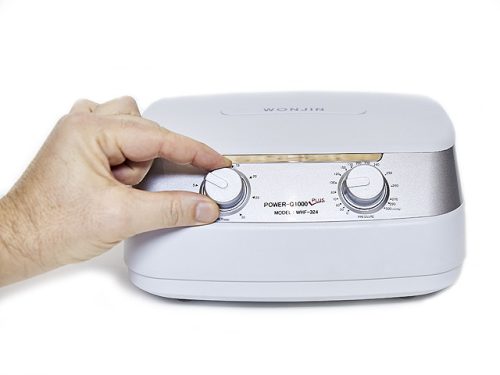
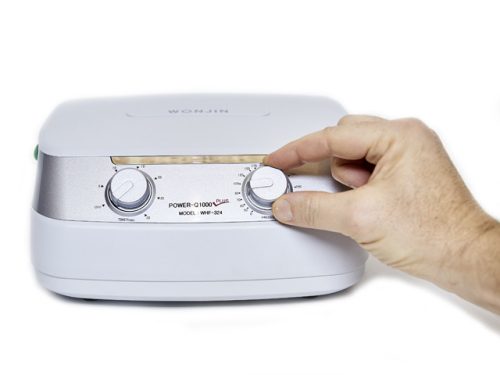
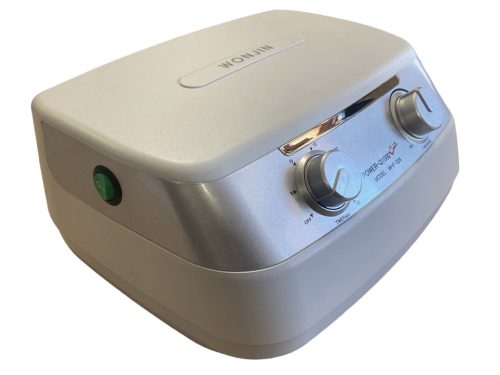
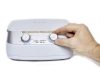
The two-knob layout is immediately understandable at a glance; there’s no menu system to get lost in. Many customers choose this model for an elderly parent or grandparent — precisely because of its simplicity.
How your device is configured – in 3 steps
Important to know before ordering: the base price is for the control unit. For treatment you will also need at least one treatment cuff, which you can add in the selector next to (or below on mobile) — that way everything you need arrives in one package and one shipment, so you can start treatment on day one.
1
Choose the treatment area
Leg (the most common choice), arm (e.g., for post-breast-surgery arm swelling) or trunk (thigh-hip-lower abdomen region). If unsure, the questionnaire below can help.
2
Measure the circumference of your limb
For the leg measure at the ankle, calf, knee and mid-thigh; for the arm measure at the wrist, forearm and upper arm. A soft tape measure and 2 minutes are enough — the exact size table is below.
3
Select the size in the selector above
Based on your measurements choose M, L or XL. If you are on the border between two sizes, choose the larger — the cuff should fit comfortably without gaps.
| Size | Leg | Arm | Trunk | Shorts |
| M | 36-48-56-64 | 37-42-50 | 115 | 37-42-50 |
| L | 48-58-68-78 | 48-54-61 | 130 | 48-54-61 |
| XL | 64-66-72-84 | - | - | 70-114-108 |
The numbers in the table indicate the circumference of the body part, measured in centimeters.
Where to measure?
- Leg: ankle / calf / knee / mid-thigh
- Arm: wrist / forearm / upper arm
- Trunk: hip / abdomen
- Shorts: upper thigh / buttock-hip / abdomen.
Compare your measurements with the table values to select the appropriate size for you.
Not sure about size? Call our colleagues on working days between 8:00 and 14:00 at 06-53/200108 – we can help choose the right cuff in a few minutes.
What does 4-chamber pneumatic compression affect?
4-chamber technology is the basic form of pneumatic compression, used for decades in home treatment of lymphedema and lipedema. The chambers inflate and deflate sequentially with gradually increasing pressure, moving interstitial fluid upward along the limb. Regular use may contribute to:
- mobilization of protein-rich interstitial fluid in stage 1–2 lymphedema,
- supporting venous return in varicose and heavy-leg complaints,
- relief of end-of-day fatigue and tightness after prolonged standing or sitting,
- complementing the effect of compression garments in maintenance therapy,
- supporting capillary-level microcirculation.2
If you’re interested in how 4-, 6- and 12-chamber configurations differ, the Lymphatic massage device – what it does and how to choose guide covers this in detail; compare manual and mechanical lymphatic drainage in the Lymphatic drainage – manual and mechanical lymphatic massage article.
Frequently asked questions
Both are 4-chamber home devices. The Q-1000 Plus is the simplest entry model: two rotary knobs, nothing else. The Q-2200 is mid-range with four treatment programs — suitable for home use and beauty salons. If simplicity is the main criterion and you only need it for home use, the Q-1000 Plus is your device.
The Premium is also 4-chamber but adds program memory and refined pressure control. If you plan long-term use across multiple indications with different settings, the Premium is useful. If a fixed setting suffices for a well-established daily routine, the Plus may be perfectly adequate.
Depends on indication: lymphedema 30–50 mmHg, lipedema 30–60 mmHg, venous complaints 30–40 mmHg is typical. Always agree exact settings with your treating physician or lymphedema therapist. Start initial sessions at lower pressure and shorter duration, then increase gradually.
Pneumatic compression doesn’t work overnight. With regular daily use, changes are usually noticeable after about 5–10 sessions — swelling and tightness may gradually decrease. Consistency is key, not intensity.
For stage 1–2 lymphedema and lipedema a 4-chamber device is generally sufficient. For more severe stage 3 cases a 6-chamber device (Q-8060) is recommended, and for clinic use or stage 4 lipedema the 12-chamber Q-8120 is suggested. Details are in the buying guide.
Reduce pressure or treatment time and monitor the limb. Mild sensitivity or numbness can occur in first sessions — this usually subsides if you start at lower pressure. If discomfort persists more than 30 minutes after treatment, you experience severe pain or skin discoloration, stop use and consult your treating physician.
NO. In case of acute skin infection (erysipelas, cellulitis) or suspected deep vein thrombosis, stop treatment immediately and seek medical attention. After completion of antibiotic therapy or exclusion of thrombosis, use may be resumed with medical approval.
See it in action – 2:45 minute demo
In this short film I present the Power Q-1000 Plus device. I cover:
- the operating principle and correct settings,
- proper cuff application,
- basic safety rules for safe use.
How to use the Power Q-1000 Plus?
1
Applying the cuff
Put the leg, arm or trunk cuff on the treated limb. It should fit snugly but not tightly.
2
Connect to the control unit
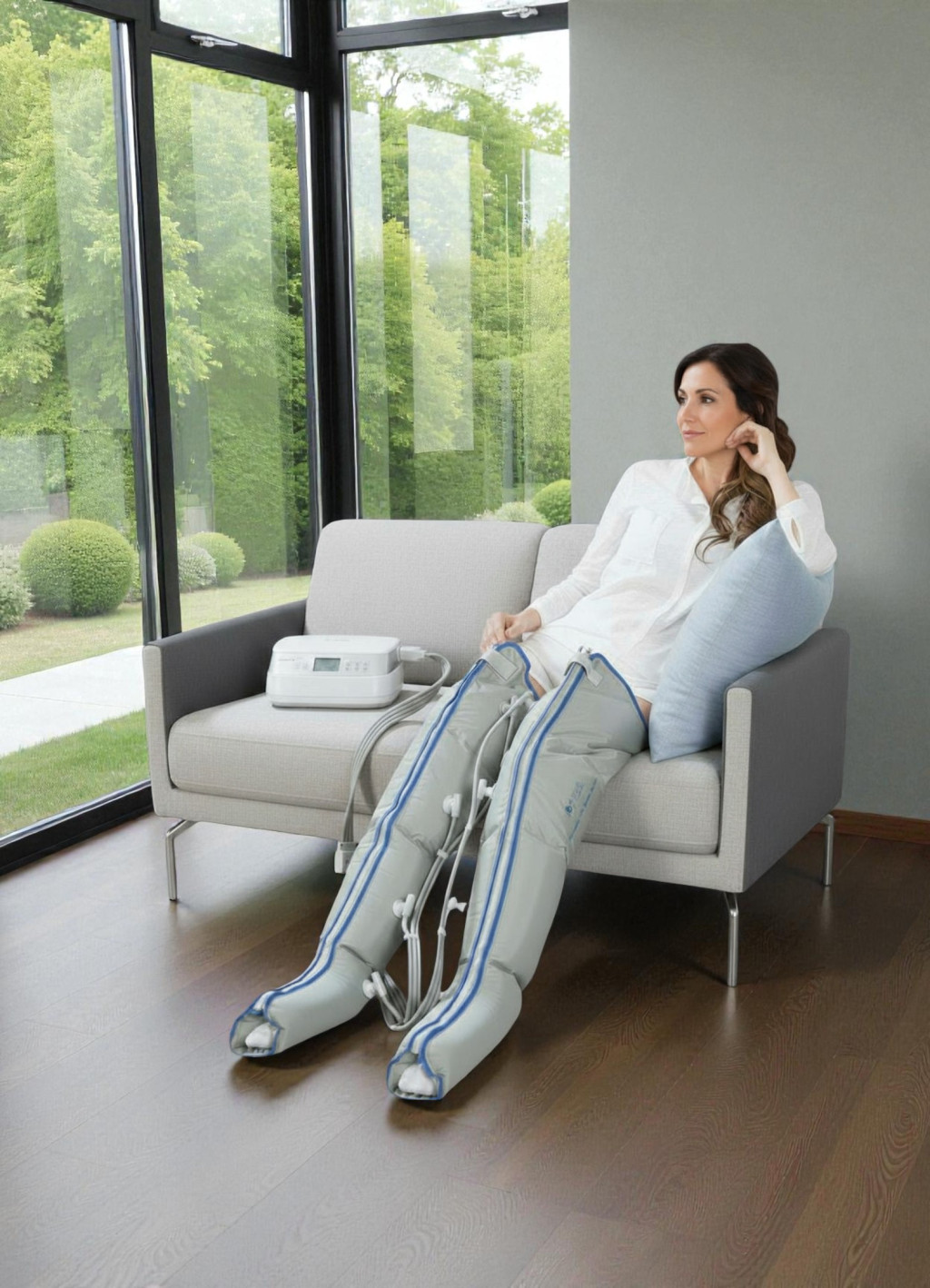
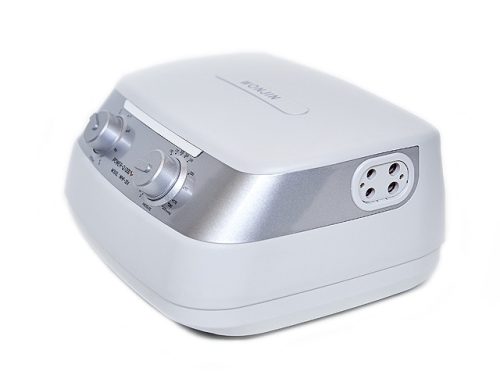
The air tube connects the cuff to the unit. One or two limbs can be treated simultaneously.
3
Set pressure and time
Use the first rotary knob to set pressure (typically 30–50 mmHg for lymphedema) and the second to set treatment time (30–60 minutes). Start initial sessions at lower pressure.
4
Start the treatment
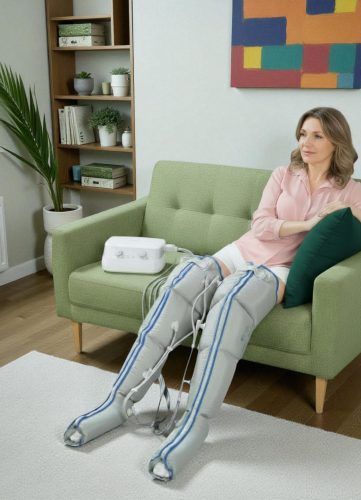
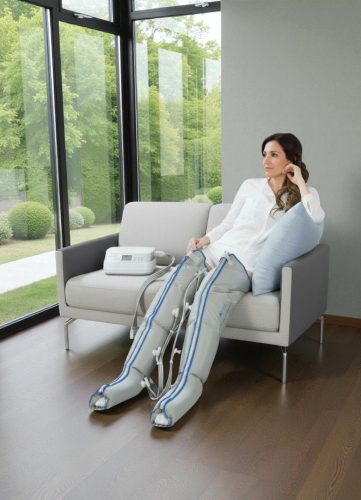
Turning the timer starts the device: the 4 chambers work sequentially in a distal-to-proximal wave. A semi-reclined or supine position is recommended. It is more effective if the limb is slightly elevated (place a pillow underneath).
5
Compression garment after treatment
To maintain the result, put on compression stockings or a sleeve immediately after treatment — this prevents the mobilized fluid from flowing back.
Why it’s worth it – and why your decision is right
A single manual lymphatic massage session in clinics typically starts from several ten-thousand HUF. Lymphedema and lipedema require long-term, regular treatment. Owning your own device can pay off within a few dozen sessions — and thereafter you can use it daily for years at home, without waiting lists or travel.

One-time expense, years of use
Daily maintenance therapy at home, on your own schedule — without clinic fees and time burden.

2-year warranty, local service
The control unit has a 2-year warranty and official service handles repairs. CE medical device, registered according to MDR.

14-day right of withdrawal
As an online buyer you may withdraw from the purchase without reason within 14 days of receipt.

Medical expert support
You can ask questions before and after purchase: on working days between 8:00 and 14:00 call 06-53/200108. We support you with 30 years of product knowledge.
What’s in the package?
The Power Q-1000 Plus basic package includes:
- 1 pc Power Q-1000 Plus control unit with power cable
- + the treatment cuff and air tube added in the selector above
The inner surfaces of cuffs can be wiped regularly with a damp cloth and disinfectant weekly. Treat the control unit only with a dry cloth. Store air tubes without twisting and avoid sharp folds.
Multiple 4-chamber cuff types are available for the Q-1000 Plus: arm, trunk and leg cuffs, cuff-protecting stockings and spare air tubes. The full range is in the Lymphatic massage accessories category.
Not sure this model is right for you?
The Power Q series has five models, from entry-level to clinical high-end. If your situation is more complex — stage 3 edema, ulcer complications, clinic use — call our colleagues at 06-53/200108 (working days 8:00–14:00), or check the detailed buying guide.
Technical specifications
| Model | Power Q-1000 Plus |
| Number of chambers | 4 |
| Pressure range | 20–250 mmHg |
| Programs | Simple manual setting (pressure + time) |
| Treatment time | 5–60 minutes, adjustable |
| Compatible cuffs | 4-chamber leg, arm, trunk cuffs |
| Power supply | 220 V / 50 Hz |
| Manufacturer | Wonjin Mulsan Co. |
| CE / MDR compliance | Class IIa medical device, registered according to MDR (2023-MRD/QS-058) |
 When NOT to use the device?
- Acute deep vein thrombosis or suspicion of it – treatment only with medical approval
- Severe heart failure – increased venous return may cause decompensation
- Active skin infection (erysipelas, cellulitis) in the treated area
- Severe peripheral arterial disease – individual assessment and low pressure indicated
- Untreated high blood pressure – use after stabilization and medical indication
- Active malignant tumor in the treated region – only with oncologist approval
- Recent postoperative period – not recommended until wound healing
- First trimester of pregnancy and complicated pregnancies – only after obstetric consultation
Unsure? Consult your treating physician before use!
 Important information
The Power Q-1000 Plus lymphatic massage device is CE certified as a medical device under the European MDR (Medical Device Regulation). Its use is intended as an adjunct to medical and physiotherapy treatment and does not replace them. In case of new symptoms, increasing swelling, pain or skin changes, consult your treating physician.
The information provided here is for guidance only. Pneumatic compression is a complementary method and does not replace medical treatment — determining the exact treatment protocol is the responsibility of your treating physician or lymphedema therapist.
Ready to have your daily treatment finally at home, in your own armchair?
Scroll up to the cuff selector, add your size and put the package in the cart — on working days we ship within 1–2 business days from our own stock. If size or model is uncertain, call our colleagues at 06-53/200108 (working days 8:00–14:00). If you want to read more before deciding, subscribe to our newsletter — you’ll be the first to get guides and promotions.
Related guides and content
 Lymphatic massage device – multi-indication hub and product overview →
 Lymphatic massage device – what it does, how to choose? →
- Lymphedema – forms, causes and stages →
- Lymphedema treatment at home – daily routine →
 Lipedema (fat edema) symptoms and treatment →
 Varicose vein disease: causes, symptoms and treatment →
- Lymphatic massage accessories – cuffs and accessories →
Scientific sources
The clinical background of 4-chamber pneumatic compression is supported by the following studies:
- Su L, Huang H, Tong Y, and colleagues (2025). Intermittent pneumatic compression devices for the prevention and treatment of breast cancer-related lymphedema – a systematic review and meta-analysis. Supportive Care in Cancer. PubMed
- Kulchitskaya DB, Fesyun AD, Konchugova TV, Apkhanova TV (2024). Influence of intermittent pneumatic compression on microvasculature condition in lymphedema. Voprosy Kurortologii, Fizioterapii, i Lechebnoi Fizicheskoi Kultury. PubMed
- Pajero Otero V, García Delgado E, Martín Cortijo C, and colleagues (2022). Intensive complex physical therapy combined with intermittent pneumatic compression versus Kinesio taping for treating breast cancer-related lymphedema. European Journal of Cancer Care. PubMed