
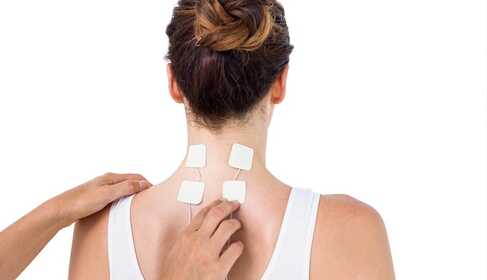

 How to use a muscle stimulator at home?
In this article I present the practical use of a muscle stimulator. The fundamental principles of the method are covered in the EMS overview article and in the theory article.
 Key idea
Successful EMS treatment rests on four basic principles: (1) an appropriate device (number of channels according to muscle size), (2) correct electrode placement (on the same muscle, aligned with muscle fibers, on the muscle belly + near the origin), (3) a goal-oriented treatment program, and (4) intensity within your tolerance. The 2022 systematic review by Borzuola (PMID 35856620) found that combining EMS with voluntary contractions gives the most durable results — passive EMS alone achieves more modest outcomes. Consistency: 4–6 sessions per week for a minimum of 8–12 weeks produces meaningful effects — 1–2 short weekly treatments are unlikely to yield significant benefit.
I demonstrate how to prepare the muscle stimulator, place the electrodes, and what you will see/feel during the treatment.
 Preparations – device, electrodes, number of channels
You will need a muscle stimulator that has an EMS function. Important: devices intended purely for TENS (pain relief) are NOT suitable for muscle stimulation, because TENS impulses act primarily on sensory nerves while EMS stimulates motor fibers. Details on the difference: TENS, EMS, MENS differences.
How many channels do you need?
The required number of channels depends on how large an area you want to stimulate at once:
- 1 channel (2 electrodes): one small muscle group (e.g., one side of the neck, forearm). Sufficient for focused home use.
- 2 channels (4 electrodes): one muscle group on both sides of the body (e.g., both upper arms, both hamstrings). Currently the most common choice for home rehabilitation (cost-effective).
- 4 channels (8 electrodes): multiple muscle groups simultaneously (e.g., both thighs + both gluteal muscles). Practical for athletes or larger treatment areas.
Equipment and connection
Each channel requires one stimulation cable and two adhesive electrodes. So a 4-channel treatment needs 4 cables and 8 electrodes. One end of the cable connects to the device, the bifurcated end connects to the electrodes.
The cable colors serve only to help you identify the two ends of the same cable — color and socket position can be interchanged without affecting the circuit. Detailed buying guide: choosing pads.
 Electrode placement – the key to effective stimulation
Skin preparation: wash the treatment area with lukewarm soapy water and dry thoroughly. The greasier or dirtier the skin, the shorter the electrode’s lifespan.
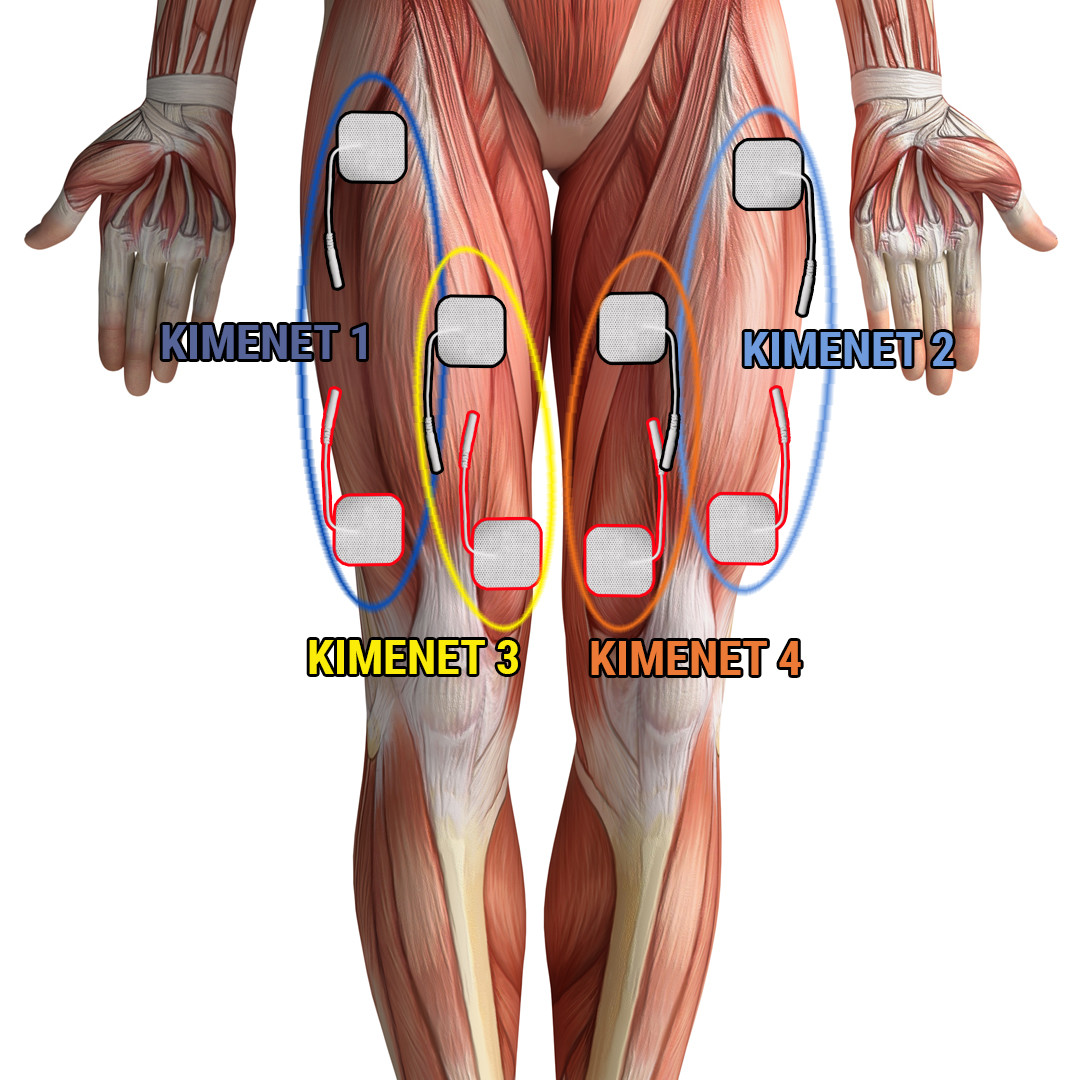
Four basic principles of electrode placement
- The two electrodes of the same cable must ALWAYS be on the same muscle or muscle group. If you want to treat the forearm flexors, both electrodes should be placed on the front of the forearm.
- Follow the direction of muscle fibers: the imaginary line connecting the electrode pair should run parallel to the muscle fibers. If you place them across the fibers the muscle may contract spasmodically and feel uncomfortable.
- Place one electrode near the muscle origin and the other in the middle of the muscle mass (where motor end plates are densest). Do NOT place electrodes over tendons or joint lines.
- Size asymmetry is advantageous: if space allows, the passive (more distal) electrode should be twice the size of the active (closer) one. For example on the thigh the active electrode near the knee could be 5×5 cm, while the passive one in the mid-thigh 5×9 or 5×10 cm.
Polarity – when does it matter?
Modern muscle stimulators use a compensated biphasic rectangular waveform: the current direction reverses many times per second, so at times one electrode is positive and at times the other is. Therefore, for EMS treatment polarity is not a meaningful factor — it does not matter whether you place the plus/minus (or red/black) electrodes in a particular position. In other therapeutic applications that use asymmetric waveforms (e.g., iontophoresis, treatment of denervated muscle) polarity can matter. Details: electrode polarity.
Hydration and skin condition
Drink 200–300 ml of water 1–2 hours before treatment: adequate hydration improves skin conductivity, which reduces discomfort during treatment and increases effectiveness. Details: hydration before electrical therapy.
Treatment program – choose according to your goal
The effect of an EMS program depends on three main parameters: frequency (Hz), pulse width (μs) and current intensity (mA). Choosing the program appropriate for your goal is critical — the detailed theory is covered in the theoretical foundations. The following table is an orientation:
| Goal | Frequency (Hz) | Typical duration | Weekly frequency |
|---|---|---|---|
| Regeneration, microcirculation | 1–10 Hz | 20–30 minutes | 3–5 sessions |
| Stiffness relief, muscle relaxation | 3–8 Hz | 20–30 minutes | 2–4 sessions |
| Postural muscle activation | 10–20 Hz | 25–30 minutes | 3–4 sessions |
| Endurance strength | 20–35 Hz | 25–45 minutes | 4–5 sessions |
| Muscle mass increase / hypertrophy | 50–70 Hz | 15–25 minutes | 3 sessions |
| Maximum strength, explosiveness | 70–100 Hz | 10–15 minutes | 2–3 sessions |
As a beginner always start with lower-frequency, stiffness-relief or regeneration programs — these produce gentle twitches and help you understand the sensation of stimulation. A maximal strength program can be unpleasant or painful from the first session, so it is not recommended for beginners.
12-week EMS schedule for regaining muscle strength
The schedule below is optimized specifically for regaining lost muscle strength (after surgery, injury, inactivity, or age-related sarcopenia). It can be applied to any muscle group with correct electrode placement. The 2025 Li ACL meta-analysis (PMID 39811154) also supported gradual progression: early (≤1 week) introduction produced meaningful quadriceps strength gains compared with conventional physiotherapy in both short (≤6 weeks) and longer (>6 weeks) follow-ups.
Week 1 — acclimatization
| Program | Mon | Tue | Wed | Thu | Fri | Sat | Sun |
|---|---|---|---|---|---|---|---|
| A = Stiffness relief (5–10 Hz) | ✓ | ✓ | ✓ | ✓ | ✓ | ✓ | ✓ |
| B = Endurance strength (20–35 Hz) | ✓ | ✓ | ✓ | ✓ |
Weeks 2–3 — introduction to stimulation
| Program | Mon | Tue | Wed | Thu | Fri | Sat | Sun |
|---|---|---|---|---|---|---|---|
| C = Stiffness relief | ✓ | ✓ | ✓ | ✓ | |||
| D = Endurance strength | ✓ | ✓ | ✓ | ✓ | ✓ | ✓ | ✓ |
| E = Maximum strength (50–80 Hz) | ✓ | ✓ |
Weeks 4–12 — substantive muscle building
| Program | Mon | Tue | Wed | Thu | Fri | Sat | Sun |
|---|---|---|---|---|---|---|---|
| F = Endurance strength | ✓ | ✓ | ✓ | ✓ | ✓ | ✓ | ✓ |
| G = Maximum strength | ✓ | ✓ | ✓ |
By the end of weeks 3–4 you will typically notice muscle tightening. After week 12 the EMS protocol can be gradually transitioned into a maintenance program (2–3 sessions per week), and it is advisable to resume conventional exercise (physiotherapy, cardio) with EMS used as a supplement for regeneration and circulation. Detailed rehab program: regaining lost muscle strength.
Intensity setting – within tolerance, but effective
The device always starts at zero mA — you must find the correct level. Use the + and – buttons to adjust current strength separately for each channel.
- First level: fine twitches in the muscle — still low, you can increase further.
- Working level: clear muscle contraction but comfortable — suitable for relaxation and circulation-enhancing programs.
- Strengthening level: the upper edge of your comfort zone — about 1–2 mA below your maximum tolerance. This is required for developing muscle strength.
- Too high: you feel stinging or pain — reduce by 2–3 mA.
Too low intensity is the most common mistake: if you do not feel a clear contraction, the treatment will not produce meaningful effects. Sensitivity can change day to day, so you need to set the intensity anew for each session.
After treatment – electrode handling and storage
When the program ends the impulses stop. Turn off the device, and remove the electrodes from the skin by the edges (NOT by pulling the cable). Place them back onto the plastic backing and do not leave them exposed to air — drying shortens electrode life.
Practical tip: storing electrodes in the refrigerator (NOT the freezer!) significantly prolongs the adhesive layer's life. A quality adhesive electrode can be used about 20–30 times with proper storage — usage count depends on skin preparation (washing, drying), sweating, and electrode size.
How long until I see results?
Muscle strengthening is not produced directly by the electrical impulse but by the repeated contractions it triggers. The physiological mechanism is the same as with conventional training — your body senses the load and activates the hormonal response that promotes muscle building.
- 1–2 sessions per week: no meaningful muscle strength gain expected.
- 4–6 sessions per week, 8–12 weeks: this is the minimum for clinically measurable strength gains (based on Borzuola 2022).
- End of weeks 3–4: increased firmness is typically felt.
- 8–12 weeks: meaningful increases in muscle strength and tone.
- After 3 months: strength will gradually decline if stimulation is stopped — maintenance requires 2–3 sessions per week (or transition to conventional exercise).
The 2021 Kemmler meta-analysis (PMID 33716787) also confirmed that EMS programs between 6 and 54 weeks lead to significant increases in muscle mass and strength, but long-term effectiveness requires consistency. Sport-focused details: EMS for athletes. Rehab protocol: EMS rehab.
 When NOT to use EMS?
EMS is generally well tolerated and safe when using CE/MDR-certified devices and following the user manual. The full list is available here: contraindications for electrotherapy.
- Implanted electronic device (pacemaker, ICD)
- Acute vascular inflammation or deep vein thrombosis
- Active or unknown tumor in the treatment area
- Epilepsy
- Acute fever, infectious condition
- Skin inflammation or wounds in the treatment area
- Pregnancy (lower abdomen, lumbar area) – consult first
- The anterior triangle of the neck (carotid line) – electrode prohibition
- Acute muscle, tendon or ligament injury during the bleeding phase (wait 3–4 days)
 Which device to choose for practical use?
Important considerations for choosing the right device: number of channels (2 or 4), built-in program selection, ease of use, and CE/MDR certification. From the Medimarket portfolio:
| Device | Positioning | Who for? |
|---|---|---|
| Myolito | Entry-level EMS (HOME) | Beginners, focused single-muscle treatment |
| Globus Elite 150 | 4-channel mid-range | Regular home training + EMS |
| Globus Premium 400 | 4-channel multifunctional | Those who want TENS + EMS + MCR combination |
| Globus Genesy 600 | PRO multifunctional | Athletes, rehab patients, complex needs |
| Sport Pro line | Sport-specific | Runners, cyclists, triathletes, football players |
Complete guide to choosing a muscle stimulator: muscle stimulator category.
 Summary – what to take away
- Choose channel number according to muscle size: 1 (small area), 2 (one muscle group), 4 (multiple muscle groups simultaneously).
- Four principles of electrode placement: same muscle, along muscle fibers, muscle belly + origin, size asymmetry (passive 2× larger).
- Skin prep: lukewarm soapy water + dry. Hydration 1–2 hours before treatment: 200–300 ml water.
- Polarity: with a compensated biphasic rectangular waveform polarity is generally not significant; pay attention with asymmetric waveforms.
- Frequency: 1–10 Hz for regeneration, 20–35 Hz for endurance, 50–70 Hz for general strengthening, 70–100 Hz for max strength.
- 12-week schedule phases: week 1 acclimatization, weeks 2–3 introduction, weeks 4–12 substantive muscle building.
- Intensity: within tolerance but effective — too low is ineffective, too high is painful.
- Results: with 4–6 sessions per week you see effects after 8–12 weeks. After 3 months switch to maintenance or conventional training.
Entry-level home: Myolito. 4-channel mid-range: Globus Elite 150 / Globus Premium 400. PRO multifunctional: Globus Genesy 600. Sport-specific: sport stimulator category.
Frequently asked questions
With incorrect placement you will typically not feel an effective muscle contraction, or you may experience skin stinging / unpleasant muscle twitching. This will not cause injury, but the treatment will be ineffective. If an electrode is not on the muscle belly or is placed on a tendon/joint line, reposition it. If electrodes cross or overlap, the muscle may cramp painfully. Correct these and restart the treatment.
A quality adhesive electrode can be used 15–20 times with proper storage and skin preparation. Adhesive life is reduced by oily/dirty skin, applying while sweating, or leaving the electrode exposed to air. It is prolonged by clean + dry skin and refrigeration after use. Replace the electrode when it no longer adheres properly — poor contact reduces stimulation effectiveness and can cause skin stinging.
The subjective feeling of "firmer" muscles typically appears by the end of weeks 3–4 with regular 4–6 weekly sessions. Meaningful strength gains are usually felt around weeks 8–12, which matches clinical measurements (Borzuola 2022, PMID 35856620). Hypertrophy (visible increase in muscle volume) is slower — generally 12–16 weeks of regular EMS combined with voluntary training are needed.
Yes, it is recommended. Drinking 200–300 ml of water 1–2 hours before treatment improves skin conductivity, which reduces discomfort and skin stinging under the electrode. Dehydrated skin offers higher resistance, making the same mA value feel more uncomfortable. Details: hydration article.
Not recommended. For effective stimulation both electrodes should be located on the same muscle to form the correct circuit. If one electrode is off the muscle, resistance is higher and more current travels through subcutaneous tissues, resulting in weaker muscle activation. The imaginary line between the two electrodes should run parallel to the muscle fibers.
Yes, if you have a multi-channel device. With a 2-channel device you can treat one muscle on both sides of the body (e.g., both hamstrings), while a 4-channel device allows treating two muscle groups at once (e.g., both thighs + both glutes).
Related articles
 Scientific sources (2020+)
- Borzuola R, Laudani L, Labanca L, Macaluso A. Superimposing neuromuscular electrical stimulation onto voluntary contractions to improve muscle strength and mass: A systematic review. Eur J Sport Sci. 2023;23(8):1547-1559. DOI: 10.1080/17461391.2022.2104656 · PMID: 35856620
- Kemmler W, Shojaa M, Steele J, et al. Efficacy of Whole-Body Electromyostimulation (WB-EMS) on Body Composition and Muscle Strength in Non-athletic Adults. A Systematic Review and Meta-Analysis. Front Physiol. 2021 Feb 26;12:640657. DOI: 10.3389/fphys.2021.640657 · PMID: 33716787
- Li Z, Jin L, Chen Z, et al. Effects of Neuromuscular Electrical Stimulation on Quadriceps Femoris Muscle Strength and Knee Joint Function in Patients After ACL Surgery: A Systematic Review and Meta-analysis of Randomized Controlled Trials. Orthop J Sports Med. 2025 Jan 13;13(1):23259671241275071. DOI: 10.1177/23259671241275071 · PMID: 39811154
- Nakanishi N, Yoshihiro S, Kawamura Y, et al. Effect of Neuromuscular Electrical Stimulation in Patients With Critical Illness: An Updated Systematic Review and Meta-Analysis of Randomized Controlled Trials. Crit Care Med. 2023 Oct;51(10):1386-1396. DOI: 10.1097/CCM.0000000000005941 · PMID: 37232695

This article provides general information and does not replace specialist medical or physiotherapy consultation. Home use of EMS is recommended with CE/MDR-certified medical devices and according to the user manual. For post-operative rehabilitation, chronic disease, or implanted medical devices, discuss starting treatment with your physician or physiotherapist first.

