Blog

If you live with COPD, you know exactly what the daily struggle for air feels like. Climbing stairs, which used to be easy, now forces you to stop. The cough that is always worse in the morning. The thick mucus that is difficult to bring up. And the constant worry about what will happen if it gets worse.
The good news is that, alongside medical treatment, there are complementary methods that may help improve your quality of life. These include salt therapy – or, as it is called in the scientific literature, halotherapy. In this guide, you will learn how salt therapy may help ease your COPD symptoms and how you can use it at home.
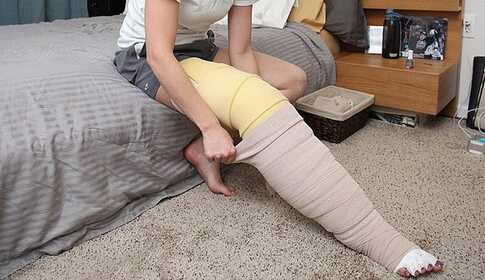
Lymphoedema — also called lymphedema — is a disease of the lymphatic system in which the lymphatic vessels cannot transport the fluid between tissues. The trapped protein-rich fluid accumulates locally and causes a chronic, gradually worsening swelling — most often affecting one limb. The two names (lymphoedema and lymphedema) refer to the same condition: Hungarian clinical practice uses them interchangeably, while international literature prefers the term “lymphoedema”.
Lymphedema affects many thousands of people in our country today. Most do not receive adequate treatment and are not even informed about what causes their condition, whether it can be eliminated, or what they need to do for their own sake. Below I briefly summarize the most important facts.
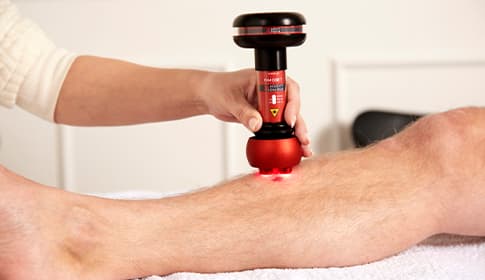
There has been a gaping wound on your lower leg for months, and it simply refuses to heal. You dress it, care for it, visit the doctor – and still it does not go away. If this sounds familiar, you are not alone. A leg ulcer is one of the most stubborn forms of chronic wound and can dramatically reduce quality of life. The good news is that soft laser therapy may give healing a new boost. Another home-based option is electrical muscle stimulation (EMS/FES) – for a detailed protocol, see: Treating leg ulcers with electrical muscle stimulation.
The various salt therapy methods share the same goal: to harness the beneficial effects of air rich in salt particles. There are many methods in use today. I will go over them now.
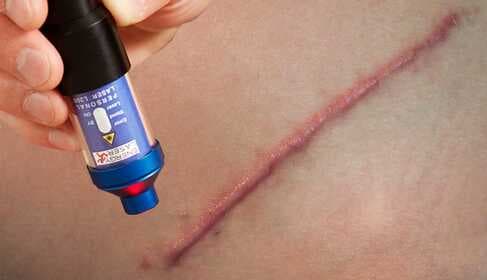
If you have a bothersome scar or keloid on your skin – whether it developed after surgery, an injury or acne – soft laser therapy may help. It will not remove the scar, but research suggests it may favourably influence the quality of scar tissue: it may become softer, flatter and paler. In this article, I’ll show you how the treatment works and what you can expect.
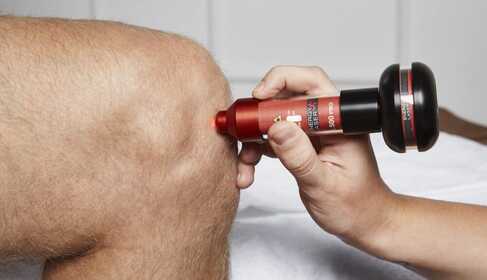
A soft laser device does not cut, burn or cause pain. Instead, it may support tissue regeneration. Its name (that is, “soft laser” or “low-level laser therapy”) refers to a gentle laser beam with a low energy level. In scientific circles, the method is called photobiomodulation and has already been studied for several decades.
The first research began in the 1960s, when Endre Mester, a Hungarian physician and researcher, accidentally discovered that low-energy laser light may have a beneficial effect on tissue regeneration. Since then, thousands of scientific studies have examined the effects of the method, and soft laser therapy is now used worldwide in modern medicine.1
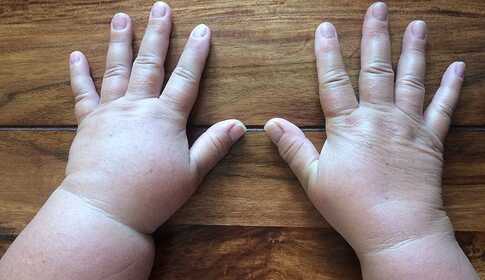
Lymphoedema is a chronic, lifelong condition. Intensive hospital or specialist phases—the introductory stages of complex decongestive therapy (CDT)—can significantly reduce limb volume, but long-term stable results depend on your daily home routine. If home treatment is irregular or stops, the swelling returns within a few weeks, and you are back where you started.
Interest in health preservation and natural remedies is growing. As a result, salt therapy (known by the foreign term halotherapy) is receiving increasing attention as an alternative treatment for many respiratory problems. Halotherapy exists in two main forms: wet and dry salt therapy, both harnessing the unique properties of salt to help alleviate respiratory diseases, improve skin conditions, and generally enhance well-being. In this article I review the application and effects of wet and dry salt therapy. I describe the operating principles of the different salt therapy methods and go over the factors that can help decide which form might be best for you. I can assure you that salt therapy is not just a wellness trend, but a rediscovery of a remedy known for millennia that fits harmoniously into modern lifestyles.
Salt therapy is a globally recognized, natural method to support the respiratory system. It was known even in ancient Greece – Hippocrates, the father of medicine, recommended inhaling salty water vapor for those with breathing difficulties. It can have beneficial effects for respiratory complaints and allergies. Its effect develops more slowly than that of drugs, but a major advantage is that it is natural and no significant side effects are known.
Home halotherapy is a natural and clinically supported complement to medical treatment for respiratory allergies and many other lung conditions. Now I introduce a device that, in my opinion, provides the most effective home halotherapy: the SaltDome halotherapy device.