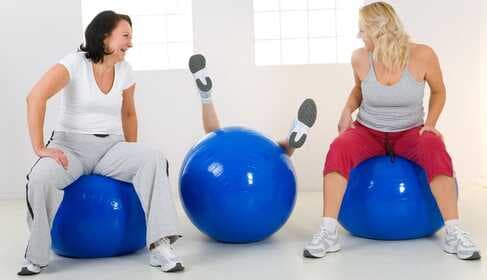
Pelvic floor exercises — how to strengthen your pelvic floor muscles
Pelvic floor exercises — also called pelvic floor training, perineal exercises or Kegel exercises — are a specialized exercise system developed to specifically train the pelvic floor muscles and preserve their elasticity.
These muscles hold the pelvic organs (bladder, uterus, rectum) in place and play an important role in urination, defecation and sexual function. Imagine them as a hammock that stretches from the pubic bone to the tailbone and supports your internal organs. When these muscles weaken or become injured, various problems can occur — many of which can be helped by pelvic floor exercises.

 Key idea
Pelvic floor exercises are the first-line, non-surgical method for pelvic floor muscle training. A comprehensive 2022 analysis by the Cochrane Collaboration found high-quality evidence that regular pelvic floor muscle training (PFMT) favorably affects symptoms of incontinence.1
 A brief history of pelvic floor exercises
Pelvic floor exercises are not new — similar techniques were used in ancient Chinese and Indian cultures. The modern form was laid down by Dr. Arnold Kegel, an American obstetrician-gynecologist, in the 1940s, primarily to treat urinary incontinence. The Kegel exercises he developed still form the basis of pelvic floor muscle training today.
In Hungary, Andrea Kriston popularized and further developed the method — her Kriston Intim Torna® became a widely known program.
 What problems can it help with?
Pelvic floor training is a versatile tool that can play a role in treating and preventing a range of pelvic concerns:
The most common form: a few drops of urine leak involuntarily when coughing, sneezing, laughing, jumping. Pelvic floor exercises can improve sphincter function and reduce or even eliminate symptoms.
Childbirth — especially if an episiotomy was performed — can stretch or injure the pelvic floor muscles. Regular exercises can help restore the musculature. It's worth starting during pregnancy: trained muscles can ease childbirth and reduce the risk of later problems.
Particularly after multiple births or in older age, the pelvic floor may no longer support internal organs adequately. Regular exercises can help prevent this and may improve early-stage prolapse. Advanced cases may require medical intervention.
A consciously controlled pelvic floor can provide a more intense sexual experience for both partners. You can learn to specifically contract and relax these muscles, which may enhance intimacy.
In men, pelvic floor training can help with post-prostate surgery incontinence, erectile dysfunction and pelvic pain. Training the anal sphincter can play a role in treating fecal incontinence.
Pelvic floor exercises are not only therapeutic but preventive. If you have no symptoms yet, regular perineal exercises can reduce the risk of developing incontinence later. This is especially important for sedentary work, low activity levels, before/after pregnancy and during menopause.
Methods of pelvic floor training
The classic Kegel exercise: imagine you are trying to stop the flow of urine or hold back stool — this movement activates the pelvic floor muscles. The exercise can be performed lying down, sitting or standing.
Basic exercise: Contract the muscles for 5 seconds, then relax for 10 seconds. Repeat 10 times, 3–4 times a day.
Advanced: Gradually increase the contraction time to 10–20 seconds. Incorporate the exercises into daily activities — while brushing your teeth, sitting at work, or watching TV.
Kegel exercises are effective on their own, but about 30% of people cannot find and contract these muscles correctly on their own. In such cases, electrostimulation or biofeedback can help.
An electrostimulator triggers muscle contraction with low-intensity pulses — targeted and concentrated. The muscle cannot distinguish between a contraction initiated by the brain and one induced by a device, but stimulation produces a more concentrated contraction.
When choose this? If you cannot find the correct muscles on your own, if you want faster results, or if more intensive training is needed for severe symptoms.
FES (Functional Electrical Stimulation): Simpler devices (e.g. Biolito, Kegel Toner) create muscle contractions with mild electrical pulses — if you exercise while using them, the effects add up.
Biofeedback devices provide feedback on whether you are performing the exercises correctly. Two main types exist:
EMG biofeedback: Measures the muscle's electrical activity. The evoStim E shows a real-time curve — you can see how effective your contraction is.
Pressure biofeedback: Measures the pressure exerted by the muscle. The evoStim P provides objective data so you can track progress week by week.
Biofeedback is especially useful for beginners and those seeking motivation for regular training.
Other methods
Elements of yoga and Pilates, hypopressive training (a diaphragm-coordination method), and Kriston Intim Torna® also target the pelvic floor muscles. Vaginal balls (e.g. Fleur balls, Fleuron set) provide passive training without electricity.
How to get the most out of pelvic floor exercises?
The effectiveness of pelvic floor training depends on several factors. Muscle strength increases only through repeated contractions — no medication, cream or dietary supplement can replace this.
| Factor | Why important? | My recommendation |
|---|---|---|
| Correct technique | Many people tense the abdominal or gluteal muscles — this is ineffective | Seek help from a physiotherapist for the first sessions |
| Consistency | Daily practice is necessary — once or twice weekly is insufficient | Daily 3–4× 5–10 minutes is better than 1× 30 minutes per week |
| Progression | Muscles need time to adapt | Start with 5 s contractions, gradually increase to 10–20 s |
| Relaxation | Overly tight muscles are as problematic as weak ones | Always include rest phases — aim for balance |
| Electrostimulation | Produces more concentrated contractions | Combine with exercises — effects are additive |
Ghaderi et al., 2023 — meta-analysis
Pelvic floor muscle training can significantly improve stress incontinence symptoms and pelvic floor muscle strength. The most pronounced improvements are seen after at least 8 weeks of regular training.2
 Expected timeline
Results do not appear overnight. With Kegel exercises alone, initial changes can be expected after 12–20 weeks of daily practice. If combined with electrostimulation, improvements may be felt after 2–4 weeks. Patience and persistence are required — but it’s worth it.
 Pelvic floor exercises across life stages
During pregnancy the growing uterus and hormonal changes place significant strain on the pelvic floor. Regular exercises can help prepare for childbirth and reduce the risk of later incontinence. For pelvic floor training during pregnancy, professional guidance is important.
Childbirth — whether vaginal or cesarean — stretches the pelvic floor muscles. After the 6–8 week postpartum check-up and with medical approval, targeted muscle training can usually begin. Gradual, gentle exercises can help restore the musculature.
During menopause, decreasing estrogen levels affect tissue elasticity, increasing the risk of prolapse and incontinence. Pelvic floor exercises can help maintain muscle tone and circulation, mitigating some adverse effects of hormonal changes.
In older age preserving pelvic floor function becomes crucial. Daily exercises can be incorporated into everyday activities. Chronic illnesses and medication side effects can alter muscle condition, but regular, personalized training still offers benefits.
Limitations of pelvic floor exercises
Pelvic floor exercises are a valuable tool, but be aware of their limitations:
It can be difficult to find the correct muscles. Many people tense the abdominal or gluteal muscles, which reduces effectiveness. Incorrect technique can lead to long-term muscle imbalance — therefore it’s worth seeking professional help at least initially.
Results take time. With independent exercises, 12–20 weeks of daily practice are needed for the first changes. This is challenging for many — electrostimulation can help achieve faster improvements.
In some cases it’s not sufficient. Advanced uterine prolapse, severe incontinence or complex pelvic floor dysfunctions may require medical intervention. In such cases, pelvic floor training plays a complementary role.
It can be overdone. Over-tightening the pelvic floor (hypertonia) can cause pain and sexual problems. The goal is always balance: contraction AND relaxation.
My recommendation
If independent training does not produce the expected result, combine it with electrostimulation. If electrostimulation is still insufficient, consult an obstetrician-gynecologist or urologist. Most forms of incontinence are treatable — you just need to act.
Devices to support pelvic floor training
When choosing, the type and severity of incontinence and individual needs are decisive. The comparison below helps you navigate:
| Segment | Device | Who I recommend it for? | Main advantage |
|---|---|---|---|
| Entry | Fleur vaginal ball | Prevention, mild symptoms, training without electricity | Passive muscle training, can be worn anywhere |
| Fleuron set | Progressive muscle building, measurable progress | 4 weight levels, step-by-step | |
| Kegel Toner | Mild–moderate stress incontinence, first stimulator | 2 programs, simple use, affordable price | |
| Intermediate | Biolito | Stress, urgency, mixed incontinence | 2 channels, 10 programs, good value |
| Perfect PFE Women | Female stress/urge incontinence | 4 women-optimized programs, probe included | |
| Perfect PFE for Men | Post-prostate surgery incontinence, men | 5 programs, anal probe, chronic pelvic pain | |
| Myolito | Incontinence + pain relief in one device | TENS + EMS + FES in one device, 12 programs | |
| Premium | Sure Pro | Urge incontinence, tibial nerve stimulation | 15 programs, 2 channels, TIBN, rechargeable battery |
| evoStim UG | Various incontinence types + pain + vaginismus | 5 program groups, IntelliSTIM, 6 compatible probes | |
| evoStim P | Rehabilitation with biofeedback control | Pressure biofeedback, ETS, real-time feedback | |
| evoStim E | Clinical-level measurement, EMG biofeedback | EMG biofeedback, objective muscle strength measurement |
You can find the full range on the incontinence devices category page.
 When not to perform pelvic floor exercises or use electrostimulation?
Kegel exercises can be performed almost anytime, but the use of electrostimulation devices is contraindicated in the following cases:
- Cardiac pacemaker (pacemaker)
- Pregnancy – exercises are allowed, electrostimulation is not
- Active malignancy in the treatment area
- Acute inflammation or infection in the pelvic area
- Fresh surgical wound in the pelvis – wait until medical approval
 Frequently asked questions
With independent Kegel exercises, expect results after 12–20 weeks of daily practice. Combined with electrostimulation, the first improvements can be felt after 2–4 weeks. Maintenance training is required long-term.
Yes. Pelvic floor training can help men with post-prostate surgery incontinence, erectile dysfunction and pelvic pain. The PFE for Men device is designed specifically for men.
Kegel exercises alone are effective — but about 30% of people cannot find the muscles correctly on their own. In such cases electrostimulation or biofeedback helps. If you want faster or more intensive results, device-supported training is recommended.
Yes. Too intensive training can cause a hypertonic (overly tight) state, which leads to pain and sexual problems. Relaxation is as important as contraction. If you experience pain, reduce intensity and consult a professional.
Kegel exercises can be performed during pregnancy — in fact, they are recommended. However, electrostimulation devices should NOT be used during pregnancy. For prenatal training, seek professional guidance.
Read more
 Treating incontinence — complete guide →
 Urinary incontinence and its treatment →
 Treatment in practice — protocols →
 Uterine prolapse and its treatment →
 The trap of adult diapers →
 All incontinence devices →
Summary — Quick overview
What is this article about?
A comprehensive guide to pelvic floor exercises (Kegel exercises, perineal training): techniques, methods, life stages, devices.
Main message:
Pelvic floor muscle training is the first-line treatment for incontinence. It is effective on its own and can produce faster results when combined with electrostimulation.
Next step:
Choose from the devices →
Sources
- Todhunter-Brown A, Hazelton C, Campbell P, et al. (2022). Conservative interventions for treating urinary incontinence in women: an Overview of Cochrane systematic reviews. Cochrane Database Syst Rev. 9(9):CD012337. DOI: 10.1002/14651858.CD012337.pub2
- Ghaderi F, Mohammadi Oskouei A, et al. (2023). Effects of pelvic floor muscle exercise on stress urinary incontinence: A systematic review and meta-analysis. Int Urogynecol J. 34(5):1137-1147. PubMed: 36378312