medimarket.com logo

Support tel: +36-53/200108

Categories
medimarket.com logo

Support tel: +36-53/200108

  • Categories
    • Deals
    • Anyagcsere tracker
    • Disease Treatment
    • Electrotherapy
    • Fitness
    • Thermotherapy
    • Devices by Treatment Purpose
    • Clinical electrotherapy
    • Cosmetic ultrasound
    • Softlaser devices
    • Airway Cleaning Device
    • Masszázs pisztoly
    • Magnetic Therapy Device
    • Lymphatic massage device
    • Penis Pump
    • Radiofrequency Device
    • Rehabilitation equipment
    • Salt Therapy
    • Beauty Care
    • Accessories and Add-Ons
    • Therapeutic Ultrasound
    • Symptoms A-Z
    • Ultrasonic Fat Remover
    • Veterinary Medicine
    • Clearance Sale
  • Blog
    • Forum
    • Disease and Its Symptoms
    • Training and Injuries
    • Lifestyle
    • FAQ
    • Device and Equipment
    • Rehabilitation
    • Therapy and Treatment
  • Info
  • Become our Distributor
  • Become our Affiliate
  1. Electrotherapy
  1. Electrotherapy
  2. Muscle Stimulation Device

Muscle Stimulation Device

A muscle stimulation device helps patients suffering from muscle problems and athletes improve muscle mass and muscle performance.
Filter
Price (€)
72.00 € - 985.00 €
Brand
CE certification 
Impulse type 
Intended use 
All products in category21 Product
11

Activa 700 TENS/EMS/MCR Device 4-Channels

In stock
449.00 € 
399.00 €
4 channels
CE / MDR
GLOBUS
Activa 700 TENS/EMS/MCR Device 4-Channels

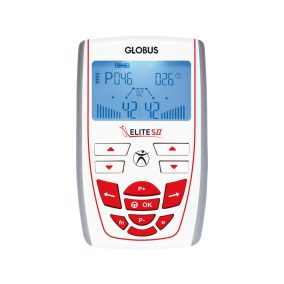
Elite SII 2-Channel TENS/EMS Device, 2 channels

In stock
155.00 €
2 channels
CE / MDR
GLOBUS
Elite SII 2-Channel TENS/EMS Device, 2 channels

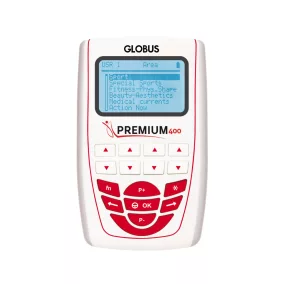
Premium 400 TENS/EMS/MCR Device 4-Channel

In stock
389.00 €
4 channels
CE / MDR
GLOBUS
Premium 400 TENS/EMS/MCR Device 4-Channel

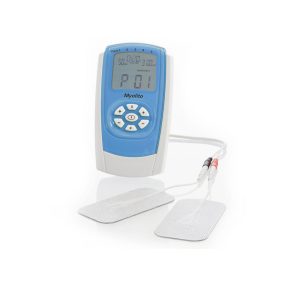
Myolito TENS/EMS/FES Device 2-Channels

In stock
91.00 €
2 channels
CE / MDR
MTR+
Myolito TENS/EMS/FES Device 2-Channels

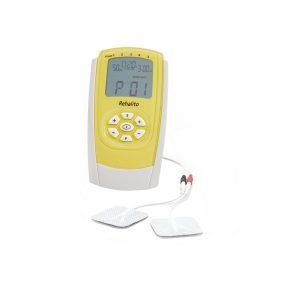
Rehalito EMS Muscle Stimulator Device, 2-Channel

In stock
72.00 €
2 channels
CE / MDR
MTR+
Rehalito EMS Muscle Stimulator Device, 2-Channel

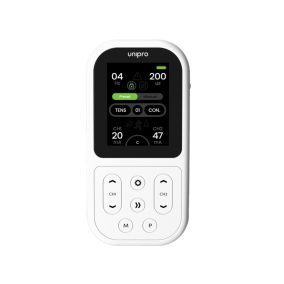
UniPro TENS/EMS/MCR/IF Device

In stock
191.80 €
2 channels
CE / MDR
TensCare
UniPro TENS/EMS/MCR/IF Device

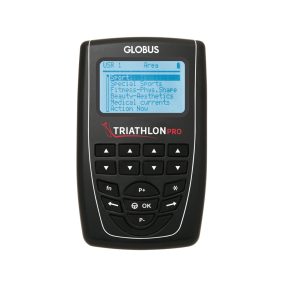
Triathlon Pro 4-Channel TENS/EMS/MCR Device

In stock
395.00 €
4 channels
CE / MDR
Popular!
GLOBUS
Triathlon Pro 4-Channel TENS/EMS/MCR Device
Cycling Running Soccer Triathlon Multisport

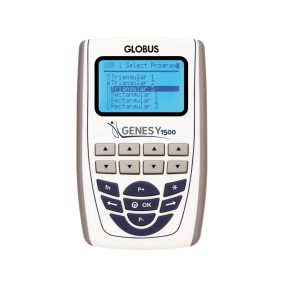
Genesy 1500 TENS/EMS/MCR/IF/Kotz Device, 4-channels

Available to order
819.00 €
4 channels
CE / MDR
GLOBUS
Genesy 1500 TENS/EMS/MCR/IF/Kotz Device, 4-channels

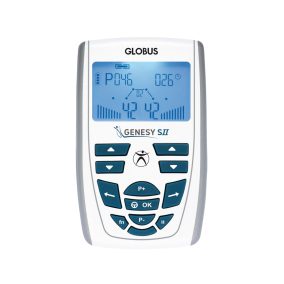
Genesy SII TENS/EMS Device, 2-channels

In stock
209.00 €
2 channels
CE / MDR
GLOBUS
Genesy SII TENS/EMS Device, 2-channels

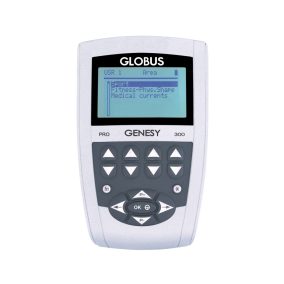
Genesy 300 Pro TENS/EMS/MCR Device, 4 channels

In stock
389.00 €
4 channels
CE / MDR
GLOBUS
Genesy 300 Pro TENS/EMS/MCR Device, 4 channels

The Champion TENS/EMS/MCR device 4 channels

In stock
495.00 €
4 channels
CE / MDR
GLOBUS
The Champion TENS/EMS/MCR device 4 channels
Cycling Running Soccer Triathlon Multisport

Runner Pro TENS/EMS/MCR device 4 channels

In stock
395.00 €
4 channels
CE / MDR
Popular!
GLOBUS
Runner Pro TENS/EMS/MCR device 4 channels
Cycling Running Soccer Triathlon Multisport
 
All products in category21 Product

With a muscle stimulation device, a type of electrical treatment called muscle stimulation can be performed, which is used to treat muscles. The medical abbreviations for muscle stimulation are EMS (electrical muscle stimulation) or NMES (neuromuscular electrical stimulation), and the devices are often called EMS or NMES units. Depending on the electrical impulse settings, the effects of muscle stimulation can include improved blood circulation, restored muscle strength, increased muscle mass, prevention of muscle atrophy, relief of stiffness and cramps, etc. Let’s look at the basics.

What is a muscle stimulation device and what is it used for?

A muscle stimulation device is used to perform muscle stimulation treatment. This treatment is applied to striated muscles. It has no significant effect on visceral or smooth muscles.

There are two main types:

  • Treatment of muscles with healthy motor nerves.
  • Treatment of muscles with damaged motor nerves, so-called denervated muscles. Hungarian therapists call this treatment "selective electrical stimulation".

The essence of muscle stimulation treatment is to deliver milliamps (mA) of electrical impulses to the treated muscle through an electrode placed on the skin (which can be self-adhesive, metal, or rubber). The electrical impulse triggers muscle contraction. By controlling the frequency, intensity, and duration of the impulses, the nature of the contraction—how much of the muscle bundle contracts, the speed, and frequency—can be precisely set.

The treatment can be focused on a specific muscle or muscle group, so the effect is localized to only the treated area (and not the whole body).

Normally, muscle contraction occurs due to electrical signals coming from your brain. During muscle stimulation, the muscle receives similar artificial impulses.

In both cases, the muscle contracts through the exact same mechanisms, the same metabolic processes occur, and it fatigues similarly.

If the contraction is the same, then its effects are also identical.

From this follow the possible applications and areas of use.

Relieving Muscle Stiffness

One of the most common muscle stiffness problems is a "stiff neck." You wake up in the morning unable to turn your neck in one direction. The muscles on that side are tight and painful. You can't look sideways properly for days, much less turn your head back. However, if you perform muscle relaxing stimulation treatments every 4-5 hours, the stiffness resolves by the next day, but at most in 2 days.

It is also common that after a fracture healing and plaster removal, muscles and tendons fixed for 2-3 months become stiff and contractured, hindering movement. Muscle stimulation can "mobilize" and relieve this stiffness within 8-10 days. Otherwise, stiffness either remains or gradually eases over months. Similar stiffness can be caused by wearing a post-surgical immobilizer or by lack of movement.

Muscle relaxing treatments also assist in treating shoulder pain, frozen shoulder, rotator cuff syndrome, epicondylitis, piriformis syndrome, etc.

In peripheral arterial disease (arterial narrowing) and diabetic neuropathy, nocturnal rest is often disturbed by severe cramps in the leg muscles. These cramps are very hard to relieve. Nighttime cramps can be prevented by muscle relaxing stimulation treatment before bedtime!

In certain diseases or conditions — such as ALS (amyotrophic lateral sclerosis), multiple sclerosis, post-stroke paralysis — some muscle groups (e.g., forearm flexors) become spastic (stiff), causing the hand to "lock" in a bent position. Opening fingers to grasp or straightening the elbow becomes extremely difficult. The tension causes increasing discomfort and even pain. Properly set muscle stimulation with the correct frequency and impulse duration can effectively relieve muscle stiffness, providing spastic patients with hours of relief.

Improving Blood Circulation

In healthy individuals, physical activity ensures venous blood returns to the heart. While walking, leg muscle contractions compress veins, pushing blood upwards toward the heart. If you move little or illness confines you to bed, this muscle pumping effect stops. Circulation slows, varicose veins develop, and thrombosis can form, which typically doesn’t heal fully. The best remedy is regular exercise, 30–40 minutes of walking or cycling daily.

Muscle stimulation becomes relevant when your condition prevents physical activity. It "replaces" muscle pumping and improves circulation, helping to prevent thrombosis.

Arterial narrowing often occurs for different reasons, but poor circulation is addressed similarly by exercise or, if absent, by muscle stimulation.

Muscle Stimulation and Joint Pain

Joint complaints usually develop slowly and insidiously. Sometimes an accident or sports injury causes abrupt onset. One fundamental cause is reduced joint stability. Ligaments and joint capsules hold joints together, but the muscles surrounding the joint provide their stability. If you exercise little and gain weight, weakening muscles cannot support your increasing body mass. The bones that form the joint then knock against each other with every step — strong muscles would prevent this!

If your symptoms are not severe yet, joint pain can be avoided through sports, exercise, and movement. Well-trained muscles maintain joint stability.

Muscle weakness underlies most knee pain, hip pain, back and spinal pain, including herniated discs. All of these are avoidable with regular 30–40 minutes of daily exercise.

The problem is that you only realize this once back pain or herniated disc develops, or your knee hurts with every step. You try to train, hoping for relief, but your aching muscles and joints don’t understand the sudden strain, and the pain worsens. You soon give up, thinking that only spine or knee surgery can help, but that’s not true.

Muscle stimulation treatment can help. It effectively strengthens your muscles within a few weeks (literally while sitting in a chair!) and about 6–8 weeks later, you can gradually start exercising, moving, and doing strength training. After 3 months, your muscles become strong enough that you’ll use the stimulator only because you enjoy its massaging effect.

Regaining Muscle Strength

If your physical activity suddenly decreases for any reason, you quickly lose strength and muscle mass. For example, if a severe illness confines you to bed for 2–3 weeks or you can't move due to surgery, you’ll notice upon standing that your muscles barely support you. You find it hard to stand up from a chair or sit up in bed.

Many come to me for advice, and I observe that most Hungarian hospitals do not sufficiently focus on patients' recovery after severe illness. They perform, for example, knee surgery, discharge you days later with instructions not to strain the joint, and tell you to come back in 3 weeks for a check-up. You rest, do nothing, and watch your muscles waste away.

Three weeks later, they tell you to get up and walk, but you find your knee stiff, thigh trembling, and knee joint unstable. You are alarmed to discover that even walking to the corner store causes knee pain.

Of course, that’s because your rehabilitation was missing!

Your knee stability and support come from your leg muscles, especially the thigh muscles, which deteriorated during rest! Without rehabilitation, you face serious problems.

However, if you perform muscle stimulation treatments on important muscles (especially thigh muscles after knee surgery) during forced bed rest, you can prevent strength loss, leading to a shorter recovery time and faster healing.

Technically, you could exercise your thigh while sitting in an armchair — but after fresh ligament or cartilage surgery, joint movement is forbidden. Muscle stimulation is excellent in such cases. You can start treatment on your (thigh) muscles the day after surgery because stimulation doesn’t cause joint displacement! It thoroughly exercises the muscle, increases blood circulation, delivering oxygen and nutrients to the affected area — preserving muscle strength and accelerating your recovery!

Delaying Muscle Atrophy

Muscle atrophy happens not only due to lack of movement. Some diseases directly damage muscle tissue or the nerves supplying them. Affected muscles gradually lose strength, mass, and tone, eventually becoming stiff and spastic.

Muscle stimulators are effective even in these cases, but while inactivity-induced muscle weakness can be reversed, these diseases only allow slowing progression, relieving stiffness, pain, and cramps, and improving quality of life. They do not cure the muscle disease itself.

Treatment of Paralyzed Muscles

Muscle paralysis is divided into two main types:

  • Central paralysis – nerve fibers and muscles are intact, but brain damage (e.g., stroke caused infarction or hemorrhage) prevents proper impulses from motor brain areas reaching the muscle.
  • Peripheral paralysis – nerve fibers to the muscle are damaged (e.g., torn by accident, spinal fracture damaging exiting nerves, or surgery injury).

Each type requires different muscle stimulation impulses!

For central paralysis, the bifasic square wave used for healthy muscles is appropriate.

For peripheral paralysis, this is not suitable. Selective electrical stimulation (denervated muscle treatment internationally) is needed. Denervated muscles can be stimulated with long impulses lasting 2–900 milliseconds. Short (microsecond) biphasic square waves cannot induce proper contraction in denervated muscles.

The only Hungarian textbook serving as a "bible" for physical therapists ("Physical Therapy in Practice") contains incorrect information about muscle stimulation, resulting in most therapists graduating with faulty knowledge. For example, paralysis caused by stroke is treated with selective stimulation and high frequencies, which increases muscle spasticity (increasing stiffness bends the paralyzed limb into a contracted posture). The correct solution would be biphasic square waves with low frequency.

Importance of Muscle Stimulation in Paralysis

In paralysis cases, the chance of recovery significantly increases if the patient receives muscle stimulation treatment daily!

Those returning home without treatment improve much slower or not at all. Muscle stimulation raises the odds of regaining function.

After stroke or peripheral paralysis, muscle stimulation should begin as early as possible. Recovery takes months or even years, so stimulation combined with exercises should continue daily and persistently for a long time. Without electrical impulses, the paralyzed muscle gradually atrophies and within about two years turns into a gelatinous mass beyond recovery.

Repeating the lost movements (even if no visible motion occurs) and muscle stimulation are essential for teaching the brain and nerves to relearn motor control, allowing another brain region to take over lost functions.

Muscle stimulation plays a crucial role in retraining neuromuscular connections. Some studies suggest the brain and its motor neurons need at least 10,000 repetitions to relearn a movement. Stimulated retraining of non-functional muscles accelerates this process.

I’ve mentioned many conditions already. Of course, these cannot be treated in the same way — like how you use different utensils for soup, main course, or dessert. Read about what determines the effect of muscle stimulation in this article.

Muscle Stimulation – Simply Explained

In this video, Dr. Zsolt Zátrok demonstrates how simple muscle stimulation can be performed.

Customer account
  • Sign In
  • Sign Up
  • My Profile
  • Cart
  • My Favorites
Information
  • Terms and Conditions
  • Privacy Policy
  • Payment
  • Shipping
  • Contact details
Scart Kft
  • Koltói Anna utca 39., Albertirsa, 2730
  • +36-53/200108
  • [email protected]
  • facebook

Other information
  • Exchange and Returns
  • Service and Warranty
  • Become a Distributor
  • Become our Affiliate
barion_com
paypal
  • Deals
  • Anyagcsere tracker
  • Disease Treatment
  • Electrotherapy
  • Fitness
  • Thermotherapy
  • Devices by Treatment Purpose
  • Clinical electrotherapy
  • Cosmetic ultrasound
  • Softlaser devices
  • Airway Cleaning Device
  • Masszázs pisztoly
  • Magnetic Therapy Device
  • Lymphatic massage device
  • Penis Pump
  • Radiofrequency Device
  • Rehabilitation equipment
  • Salt Therapy
  • Beauty Care
  • Accessories and Add-Ons
  • Therapeutic Ultrasound
  • Symptoms A-Z
  • Ultrasonic Fat Remover
  • Veterinary Medicine
  • Clearance Sale
  • Blog
    Blog
    • Forum
    • Disease and Its Symptoms
    • Training and Injuries
    • Lifestyle
    • FAQ
    • Device and Equipment
    • Rehabilitation
    • Therapy and Treatment
  • Info
  • Become our Distributor
  • Become our Affiliate
Change language
  • hu
  • en
  • sk
  • de
  • nl
Change currency
Sign in
Sign Up
Privacy settings
Our website uses cookies necessary for basic functionality. You can allow additional cookies for broader features (marketing, analytics, personalization). For more details, see our Privacy Policy in the Privacy Notice.